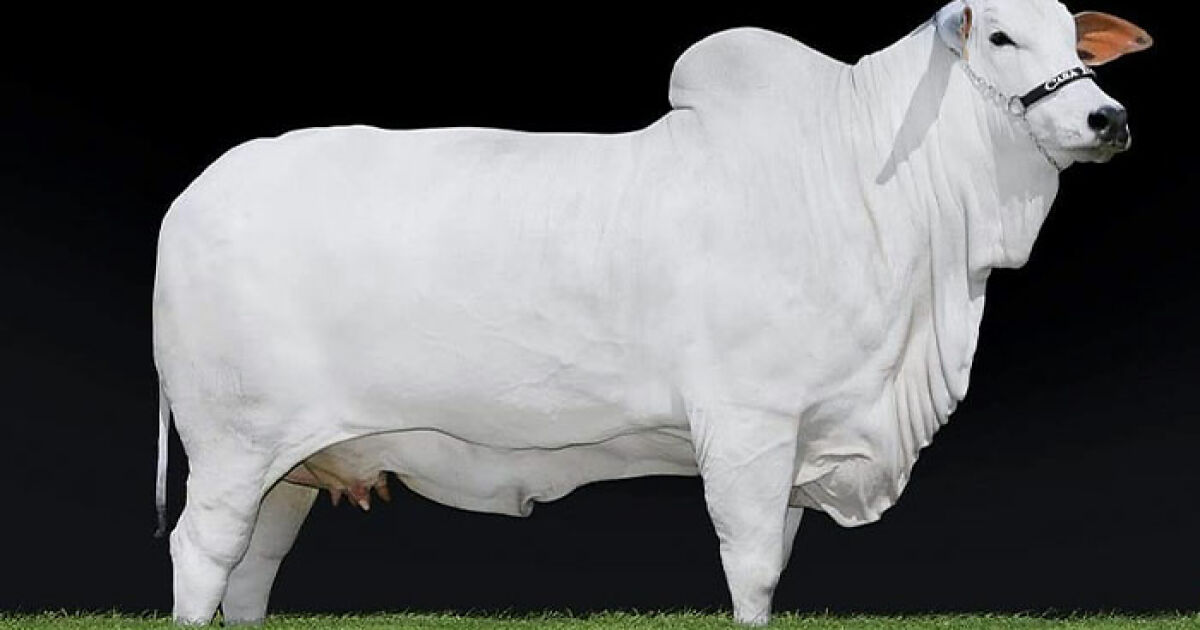
Every once in a while, the internet serves up a headline so gloriously specific that you have no choice but to click. A champion cow worth millions? In Brazil? With elite genetics, security, admirers, and enough buzz to make luxury-car dealers feel underdressed? Yes, that happened. Viatina-19, the famous white Nelore cow from Brazil, became a global sensation after a record-setting sale turned her into the bovine equivalent of a blue-chip asset. She is not famous because she makes lattes better or because she wandered into a fashion week after-party. She is famous because breeders see her as a genetic jackpot.
Now, let’s clear the hay bale right away: while many viral headlines describe Viatina-19 as a $4.8 million cow, primary reporting at the time placed her record value closer to roughly $4 million to $4.38 million, depending on the exchange rate used. Either way, the conclusion is the same: this is not a normal cattle transaction. This is elite livestock economics wearing a shiny white coat and stepping into the ring like it knows everybody is staring.
And honestly, everybody is staring. Viatina-19 has become a symbol of how modern cattle breeding works at the highest levels: part science, part auction theater, part national pride, and part reminder that agriculture has its own version of celebrity culture. If Silicon Valley builds unicorns, Brazilian cattle breeders apparently build supercows.
Why Viatina-19 Matters So Much
Viatina-19 is a Nelore cow, a breed that dominates Brazil’s beef industry. Nelore cattle are prized for traits that ranchers care deeply about: heat tolerance, disease resistance, fertility, adaptability, and the ability to perform well in tropical conditions. In plain English, they are tough, productive, and built for places where some European breeds would melt into an emotional puddle by lunchtime.
That breed advantage is a huge deal in Brazil, where climate, scale, and production efficiency shape the entire cattle business. Nelore cattle descend from Indian zebu stock, and over time they became central to Brazilian beef production because they handle heat, insects, and rougher conditions far better than many other breeds. Oklahoma State University notes the breed’s reproductive efficiency and highlights how Nelore genetics contribute to heat tolerance, disease resistance, and longevity. That is exactly the kind of resume that gets breeders reaching for their wallets.
Viatina-19 took those breed strengths and dialed them up to eleven. Reports described her as weighing about 1,100 kilograms, or more than 2,400 pounds, roughly twice the weight of an average adult of her breed. Breeders and veterinarians also pointed to her muscle development, fertility, posture, hoof quality, maternal value, and ability to pass desirable traits to offspring. In the cattle world, that combination is not just attractive. It is commercially explosive.
The Million-Dollar Question: Why Would Anyone Pay This Much for One Cow?
The answer is genetics. Nobody is paying millions for Viatina-19 because they want the world’s most expensive hamburger, which would be both financially irresponsible and a truly terrible marketing strategy. They are paying for access to her reproductive potential.
Elite cattle like Viatina-19 are valuable because their eggs, embryos, and offspring can generate years of income. Breeders use advanced reproductive technologies such as in vitro fertilization, embryo transfer, and sometimes cloning to spread those traits through future generations. In Viatina-19’s case, AP reported that breeders were paying around $250,000 for the opportunity to collect her egg cells. That detail alone tells you this is less “farm purchase” and more “genetic investment portfolio with hooves.”
This also explains why record animals are often owned by multiple investors. A fractional ownership structure lets breeders split the eye-popping upfront cost while sharing future returns from reproduction, prestige, and genetics. Newsweek’s coverage of the earlier record-making sale described one-third ownership being sold for 6.99 million reals, pushing the cow’s total value to a staggering level. In elite livestock circles, co-ownership is not weird. It is business.
And business is the key word here. Viatina-19 is not just an animal; she is an asset class. Her value comes from the expectation that she can help produce more animals with premium genetics, better conformation, stronger commercial appeal, and greater demand at auction. The modern cattle industry does not just sell beef. At the top end, it sells future probability.
How Brazil Built a Supercow Economy
To understand Viatina-19, you have to understand Brazil. The country is one of the biggest forces in global beef, with USDA material identifying Brazil as the largest beef exporting country in the world. It also has an enormous cattle population, with reporting putting the national herd at well over 225 million animals. That scale gives Brazil a powerful incentive to improve cattle efficiency, genetics, and export competitiveness.
In that context, Viatina-19 is not some random outlier who wandered into fame. She is a product of a system that has been refining cattle breeding for decades. National Geographic described Brazil’s cattle sector as an ascendant market where genetics are increasingly central to the future of beef production. In other words, Viatina-19 is not just a headline. She is a billboard for where the industry wants to go.
That billboard image is not even metaphorical. Reports noted that her owners installed roadside signs celebrating her, attracting ranchers, locals, and curious students. You know you have crossed into another level of fame when the cow is not just in the barn but also in roadside promotion like a country-music star on tour.
Her home region, Uberaba, is a major center of Brazil’s zebu culture and host to ExpoZebu, one of the biggest cattle events in the world. At these shows and auctions, elite animals are paraded, judged, and sold with the kind of theatrical energy many people associate with high-end horse sales or classic-car auctions. There are breeders, veterinarians, investors, technicians, and spectators all watching closely because one outstanding animal can shift market expectations.
What Makes Nelore Cattle So Special?
Nelore cattle are not famous simply because they look striking, though the bright coat, hump, and distinctive profile do help them stand out. Their real strength is utility. They are Bos indicus cattle, known for handling tropical heat and insect pressure better than many Bos taurus breeds. That matters tremendously in a country with Brazil’s geography and climate.
According to breed references and reporting, Nelore cattle are associated with strong reproductive performance, efficient adaptation, and resilience under challenging conditions. Newsweek, drawing on Oklahoma State information, noted that their sweat glands are larger and more numerous than those of many European breeds, helping explain their heat tolerance. For ranchers, that is not trivia. That is profitability disguised as anatomy.
Brazil’s embrace of Nelore cattle also reflects a broader agricultural truth: the “best” animal is not universal. The best animal is the one that fits the environment, the production model, and the economics of the region. A breed that thrives in tropical pastures, resists disease pressure, and reproduces efficiently can transform an entire industry. Viatina-19 is the glamorous version of that logic.
The Environmental Debate Nobody Can Ignore
Here is where the story stops being a quirky animal-news gem and starts carrying real policy weight. Cattle are big business, but cattle are also deeply tied to environmental concerns. Reporting on Viatina-19 repeatedly linked her fame to Brazil’s ambition to expand beef exports while facing criticism over deforestation and greenhouse gas emissions.
Cattle ranching has long been a major driver of Amazon deforestation. National Geographic noted that cattle ranching has shaped land use in Brazil for decades, while AP connected Brazil’s massive cattle population to both economic development and environmental cost. Meanwhile, EPA material on methane emissions underscores why cattle remain central in climate conversations: enteric fermentation and manure management are significant methane sources, and cattle are among the biggest contributors.
That does not mean the industry has no answer. Supporters of genetic improvement argue that breeding more efficient cattle could reduce the age at slaughter, improve productivity, and produce more beef with fewer resources over time. Some advocates present elite zebu genetics as part of a sustainability strategy. Critics, however, argue that high-performance show animals are not the same thing as scalable environmental reform, and they warn that better genetics do not automatically solve deforestation, methane, or land-use problems.
In other words, Viatina-19 sits at the center of a genuine debate. Is she evidence of smarter agriculture, or is she a luxury mascot for an industry still wrestling with its biggest environmental contradictions? The honest answer is probably both. She represents real scientific progress in breeding and real discomfort about the climate cost of cattle expansion. That tension is part of what makes her story so compelling.
From Auction Star to Global Symbol
Part of Viatina-19’s appeal is that she symbolizes multiple things at once. To breeders, she is the benchmark for excellence. To Brazil’s livestock industry, she is proof of national sophistication in genetics and breeding. To business-minded investors, she is a rare asset with future reproductive value. To the public, she is the cow that somehow broke the internet by being worth more than many mansions.
And to journalists, she is gold. She combines science, money, spectacle, food systems, climate debate, and just enough absurdity to make readers grin before they realize they are learning something substantial. A million-dollar painting is elite culture. A multi-million-dollar cow is elite culture with dust, boots, and a lot more protein.
Her story also shows how much agriculture has changed. The old image of cattle ranching as purely traditional and rustic still exists, but at the top tier, this is a world of reproductive labs, genetic strategy, valuation logic, international buyers, and premium branding. Viatina-19 may live on a ranch, but her story belongs equally to the lab, the marketplace, and the media machine.
The Experience Around Viatina-19: Why This Story Feels So Big
If you want to understand the emotional force of the Viatina-19 story, imagine stepping into the world that surrounds her. Not as a literal eyewitness account, but as a composite of what credible reporting describes: the heat, the dust, the polished boots, the practiced pride, the loudspeakers, the cameras, the expectation hanging in the air like static before a storm. This is not a sleepy barnyard scene with a rooster freelancing in the background. This is a high-performance agricultural theater where every walk, glance, muscle line, and pedigree note matters.
You can picture the atmosphere at a major cattle fair like ExpoZebu: crowds moving from pens to show rings, breeders talking bloodlines as if they are discussing stock options, veterinarians checking animals with the calm intensity of surgeons, and buyers watching with a level of concentration usually reserved for championship sports or serious real estate deals. Somewhere in the middle of all that is Viatina-19, not just standing there, but radiating the strange power that comes from being both an animal and an economic event.
That is what makes this story memorable. It is not just the number. It is the collision of worlds. You have biology meeting branding. Rural tradition meeting cutting-edge reproductive science. National pride meeting global demand. And then, because reality apparently enjoys showing off, you have the spectacle of a cow whose genetics are discussed with the same reverence some people reserve for classic racehorses, luxury art, or once-in-a-generation athletes.
There is also something undeniably human about the fascination. People are drawn to records. Tallest building, fastest sprinter, rarest baseball card, most expensive cow. Records turn ordinary categories into drama. A cow becomes the cow. Once that happens, the public stops seeing just livestock and starts seeing mythology with ears.
But the experience around Viatina-19 is not all glamour. It also reveals the pressure inside modern food production. Behind the applause is a serious question: how do producers raise animals that are more resilient, more efficient, and more profitable without pretending the environmental bill does not exist? That question follows Viatina-19 everywhere, even when the headlines focus on the jaw-dropping price tag.
So the lasting experience of this story is a mix of awe, curiosity, and unease. Awe at the sheer sophistication of breeding. Curiosity about how livestock genetics became this advanced. Unease because the story is also tied to land use, methane, and the future of beef itself. That combination is why Viatina-19 lingers in people’s minds. She is not just an expensive cow. She is a spotlight. And once that spotlight flips on, you start seeing the entire cattle industry more clearly, from the ambition to the science to the contradictions no one can afford to ignore.
Final Takeaway
Viatina-19 is more than a record-breaking Nelore cow. She is a living case study in how modern agriculture turns elite genetics into global headlines and serious money. Her value reflects the enormous importance of cattle breeding in Brazil, the commercial power of reproductive technology, and the industry’s belief that superior animals can shape the future of beef production.
At the same time, her fame arrives with a giant asterisk the size of a pasture: the cattle business does not exist outside the climate conversation. That makes Viatina-19 fascinating for more than her price alone. She stands at the intersection of science, commerce, national ambition, and environmental scrutiny. That is a lot for one cow to carry, even one this impressive.
So yes, Viatina-19 is a record-breaker. She is also a reminder that in today’s world, agriculture is not just about what ends up on a plate. It is about genetics, markets, sustainability, image, and influence. And occasionally, it is about a cow so valuable that the rest of us are left blinking at the screen and thinking, “Well, that escalated quickly.”