Choosing the best fuel for a smokeless fire pit sounds simple until you are standing in the aisle staring at hardwood logs, pellets, charcoal, propane tanks, and mysterious “instant fire” packs that look like they were invented by a very confident camping wizard. The truth is that smokeless fire pits are only as smokeless as the fuel you feed them. Use dry, clean, properly sized fuel and your fire pit can reward you with rolling flames, cozy heat, and clothes that do not smell like you spent the evening wrestling a barbecue. Use wet logs, treated scraps, or the wrong fuel entirely, and suddenly your “smokeless” fire pit becomes a backyard fog machine with emotional issues.
The best fuel for most smokeless fire pits is kiln-dried or well-seasoned hardwood with less than 20 percent moisture. It burns hot, creates less smoke, works with most wood-burning smokeless fire pits, and gives you the classic crackle people secretly want when they buy anything involving fire. Wood pellets are the best choice for a cleaner, more predictable burn, especially in pellet-compatible fire pits. Propane or natural gas is best for convenience, but only in gas fire pits designed for it. Charcoal is excellent for cooking in models that allow it, but it is not the default choice for every smokeless pit.
So, the real answer is not “one fuel rules them all.” The best smokeless fire pit fuel depends on your fire pit model, your goal, your patience level, and whether you want ambiance, cooking heat, easy cleanup, or a flame that starts before your guests finish saying, “Do you have a lighter?”
How Smokeless Fire Pits Actually Work
A smokeless fire pit does not magically delete smoke from existence. It reduces smoke by improving combustion. Most wood-burning smokeless fire pits use a double-wall design, lower air intake holes, and upper vent holes that create secondary combustion. In plain backyard English: the fire pit pulls in air, heats it, and sends that hot air back over the top of the flames to burn off smoke particles before they escape into your face.
This system works beautifully when the fire is hot and the fuel is dry. It works less beautifully when you toss in damp logs, oversized chunks, leaves, bark-heavy debris, or whatever mystery board has been living behind the shed since 2007. Smokeless technology is smart, but it is not a miracle worker. Think of your fire pit like a sports car: yes, it is engineered well, but it still does not want bargain-bin sludge in the tank.
The Best Overall Fuel: Dry Hardwood Logs
For most people, the best fuel for a smokeless fire pit is dry hardwood. Hardwood logs deliver the classic campfire experience: bright flames, satisfying crackle, steady heat, and that cozy “everybody gather around” feeling. Popular hardwood choices include oak, ash, maple, hickory, cherry, and apple. These woods are dense, burn hotter and longer than softwoods, and create fewer sparks when properly seasoned.
Why Hardwood Works So Well
Smokeless fire pits need heat to perform well. Hardwood provides that heat. Because it is dense, it burns longer and produces a strong coal bed, which helps maintain secondary combustion. Once the fire pit gets hot, the airflow system can do its job: reburning smoke, improving efficiency, and leaving behind a smaller pile of ash than a messy traditional fire pit.
Oak is a top all-around choice because it burns long and hot. Ash lights more easily than many hardwoods and produces steady heat. Maple gives a clean, pleasant burn. Hickory burns hot and brings a stronger aroma, which can be wonderful for cooking but a bit intense if you only wanted to toast marshmallows and discuss neighborhood gossip. Fruitwoods like cherry and apple are excellent for cooking because they add a mild, sweet smoke flavor.
Seasoned vs. Kiln-Dried Wood
Seasoned firewood has been cut, split, stacked, and dried naturally for several months. Kiln-dried firewood is dried in a controlled chamber, making it more consistent and often easier to light. Both can work very well, but the important number is moisture content. Wood below 20 percent moisture burns cleaner, hotter, and with less smoke.
If you buy firewood from a local supplier, ask whether it is truly seasoned or kiln-dried. “Seasoned” can sometimes mean “it sat outside for a while and had thoughts about becoming dry.” A simple moisture meter is inexpensive and can save you from smoky disappointment. Split a log and test the fresh interior surface, not the outside bark. If the reading is under 20 percent, your smokeless fire pit is much more likely to behave like the sleek backyard centerpiece you paid for.
Hardwood Pros and Cons
Hardwood is affordable in many areas, easy to find, and ideal for people who want a real wood fire. It produces great ambiance and can be used for cooking in fire pits designed for grilling accessories. The downside is that logs require stacking, storage, kindling, and a little fire-building skill. Hardwood also creates more ash than pellets or gas, and low-quality or wet wood can produce smoke even in a well-designed smokeless pit.
Best for Clean, Consistent Burns: Wood Pellets
Wood pellets are a fantastic fuel for pellet-compatible smokeless fire pits. They are made from compressed sawdust, usually with low moisture content, which helps them burn hot and evenly. Pellets are tidy, compact, and predictable. If hardwood logs are the acoustic guitar of fire pit fuel, pellets are the Bluetooth speaker: less rustic, very convenient, and surprisingly good at keeping the party going.
Why Pellets Are Popular
Pellets burn with a steady flame because they are uniform in size and density. They also produce less visible smoke than poorly seasoned logs because they contain very little moisture. Many pellet fire pits create a beautiful flame pattern, and some brands sell premeasured wood packs designed to light quickly and burn for a predictable amount of time.
Pellets are especially useful for small patios, quick weeknight fires, and people who do not want to mess with splitting kindling. They are also easier to store than logs. A bag of pellets can sit neatly in a garage or shed without creating the “tiny forest exploded in here” look that firewood sometimes brings.
Pellet Cautions
Not every smokeless fire pit can burn pellets safely or efficiently without an adapter. Pellets can fall through standard fire grates, block airflow, or create too intense a flame if you overload the pit. Always check your owner’s manual before using pellets. If your fire pit brand sells a pellet adapter, use it. That little metal insert is not just decorative; it keeps pellets where they belong and helps maintain the airflow pattern.
Also, add pellets gradually. Dumping in a mountain of pellets can smother the fire or create a flame taller than expected. Start small, let the fire establish itself, then add more as needed. Backyard fires should be cozy, not auditioning for a disaster movie.
Best for Cooking: Hardwood and Lump Charcoal
If your smokeless fire pit is built for cooking, hardwood and lump charcoal are usually the best fuels. Hardwood creates live-fire flavor and a strong coal bed. Lump charcoal burns hot and clean, making it useful for grilling, searing, and cooking over a more controlled heat source.
When to Use Hardwood for Cooking
Use hardwood when flavor matters. Oak, hickory, maple, cherry, and apple are popular choices because they add pleasant smoke notes without chemical additives. For burgers, steaks, vegetables, and skewers, a hardwood coal bed can be excellent. Let the flames calm down before placing food over the fire. Cooking directly over roaring flames may look dramatic, but it often produces food that is charred outside, raw inside, and emotionally confusing.
When to Use Charcoal
Lump charcoal is a good option in smokeless fire pits that are specifically designed to handle it. It lights faster than logs, reaches high temperatures, and produces a stable bed of heat for grilling. Charcoal briquettes can work in some cooking setups, but they may contain binders or additives, so check your fire pit instructions and food-safety preferences.
Charcoal is not ideal for every smokeless fire pit. Some models rely on wood flames to drive the secondary burn effect. Others are designed with adjustable fuel racks or grill grates that make charcoal practical. The rule is simple: if the manufacturer says charcoal is allowed, enjoy. If the manual says wood only, believe the manual. It has fewer jokes, but more legal review.
Best for Convenience: Propane and Natural Gas
Propane and natural gas are excellent choices if you want instant flames, minimal cleanup, and no wood storage. However, they belong in gas fire pits, not wood-burning smokeless fire pits. A propane fire pit is usually not “smokeless” because of secondary combustion; it is smoke-free because it is not burning wood.
Propane Fire Pits
Propane fire pits are portable, easy to light, and clean-burning. They are great for patios, renters, and people who want a fire feature without sweeping ash the next morning. A standard propane tank can power many outdoor fire tables and portable gas pits. The flame is adjustable, and shutdown is as simple as turning a knob.
The drawbacks are fuel cost, tank refills, and a different kind of ambiance. Propane flames are pretty, but they do not crackle. You will not get the same wood-fire smell, coal bed, or cooking versatility unless the unit is specifically designed for cooking. Also, propane fire pits produce less radiant heat than a roaring wood fire in many cases, so they may feel more decorative than toasty on cold nights.
Natural Gas Fire Pits
Natural gas is ideal for permanent outdoor living spaces. It connects to a home gas line, so there are no tanks to refill. It is convenient, clean, and great for frequent use. The trade-off is installation cost and lack of portability. Once a natural gas fire pit is installed, it is not moving across the patio unless you enjoy expensive plumbing adventures.
Fuels to Avoid in a Smokeless Fire Pit
The wrong fuel can create excess smoke, toxic fumes, dangerous flare-ups, or damage to your fire pit. Avoid treated lumber, painted wood, stained wood, plywood, particleboard, pallets of unknown origin, glossy paper, trash, plastic, yard waste, and wet leaves. These materials can release chemicals, clog airflow, spark heavily, or turn your relaxing evening into a call-the-fire-department situation.
Do Not Use Liquid Accelerants
Never use gasoline, lighter fluid, alcohol, kerosene, or other liquid accelerants in a smokeless fire pit. They can cause sudden flare-ups, invisible flames, and serious burns. If your fire pit needs help starting, use dry kindling, a natural fire starter, or a manufacturer-approved starter. A good fire should begin with patience, not a chemistry experiment.
Be Careful With Tabletop Liquid-Fuel Fire Pits
Small decorative fire bowls that use alcohol or liquid fuel are not the same as wood-burning smokeless fire pits. Liquid-fuel tabletop fire products have been associated with severe burn hazards, especially when refilled improperly or when flames are hard to see. For a backyard smokeless fire pit, stick with fuels approved by the manufacturer and avoid pouring liquid fuel into any open flame.
Fuel Comparison: Which One Fits Your Backyard?
| Fuel Type | Best For | Main Advantage | Main Drawback |
|---|---|---|---|
| Kiln-Dried Hardwood | Classic smokeless fire pit experience | Hot, natural, long-lasting fire | Needs storage and proper lighting |
| Seasoned Hardwood | Budget-friendly regular use | Easy to find locally | Quality varies by supplier |
| Wood Pellets | Clean, consistent, quick fires | Low moisture and predictable burn | May require a pellet adapter |
| Lump Charcoal | Cooking and grilling | Hot, stable cooking heat | Only for compatible models |
| Propane | Convenience and portability | Easy ignition and no ash | No wood-fire crackle or aroma |
| Natural Gas | Permanent patios | No tank refills | Requires fixed installation |
How to Get the Least Smoke From Any Approved Fuel
Even the best fuel can smoke if the fire is built poorly. Start with a small, hot fire. Use dry kindling and stack logs loosely so air can move between them. Do not overload the pit. Smokeless fire pits need airflow, and airflow needs space. If the fire looks like a collapsed log cabin made by a tired beaver, rearrange it.
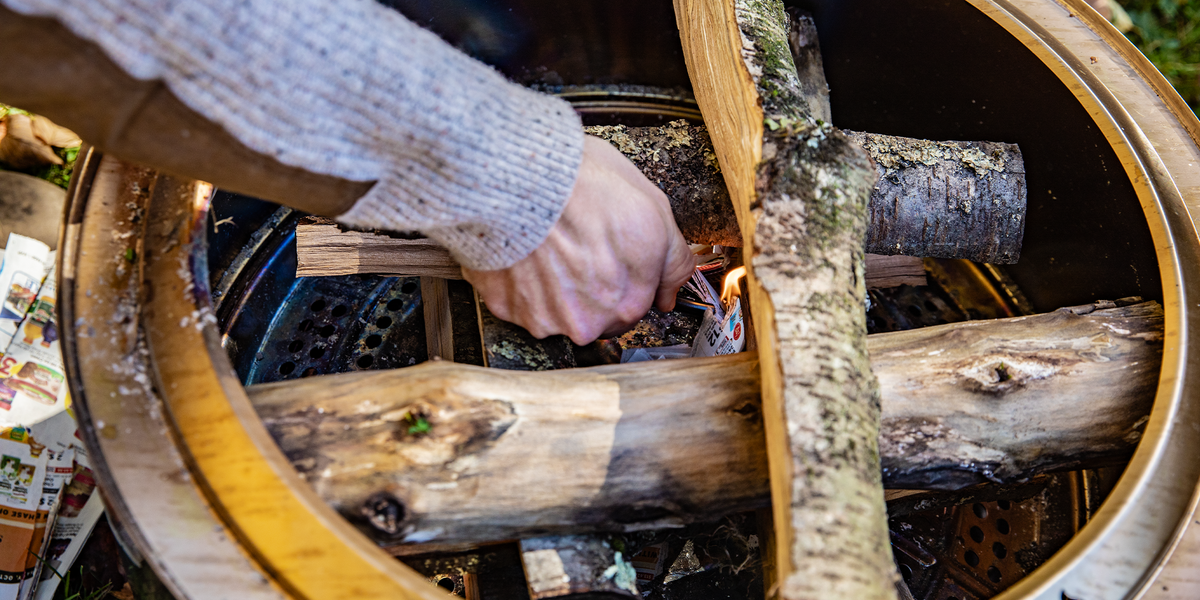
Keep logs below the upper rim when possible. Oversized logs sticking out of the top can interrupt secondary combustion and create smoke. Split logs burn better than huge rounds because more surface area is exposed to heat. For many smokeless pits, logs under four inches in diameter are easier to ignite and maintain.
Store fuel properly. Keep firewood off the ground, covered on top, and open on the sides so air can circulate. Pellets should be stored in a dry, sealed container because they absorb moisture. Once pellets swell, crumble, or clump, they burn poorly and may clog airflow.
So, What Fuel Should You Choose?
Choose kiln-dried hardwood if you want the best all-around smokeless fire pit experience. It is hot, reliable, widely compatible, and gives you the real-fire atmosphere most people want. Choose wood pellets if you value consistency, easy storage, and quick lighting. Choose lump charcoal if your fire pit supports cooking and you want stable grilling heat. Choose propane or natural gas if convenience matters more than crackle.
For many households, the ideal setup is a hybrid fuel strategy. Keep kiln-dried hardwood for weekend gatherings, pellets for quick weeknight fires, and a few natural fire starters for easy ignition. If you cook often, add approved lump charcoal or cooking hardwoods. This gives you flexibility without turning your garage into a suspicious fuel museum.
Real-World Experience: Lessons From Using Smokeless Fire Pit Fuel
The first thing most people learn after buying a smokeless fire pit is that “smokeless” is a performance goal, not a supernatural promise. The fire pit can be beautifully engineered, but the fuel still matters. In real backyard use, the difference between dry hardwood and damp bargain wood is dramatic. Dry hardwood catches faster, burns hotter, and reaches that rolling secondary burn stage where flames seem to curl around the inside rim. Damp wood hisses, smolders, and sends smoke sideways like it has a personal grudge against the person sitting in the nicest chair.
A practical experience-based approach is to keep two types of fuel on hand. Use wood pellets when you want a quick, predictable fire after dinner. Pellets are great when guests are arriving soon and you do not want to spend 25 minutes crouched over kindling like a medieval apprentice. A small pile of pellets can light quickly, build heat fast, and create an impressive flame. For longer evenings, switch to hardwood logs once the fire pit is hot. The pellets help establish the burn, and the hardwood keeps the atmosphere going.
Log size is another real-world detail that matters more than beginners expect. Smaller split logs almost always perform better than giant chunks. If the log sticks above the rim or blocks the airflow holes, the pit gets smokier. A few compact splits arranged with breathing room will usually outperform one heroic log that looks like it was borrowed from a lumberjack competition.
Storage is also part of the fuel decision. Kiln-dried wood is wonderful, but it costs more and still needs protection from rain. Seasoned local wood can be a great value, but only if it is genuinely dry. Pellets are easy to store, but they must stay sealed and dry. A forgotten open pellet bag in a humid garage can become a sad sack of sawdust oatmeal. Nobody wants that.
For cooking, hardwood wins on flavor. Applewood and cherry are excellent for lighter foods, while oak and hickory are better for heartier meals. If the fire pit has a grill system, let the flames settle into coals before cooking. Food cooked over steady coals tastes better and causes fewer flare-ups. Marshmallows, however, remain a lawless food group. Someone will burn one into a carbon meteor, and that person will still insist it is perfect.
The best experience comes from matching fuel to the occasion. For a quiet solo evening, pellets are easy. For a family hangout, hardwood feels warmer and more traditional. For grilling, approved charcoal or cooking hardwood makes sense. For people who hate ash cleanup, propane is hard to beat. The smartest fire pit owners do not ask, “What fuel is best forever?” They ask, “What fuel is best for tonight?” That small shift leads to better fires, less smoke, and fewer moments of waving a cushion through the air like a backyard smoke signal.
Conclusion
The best fuel for your smokeless fire pit is the fuel that matches your fire pit design and your outdoor routine. For most wood-burning smokeless fire pits, dry hardwood is the top choice because it burns hot, lasts well, and creates the classic fire experience. Wood pellets are excellent for low-smoke convenience and consistent flames, especially when used with a compatible pellet insert. Charcoal is best for cooking in approved models, while propane and natural gas are best for people who want instant flames and minimal cleanup.
Whatever you choose, remember the golden rule: dry, clean, approved fuel only. Avoid wet wood, treated lumber, trash, and liquid accelerants. A smokeless fire pit is a wonderful backyard upgrade, but it performs best when you feed it properly. Treat it well, and it will give you warm evenings, toasted marshmallows, and far fewer awkward moments of guests quietly rotating away from the smoke like human weather vanes.
Note: This article is written from synthesized, real-world fire pit fuel guidance, U.S. safety recommendations, and manufacturer best practices for smokeless fire pits.