Self storage looks beautifully simple from the parking lot: rent a room, fill it with boxes, close the door, and reclaim your garage. Then the questions begin. Which unit size do you need? Is climate control worth the extra cost? Does renters insurance cover stored belongings? And why is the box containing your winter coats trapped behind a sofa, two bicycles, and a mysterious tower labeled “MISC.”?
This guide turns the essential information from a self storage infographic into a practical plan. Whether you are moving, remodeling, downsizing, storing business inventory, or simply trying to stop your spare bedroom from becoming a cardboard-box sanctuary, the goal is the same: rent only the space you need, protect your property, and organize everything so you can find it again.
What Is Self Storage?
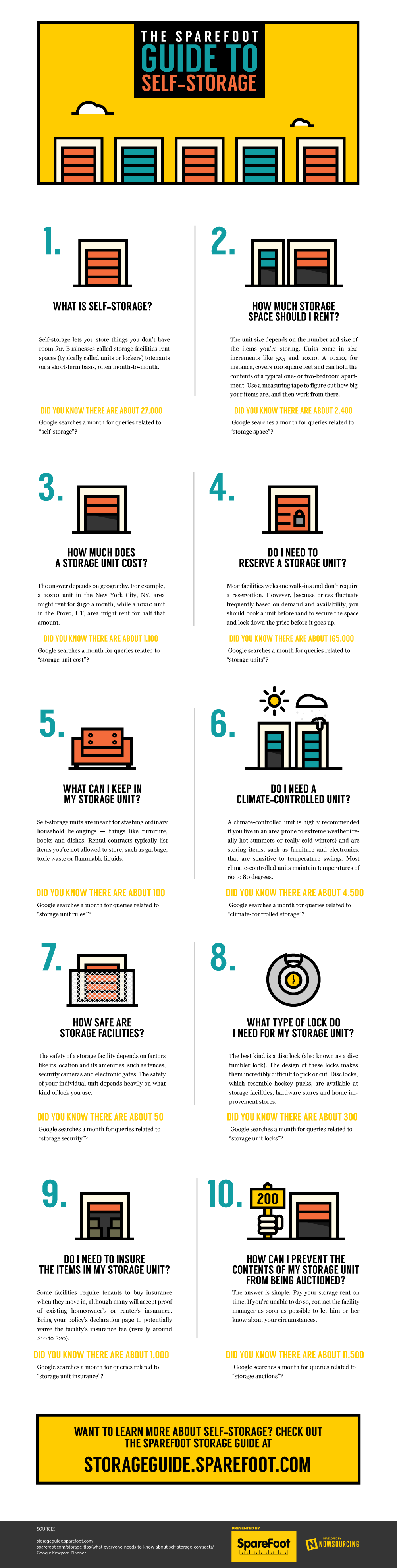
Self storage is a rented space used to hold personal or business property. Facilities typically offer several unit sizes, month-to-month rental agreements, controlled access, and optional features such as climate control, drive-up doors, elevators, carts, lighting, or extended access hours.
Portable storage containers are another option. Instead of transporting everything to a facility immediately, a container can be delivered to your property, packed over time, and then moved or stored by the provider.
When Renting a Storage Unit Makes Sense
A storage unit can be useful during a household move, home sale, renovation, college break, military deployment, estate transition, business expansion, or serious decluttering project. It can create temporary flexibility when your available space and your belongings are no longer on speaking terms.
However, storage becomes less useful when it turns into an expensive waiting room for things you no longer need. Before renting, divide your belongings into four categories:
- Keep at home
- Place in storage
- Sell or donate
- Recycle or discard
Every item removed before move-in reduces packing time and may allow you to rent a smaller, less expensive unit.
How to Choose the Right Storage Unit
Start With an Inventory
List everything you plan to store, including furniture, mattresses, appliances, bicycles, boxes, tools, and seasonal equipment. Measure oversized pieces and note which furniture can be disassembled.
Storage companies commonly offer units with footprints such as 5-by-5, 5-by-10, 10-by-10, and 10-by-15 feet, along with larger spaces for household contents, commercial inventory, or vehicles. Online size guides are helpful, but they cannot account for every awkward sofa, unusually tall cabinet, narrow doorway, or elevator that appears to have been designed exclusively for handbags.
When estimating space, include room for safe stacking and a walkway. A unit that technically holds everything may still be unusable if retrieving one box requires unloading the entire contents into the parking lot.
Consider How Often You Need Access
Access requirements should influence both the facility and the unit location. Check gate hours, office hours, holiday access, loading areas, parking, elevator availability, hallway width, and whether carts are provided.
A drive-up unit may be convenient for heavy furniture, tools, or business inventory. An indoor unit may offer better protection from outdoor conditions, although it could require more carrying. If you expect frequent visits, paying slightly more for a convenient location can save considerable time and lower-back negotiations.
Inspect the Facility
Visit the property before signing whenever possible. Look for controlled gate entry, perimeter fencing, adequate lighting, visible cameras, clean hallways, fire-safety equipment, maintained roofs, intact doors, and signs of professional management.
Also inspect for water stains, standing water, damaged gutters, pest activity, unusual odors, or gaps around doors. Ask whether units have individual alarms and how the company responds when a camera, gate, or access system fails.
Security features can reduce risk, but they do not guarantee that property cannot be stolen or damaged. Cameras are useful, but they are not tiny insurance agents mounted on the wall.
Do You Need Climate-Controlled Storage?
Climate-controlled storage is designed to maintain more stable indoor conditions than a standard outdoor unit. The exact meaning varies among companies. Some facilities regulate temperature only, while others also manage humidity or provide additional ventilation.
Before paying for climate control, ask what conditions are controlled, how they are monitored, and whether the entire building or only selected units receive that treatment.
Items That May Benefit From Climate Control
- Wooden, upholstered, or leather furniture
- Electronics and computer equipment
- Musical instruments
- Photographs, books, and important papers
- Artwork and collectibles
- Mattresses and textiles
- Business records or sensitive inventory
- Items with significant sentimental value
Heat, cold, moisture, and rapid environmental changes can warp wood, weaken adhesives, damage paper, encourage corrosion, and create conditions favorable to mold. Environmental agencies and preservation specialists consistently emphasize moisture control when protecting vulnerable materials.
Climate control is especially valuable in regions with high humidity, extreme heat, freezing winters, or dramatic seasonal changes. It may also be worthwhile for long-term storage, even when the local climate appears moderate.
Understand the Complete Cost
The advertised monthly rate is rarely the only expense. Your total storage budget may include:
- Administrative or setup fees
- A security deposit
- A required lock
- Insurance or a facility protection plan
- Taxes
- Moving supplies
- Truck rental, fuel, or labor
- Late-payment fees
- Future rental-rate increases
Promotional pricing can be useful, but ask when the promotion ends and what the normal monthly charge will be. Compare facilities based on the expected cost over your entire rental period rather than the first month alone.
Location also affects value. A facility outside a busy urban area may charge less, but frequent trips can erase those savings through fuel costs and lost time. Choose a distant facility for belongings you rarely need and a convenient facility for items you expect to retrieve regularly.
Read the Rental Agreement Carefully
A self storage contract is not decorative paperwork. Review the regular rent, promotional terms, payment date, access rules, insurance requirements, late fees, rate-change policy, move-out notice, prohibited items, refund terms, and facility lien rights.
Self storage laws vary by state. When rent remains unpaid, a facility may eventually restrict access and begin legally authorized enforcement procedures that can include the sale of stored property. Keep your mailing address, email address, and telephone number current so important notices reach you.
Questions to Ask Before Signing
- What is the full amount due on move-in day?
- What will the regular monthly total be?
- How are future rate increases communicated?
- Is insurance required?
- How much notice is required before moving out?
- Are partial-month refunds available?
- What happens after a missed payment?
- Which items are prohibited?
Save the agreement, payment receipts, inventory, photographs, and facility notices in a digital folder outside the unit. Paperwork locked behind a delinquent gate is not especially cooperative.
Storage Unit Insurance: Verify, Do Not Assume
Some homeowners and renters insurance policies cover personal property stored away from the insured residence. However, off-premises limits, deductibles, and exclusions vary considerably.
Coverage may be lower for belongings kept outside the home. Standard policies may also exclude or limit losses involving flooding, earthquakes, mold, mildew, pests, gradual deterioration, or poor maintenance. Jewelry, artwork, collectibles, firearms, business equipment, and other valuable categories may have separate limits.
Ask your insurance professional three direct questions:
- Are my belongings covered while they are in self storage?
- What coverage limit and deductible apply?
- Which causes of damage or loss are excluded?
Compare those answers with any insurance policy or protection plan offered by the facility. Create a photo inventory, record serial numbers, and keep receipts or appraisals for valuable items. Documentation feels boring until it becomes the only evidence that an expensive tool, computer, or collectible existed.
What Not to Put in a Storage Unit
Rules differ by facility, but most rental agreements prohibit hazardous, illegal, explosive, flammable, or perishable materials. Commonly prohibited items include:
- Gasoline, diesel fuel, and propane tanks
- Fireworks and explosives
- Paint thinner and certain chemicals
- Compressed gases
- Pesticides and toxic materials
- Fresh food and other perishables
- Living plants and animals
- Stolen or illegally obtained property
Fuel-powered equipment generally must be completely drained according to facility requirements. Never use a storage unit as a residence, office, workshop, or sleeping space unless the facility and local laws specifically permit that use.
Avoid storing cash, passports, original legal documents, irreplaceable family records, expensive jewelry, medications, or objects with unique emotional value. These belongings are usually better protected in a secure home safe, bank safe-deposit box, specialized facility, or encrypted digital archive.
How to Prepare Belongings for Storage
Clean and Dry Everything
Dirt, food residue, moisture, and body oils can lead to odors, staining, pests, and mold. Wash fabrics, wipe furniture, clean appliances, and allow everything to dry completely before packing.
Defrost refrigerators and freezers, clean their interiors, and store them with doors slightly open to encourage airflow. Do not seal damp rugs, patio cushions, tents, sports equipment, or laundry inside plastic bags. “Mostly dry” is simply wet with an optimistic marketing department.
Choose Appropriate Containers
Uniform, sturdy boxes stack more safely than damaged grocery cartons. Use smaller boxes for books, tools, dishes, and other dense objects so they remain liftable. Clear plastic bins make contents easy to identify and offer resistance to minor moisture and pests, but everything placed inside must be completely dry.
Use wardrobe boxes for hanging clothes, divided cartons for dishes, and protective bags designed for mattresses. Photographs, documents, textiles, and family keepsakes should be packed in clean, suitable preservation materials. Avoid newspaper around delicate belongings because ink can transfer.
Disassemble Furniture
Remove table legs, shelves, headboards, and detachable sections when practical. Place screws and hardware in labeled bags and attach each bag securely to the corresponding furniture item.
Protect furniture with breathable moving blankets or fabric covers. Tight plastic wrapping can trap moisture around wood or upholstery, particularly during long-term storage. Keep delicate furniture away from exterior walls and avoid placing heavy boxes on upholstered pieces.
How to Organize a Storage Unit
- Plan the layout. Assign zones for furniture, tools, documents, seasonal items, and frequently used boxes.
- Elevate belongings. Use shelving, pallets, or approved risers to reduce direct floor contact.
- Put heavy items low. Dense boxes and sturdy furniture belong at the bottom of stacks.
- Use vertical space safely. Add freestanding shelving where permitted, but avoid unstable towers.
- Leave a center aisle. Maintain a walkway to belongings stored near the back.
- Face labels outward. Label at least two sides of every container.
- Keep priority items near the door. Store frequently needed tools, clothing, and files within easy reach.
- Photograph the layout. Your memory will confidently invent the wrong location six months later.
Create a Digital Inventory
Number every box and maintain a spreadsheet or phone note describing its contents. A useful entry might read, “Box 27: winter coats, gloves, scarves, guest-room closet.” An entry that reads, “Box 27: stuff,” is a cry for help.
Record serial numbers for electronics, tools, and equipment. Take photographs of valuable items and save copies of the inventory in cloud storage or with your insurance records.
Self Storage Infographic Checklist
- Sort: Decide what to keep, store, sell, donate, or discard.
- Measure: List furniture, boxes, appliances, and oversized items.
- Compare: Review unit size, access, distance, security, and climate control.
- Calculate: Include rent, insurance, fees, supplies, transportation, and possible increases.
- Verify: Read the contract, insurance terms, exclusions, and prohibited-item rules.
- Prepare: Clean, dry, disassemble, wrap, and label everything.
- Organize: Place heavy items low, keep labels visible, and maintain an aisle.
- Document: Save photographs, receipts, serial numbers, and a unit map.
- Review: Inspect the unit and reconsider the expense every few months.
Real-World Self Storage Experiences and Lessons
The most useful storage lessons often arrive five minutes after the facility office closes. During one apartment renovation, the original plan was to rent the smallest available unit and stack everything to the ceiling. On paper, the belongings fit. In practice, the first truck contained a sectional sofa that refused to behave like a rectangle.
Moving to the next unit size increased the monthly cost, but it created a walkway and eliminated repeated unloading. The lesson was not that everyone should rent a larger unit. It was that awkward furniture must be measured and access space must be included. Cushions, unfortunately, do not understand geometry.
Promotional pricing creates another common surprise. A renter may choose a facility because its introductory rate is dramatically lower than competing offers. Several months later, the regular rent, insurance charge, and additional fees make the unit more expensive than expected.
The better approach is to ask for the full move-in cost, expected recurring total, promotion expiration date, and rate-adjustment policy. A simple spreadsheet can quickly reveal the difference between a genuine bargain and a bargain wearing a tiny asterisk.
Organization often creates the greatest quality-of-life improvement. In one long-term unit, every box was carefully labeled by room. Unfortunately, most labels faced the walls after stacking. Finding holiday decorations required moving nearly half the unit.
During the repack, each box received a number on two sides, a center aisle was created, and a simple map was saved on a phone. The next retrieval took four minutes instead of an afternoon. The glamorous secret of storage efficiency was apparently writing things down and facing the words toward human eyeballs.
Moisture is another teacher with an unpleasant curriculum. Patio cushions that felt “almost dry” were sealed inside bags after a rainy move. Weeks later, the odor confirmed that almost dry was not dry enough. Cleaning and completely drying fabrics, using appropriate covers, maintaining airflow, and selecting climate control for vulnerable belongings can prevent a shortcut from becoming a disposal project.
Insurance assumptions can be even more expensive. Some renters believe the facility automatically insures everything inside the unit. Others assume their homeowners or renters policy provides unlimited coverage. Neither belief is safe.
A brief conversation with an insurance agent can clarify limits, deductibles, exclusions, and whether additional coverage is appropriate. Pair that conversation with photographs, receipts, appraisals, and serial numbers. Create the evidence before something goes missing, not while trying to reconstruct a tool collection from memory.
Finally, the best storage experience is often the one that ends on schedule. Set a date for reviewing the unit and decide what would justify keeping each category. Furniture waiting for a confirmed move has a clear purpose. Boxes untouched for three years may simply be paying monthly rent because nobody wants to make a decision.
A quarterly inspection keeps self storage from becoming a forgotten expense. Remove unwanted belongings, check for moisture or pests, verify insurance, update contact details, and confirm that automatic payments are working. Your storage unit should support your life, not quietly become the most expensive closet you never visit.
Conclusion
A successful self storage plan begins before the first box crosses the facility gate. Measure your belongings, compare the complete cost, inspect the property, understand the contract, verify insurance coverage, and choose climate control when vulnerable possessions require more stable conditions.
Clean and dry everything before packing. Use sturdy containers, label multiple sides, create a digital inventory, keep heavy boxes low, and maintain an open aisle. Review the unit regularly so temporary storage does not become a permanent monthly charge.
When used intentionally, self storage can reduce stress during a move, renovation, transition, or business expansion. When used without a plan, it can become a room full of belongings you pay to own but cannot find. Make every box identifiable and every square foot earn its keep.