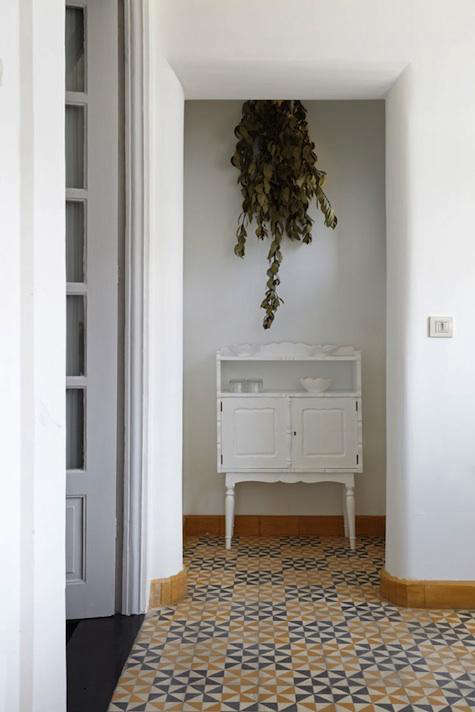
Every great interior has at least one “tell”a detail that quietly whispers, someone here has taste. Sometimes it’s a perfectly imperfect glaze. Sometimes it’s a countertop you want to pet (please don’t). And sometimes it’s a floor that looks like it time-traveled from an ancient city, landed in your hallway, and decided to stay forever.
Welcome to today’s case file: Minos tiles from Ann Sacks. These are mosaics with a backstory, a vibe, and the kind of craft that makes other tiles suddenly sit up straighter. We’re going to investigate what Minos is, why designers keep “discovering” it like it’s a rare gemstone, and how to use it without accidentally turning your home into a themed restaurant (unless that theme is “jaw-droppingly chic,” in which casecarry on).
The Case File: What Are Minos Tiles, Exactly?
Minos is a stone mosaic collection associated with Ann Sacksknown for artisanal surfaces that feel curated, not commodity. Minos mosaics are often described as hand-cut and hand-placed, and the design language leans into that old-world, small-piece mosaic tradition: intricate geometry, rhythmic repeats, and subtle variation that’s impossible to fake convincingly with a “print.”
The aesthetic headline: ancient-meets-tailored. Think “archaeological elegance,” but make it livable. Many Minos patterns read like the refined cousin of historic Jerusalem-style stone mosaicstextural, slightly irregular, and built from pieces that look like they were assembled by a human being with patience and a steady hand (the true luxury).
Why designers love the Minos look
- Texture without chaos: Natural stone variation creates movement, even in neutral palettes.
- Pattern with pedigree: The motifs feel timeless because they echo long-standing mosaic traditions.
- Small scale, big impact: Mosaics can carry a room without shouting at it.
Meet the “Agency”: Ann Sacks, in One Stylish Snapshot
Ann Sacks is a major name in luxury tile and stone, with a reputation built on design-forward collections, showrooms that cater to pros and passionate homeowners, and a mix of globally sourced materials and in-house production. The brand’s roots trace back to Portland, Oregonwhere the company established itself and grew into a North American showroom presence.
The shorthand: when someone says “Ann Sacks,” they’re usually thinking curated surfaces, premium materials, and collections that feel like they were chosen with a mood board in mind (not a spreadsheet).
Where Minos fits in
Minos sits in that sweet spot between decorative and architectural: it has enough pattern to be memorable, but enough restraint to play well with modern cabinetry, classic millwork, and everything in between. It’s the kind of mosaic you can use in a 1920s bungalow, a minimalist loft, or a new build that needs a little soul.
The Name Game: Why “Minos” Feels So Mythic
“Minos” is a name with built-in drama. It’s hard not to picture labyrinths, ancient stone corridors, and somebody holding a torch dramatically while whispering, “We shouldn’t be down here.”
Whether you read it as a nod to Mediterranean history or simply a poetic label for a mosaic line that looks like it’s been around forever, the effect is the same: Minos tiles feel storied. And in interior design, “storied” is a polite way of saying “this will make your house look like it has a life.”
What gives Minos that aged-in-the-best-way feeling
- Natural stone character: tonal shifts, tiny inclusions, and variation that reads as depth.
- Hand-assembled energy: slight irregularities that signal craft, not a factory line.
- Pattern scale: small pieces create a “field” effectmore tapestry than poster.
Pattern Sleuthing: How Minos Mosaics Behave in Real Rooms
Mosaics are like strong perfume: a little goes a long way, and placement matters. Minos patterns tend to land in one of two camps: graphic geometry (interlocking forms and repeating motifs) and organic complexity (the kind that looks almost painterly from across the room).
1) The “Entryway Statement” move
Want instant “this house is special” energy? Put Minos underfoot in a small, high-visibility zone: an entry vestibule, a foyer inset, or a mudroom corridor. The mosaic becomes a welcome mat that never gets soggy.
Pro tip: frame it. A simple borderstone, wood threshold, or even a clean line of larger-format tilekeeps the pattern intentional, like it was always part of the architecture.
2) The “Powder Room Plot Twist”
Powder rooms are where design risks go to feel alive. A Minos mosaic floor paired with plain walls and a great mirror is a classic high-impact, low-square-footage strategy. If the mosaic is busy, let everything else be calmlike the tile is telling the story and the sink is just taking notes.
3) The “Kitchen: Don’t Overdo It” rule
In kitchens, Minos works best as an accent: a niche backsplash, a coffee station, an island face, or a small floor zone that needs definition. Full-room mosaic floors can be gorgeous, but they’re also visually activemeaning they’ll compete with cabinet hardware, stools, and the constant chaos of someone asking, “Where are the scissors?” while holding the scissors.
4) The “Shower Floor That Doesn’t Slip Into Boring”
Mosaics are naturally suited to shower floors because the grout lines create traction and allow the tile to follow the slope. A Minos-style stone mosaic can make a shower feel like a boutique hotelespecially when paired with simple wall tile and warm metal fixtures. (Your shampoo will feel more expensive. Not scientifically, but spiritually.)
Color, Grout, and the Art of Not Ruining It
With stone mosaics, the grout choice is basically the narrator. It can fade into the background and let the stone speak, or it can outline every piece like a cartoon and change the whole vibe. Choose wisely, dear Watson.
Grout strategies that usually win
- Match grout to the mid-tone in the stone for a quieter, more “antique” read.
- Use a slightly lighter grout if you want the pattern to register from a distance.
- Avoid harsh contrast unless you truly want a graphic look (and have tested it on a sample board).
Finish matters more than you think
A honed finish tends to feel more modern and calm, while a tumbled or more textured stone reads rustic and timeworn. Neither is “better,” but they tell different stories. If your home leans clean-lined, honed often keeps Minos from feeling too “Old World.” If your home has plaster walls, arched openings, or traditional details, texture can feel perfectly at home.
Installation: The Unsexy Part That Decides Everything
Let’s say this with love: mosaics are not the place to “wing it.” Minos-style stone mosaics deserve a good installer and a substrate that’s flatter than your friend’s attempt at sarcasm.
What typically matters most
- Surface prep: Walls and floors need to be flatsmall humps can telegraph through small tiles.
- Dry layout: Lay sheets out before setting so color and pattern distribute evenly.
- Proper thinset: Stone mosaics generally call for quality mortars; avoid shortcuts like mastic in the wrong applications.
- Movement joints: Tile moves. Buildings move. Ignore movement joints and the tile will eventually protest.
Sealing and stone reality checks
Stone mosaics often benefit from sealing, especially in wet areas and high-traffic floors. Sealing isn’t a magic force field, but it buys you time to wipe up spills before they become permanent memories.
Cleaning is usually simplest: pH-neutral cleaners, no harsh acids, and a general commitment to not treating your stone floor like a science experiment.
Budget Sleuthing: Where the Costs Really Hide
Mosaic tile pricing can feel deceptively straightforward until installation enters the chat. The tile itself may be priced by the square foot, but mosaics can increase labor time because they demand careful alignment, sheet blending, and detail work around edges and fixtures.
The most cost-effective approach is often the most design-forward: use Minos as a feature zone. A small floor inset, a shower pan, a backsplash momentthese deliver the “wow” without requiring you to tile your entire home like a Roman villa.
Smart ways to maximize impact
- Go small but prominent: entry, powder room, shower floor, or a framed niche.
- Pair with simple field tile: let Minos be the star, not a member of an unruly boy band.
- Order extra: mosaics are fussy; having attic stock is peace of mind you can actually use later.
How to “Spec It Like You Mean It”
If you’re working with a designer, your job is to approve what you love. If you’re doing this yourself, you’re the designer now. Congratulations, and also: hydrate.
A practical checklist before you commit
- Get samples and view them morning and night. Stone can shift under different light temperatures.
- Ask about lead times and availabilityespecially if you’re matching multiple areas.
- Mock up grout on a small board. One grout choice can turn “timeless” into “why is it yelling?”
- Confirm transitions at thresholds, drains, and corners. Details make mosaics look custom.