Note: Apple has not officially announced a foldable iPhone as of this writing. The analysis below is based on public patent filings, reputable technology reporting, market research, and the current state of foldable phone design.
Introduction: The Foldable Phone Finally Gets Serious
The foldable phone used to feel like a party trick: impressive for five minutes, terrifying for your wallet, and slightly suspicious every time the hinge made a tiny sound. Today, foldables are no longer futuristic prototypes hiding behind glass at trade shows. Samsung, Motorola, Google, Honor, Oppo, and others have pushed folding screens into real pockets, real backpacks, and occasionally real repair shops. The category has matured, but one enormous question still floats above it like a notification bubble: when will Apple join the foldable phone race?
The phrase “foldable phone Apple” has become a search-engine magnet because Apple’s absence is almost as interesting as a launch would be. The company rarely races into a new hardware category just because rivals arrived first. It waits, studies, patents, improves, and then tries to enter with a product that feels less like a science project and more like something your aunt can use without reading a 45-page survival guide.
That is where Apple patents become fascinating. Over the years, Apple has filed and received patents covering flexible displays, folding housings, hinges, bendable glass regions, self-healing display layers, textured glass recesses, and support structures designed to reduce stress around the fold. These filings do not guarantee a finished product, but they do reveal the problems Apple is trying to solve: crease visibility, durability, hinge complexity, display protection, battery layout, and software usability.
In short, Apple is not just asking, “Can we make an iPhone fold?” It appears to be asking, “Can we make a foldable phone that still feels like an iPhone after 50,000 opens, one coffee spill, three drops, and a year of being shoved into jeans pockets?” That is a much harder questionand a much more Apple-like one.
What Is a Foldable Phone?
A foldable phone is a smartphone with a flexible display and hinge system that allows the device to change shape. Most designs fall into two major categories: book-style foldables and clamshell foldables.
Book-Style Foldable Phones
A book-style foldable opens like a small tablet. When closed, it works like a regular smartphone with an outer screen. When opened, it provides a larger inner display for reading, gaming, multitasking, video calls, photo editing, and productivity. Samsung’s Galaxy Z Fold line is the best-known example. This design is likely the closest match to what many analysts expect from an Apple foldable phone because it fits Apple’s ecosystem: iPhone outside, iPad mini-like canvas inside.
Clamshell Foldable Phones
A clamshell foldable opens vertically like the classic flip phones of the early 2000s, except with a modern flexible OLED screen inside. Motorola Razr and Samsung Galaxy Z Flip models helped popularize this format. These devices prioritize pocketability and style. They are less about replacing a tablet and more about making a large phone compact enough to fit into pockets that were apparently designed by someone who has never owned a smartphone.
For Apple, both options are possible in theory. However, most recent reports and patent interpretations point toward a premium book-style foldable iPhone, potentially with a large inner screen and a smaller outer display.
Why Apple Has Waited So Long
Apple is not usually first in a category. It was not first with the MP3 player, smartphone, smartwatch, wireless earbuds, or tablet. Its strategy is usually to wait until the technology is good enough, then package it into a product that feels polished, familiar, and tightly connected to its software ecosystem.
Foldable phones still have obvious challenges. The display crease can be visible. The hinge can collect dust. The device can be thicker than a traditional phone. Repairs can be expensive. Battery capacity is difficult to balance across two halves of the device. App interfaces need to move gracefully between outer and inner screens. Even the simple act of adding a case becomes a tiny engineering comedy.
For Apple, those issues are not small annoyances. They are potential reasons to wait. A foldable iPhone would almost certainly be expensive, and Apple customers would expect it to feel premium from day one. A visible crease, fragile display layer, awkward software layout, or unreliable hinge would not just be a technical problem; it would become a meme by lunchtime.
Apple Patents: What They Reveal About a Possible Foldable iPhone
Apple patents are not product announcements. Many patented ideas never become commercial devices. Still, patents are useful because they show where Apple is investing engineering attention. In the foldable phone space, Apple’s patent activity points to several major themes.
1. Flexible Displays and Bend Axes
Apple has explored electronic devices with flexible displays mounted across a hinge or bend axis. The core idea is simple to describe and difficult to execute: the display must bend repeatedly without cracking, distorting, or separating from its support structure. A foldable display is not just a screen; it is a layered sandwich of OLED pixels, touch sensors, adhesives, protective materials, and cover layers. Every layer must survive movement.
In a traditional phone, the display can be rigid and strongly supported. In a foldable phone, the center area must bend while still looking flat when open. That is like asking a yoga instructor to become a marble countertop on command. Apple’s patents suggest attention to the mechanical relationship between the flexible display, the housing, and the hinge.
2. Hinge Mechanisms That Protect the Screen
The hinge is the heart of any foldable phone. If the hinge is too loose, the device feels cheap. If it is too stiff, opening the phone becomes a thumb workout. If it does not guide the display correctly, the screen can crease, stretch, or fail.
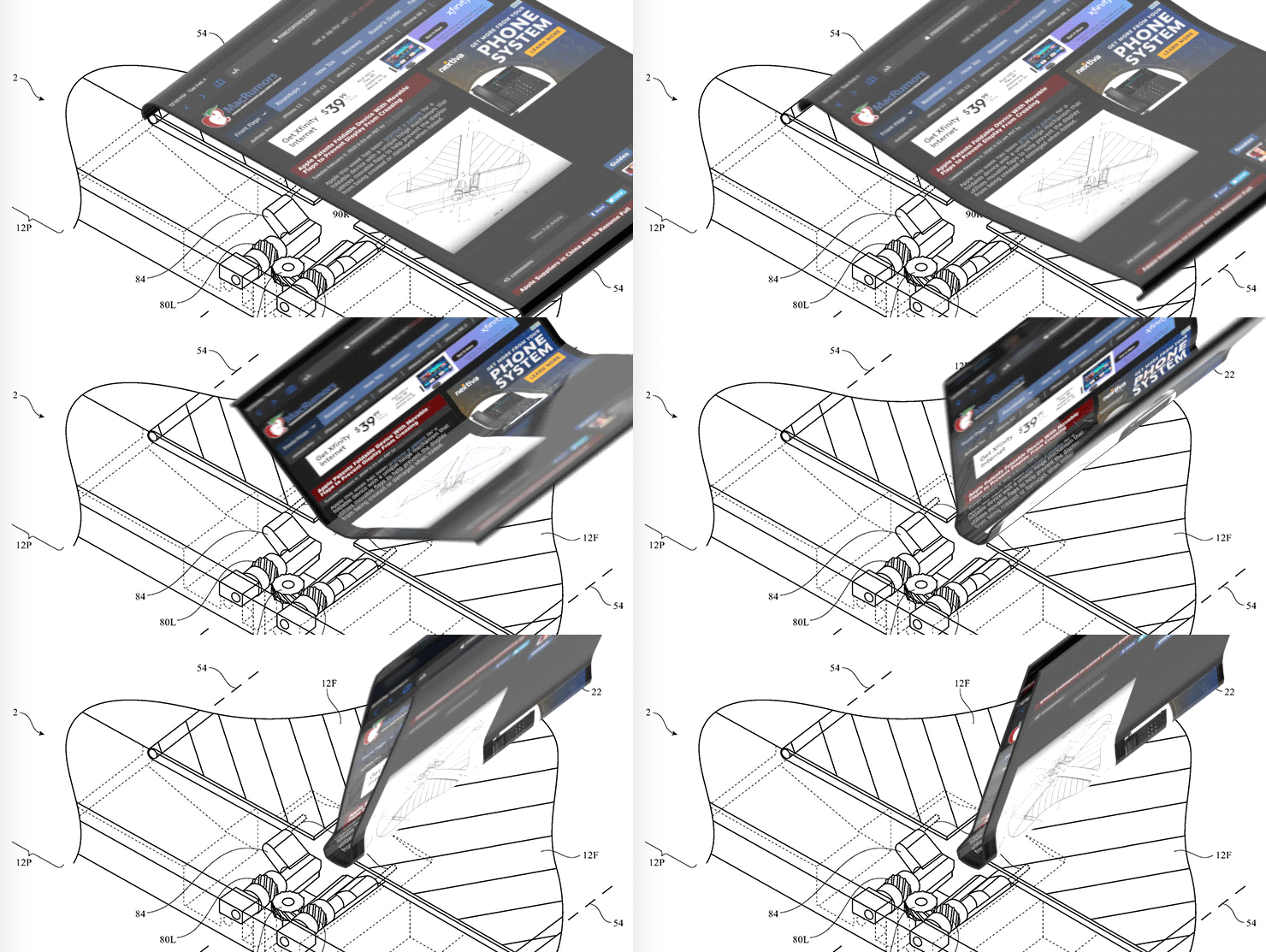
Apple patents have described hinge systems that maintain separation between device halves and help preserve a minimum bend radius for the display. That matters because flexible screens do not like sharp bends. A larger, controlled curve reduces stress. Some patent concepts also discuss movable support flaps that retract when the device folds and support the screen when it opens. The goal is to avoid leaving the central display area unsupported.
This is important because users do not gently tap only the left and right sides of a screen. They tap the middle. They swipe through apps. They press buttons in games. They pinch photos. If the folding area feels hollow, soft, or wobbly, the illusion of a single premium display breaks immediately.
3. Durable Folding Glass
One of the most interesting Apple patent areas involves display cover layers that are thinner in the folding region and thicker elsewhere. This concept makes engineering sense. The screen needs flexibility near the hinge, but it also needs strength at corners and edges where drops are most likely to cause damage.
Think of it like a gymnast wearing armor: flexible at the joints, reinforced where impact is likely. A foldable iPhone would need to handle both bending stress and everyday accidents. Apple’s focus on durable folding displays suggests that it is not enough for the device to fold in a laboratory. It must survive the chaos of real life: keys in pockets, sandy beach bags, accidental drops, and the mysterious gravity field around kitchen tile.
4. Self-Healing Display Layers
Apple has also patented ideas related to self-healing display cover layers. The concept does not mean a screen would magically recover from being run over by a car. Instead, it suggests materials that could reduce or repair minor scratches, dents, or surface deformation, potentially using heat, light, or electric current.
For foldables, this is especially relevant because the display surface is usually softer than traditional smartphone glass. Ultra-thin glass may be used, but foldable displays often rely on polymer layers as part of the protective stack. A self-healing layer could help reduce visible wear in the bend region, where repeated folding can create tiny marks over time.
5. Textured Glass Recesses and Polymer Fill
Another Apple patent concept describes glass with a recess along the bend axis and polymer material placed in that recess. The idea is to create a locally flexible area while keeping the display surface visually smooth. Texturing may help adhesion and reduce reflections. Translation for normal humans: Apple appears to be studying how to make the folding zone bend without looking or feeling like a folding zone.
If Apple can reduce the crease while keeping the display durable, that could become one of the strongest selling points of a foldable iPhone. The crease has been the foldable phone’s most famous wrinkleliterally and commercially.
The Crease Problem: Why It Matters So Much
Every foldable phone must deal with the crease. Some users stop noticing it after a few days. Others see it forever, like a tiny valley of regret running through a $2,000 device. The crease is not only a cosmetic issue. It reflects the tension between flexibility and flatness.
When a screen folds, material must go somewhere. Engineers can reduce crease visibility with waterdrop hinges, improved support plates, ultra-thin glass, better adhesives, and smarter hinge geometry. Samsung’s newer foldables, for example, use advanced hinge designs to reduce visible creasing and distribute stress more evenly. Still, the perfect “no-crease” foldable remains a major industry goal.
Apple’s patents suggest that the company sees the crease as a central challenge. If Apple launches a foldable phone, marketing will likely emphasize the display experience: flatter, smoother, more durable, and more natural to use. Whether reality matches the keynote adjectives will be the real test.
What Could an Apple Foldable Phone Look Like?
Based on current reporting and patent themes, the most likely Apple foldable phone would be a book-style device. It could have an outer display for quick tasks and a larger inner screen for immersive use. When closed, it would work like an iPhone. When opened, it could behave more like a small iPad.
Possible Design Features
A foldable iPhone could include a premium hinge, a large OLED inner display, a compact outer display, multiple cameras, iOS interface adjustments, and possibly Apple Pencil-like input in the future. It may also use advanced materials to reduce weight and improve hinge durability.
The biggest design question is thickness. Foldables often feel like two phones stacked together because, technically, that is not far from the truth. Apple would need to make the folded device slim enough to feel elegant, while still fitting batteries, cameras, speakers, cooling, magnets, antennas, and the hinge. That is a packaging puzzle with no easy pieces.
Software Could Be Apple’s Secret Weapon
Hardware gets the headlines, but software may decide whether a foldable iPhone succeeds. Apple already has experience with iPhone and iPad interface scaling. A foldable device could switch between one-handed phone mode and larger-screen productivity mode. Apps like Safari, Mail, Notes, Photos, Freeform, FaceTime, Messages, and Files could benefit immediately.
Imagine opening Maps on the inner screen while traveling, editing a photo with more room for controls, reading a long article without constant scrolling, or using split-screen apps in a way that feels more natural than on a standard iPhone. A foldable iPhone would not need to invent new behavior from scratch. It could borrow from the iPad while keeping the pocket-friendly identity of the iPhone.
Apple Patents vs. Apple Products: Do Not Confuse the Two
It is tempting to treat every Apple patent like a sneak peek at next year’s keynote. That is risky. Apple patents thousands of ideas, and many never ship. Some are defensive filings. Some protect future options. Some are experiments. Some are engineering breadcrumbs that lead nowhere public.
However, when multiple patents cluster around the same themeflexible displays, hinge support, self-healing cover layers, durable folding glass, and foldable housingsit becomes reasonable to say Apple has seriously studied the category. The company may not use every patented idea, but the pattern shows sustained interest.
How Apple Could Compete With Samsung, Motorola, and Google
Samsung has years of real-world foldable experience. Motorola has leaned into stylish clamshell nostalgia and has expanded its foldable lineup. Google has used foldables to showcase Android multitasking and AI-powered features. Apple would enter late, but late does not always mean weak.
Apple’s advantage is ecosystem gravity. A foldable iPhone could connect tightly with AirPods, Apple Watch, iCloud, Mac, iPad, Apple Intelligence, FaceTime, iMessage, and the App Store. Developers would likely optimize quickly if the device sells in meaningful numbers. Accessory makers would flood the market with cases, stands, keyboards, mounts, and probably at least one leather sleeve priced like a weekend vacation.
The challenge is value. Foldables are expensive, and Apple’s first model would likely sit at the ultra-premium end of the market. Consumers will ask a fair question: why buy a foldable iPhone instead of an iPhone Pro Max and an iPad mini? Apple’s answer must be convenience, elegance, durability, and a software experience that makes the larger inner screen feel essential rather than decorative.
Potential Benefits of a Foldable iPhone
More Screen Without More Pocket
The obvious benefit is screen size. A foldable phone gives users a larger workspace while remaining pocketable. This matters for reading, browsing, gaming, watching videos, editing documents, and managing email.
Better Multitasking
A larger inner screen could allow two apps side by side. A user might drag photos into messages, compare documents, watch a video while browsing, or keep notes open during a call. If Apple makes this feel simple, it could turn multitasking from a power-user feature into an everyday habit.
Creative and Productivity Uses
A foldable iPhone could appeal to creators, students, travelers, business users, and anyone who wants a bigger canvas without carrying another device. Photo previews, video timelines, PDFs, spreadsheets, and presentations all benefit from extra display space.
Potential Problems Apple Must Solve
Durability
Foldables have more moving parts than traditional phones. Moving parts create more ways for things to go wrong. Apple must make the hinge feel strong, keep dust out, protect the folding display, and ensure long-term reliability.
Battery Life
A large inner display can drain power quickly. Apple would need efficient OLED panels, smart refresh-rate management, optimized chips, and enough battery capacity to support all-day use.
Price
A foldable iPhone would almost certainly be expensive. If the price crosses far above current Pro Max levels, Apple must justify it with a truly premium experience. A foldable phone cannot feel like a compromise with a luxury receipt attached.
App Optimization
Apps must adapt smoothly between folded and unfolded states. If apps look stretched, confused, or awkward, users will notice immediately. Apple’s developer ecosystem helps, but execution still matters.
Experience Section: Living With the Idea of an Apple Foldable Phone
From a practical user-experience perspective, the most exciting thing about an Apple foldable phone is not the folding itself. Folding is cool, but novelty fades. The real question is whether the device solves daily annoyances. A regular large phone is great until you need to read a PDF, compare two webpages, edit a spreadsheet, or watch a video while replying to messages. Then the screen suddenly feels like a studio apartment trying to host a wedding.
A foldable iPhone could make those moments easier. Picture standing in an airport with your boarding pass on one side of the inner screen and your hotel confirmation on the other. Imagine opening a recipe while keeping a grocery list visible. Think about reading a long email and drafting a reply without constantly bouncing between screens. For students, a foldable iPhone could make research and note-taking more convenient. For business users, it could become a pocketable presentation reviewer. For travelers, it might reduce the need to carry a small tablet.
The camera experience could also improve in interesting ways. Foldables allow unusual shooting positions. The phone could sit half-open on a table for video calls, time-lapse shots, or group photos. The outer screen could act as a preview for rear-camera selfies. Apple already puts enormous effort into camera software, so a folding design could unlock new shooting modes that feel playful and practical.
However, the experience would only work if Apple makes the device feel normal. That sounds strange, but it is crucial. The best technology disappears into habit. Users should not worry about how hard they are pressing the screen, whether dust entered the hinge, or whether the crease is getting worse. They should simply open the device when they need more room and close it when they are done.
Weight will matter too. A foldable phone that feels like a pocket brick will impress reviewers and annoy owners. Apple would need to balance screen size with comfort. The outer display must also be genuinely useful. If users need to open the phone for every small task, the magic becomes work. Quick replies, calls, payments, notifications, music controls, maps, and camera access should all work beautifully on the outside screen.
The emotional experience is just as important. Apple products often succeed because they feel coherent. A foldable iPhone should not feel like an iPhone awkwardly glued to an iPad. It should feel like one device with two personalities: compact when life is moving fast, expansive when the user wants to focus. That is the promise of the category. Not “look, it bends,” but “look, it fits the moment.”
If Apple can deliver that feeling, the foldable iPhone could become more than a premium gadget. It could redefine what people expect from a phone. If it cannot, then it may become a very expensive reminder that hinges are hard, screens are fragile, and sometimes rectangles are popular for a reason.
Conclusion: Apple’s Foldable Future Is About Trust
The foldable phone market is no longer a wild experiment. It is a serious premium category with improving hardware, stronger hinges, better displays, and growing consumer curiosity. Apple’s foldable phone ambitions, as suggested by years of patents and industry reporting, appear focused on the hardest problems: crease reduction, display durability, hinge engineering, and a seamless user experience.
Apple does not need to be first. It needs to be trusted. A foldable iPhone would have to convince buyers that it is not fragile, not awkward, and not just expensive for the sake of being expensive. The patents show Apple is thinking deeply about the engineering. The market shows there is demand. The remaining question is whether Apple can combine both into a device that feels inevitable.
If the first foldable iPhone arrives with a durable display, a refined hinge, strong battery life, and software that makes the inner screen genuinely useful, it could turn foldables from a niche luxury into a mainstream aspiration. Until then, Apple patents remain the best window into what may be coming: a phone that bends, hopefully without making users bend their budgets too painfully.