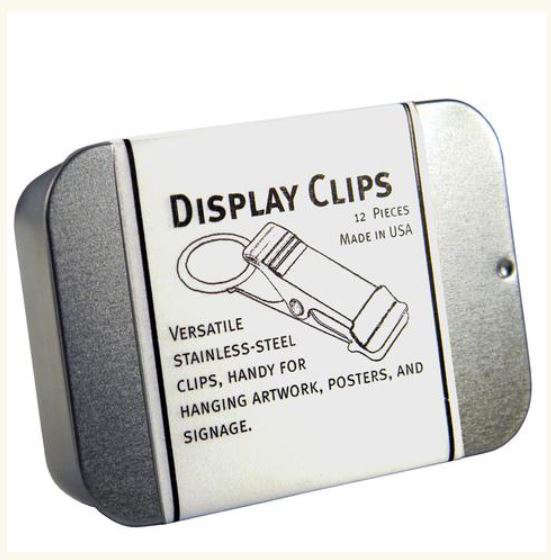
Display clips are the tiny backstage crew of retail, offices, events, classrooms, craft rooms, and trade shows. They hold signs upright, keep price cards visible, make photos look intentional, and rescue menus from the tragic fate of lying flat on a countertop like a tired pancake. Simple? Absolutely. Unimportant? Not even close.
Whether you call them display clips, sign holder clips, retail display clips, shelf talker clips, price tag holders, memo clips, photo clips, or POP clip sign holders, the job is the same: make information easy to see, easy to change, and easy to trust. In a store, that might mean showing the price of a loaf of sourdough. At a wedding, it might mean holding table numbers. In an office, it could be a clean little reminder that says, “Please label your lunch,” which is polite corporate language for “Gary, stop stealing yogurt.”
What Are Display Clips?
Display clips are small holders designed to grip printed signs, labels, cards, photos, product tags, or lightweight promotional materials. They usually combine two parts: a clip that attaches to a surface and a grip that holds the visible message. Some are clear plastic, some are metal, some swivel, some stick with adhesive, some cling with magnets, and some use suction cups for glass or smooth surfaces.
The best display clips do three things well. First, they keep the message visible. Second, they make updates fast. Third, they stay out of the way visually, so the signnot the hardwaregets the attention. That is why clear acrylic and transparent PVC clips are common in retail environments: they blend into shelves, baskets, bins, counters, and glass cases without shouting, “Look at me, I am a tiny plastic clamp!”
Why Display Clips Matter More Than They Look
Good signage helps people make decisions. A shopper standing in front of five similar products wants clarity: price, size, flavor, benefits, promotion, or a quick “new arrival” nudge. Display clips place that information exactly where the decision happens. This is especially useful in grocery stores, bakeries, delis, boutiques, bookstores, hardware aisles, farmers markets, pop-up shops, and showrooms.
Think of a shelf without labels. It is not mysterious in a charming way; it is just mildly stressful. Customers do not want to decode your store like an escape room. Display clips make information obvious, and obvious information can reduce friction, answer common questions, and support faster buying decisions.
Main Types of Display Clips
1. Retail Sign Holder Clips
Retail sign holder clips are made for shelves, baskets, dump bins, bowls, racks, pegboard areas, and countertop displays. They often hold small printed cards showing prices, discounts, product features, or promotional messages. Many retail clips rotate or swivel, which helps staff angle the sign toward the customer instead of toward the ceiling, the floor, or some philosophical middle distance.
2. Shelf Talker Clips
Shelf talker clips are popular in supermarkets, pharmacies, convenience stores, and specialty retailers. They attach near the shelf edge and hold small signs that “talk” to shoppers. A shelf talker might say “Best Seller,” “Staff Pick,” “Gluten-Free,” “Buy One, Get One,” or “Limited Time.” In crowded aisles, these small signs can be powerful because they interrupt the visual sameness of rows and rows of packaging.
3. Price Tag Holders
Price tag holders are designed to hold smaller cards, labels, or tickets. They are common in bakeries, cheese cases, seafood counters, farmers markets, jewelry displays, and boutique product tables. A clear clip-on price card holder lets customers see the price without asking, which is good because many customers would rather leave than say, “How much is this?” for the fourth time.
4. Magnetic Display Clips
Magnetic display clips are ideal for metal shelves, warehouse racks, filing cabinets, lockers, refrigerators, and steel display fixtures. They are quick to reposition and leave no adhesive residue. They work especially well in environments where signs move often, such as seasonal promotions, warehouse inventory zones, stockrooms, classrooms, and trade show setups.
5. Adhesive Display Clips
Adhesive display clips stick to smooth surfaces and hold lightweight signs. They are useful when a fixture has no lip, channel, or metal surface. The downside is commitment. Adhesive can lose strength over time, especially in heat, humidity, dust, or repeated repositioning. Before using adhesive clips on painted walls, finished wood, or delicate surfaces, test first unless you enjoy surprise renovation projects.
6. Suction Cup Sign Clips
Suction cup clips work on clean glass, acrylic, tile, and other non-porous surfaces. They are common on windows, glass doors, refrigerated cases, bathroom mirrors, and temporary event signage. For best results, clean the surface first and avoid using them on dusty, textured, or curved areas. Suction cups are loyalbut only when treated nicely.
7. Photo and Memo Display Clips
Photo display clips are more decorative and often used at home, in offices, at weddings, in dorm rooms, in classrooms, and on craft tables. They may be attached to wooden bases, wire stands, grid boards, string lights, tabletop holders, or wall organizers. These clips turn photos, postcards, notes, business cards, and small prints into casual displays without needing frames.
Common Materials Used in Display Clips
Plastic and PVC: Lightweight, affordable, flexible, and commonly used for shelf clips, price tags, and retail signs. Clear plastic keeps the focus on the message.
Acrylic: Clear, sturdy, and more polished-looking than basic plastic. Acrylic clips and holders are often used for counters, offices, showrooms, menus, awards, and premium displays.
Metal: Durable and stylish, often used for memo holders, photo stands, office clips, or heavier-duty applications. Metal can look modern, rustic, industrial, or elegant depending on the finish.
Wood: Warm and decorative, especially for tabletop place cards, weddings, cafés, handmade product displays, and craft fairs. Wood adds personality but is not always the best choice for damp or heavy-use environments.
Magnetic components: Useful when signs need frequent moving. Magnetic clips are great for metal racks and temporary labels, but they need enough magnetic strength to hold the sign securely.
Where Display Clips Are Used
Retail Stores
Retailers use display clips for price cards, sale announcements, product descriptions, shelf talkers, aisle violators, clearance tags, and category labels. A boutique might use small clips to label handmade jewelry. A grocery store might clip signs to produce bins. A hardware store might use magnetic clips on metal shelving to identify screws, tools, or seasonal items.
Restaurants, Cafés, and Bakeries
Food businesses rely on display clips for pastry labels, buffet cards, menu specials, allergen notes, table numbers, and counter signs. In these settings, visibility and cleanliness matter. Clear, easy-to-wipe clips are usually better than ornate designs that trap crumbs like tiny museums of yesterday’s croissant.
Offices and Workspaces
In offices, display clips can hold desk names, cubicle labels, conference room notices, policy reminders, mailroom signs, event schedules, and temporary instructions. They are especially helpful when information changes often and no one wants to laminate a sign every Tuesday.
Events and Trade Shows
At conferences, expos, weddings, markets, and pop-up events, display clips help with booth pricing, product cards, brochures, place cards, seating charts, QR code signs, and promotional offers. A sturdy tabletop clip can make a small vendor booth look more organized and professional without requiring a giant display budget.
Home Organization and Décor
At home, display clips are used for photos, recipes, chore charts, children’s artwork, greeting cards, pantry labels, vision boards, and desk reminders. They are a simple way to rotate memories and notes without punching holes, buying frames, or covering the refrigerator until it looks like a paper avalanche.
How to Choose the Right Display Clips
Match the Clip to the Surface
The first question is not “Which clip looks cute?” It is “Where will this clip attach?” Shelf edge, wire basket, glass door, tabletop, metal rack, fabric panel, pegboard, acrylic bin, wooden crate, or countertop? A clip that works beautifully on a basket may fail dramatically on glass. Choose the attachment style before choosing the shape.
Check Sign Size and Thickness
Display clips are not all designed for the same insert. Some hold thin paper, while others work better with cardstock, laminated cards, small acrylic signs, or printed plastic tags. If the card is too thick, the clip may crack or refuse to grip. If the card is too thin, it may sag, curl, or flutter like it is auditioning for a weather report.
Consider Viewing Angle
Swivel display clips are useful when customers approach from different directions. Vertical clips work well for taller signs, while horizontal clips suit price cards and product labels. For low shelves, angle the sign upward. For eye-level shelves, keep it straight and clean. For countertop displays, make sure the message is visible from normal standing distance.
Choose Clear Hardware for Busy Displays
When a display already has colorful packaging, sale tags, product shapes, and customer traffic, clear clips usually look best. They reduce visual noise and keep the focus on the sign. Decorative clips are better for weddings, photo displays, craft booths, and boutique settings where the clip itself contributes to the mood.
Think About Durability
For high-traffic retail areas, choose clips that can handle frequent touching, cleaning, and sign changes. For refrigerated cases, consider moisture and temperature. For outdoor use, choose weather-resistant materials and avoid weak adhesives. For trade shows, choose clips that pack well and do not snap the first time someone breathes near them.
Best Practices for Using Display Clips
Keep messages short. A display clip is not a novel stand. Use quick, readable text: price, benefit, feature, direction, or call to action.
Use strong contrast. Dark text on a light background or light text on a dark background is easier to read. Avoid pale gray text on a slightly paler gray background unless your goal is to make customers squint suspiciously.
Place signs near the product. A sign should answer the question exactly where the question appears. If the product is on the left and the sign is three feet away on the right, confusion wins.
Keep clips consistent. A store using ten different clip styles can start to look messy. Choose a small system: one clip for shelf labels, one for promotions, one for counters, and one for special displays.
Clean them regularly. Clear clips show dust, fingerprints, tape marks, and food residue. A quick cleaning schedule keeps displays looking professional.
Replace broken clips quickly. A cracked clip makes even a beautiful sign look neglected. Keep extra clips on hand, especially in stores and events where displays change often.
Common Mistakes to Avoid
One common mistake is using clips that are too small for the sign. Oversized cards wobble, tilt, and eventually flop forward like they have lost faith in the promotion. Another mistake is placing signs too low, too high, or behind products. If customers cannot see the message, the clip is technically present but practically useless.
Another issue is over-signing. Display clips make signage easy, but that does not mean every product needs five labels. Too many clipped signs create visual clutter. Customers may ignore all of them. Use clips strategically for promotions, important product information, navigation, pricing, and decision-making support.
Finally, avoid mismatching clip style with brand style. A luxury boutique may prefer sleek acrylic or metal holders. A rustic bakery might choose wood or chalkboard-style clips. A discount store may prioritize durable clear plastic. The hardware should quietly support the brand, not start a personality conflict on the shelf.
Display Clips for Better Customer Experience
Display clips improve customer experience by removing small points of confusion. A price card reduces hesitation. A feature tag explains why one product costs more than another. A QR code sign lets shoppers scan for reviews, recipes, instructions, or product videos. A “staff pick” card adds a human recommendation. A “new arrival” clip creates urgency without shouting.
In physical spaces, little details shape trust. Clean, consistent, well-placed display clips make a business feel organized. Poorly placed or broken clips can make a store feel neglected. The customer may not consciously think, “Ah yes, excellent clip strategy,” but they will notice that the shopping experience feels clearer and smoother.
Real-World Experience With Display Clips
In practice, display clips prove their value when things get busy. At a small weekend market, for example, a vendor selling candles can use tabletop clips to show scent names, burn times, prices, and “best seller” notes. Without clips, customers pick up every jar, search for tiny labels, and ask the same three questions all morning. With clips, the table becomes self-explanatory. The vendor can focus on conversation instead of repeating, “Yes, the lavender one is $14,” until the words lose all meaning.
In a café, display clips can make the pastry case feel cleaner and more inviting. Small clear clips holding cards for “almond croissant,” “blueberry muffin,” and “contains walnuts” help customers choose quickly. This is not just about looking nice. It can reduce staff interruptions, support allergen communication, and make the line move faster during the morning rush. The trick is to use cards that are easy to wipe or replace, because food environments are not gentle. Sugar dust is basically glitter with ambition.
In office settings, magnetic display clips are surprisingly useful. A team can label file cabinets, project boards, mail slots, supply shelves, or temporary workflow zones without committing to permanent signage. When the layout changes, the clips move with it. This is especially helpful in shared offices, studios, and warehouses where labels need to evolve faster than a printed sign order can arrive.
For events, display clips can prevent chaos in a very practical way. Table numbers, menu cards, name cards, raffle instructions, product descriptions, and QR code donation signs all need to stand upright and survive human traffic. A good clip keeps the information visible even after someone bumps the table, rearranges the centerpiece, or enthusiastically gestures with a bread roll. The best event clips are stable, easy to pack, and attractive enough to blend into the theme.
At home, photo display clips offer flexibility that frames cannot. You can rotate school pictures, vacation postcards, recipe cards, children’s drawings, holiday notes, or motivational quotes without taking anything apart. For renters, clip displays are especially friendly because they can avoid nails and wall damage. A simple wire grid with mini clips can become a memory board, planning wall, or rotating art gallery. It is low-cost, low-pressure, and far easier than pretending you will someday organize every photo into albums.
The biggest lesson from using display clips is that the small hardware matters only when it serves the message. The clip should be sturdy enough to hold, subtle enough to disappear, and flexible enough to change when the display changes. When that happens, display clips become more than accessories. They become tiny communication tools that make spaces easier to understand.
Conclusion
Display clips may be small, but they solve a big communication problem: how to put the right message in the right place without making the display look messy. From retail sign holder clips and shelf talker clips to photo holders, price tag clips, magnetic sign grippers, and suction cup display clips, these simple tools help businesses and individuals present information clearly, professionally, and affordably.
The best display clip is not always the fanciest one. It is the one that fits the surface, holds the sign securely, matches the environment, and makes the message easy to read. Choose wisely, keep the design clean, and your clips will quietly do their joblike tiny, reliable employees who never ask for coffee breaks.
Note: This article was created for web publishing in standard American English and synthesizes practical information from reputable U.S. retail fixture, office supply, signage, accessibility, and merchandising resources. Source links are intentionally not inserted into the article body for cleaner publication.