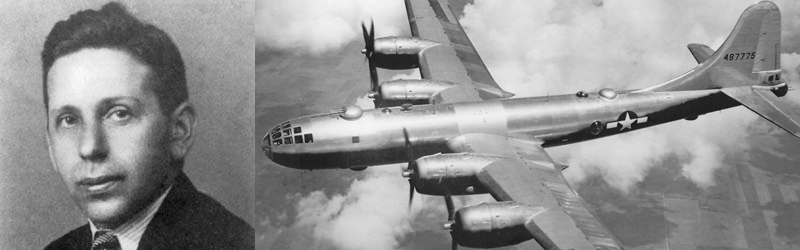
Most people solve problems by staring harder at what is directly in front of them. Abraham Wald did something far more useful: he looked for what was missing. That single habit of mind helped change the way people think about data, decisions, business strategy, risk, failure, and even success itself. It is also the reason his famous World War II aircraft story still travels through classrooms, boardrooms, data science teams, and coffee-fueled strategy meetings where someone eventually says, “Wait, are we only looking at the survivors?”
The lesson sounds simple, almost suspiciously simple: seek what is not there. But it is not a cute motivational poster. It is a disciplined way to think. It asks us to notice missing evidence, silent failures, unseen customers, rejected applicants, abandoned projects, lost opportunities, and all the people or things that never made it into the spreadsheet. In other words, Wald teaches us that the empty spaces in the data may be louder than the visible numbers.
This article explores Abraham Wald’s problem solving lesson, the meaning of survivorship bias, and how the “missing bullet holes” principle applies to modern life. Whether you are building a company, writing content, studying history, investing money, improving a product, or just trying to stop repeating the same mistakes with different fonts, Wald’s insight can make you a sharper thinker.
Who Was Abraham Wald?
Abraham Wald was a Hungarian-born mathematician and statistician whose work shaped modern statistics, decision theory, and sequential analysis. Born in 1902 in what was then Kolozsvár, Hungary, Wald later studied mathematics in Europe before moving to the United States in 1938. His move came during a dark period in European history, as Nazi power made life increasingly dangerous for Jewish scholars and families.
In the United States, Wald became associated with Columbia University and contributed to the Statistical Research Group during World War II. This group brought together some of the sharpest mathematical minds of the era to solve military problems with statistics. While generals had planes, ships, and maps, Wald and his colleagues had probability, logic, and the kind of pencils that could quietly change history.
More Than the Bomber Story
Wald is best remembered by many people for his aircraft survivability work, but his career was much broader. He made major contributions to statistical decision theory and sequential analysis, a method that studies data as it arrives rather than waiting until a fixed sample is complete. That may sound technical, but the idea is practical: sometimes you should make a decision once the evidence is strong enough, not after you have collected a mountain of data just to look impressive in a meeting.
His broader legacy is precision. Wald showed that good problem solving is not about being louder, faster, or more confident than everyone else. It is about framing the problem correctly. And as his most famous lesson shows, framing the problem correctly often means asking, “What evidence is missing because the process itself filtered it out?”
The Famous WWII Bomber Problem
During World War II, Allied aircraft returned from combat missions covered with bullet holes. Military analysts examined the damage patterns and noticed that certain parts of the planes had been hit more often than others. The obvious conclusion seemed to be that those heavily damaged areas needed more armor.
Obvious, yes. Correct, no.
Adding armor to aircraft was not as simple as wrapping the whole thing in steel and hoping for the best. Armor added weight. Extra weight made planes slower, reduced range, increased fuel consumption, and could make missions more dangerous. So the question was not “Where can we add armor?” but “Where will armor save the most lives while adding the least burden?”
The returning planes appeared to offer the answer. Wings, fuselage sections, and other visible areas showed damage. Engines and certain critical areas showed fewer bullet holes. A conventional reading would say: reinforce the places with the most damage.
Wald saw the trap.
The Planes That Came Back Were Not the Whole Story
The aircraft being studied had one very important thing in common: they had returned. They were survivors. That meant the bullet holes on those planes showed where aircraft could be hit and still make it home. The missing bullet holes mattered more. If few returning planes had damage in the engine area, perhaps it was not because the enemy politely avoided the engine like a well-mannered dinner guest. More likely, planes hit in those critical areas did not return at all.
Wald’s recommendation was counterintuitive: reinforce the areas with little or no visible damage on the surviving aircraft. In plain English, do not armor where the surviving planes were hit. Armor where the missing planes were probably hit.
That is the heart of the Abraham Wald problem solving lesson. The data you see may be biased by survival. The truth may be hiding in the cases you never got to examine.
What Is Survivorship Bias?
Survivorship bias is a selection error that happens when we focus only on the people, companies, products, investments, or events that made it through a process and ignore the ones that disappeared along the way. It is the reason success stories can be inspiring and misleading at the same time.
Think of a shelf full of bestselling business books. Many describe founders who dropped out of college, worked impossible hours, ignored critics, and eventually became billionaires. Inspiring? Sure. Complete evidence? Not even close. For every famous founder who succeeded after dropping out, many others dropped out, worked impossible hours, ignored critics, and ended up with debt, stress, and a domain name they forgot to renew.
Survivorship bias turns survivors into representatives of the whole group. It confuses “this worked for someone who made it” with “this is why they made it.” That is like studying lottery winners to discover the morning routine that “caused” their jackpot. Spoiler: it was not the oatmeal.
Why the Bias Feels So Convincing
Survivorship bias is powerful because visible success is emotionally attractive. Winners give interviews. Failed projects vanish. Profitable funds advertise their performance. Closed funds disappear from brochures. Popular apps show up in case studies. Forgotten apps live in the digital attic with broken login buttons and one lonely user named Dave.
Our brains love clean stories. We prefer a neat path from action to result: work hard, believe in yourself, move fast, break things, become rich. But reality is messier. Timing, luck, market conditions, hidden support, distribution advantages, and plain randomness often play major roles. Wald’s lesson encourages us to resist the tidy story and ask better questions.
Why “Seek What’s Not There” Is a Better Problem Solving Strategy
Seeking what is not there does not mean inventing evidence. It means identifying missing data, understanding why it is missing, and asking how its absence changes the conclusion. This is a major difference. A careless thinker says, “I do not see evidence, so it does not exist.” A Wald-style thinker says, “Why might I be unable to see this evidence?”
Visible Data Can Be a Filtered Sample
Every dataset has a doorway. Something decides what gets in and what stays out. Customers who complain are visible; customers who quietly leave are less visible. Employees who remain at a company fill engagement surveys; employees who quit may hold the most useful feedback. Published studies are visible; unpublished null results may change the interpretation. Winning ads get discussed; failed ad tests are buried under “Q3 learnings” and a suspiciously cheerful slide deck.
The key question is not just “What does the data show?” It is also “What had to happen for this data to be available?” The answer often reveals the bias.
Absence Can Be Evidence
In the bomber example, the absence of engine damage on returning aircraft was not meaningless. It was a clue. In business, a lack of complaints from churned customers may not mean satisfaction; it may mean they left without bothering to explain. In healthcare research, missing follow-up responses may not be random; people with worse outcomes may be less likely to continue participating. In investing, a list of successful funds may exclude funds that closed or merged after poor performance.
Absence is not always proof, but it is often a signal. Smart problem solvers treat silence as something to investigate.
Modern Examples of Abraham Wald’s Lesson
Business Strategy: Study the Customers Who Left
Companies love customer testimonials. They look great on landing pages and make everyone feel warm and scalable. But testimonials usually come from survivors: customers who bought, stayed, and liked the product enough to say nice things in public. That is useful, but it is incomplete.
A Wald-style company also studies the missing customers. Who visited the pricing page and never signed up? Who tried the free trial and vanished after day two? Who loved the demo but failed to get budget approval? Who used the product for six months, then canceled without leaving feedback?
The visible customers tell you what works. The missing customers tell you what blocks growth.
Marketing and SEO: Do Not Only Analyze Winning Pages
SEO teams often study top-ranking pages to understand what Google and Bing reward. That is sensible, but it can become misleading. If you only examine pages that already rank, you may miss all the pages with similar formats, keywords, or content lengths that never reached page one.
For example, suppose the top articles in a niche all have long introductions, FAQ sections, and expert quotes. You might conclude that those features caused the rankings. But what about the hundreds of articles with long introductions, FAQ sections, and expert quotes that still failed? The difference might be topical authority, backlinks, search intent alignment, page speed, internal linking, freshness, or simply better usefulness.
Wald’s lesson for SEO is clear: study what failed to rank, not just what succeeded. The graveyard of invisible content is full of strategy lessons.
Investing: Beware of Funds That “Survived”
In investing, survivorship bias can make performance look better than it really was. If a database includes only funds that still exist today, it may leave out funds that closed, merged, or disappeared after poor returns. That makes the surviving group look stronger than the original full group.
This is the financial version of inspecting only the planes that landed safely. The missing funds matter. Without them, investors may overestimate the performance of a strategy, manager, or market category. A smart investor asks, “What failed and disappeared before this performance chart was created?”
Careers: Do Not Copy Only the Famous Outliers
Career advice is packed with survivorship bias. Famous people tell us how they succeeded, and their stories often contain useful ideas. But copying a famous person’s path without studying the unseen failures can be dangerous.
For every entrepreneur who became wealthy by quitting a job and going all-in, others made the same move and lost savings. For every creator who grew an audience by posting daily, others posted daily into the void until the void considered filing a noise complaint. For every executive who took a bold risk, others took bold risks and quietly updated their LinkedIn profiles.
The lesson is not “avoid risk.” The lesson is “understand the full risk distribution.” Study the survivors, but also study the people who made similar choices and did not get the same outcome.
How to Apply Wald’s Thinking in Everyday Decisions
Ask: Who Is Missing From the Data?
Before accepting a conclusion, ask who or what is absent. Are former customers missing? Failed startups? Rejected candidates? Patients who dropped out of a study? Employees who left before the survey? Products that never launched? People who tried the advice and did not benefit?
This question immediately improves your thinking because it forces you to examine the sample. A beautiful chart based on a biased sample is still a biased chart. It just looks better in a presentation.
Ask: Why Is This Evidence Visible?
Visibility is not neutral. Some evidence is visible because it is common. Some is visible because it is dramatic. Some is visible because it survived a filter. Some is visible because a marketing team placed it directly in front of your face with a button that says “Download the ultimate guide.”
When you understand why evidence is visible, you can better judge how much trust it deserves. A list of successful companies may be useful, but it is not enough to explain success. A pile of complaints may reveal pain points, but it may overrepresent angry users. A viral post may teach something about attention, but it may not represent durable value.
Ask: What Would Failure Look Like Here?
Many people plan by imagining success. Wald-style thinkers also imagine failure. If this product fails, what data would disappear? If this policy hurts people, who would be least likely to complain? If this content strategy fails, which metrics would hide the problem? If this investment disappoints, how would the bad evidence be removed from future reports?
This question helps expose blind spots before they become expensive surprises.
The Deeper Lesson: Intelligence Is Often Subtraction
Abraham Wald’s insight was not just mathematical. It was philosophical. He showed that intelligence often comes from subtracting the obvious and studying what remains. The visible bullet holes were not useless; they were just incomplete. The missing bullet holes completed the picture.
In many fields, the best thinkers are not the ones with the most information. They are the ones who understand the shape of missing information. They know that reality has shadows. They know that data is collected through systems, and systems filter what can be seen. They know that silence, absence, and disappearance can be evidence if you ask the right questions.
That is why Wald’s lesson remains so powerful. It is not trapped in World War II history. It applies anywhere decisions are made from incomplete evidence. Which is to say: everywhere.
Common Mistakes When Applying the Wald Lesson
Mistake 1: Treating Missing Data as a Mystery Forever
Some people hear “look for what’s not there” and turn every missing detail into a conspiracy board with red string. That is not the point. Missing data should lead to better investigation, not dramatic guessing. The goal is to form reasonable hypotheses, test them, and improve the sample when possible.
Mistake 2: Ignoring Visible Evidence Completely
Wald did not say visible evidence was worthless. The returning planes mattered. Their damage patterns revealed what aircraft could survive. The problem was interpreting the visible evidence without considering the invisible cases. Good analysis uses both: what is present and what is absent.
Mistake 3: Confusing Cleverness With Correctness
Counterintuitive ideas are exciting, but not every opposite conclusion is wise. Sometimes the obvious answer is actually correct. Wald’s reasoning worked because it was grounded in the selection process. He understood why the sample was biased. The goal is not to disagree for sport; the goal is to understand how the evidence was created.
Experience-Based Reflections: Learning to See the Missing Pieces
One of the most practical experiences related to Abraham Wald’s lesson comes from reviewing projects after they succeed or fail. In many organizations, post-project analysis focuses on what happened inside the visible project: the campaign that launched, the product that shipped, the article that ranked, or the client that signed. Teams examine the surviving outcome and then build a story around it. That story may be useful, but it often leaves out the quiet evidence that never made the meeting agenda.
For example, imagine a content team celebrating a blog post that brought in strong organic traffic. The easy conclusion is that the headline style, word count, and keyword placement caused the success. Everyone nods. Someone says “replicable framework.” A spreadsheet is born. But a Wald-inspired review asks a better question: what about the dozens of similar posts that did not rank? Did they target the wrong search intent? Were they published on weaker domains? Did they lack internal links? Did they fail because the topic was too competitive, too stale, or too broad?
The same lesson appears in product development. A company may interview only active users and discover that people love certain features. That is good news, but it is not the whole truth. Former users may have left because onboarding was confusing, pricing was unclear, or one missing integration ruined the experience. If the company listens only to happy survivors, it may keep polishing the wrong part of the plane.
In personal decision-making, Wald’s lesson is equally useful. People often compare themselves to visible success stories and feel behind. They see the entrepreneur who built a company in two years, the creator with a million followers, the investor who bought early, or the student who won a scholarship. But they do not see the failed attempts, invisible support systems, lucky timing, or people who followed the same path and did not get the same result. Looking for what is not there can reduce unnecessary self-blame. It reminds us that outcomes are shaped by more than effort alone.
A helpful habit is to create a “missing evidence checklist” before making important decisions. Ask: who is not represented here? What failed and disappeared? What would I know if I could interview the people who quit, lost, rejected the offer, canceled the service, or never returned? What evidence would change my mind? These questions are simple, but they can prevent expensive mistakes.
The most valuable experience is learning that good judgment often feels slower at first. Wald-style thinking interrupts the rush to conclude. It makes you pause before copying success, trusting averages, or admiring a beautiful chart. That pause is not hesitation; it is protection. It is the mental equivalent of checking the engine before admiring the paint job.
Ultimately, Abraham Wald’s problem solving lesson is a discipline of humility. It says the world is bigger than your sample. It says the truth may be hiding among the people, planes, projects, and possibilities that did not return. When you seek what is not there, you do not become negative. You become more accurate. And in problem solving, accuracy is the armor that actually saves the mission.
Conclusion
Abraham Wald’s problem solving lesson is timeless because it challenges one of our most comfortable habits: trusting what we can see. The returning planes were visible. The bullet holes were visible. The damage maps were visible. But the answer lived in the missing evidence. Wald understood that the planes that did not return were part of the dataset too, even if they could not be inspected in the hangar.
That is the real power of seeking what is not there. It helps us avoid survivorship bias, question success stories, improve business decisions, read data more carefully, and think with greater humility. The next time a conclusion seems obvious, pause and ask the Wald question: what is missing from this picture? The answer may be the difference between reinforcing the wrong part of the plane and bringing more people safely home.