Some video games arrive looking so confident that it is hard to imagine them ever being anything else. Halo feels permanently attached to first-person combat. Team Fortress 2 seems genetically engineered to contain cartoon mercenaries, sandwich jokes, and suspiciously well-dressed spies. Fortnite appears to have been born doing victory dances on a shrinking island.
That confidence is often an illusion. Major games can spend years changing genres, protagonists, art styles, business models, and entire fictional universes. A prototype may begin as a strategy game, turn into a third-person action title, and finally become the shooter that sells millions of consoles. Another project may be canceled so thoroughly that its surviving ideas escape the wreckage and form a new franchise.
The following development stories show that game creation is less like following a perfect blueprint and more like repairing an airplane while somebody is testing the flamethrower. These ten famous games were once headed toward very different destinations.
1. Halo: Combat Evolved Began as a Strategy Game
Before Master Chief aimed a rifle, someone else was supposed to command the battlefield
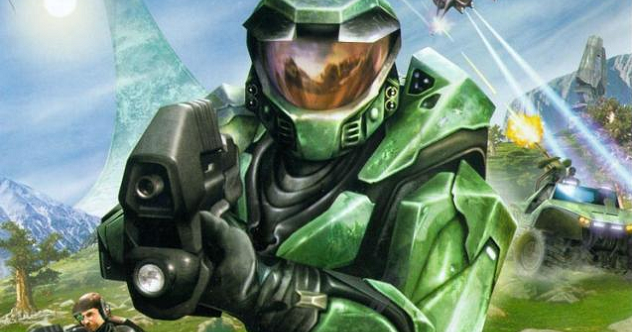
Halo: Combat Evolved helped define console first-person shooters, but Bungie did not begin with that format. Early versions were closer to a real-time strategy game in which players would direct futuristic units across large battlefields. The project later evolved into a third-person action game, putting the camera behind a soldier rather than above an army.
Only after more experimentation did Bungie settle on the first-person perspective that made the final game so immediate. That decision shaped everything: the two-weapon rhythm, the importance of grenades, the scale of vehicles, and the feeling that the player was standing inside a science-fiction war rather than supervising it from a comfortable cloud.
Master Chief was not simply inserted into a finished plan. The plan mutated around him until the camera, combat, and character finally clicked.
Research basis:
2. Assassin’s Creed Was Once a Prince of Persia Project
The Prince was nearly protected by the character who replaced him
After Prince of Persia: The Sands of Time, Ubisoft Montreal explored a next-generation follow-up. One concept placed the player in control of an Assassin serving or protecting a non-playable prince. The working idea became known as Prince of Persia: Assassins, combining acrobatic movement with research into the historical Hashashin.
There was one awkward problem: a Prince of Persia game in which the Prince was not the star was a difficult pitch. Rather than force the idea back into its royal box, the team removed the Prince, expanded the Assassin into the protagonist, and built a new intellectual property.
The result gained crowded cities, social stealth, the Animus, and a conspiracy large enough to employ every history teacher on Earth. What began as a franchise extension became the franchise that eventually overshadowed it.
Research basis:
3. Overwatch Rose from the Remains of a Massive MMO
Project Titan was far larger, stranger, and harder to finish
Blizzard’s Overwatch is built around compact matches and sharply defined heroes. Its ancestor, Project Titan, was aiming at something much larger: a futuristic MMO in which players could reportedly maintain ordinary professions while also taking part in action-oriented missions and combat.
Titan struggled to find a unified core and was eventually canceled. A smaller group then examined what could be salvaged. Classes, visual concepts, abilities, technology, and the broader spirit of a hopeful future helped feed a new pitch.
Instead of asking players to live an entire second life, Overwatch concentrated its best ideas into colorful heroes and readable team battles. Titan wanted to be a digital world. Its descendant became a focused multiplayer sport with a talking gorilla. Sometimes ruthless editing is a superpower.
Research basis:
4. Fortnite Was Originally About Building Forts Against Monsters
Battle royale was the side mode that swallowed the planet
Long before celebrity concerts, licensed superheroes, and banana-related tactical concerns, Fortnite was introduced as a cooperative survival game. Players would explore, scavenge materials, construct defenses, craft equipment, and protect objectives from waves of monsters.
That original vision survives as Fortnite: Save the World, a player-versus-environment campaign centered on building and defending. The battle royale mode arrived later and transformed the brand. The building system remained, but its purpose changed from holding off monster hordes to outlasting human opponents on a shrinking map.
A game whose title literally emphasized forts became famous among players who sometimes won by hiding in bushes and refusing to build anything. The shift also turned Fortnite into a flexible social platform capable of absorbing new modes, events, brands, and approximately half of popular culture.
Research basis:
5. Resident Evil 4 Passed Through Several Alternate Realities
One abandoned version became Devil May Cry
The finished Resident Evil 4 is famous for its rural European setting, aggressive enemies, and over-the-shoulder camera. Reaching that version required Capcom to discard multiple ambitious directions.
An early action-heavy prototype led by Hideki Kamiya drifted so far from survival horror that it was transformed into a separate game: Devil May Cry. Another version, commonly associated with the “Hook Man” demonstration, leaned into hallucinations and supernatural threats. Leon explored eerie interiors while the environment appeared to distort around him, and a ghostly enemy armed with a hook pursued him.
Capcom eventually abandoned that approach too. Shinji Mikami’s final direction emphasized physical enemies, fast pressure, and precise shooting. The development process generated a new action franchise, discarded a paranormal horror game, and then produced one of the most influential third-person shooters ever made. That is an unusually productive identity crisis.
Research basis:
6. Conker’s Bad Fur Day Was Supposed to Be Adorable
The cheerful squirrel escaped a family platformer and found a bar
Conker was originally positioned as the star of a bright, family-friendly Nintendo 64 platformer called Twelve Tales: Conker 64. Early footage showed a cute squirrel exploring colorful worlds in a game that appeared comfortably at home beside other mascot adventures of the era.
The problem was that Rare already had successful family platformers, and the market was crowded with cheerful animals collecting things. The team radically reworked the project into Conker’s Bad Fur Day, an adult comedy packed with profanity, movie parodies, violence, alcohol, and jokes that probably caused several Nintendo executives to stare silently through office windows.
Much of the underlying platform-game technology remained, but the tone became the selling point. Conker went from potential lunchbox mascot to exhausted antihero, proving that a genre can remain recognizable while its intended audience changes completely.
Research basis:
7. Team Fortress 2 Nearly Became a Serious Military Shooter
The cartoon chaos replaced realism, vehicles, and battlefield command
The released Team Fortress 2 uses exaggerated silhouettes, theatrical voices, and animation-inspired environments. Earlier plans were far more realistic. Announced as Team Fortress 2: Brotherhood of Arms, the project was presented as a modern military game with ambitious features such as vehicles, command systems, and large-scale coordination.
Years of development changed the technology and the market around it. Valve eventually rejected the realistic presentation, partly because it clashed with the wonderfully artificial logic of class-based play.
A giant man carrying a minigun, a doctor firing healing beams, and a spy disguising himself as the enemy become easier to understand when the world announces, loudly, that realism has left the building. The final visual style made each class instantly readable from a distance and gave the game a personality that military authenticity could never have supplied.
Research basis:
8. Doom (2016) Escaped from “Call of Doom”
The canceled version was slower, more scripted, and less interested in pure demon demolition
Before the ferocious 2016 reboot, id Software worked on a different Doom 4. Publicly discussed footage and reporting described a more cinematic game set amid an invasion of Earth, with scripted sequences, human resistance fighters, and a tone that invited comparisons to major military shooters of the period.
Bethesda and id concluded that the project did not feel sufficiently like Doom. The version was scrapped, earning the unofficial nickname “Call of Doom,” and development restarted around speed, aggressive movement, improvisational arena combat, and gloriously unreasonable amounts of demon damage.
The released game barely pauses to admire its own plot. It hands the player a shotgun and treats forward motion as a moral philosophy. By rejecting contemporary shooter trends, id rediscovered the older identity of the series and made it feel modern precisely because it stopped chasing modern fashion.
Research basis:
9. Borderlands Once Looked Like a Conventional Realistic Shooter
Pandora’s comic-book identity arrived after years of work
The original Borderlands was initially developed with a more realistic science-fiction art direction. Its dusty environments, armor, weapons, and muted palette placed it near other serious-looking shooters and post-apocalyptic games of the late 2000s.
The core “shooter meets loot-driven role-playing game” idea was distinctive, but the visuals did not communicate its strange humor and exaggerated systems. Gearbox took a major risk by changing the art direction late in development. The team rebuilt assets around hand-drawn textures, heavy outlines, graphic shapes, and a comic-inspired presentation.
That choice did more than make screenshots recognizable. It allowed absurd guns, loud characters, and elastic violence to occupy the same universe without looking like mistakes. Without the redesign, Borderlands might have been remembered as another brown shooter from an extremely brown decade.
Research basis:
10. Red Dead Revolver Started with a Very Different Kind of S.W.A.T.
Capcom’s arcade-flavored experiment became the seed of Rockstar’s western empire
Before Red Dead Redemption turned slow horseback rides and emotional cowboy misery into a blockbuster formula, there was Red Dead Revolver. Its origins stretch back to a Capcom-funded project at Angel Studios.
The early concept reportedly used the title or acronym S.W.A.T., which was later playfully reinterpreted as “Spaghetti Western Action Team” when the project adopted a western theme. The game drew from arcade-style action and Capcom’s history, including the influence of Gun.Smoke.
Development became troubled, Capcom canceled the project, and Rockstar later acquired the rights after purchasing Angel Studios. Rockstar completed Red Dead Revolver, then used the broader western opportunity as a foundation for the more expansive Red Dead Redemption. The series famous for patient open worlds and detailed horse anatomy began as a far more arcade-minded production with a joke acronym.
Research basis:
Why Great Games Often Need to Become Different Games
These stories reveal a useful truth about creative work: persistence does not always mean protecting the first idea. Sometimes it means identifying the part worth saving and throwing everything else into the development volcano.
Halo kept its large science-fiction battles but changed the player’s relationship to them. Assassin’s Creed kept acrobatic movement but abandoned the franchise that inspired it. Overwatch rescued character ideas from an MMO that could not hold itself together.
The best pivots were not random. Each moved its project toward a clearer identity. Team Fortress 2 became more readable. Borderlands became more visually honest about its personality. Doom became faster and more unmistakably Doom. Even Conker, while behaving like a squirrel who should not be allowed near an open tab at a pub, became memorable by refusing to be another safe mascot.
Alternate versions are fascinating because they expose how fragile famous games once were. A different executive decision, a less stubborn director, or one successful prototype could have produced an industry filled with entirely different icons.
The Player Experience: Revisiting Games After Learning What They Almost Became
Learning about abandoned versions changes the experience of playing the finished games. A familiar mechanic begins to look like a fossil from an earlier design. Driving a Warthog in Halo feels different when you know the project once viewed soldiers and vehicles as strategy units. The battlefield still contains traces of that broader perspective: open spaces, groups of enemies, friendly squads, and machines that encourage players to think about positioning rather than simply walking down a corridor.
Fortnite offers an even more visible form of creative archaeology. Building was not invented merely to help battle royale players construct a five-story apartment complex after hearing one distant gunshot. It came from a game about gathering resources and creating defenses against monsters. The modern mode repurposed an existing system, and players transformed it again by using walls, ramps, and edits as high-speed combat tools. A feature can survive a genre change while gaining an entirely new language.
These histories also make canceled content feel less like failure. The early Resident Evil 4 prototype did not disappear without consequence; part of its energy became Devil May Cry. Project Titan did not ship, but its remains helped Blizzard form Overwatch. For players, that knowledge creates a more generous way to think about unfinished projects. Creative work can fail in one form and remain valuable as training, technology, art, mechanics, or a warning written in very expensive ink.
There is also pleasure in imagining the alternate timeline. A realistic Team Fortress 2 might have competed directly with tactical military games and then faded into a crowded field. A family-friendly Conker might have enjoyed respectable sales, appeared on cereal boxes, and never become a cult favorite. A cinematic Doom 4 might have contained dramatic radio chatter while the player waited politely behind a waist-high wall.
None of these possibilities is automatically terrible, but each lacks the unmistakable identity of the version that survived. The games became successful not simply because developers added more content, but because they became willing to remove ideas that sent contradictory messages.
For creators, the lesson is not “change everything whenever development becomes difficult.” Constant reinvention can destroy schedules, budgets, and morale. The more practical lesson is to examine whether the game’s systems, presentation, and emotional promise are telling the same story.
Borderlands had wild loot and exaggerated action trapped inside visuals that suggested grim realism. Team Fortress 2 had absurd class behavior wearing a serious uniform. Their redesigns aligned appearance with play. The visual identity was not decoration added at the end; it told players how to interpret everything happening on the screen.
For players, these stories make finished games feel less inevitable and therefore more impressive. A classic is not always the product of one flawless idea. It may be the winner of an internal tournament among dozens of weaker versions.
Every polished opening sequence can hide years of prototypes, arguments, deleted assets, and meetings where someone bravely said, “What if the squirrel swore?” The final game is not merely what the studio created. It is also what the studio had the courage to stop creating.
Conclusion
The development histories of these ten big video games prove that radical change can be a feature rather than a disaster. Strategy games became shooters, sequels became new franchises, realistic worlds became cartoons, and failed MMOs became hero-driven multiplayer hits. The discarded versions remain compelling, but the most important story is why developers let them go.
Great games are often discovered through revision. Their teams remove ideas that are impressive but unfocused, preserve systems that still have energy, and rebuild around a stronger promise.
The next time a game appears perfectly formed, remember that somewhere in its history there may be a canceled strategy interface, an unemployed prince, or a family-friendly squirrel who made several alarming career choices.