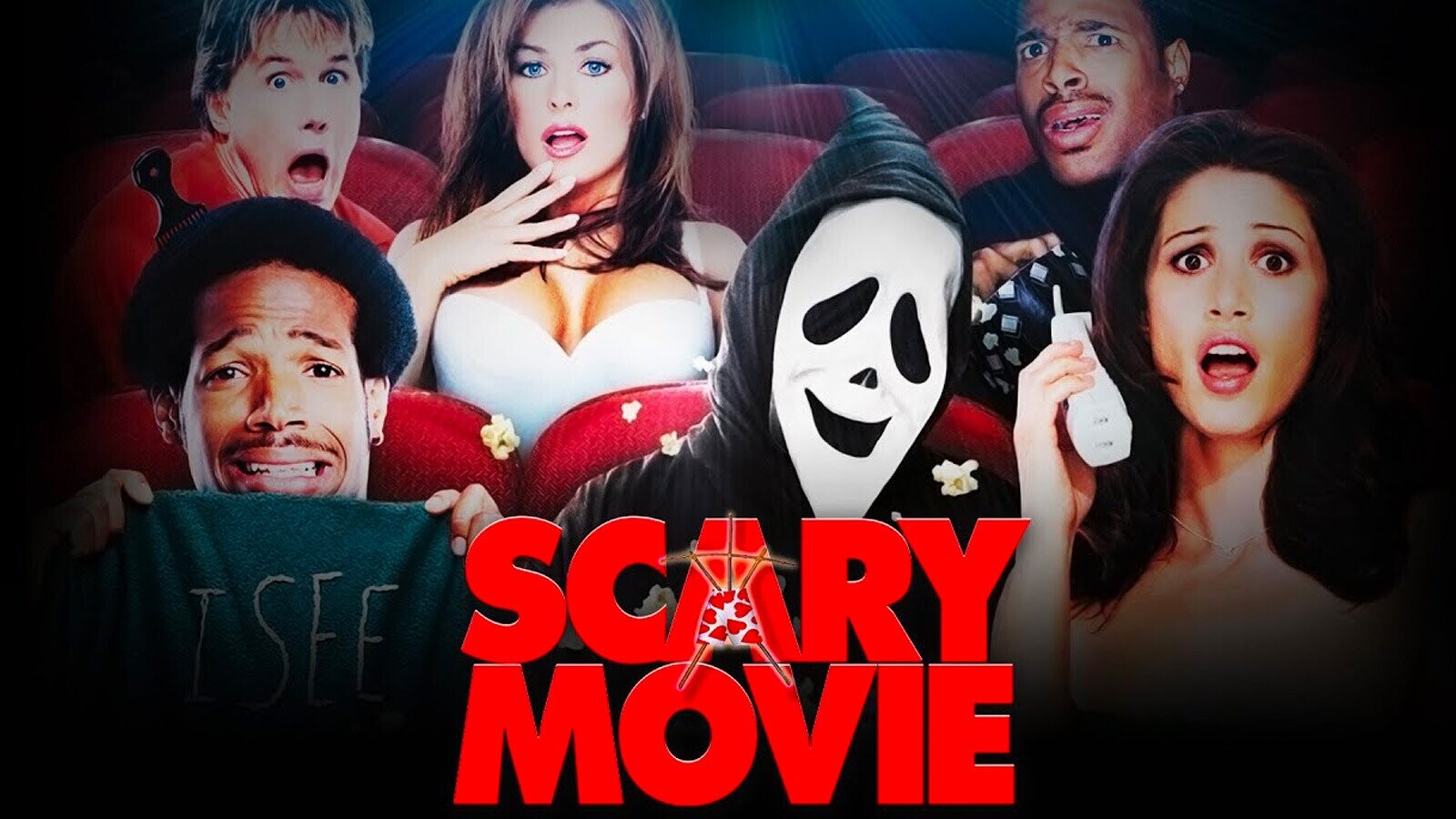
There are movie franchises that whisper their legacy politely. Then there is Scary Movie, a franchise that kicks down the door in a Ghostface mask, shouts “Wazzup!” into the phone, trips over a coffee table, and somehow still makes box-office history.
Released in 2000, the first Scary Movie arrived at exactly the right cultural moment. Teen slashers were hot again, Scream had made horror self-aware, I Know What You Did Last Summer had turned guilty teenagers into fish-hook bait, and audiences were ready for a parody that treated horror clichés like a piñata. The Wayans family delivered a comedy that was rude, chaotic, silly, sharp, and strangely durable.
More than two decades later, the Scary Movie franchise remains one of the most recognizable horror parody series in American pop culture. It spoofed slashers, haunted houses, alien invasions, cursed videotapes, creepy kids, found footage, and celebrity culture. Some jokes aged like fine wine; others aged like milk left in a haunted basement. But the franchise’s impact is undeniable.
Here are 15 trivia tidbits about the Scary Movie franchise, from its sneaky connection to Scream to its box-office surprises, famous cameos, returning stars, and that unforgettable “Wazzup!” phone call.
15 Trivia Tidbits About the Scary Movie Franchise
1. Scary Movie Was Originally the Title of Scream
One of the funniest bits of horror history is that Scream, the very film most heavily spoofed by Scary Movie, was originally developed under the title Scary Movie. Kevin Williamson’s screenplay was later renamed Scream, but the abandoned title eventually found a second life as the name of the spoof franchise. In other words, Scary Movie did not just parody Scream; it borrowed its old name, put on a fake mustache, and ran around Hollywood yelling at people.
2. The First Film Was a Wayans Family Power Move
The original Scary Movie was directed by Keenen Ivory Wayans and written by a team that included Shawn Wayans and Marlon Wayans, who also starred in the movie. That family-driven creative energy helped define the first film’s personality: fast, loud, physical, fearless, and very willing to go for the joke that other comedies might politely avoid.
3. It Was a Huge Box-Office Hit
The 2000 film was made on a relatively modest budget compared with many studio comedies and became a massive commercial success. It grossed more than $270 million worldwide, proving that horror parody was not just a late-night rental category. Audiences showed up in theaters because the movie felt like a party where every popular horror film had been invited and then roasted mercilessly.
4. The Main Targets Were Scream and I Know What You Did Last Summer
The plot of the first Scary Movie mashes together two major 1990s horror hits: the masked-killer structure of Scream and the guilt-ridden hit-and-run secret from I Know What You Did Last Summer. The result is a parody that understands the grammar of teen slashers: mysterious phone calls, suspicious boyfriends, dramatic secrets, clueless cops, and teenagers who make decisions so bad you want to throw a flashlight at the screen.
5. “Wazzup!” Was a Parody of a Real Advertising Phenomenon
The famous “Wazzup!” scene did not appear from nowhere. It spoofed Budweiser’s wildly popular “Whassup?” advertising campaign, which became a pop-culture monster around 1999 and 2000. Scary Movie took the casual phone-call greeting and pushed it into horror-comedy absurdity by letting Ghostface join the chorus. It remains one of the franchise’s most quoted scenes because it captures the movie’s whole mission: take something everyone recognizes and make it aggressively ridiculous.
6. Anna Faris Got a Career-Defining Break as Cindy Campbell
Anna Faris became the emotional center of the franchise as Cindy Campbell, a brilliantly clueless final-girl parody. Cindy works because Faris does not play her as a wink to the audience every second. She commits to the panic, confusion, sincerity, and nonsense. That commitment turns Cindy into more than a Sidney Prescott spoof. She becomes her own comedy heroine: sweet, durable, and somehow always surprised that danger has returned, even after several movies of danger repeatedly returning.
7. Regina Hall’s Brenda Became a Fan Favorite
Regina Hall’s Brenda Meeks is one of the franchise’s secret weapons. Brenda is loud, dramatic, loyal, impatient, and often the only person reacting with the correct level of outrage. Her movie-theater scene in the first film became a classic because it flips the “annoying audience member” joke into something bigger and more chaotic. Brenda does not merely watch horror movies; she argues with them like they owe her money.
8. Scary Movie 2 Brought Back Characters Who Had No Business Being Alive
One of the funniest franchise decisions came in Scary Movie 2, where characters returned even though the first movie had treated survival as more of a suggestion than a rule. Instead of overexplaining it, the sequel mostly shrugs and moves forward. That attitude fits the series perfectly. Continuity matters, but only until it gets in the way of a joke.
9. Marlon Brando Was Almost in Scary Movie 2
In one of the strangest behind-the-scenes stories, Marlon Brando was originally involved with the opening exorcism sequence in Scary Movie 2. He ultimately left the production because of health issues, and James Woods took over the priest role. It is one of those Hollywood trivia nuggets that sounds fake until you look it up twice, blink slowly, and whisper, “Show business is a haunted carnival.”
10. The Franchise Shifted After the Wayans Brothers Left
The first two films carry the Wayans stamp heavily. Beginning with Scary Movie 3, the franchise moved in a different direction under director David Zucker, famous for classic spoof comedy such as Airplane! and The Naked Gun. The tone became broader, more PG-13, and more focused on rapid-fire pop-culture gags. Some fans prefer the rawer early films; others enjoy the cleaner, more old-school Zucker-style absurdity.
11. Scary Movie 3 Spoofed the Early-2000s Horror Boom
Scary Movie 3 arrived in 2003 and shifted the franchise’s focus toward The Ring, Signs, and other early-2000s hits. Cindy became a reporter, crop circles appeared, cursed videotapes caused trouble, and Leslie Nielsen brought presidential-level silliness to the plot. The movie understood that horror had changed since 2000. Ghostface was no longer the only game in town; creepy videotapes and alien paranoia had joined the buffet.
12. The Series Became a Time Capsule of Pop Culture
Watching the Scary Movie franchise today is like opening a comedy scrapbook from the 2000s. You get horror references, celebrity cameos, music-video energy, TV jokes, tabloid culture, and sudden parodies of whatever was famous five minutes earlier. That makes the films uneven but fascinating. They are not just spoof movies; they are snapshots of what American audiences were laughing at, quoting, and gossiping about at the time.
13. The Box Office Peaked Early but Stayed Strong for Years
The first Scary Movie remains the highest-grossing entry in the franchise, but the series continued to perform well for several installments. Scary Movie 3 also became a major success, and Scary Movie 4 kept the brand alive in 2006. By Scary Movie 5 in 2013, the cultural energy had cooled, but the franchise had already secured its place as one of the defining parody series of the 2000s.
14. Scary Movie 5 Was the Only Entry Without Anna Faris and Regina Hall
For many fans, the absence of Cindy and Brenda in Scary Movie 5 was impossible to ignore. Ashley Tisdale and Simon Rex led the film, and the story spoofed newer horror hits like Paranormal Activity and Mama. Still, without the Faris-Hall chemistry, the movie felt like a haunted house after the funniest guests had gone home and taken the snacks.
15. The Wayans Brothers, Anna Faris, and Regina Hall Are Returning
The franchise is set for a major revival, with the Wayans brothers returning creatively and Anna Faris and Regina Hall coming back as Cindy and Brenda. That matters because the modern horror landscape is practically begging to be spoofed. Legacy sequels, elevated horror, killer dolls, prestige trauma metaphors, viral marketing, true-crime obsession, and endless reboots have given the franchise a fresh buffet of targets. If the new film captures the early series’ reckless energy while sharpening the satire for today, it could remind audiences why horror parody became such a phenomenon in the first place.
Why the Scary Movie Franchise Still Works
The reason Scary Movie remains memorable is not simply that it makes fun of horror movies. Plenty of parodies do that. What made the franchise explode was timing, attitude, and recognition. The first film hit when audiences knew the rules of slashers well enough to laugh at them. Everyone understood the phone call, the final girl, the masked killer, the suspicious boyfriend, the tragic backstory, and the character who explains the rules while absolutely failing to follow them.
The best Scary Movie jokes work because they are built on familiarity. The audience is already halfway to the punchline before the scene starts. When Ghostface calls, viewers know what should happen. When Cindy runs, viewers know what kind of horror heroine she is parodying. When Brenda talks back to a movie screen, viewers know exactly the kind of theater behavior being exaggerated. The comedy comes from recognition, then escalation.
The franchise also succeeded because it was not precious about horror. It loved the genre enough to know its patterns and rude enough to throw whipped cream at them. That balance is important. A weak parody mocks from a distance. A strong parody understands the thing it mocks. Scary Movie understood jump scares, stalker calls, ominous music, dumb teen decisions, and the strange way horror characters investigate suspicious noises as if they are trying to win a Darwin Award.
Experience Section: Watching Scary Movie Today
Watching Scary Movie today is a very different experience from watching it in 2000, and that is part of the fun. Back then, the references felt immediate. The “Wazzup!” joke was not nostalgia; it was current slang with a commercial jingle still rattling around in everyone’s head. The Scream references were fresh. The teen-slasher boom was still close enough that audiences could spot every borrowed camera angle, every suspicious phone call, and every overly serious hallway conversation.
Today, the experience is more layered. For younger viewers, Scary Movie can feel like a chaotic introduction to late-1990s and early-2000s pop culture. For older viewers, it feels like a time machine powered by dumb jokes and questionable fashion. The humor is not subtle, and that is putting it gently. Some gags land instantly. Some make you laugh because they are absurdly committed. Some make you stare into the middle distance and think, “Wow, comedy rules were different then.”
The best way to enjoy the franchise now is to watch it as both a comedy and a cultural artifact. Notice how quickly it moves. Notice how many references are packed into a single scene. Notice how the performers, especially Anna Faris and Regina Hall, give the madness a human center. Faris makes Cindy’s confusion oddly charming, while Hall gives Brenda a volcanic comic rhythm. They are not just reacting to jokes; they are driving them.
It is also interesting to watch the franchise alongside the horror movies it spoofs. Watch Scream, then watch Scary Movie. Watch The Ring or Signs, then watch Scary Movie 3. Suddenly, the jokes become sharper because you can see exactly what is being twisted. The parody is like a funhouse mirror: the image is distorted, but the original shape is still visible.
For fans who grew up quoting “Wazzup!” with friends, the franchise carries a social memory. These were movies people repeated in cafeterias, dorm rooms, living rooms, and late-night hangouts. You did not need to remember the entire plot. You remembered the lines, the faces, the ridiculous scenes, and the feeling of watching a movie that seemed determined to break every polite rule in the room.
That is why the upcoming revival has potential. Horror has changed dramatically since 2013. Modern audiences have seen prestige grief horror, legacy sequels, viral killer dolls, social thrillers, requels, multiverse marketing, and franchises that refuse to stay dead. In other words, the buffet is fully stocked. A smart new Scary Movie could do for today’s horror cycle what the original did for slashers: identify the patterns, exaggerate them, and make audiences laugh at the tropes they secretly love.
Conclusion
The Scary Movie franchise is messy, memorable, outrageous, and historically important in the world of horror comedy. It turned the post-Scream slasher craze into a parody goldmine, gave Anna Faris and Regina Hall career-defining comic roles, transformed “Wazzup!” into a horror gag, and proved that audiences were hungry for movies that laughed directly at the films they had just paid to be scared by.
Not every entry hits with the same force, but the franchise’s legacy is secure. It captured a moment when horror, advertising, teen culture, and spoof comedy collided in one loud, ridiculous package. And with the Wayans brothers, Faris, and Hall returning, Scary Movie may once again have the perfect opportunity to ask modern horror the only question that matters: “Wazzup?”