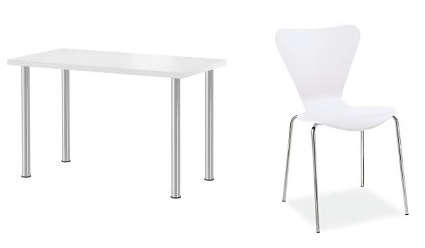
The IKEA VIKA AMON/ VIKA CURRY table combination was never the flashiest piece in the showroom. It did not have hidden drawers, motorized controls, or a name anyone could confidently pronounce on the first attempt. What it offered instead was something remarkably useful: a large, simple work surface supported by four uncomplicated metal legs.
That basic formula made the VIKA AMON/ VIKA CURRY table a favorite for home offices, student rooms, craft spaces, gaming setups, and creative studios. Owners could choose a tabletop, pair it with affordable legs, and build a desk without purchasing a bulky all-in-one workstation. Although IKEA has discontinued the VIKA range, the combination remains common in secondhand listings and continues to attract buyers who appreciate modular furniture.
Editor’s note: VIKA AMON tabletops were sold in several sizes, finishes, and regional configurations. Always measure a secondhand table instead of assuming every version has the same specifications.
What Is the VIKA AMON/ VIKA CURRY Table Combination?
The combination consists of two separate components from IKEA’s former VIKA table system:
- VIKA AMON: A lightweight rectangular tabletop with predrilled mounting locations.
- VIKA CURRY: A cylindrical steel table leg fitted with a circular mounting plate and a plastic floor-protecting foot.
Four VIKA CURRY legs attached to the underside of a VIKA AMON top created a minimalist table or desk. The design reflected the central idea behind the VIKA system: buyers could mix tabletops, legs, trestles, storage units, and other supports to create furniture suited to their space.
A commonly documented large U.S. configuration measured approximately 59 inches wide, 29 1/2 inches deep, and 28 3/8 inches high. Smaller VIKA AMON tops were also available, including versions around 39 inches wide and 24 inches deep. Because product dimensions varied by year and market, those numbers should be treated as a guide rather than a universal specification.
VIKA AMON/ VIKA CURRY Specifications and Construction
| Feature | Typical Details |
|---|---|
| Furniture type | Modular table or fixed-height desk |
| Common large size | About 59 x 29 1/2 x 28 3/8 inches |
| Tabletop construction | Fiberboard surfaces, particleboard reinforcement, plastic edging, and lightweight paper filling |
| Leg construction | Powder-coated cylindrical steel with a plastic foot |
| Leg attachment | Circular mounting plate secured with five screws |
| Height adjustment | No meaningful height adjustment beyond minor leveling at the feet |
| Current status | Discontinued and generally available only secondhand |
A Lightweight Hollow-Core Tabletop
The VIKA AMON was not a solid slab of hardwood. Its construction used fiberboard outer layers, reinforced sections of particleboard, plastic edging, and a paper-based internal filling. This approach produced a broad desktop that was lighter and less expensive than a comparably sized solid-wood surface.
The lightweight structure was excellent for ordinary computer equipment, notebooks, sewing supplies, and home-office accessories. It was less suitable for concentrated pressure from heavy machinery, large clamps, commercial equipment, or monitor arms installed without reinforcement.
The hollow-core design also explains why drilling random holes into a VIKA AMON can end with a screw gripping little more than optimism. The factory mounting areas contain material designed to hold the leg screws. Other portions may have much less internal support.
Simple Steel VIKA CURRY Legs
Each VIKA CURRY leg uses a round plate attached to the tabletop with five screws. The tubular leg then connects to that plate. This two-part arrangement makes assembly easy and allows the legs to be removed when the table needs to be transported.
The original assembly instructions specify that the mounting surface should be at least 25 millimeters, or approximately one inch, thick. A thinner, incompatible tabletop could allow the screws to break through the upper surface. That would certainly personalize the desk, although not in the charming Scandinavian way anyone intended.
Why the VIKA System Became So Popular
Modularity Without a Complicated Design Process
The VIKA collection allowed customers to design a table without becoming amateur furniture engineers. A buyer could select a tabletop finish, choose four legs, and leave the store with a practical desk. More ambitious owners combined VIKA tops with drawer units, adjustable supports, trestles, shelves, or additional tabletops.
This flexibility made the VIKA AMON/ VIKA CURRY combination useful for renters and students. The table could begin as a writing desk, become a computer station, and later serve as a craft table or temporary dining surface.
Generous Desktop Depth
The large VIKA AMON top offered approximately 29 1/2 inches of depth. That was valuable when large computer monitors occupied considerably more space than today’s slim displays. The depth also leaves room for a keyboard, mouse, notebooks, speakers, and a cup of coffee positioned a sensible distance from the electronics.
For creative work, the broad surface accommodates sketchbooks, cutting mats, small audio equipment, or sewing projects. Compared with many compact modern desks, the VIKA AMON feels less like a narrow shelf and more like a genuine workspace.
A Visually Light Appearance
Four slim legs give the table a clean, open look. There are no side panels or cabinets blocking the space underneath, so the combination works well in modest rooms where heavier furniture could feel oppressive.
The trade-off is a lack of built-in storage. Anyone with a talent for producing paperwork may need a separate drawer unit before the desktop becomes an archaeological site of receipts and charging cables.
How to Assemble a VIKA AMON/ VIKA CURRY Table
1. Inspect the Components
Confirm that you have four legs, four circular mounting plates, twenty appropriate screws, and an undamaged tabletop. When buying used, check that the factory holes have not been stripped by repeated disassembly.
2. Protect the Finished Surface
Place a blanket, rug, or flattened cardboard on the floor. Position the tabletop upside down on the protective material. Do not assemble it directly on a rough floor unless random scratches are part of the decorating plan.
3. Align the Mounting Plates
Place each circular plate over the predrilled holes near a corner. The central connection for the leg should point away from the tabletop. Make sure the five smaller holes align correctly before inserting the screws.
4. Tighten the Screws Evenly
Install the five screws in each plate, tightening them gradually in an alternating pattern. A hand screwdriver provides more control than an aggressive power drill. Overtightening may strip the internal material and weaken the connection.
5. Attach the Legs
Screw each tubular leg into its mounting plate until it is secure. Avoid using the leg as an oversized wrench after it has reached the end of its thread.
6. Turn the Table Upright
Ask another person to help flip the larger table. Lift and rotate it instead of dragging weight across the legs. Once upright, check for wobble and adjust the feet if your version includes minor leveling capability.
How Well Does the Table Perform?
For Home-Office Work
The VIKA AMON/ VIKA CURRY table works particularly well for a laptop, a conventional monitor, a keyboard, and everyday office supplies. Its open underside provides generous knee clearance, while the large top makes it easy to separate computer work from writing or paperwork.
The fixed height may not suit every person perfectly. Most versions sit at approximately standard desk height, but an adjustable chair and footrest may be needed to create a comfortable posture.
For Gaming and Multiple Monitors
The large tabletop can accommodate a gaming setup or two monitors, provided the weight is distributed sensibly. Place heavy equipment closer to supported areas rather than concentrating everything in the center.
Owners planning an especially heavy arrangement should consider adding a fifth leg near the rear center or using a separate support beneath the long span. Historical user reports occasionally mention gradual bowing when wide tabletops carried heavy equipment for extended periods.
Do not assume that a modern IKEA tabletop’s published load rating applies to an older VIKA AMON. Materials, dimensions, age, and internal reinforcement may differ.
For Crafts and Hobbies
The broad surface is useful for drawing, model building, sewing, gift wrapping, and other light craft activities. However, the table should not be treated as a heavy-duty workshop bench. Avoid hammering directly on the top, mounting a large vise, or applying strong clamps to unsupported edges.
Creating an Ergonomic VIKA AMON Workstation
A spacious desk does not automatically produce a comfortable workspace. Proper chair, monitor, keyboard, and mouse placement still matter.
Adjust the chair so your shoulders remain relaxed and your elbows stay near your sides. Your forearms should be approximately parallel to the floor when using the keyboard. If raising the chair leaves your feet dangling, add a footrest.
Place the monitor directly in front of the primary seating position, approximately an arm’s length away. The upper portion of the screen should generally be near eye level or slightly below it. The VIKA AMON’s depth provides enough room to move a monitor backward without forcing the keyboard onto the front edge.
Keep the keyboard and mouse close together. Frequently used accessories should remain within easy reach so you are not repeatedly stretching across the tabletop. A monitor riser, external keyboard, and supportive chair can transform this basic table into a surprisingly comfortable workstation.
What to Check Before Buying One Used
Water Damage
Inspect the edges and underside for swelling, bubbling, or softness. Once moisture enters a damaged fiberboard or particleboard section, the material may expand and lose strength. A faint surface ring is cosmetic; a swollen corner is a structural warning.
Stripped Mounting Holes
Gently test each leg connection. If a mounting plate moves even after its screws are tightened, the holes may be stripped. Minor damage can sometimes be repaired, but a badly weakened corner may require reinforcement or a different mounting location.
Tabletop Sag
Look across the long edge from a low angle. A slight visual variation may be harmless, but a clear downward curve suggests prolonged overloading or inadequate support.
Missing Feet or Hardware
Confirm that every leg has its lower plastic foot and that the seller includes the mounting plates. A bare metal edge can scratch flooring, and replacing discontinued hardware is often more troublesome than replacing a missing screw.
Exact Dimensions
Ask the seller to provide measurements. “Large IKEA desk” is not a recognized unit of measurement, despite its popularity in online listings.
Care, Maintenance, and Sensible Upgrades
Clean the tabletop with a soft cloth lightly dampened with water and a small amount of mild detergent. Wipe it dry afterward. Avoid saturating seams or damaged edges, because moisture can reach the underlying wood-based material.
Use coasters beneath drinks and protective pads under equipment with rough feet. Do not place hot cookware directly on the finish. The table is versatile, but it is not auditioning to become a kitchen range.
Cable trays and lightweight organizers can be added beneath the table, but their screws must be chosen carefully. Use short fasteners in reinforced areas, or attach accessories with removable adhesive systems when appropriate. Long screws may penetrate the upper surface.
Cosmetically tired tabletops can sometimes be refreshed with furniture film, contact paper, or paint. Before painting, clean the finish, scuff it lightly, use a compatible bonding primer, and apply thin coats. Repairs involving swollen material are less predictable because paint cannot restore lost structural strength.
VIKA AMON/ VIKA CURRY Pros and Cons
Advantages
- Large and useful work surface
- Simple assembly with predrilled mounting holes
- Open legroom and a visually uncluttered design
- Easy to disassemble for transportation
- Suitable for offices, study areas, gaming, and light crafts
- Often affordable on the secondhand market
- Compatible with many creative furniture modifications
Disadvantages
- Discontinued, with replacement parts becoming harder to locate
- No built-in drawers or cable management
- Fixed height may not fit every user ergonomically
- Hollow-core construction limits aggressive drilling and clamping
- Wide tops may sag when overloaded for long periods
- Damaged edges are vulnerable to moisture
Is the VIKA AMON/ VIKA CURRY Table Still Worth Buying?
A well-maintained example can still be a practical purchase. It makes the most sense for someone who wants a simple, spacious desk and is comfortable inspecting used furniture carefully. It is especially appealing when the price is low enough to reflect its age and discontinued status.
Skip a table with substantial swelling, severely stripped screw holes, or obvious sagging. A damaged lightweight top is rarely worth heroic restoration efforts when modern modular alternatives are readily available.
IKEA’s current LAGKAPTEN and ADILS products continue a similar mix-and-match concept. They are not exact replacements for every VIKA component, but they illustrate why the original idea has lasted: a straightforward tabletop and four simple legs solve a surprising number of furnishing problems.
A Representative VIKA AMON/ VIKA CURRY Ownership Experience
The Secondhand Pickup
A typical modern ownership story begins not in an IKEA warehouse but in a parking lot, where a seller is attempting to fit a 59-inch tabletop into a compact hatchback. This is when the removable VIKA CURRY legs immediately prove their value. Unscrew four legs, protect the tabletop with a blanket, and the combination becomes much easier to transport.
The first inspection usually reveals a few signs of age: light scratches, a faded patch where a monitor once sat, or a corner that has met several door frames. None of these automatically ruins the table. The important checks involve structural condition. The top should remain flat, the edges should feel firm, and the mounting plates should stay tight.
The First Day of Setup
Once assembled, the table’s most noticeable quality is its usable depth. A monitor can sit far enough back to create a comfortable viewing distance, leaving room for a full-size keyboard, mouse pad, notebook, and desk lamp. Unlike some shallow writing desks, the VIKA AMON does not force every object to compete for the same narrow strip of territory.
The four-leg layout also makes the area beneath the desk feel open. A rolling chair moves freely, and a small drawer unit can be added without permanently changing the table. Cable clutter, however, becomes immediately visible. The minimalist design hides absolutely nothing, including that mysterious charging cable nobody remembers buying.
After Several Months of Daily Use
During ordinary office work, the combination feels stable enough. Typing, writing, and moving a mouse create little disturbance when the feet are level and the screws remain snug. On an uneven floor, one corner may rock slightly until the foot is adjusted or a discreet furniture shim is added.
The fixed desk height becomes more noticeable over longer work sessions. A shorter user may need to raise the chair and add a footrest. A taller user may want a slightly elevated keyboard position or a different chair adjustment. The tabletop is not ergonomically magical, but its generous surface provides enough flexibility to position equipment properly.
Maintenance is simple. Dust and fingerprints wipe away easily, while a coaster prevents drink rings and keeps condensation away from the seams. A desk mat can cover scratches, soften keyboard noise, and protect the finish from daily wear.
Adding More Equipment
The temptation to keep expanding the setup arrives quickly. One monitor becomes two, speakers appear, and a desktop computer begins occupying a corner. At this stage, sensible weight distribution matters. Placing the heaviest items near the legs reduces stress on the center of a wide top.
A heavy monitor arm requires more caution. Clamping one directly to a hollow edge may crush the material or create concentrated pressure. A broad reinforcement plate can spread the force, but owners should still evaluate the condition and internal structure of the specific tabletop. A freestanding monitor base is often the safer choice.
Moving the Table to Another Room
The table’s modular nature becomes valuable again during a move. The legs detach without requiring a complicated sequence, and the separate pieces are manageable for two people. Repeated disassembly should still be done carefully. Removing and reinstalling screws too aggressively can weaken the mounting holes over time.
After the move, the table may return as an office desk, become a sewing station, or support a temporary project area. That ability to change roles is a major reason old VIKA components remain useful long after their original catalog disappeared.
The Long-Term Verdict
Living with a VIKA AMON/ VIKA CURRY table is less about admiring premium craftsmanship and more about appreciating uncomplicated utility. The table is broad, light, adaptable, and easy to understand. It asks for reasonable treatment: keep water away from damaged edges, avoid extreme concentrated loads, tighten loose hardware, and do not drill into it as though it were solid lumber.
For the right owner, those limitations are minor. A clean secondhand example can provide years of service as a home-office desk or hobby table. It may not be an heirloom destined for a future design museum, but it can hold a computer, organize a project, survive several apartments, and occasionally host dinner when every other surface is occupied. That is a respectable career for four metal legs and a very large rectangle.
Conclusion
The VIKA AMON/ VIKA CURRY table combination represents IKEA modular design at its most direct. Its spacious tabletop, slim steel legs, predrilled mounting points, and uncomplicated construction made it affordable and adaptable. Those same qualities continue to make good used examples worth considering.
Buy according to condition rather than nostalgia. Check the top for moisture damage and sagging, inspect every mounting point, confirm the dimensions, and consider how much equipment the table will support. With careful setup and sensible use, this discontinued IKEA desk can remain a comfortable and useful workstation long after its showroom days have ended.