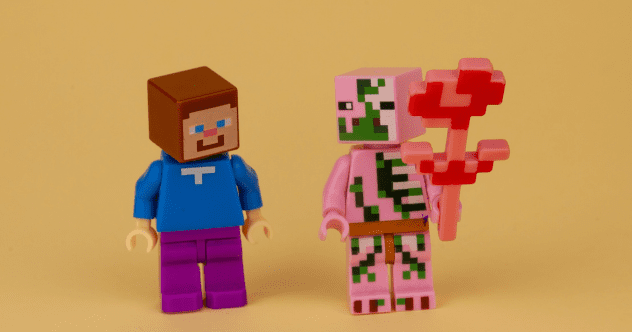
Minecraft looks simple at first glance: blocks, tools, mobs, and the occasional creeper arriving with the emotional timing of a tax bill. But give players enough time, Redstone dust, and stubborn optimism, and suddenly the game becomes a planet-building simulator, an architecture studio, a computer lab, a museum, and sometimes a wizard school with suspiciously excellent staircases.
The best Minecraft creations are not just “big builds.” They are proof that a sandbox game can become a shared language for design, engineering, history, fandom, education, and pure creative chaos. Some of these projects took years. Some required hundreds of builders. Some are so technically absurd that your starter dirt house may quietly file for retirement.
Below are 10 mindblowing Minecraft creations based on real projects and community builds that show just how far players can push the world’s most famous blocky universe.
1. BuildTheEarth: Recreating the Entire Planet at 1:1 Scale
BuildTheEarth is the kind of project that sounds like a joke until you realize people are actually doing it. The mission is wildly ambitious: recreate the entire Earth in Minecraft at a one-to-one scale, where one Minecraft block roughly represents one real-world meter.
Instead of building one castle or one city, contributors work on neighborhoods, landmarks, streets, airports, skyscrapers, bridges, and local details from around the world. The project uses real-world mapping references and community coordination, turning Minecraft into a global construction site where volunteers can help build places they know personally.
One of the most impressive branches is the New York City effort, where builders have worked on a 1:1 version of Manhattan and surrounding areas. That includes recognizable neighborhoods, famous landmarks, and tiny real-world details that make locals do a double take. It is not just “New York-ish.” The goal is accuracy, and that makes the project feel less like a map and more like a digital twin wearing square shoes.
What makes BuildTheEarth mindblowing is the scale of collaboration. Minecraft has always encouraged creativity, but this project turns casual building into a worldwide archive of human architecture. It is part geography lesson, part urban planning exercise, and part friendly reminder that players will absolutely try to rebuild a planet if you give them enough blocks.
2. WesterosCraft: A Fantasy Continent Built Block by Block
WesterosCraft is a massive Minecraft recreation of the world inspired by George R. R. Martin’s A Song of Ice and Fire. The project began in 2011 and has grown into one of the most famous community build servers in Minecraft history.
Instead of tossing together a few fantasy castles and calling it a day, the WesterosCraft team has built entire regions with cities, keeps, villages, roads, interiors, landscapes, and political flavor baked into the architecture. King’s Landing, Winterfell, The Wall, Highgarden, Pyke, Dorne, and other major locations are represented with a level of planning that makes many fictional maps look underdressed.
The magic of WesterosCraft is not only size. It is consistency. Builders follow lore, regional style guides, and architectural logic so each place feels like it belongs to its culture and climate. The North feels rugged and cold. The Reach feels wealthy and green. King’s Landing feels like a capital city that has seen too many royal problems and not enough urban sanitation meetings.
For fans of Minecraft mega builds, WesterosCraft is a masterclass in worldbuilding. It shows how a shared fictional universe can become a navigable, explorable environment. It also proves that a good build is not just about what you see from the sky. It is about streets, rooms, stairs, roofs, walls, and all the tiny choices that make a place feel lived in.
3. Minecraft Middle-earth: Tolkien’s World in Blocks
Minecraft Middle-earth, often called MCME, is one of the longest-running Minecraft building communities. Founded in 2010, it focuses on recreating J. R. R. Tolkien’s Middle-earth inside Minecraft.
That means the project is not merely a big fantasy map. It is an enormous attempt to translate literature, geography, architecture, and atmosphere into playable space. Locations such as Minas Tirith, Rivendell, Edoras, and other iconic areas have inspired detailed builds shaped by both Tolkien’s descriptions and the visual language fans recognize.
What makes Minecraft Middle-earth special is the balance between scale and craftsmanship. Fantasy worlds can become messy quickly because everyone has their own mental image of them. MCME works because the community treats the world as a serious design challenge. Mountains, roads, halls, farms, forests, and cities have to make sense together.
The result is one of the most impressive examples of Minecraft as literary architecture. It is like reading a book with your walking keys. You do not just imagine the path to a white city or a hidden valley; you can explore it, look up at the walls, and wonder why your own survival base still has a furnace sitting in the middle of the floor like modern art.
4. Greenfield: A Realistic Modern City
Greenfield is a fictional Minecraft city inspired heavily by the West Coast of the United States, especially Los Angeles. It is built at a one-to-one scale and designed with the kind of urban detail that makes it feel more like a city planning simulation than a casual block project.
The build includes residential neighborhoods, downtown areas, industrial zones, highways, an airport, businesses, suburbs, and carefully detailed surroundings. In many Minecraft city builds, the outside looks impressive but the inside is just hollow space and emotional disappointment. Greenfield goes much further, with interiors and infrastructure that make the city feel functional.
Part of Greenfield’s appeal is its realism. It does not rely only on fantasy towers or impossible structures. Instead, it studies the everyday built environment: parking lots, storefronts, apartments, road layouts, signs, public spaces, and the strange beauty of urban sprawl. It captures the way real cities are layered, patched, expanded, and occasionally held together by traffic cones.
For builders interested in modern architecture, Greenfield is an elite reference point. It shows how scale, planning, and repetition can become beautiful when handled carefully. A good skyscraper is impressive, but a believable city block with alleys, sidewalks, roofs, service areas, and interiors is a whole different level of dedication.
5. The Uncensored Library: Minecraft as a Free-Speech Monument
The Uncensored Library is one of the most meaningful Minecraft creations ever built. Created with involvement from Reporters Without Borders and the design collective BlockWorks, it uses Minecraft as a digital space for press freedom and access to censored writing.
The project is visually striking: a grand library with monumental architecture, formal halls, reading spaces, and symbolic design. But the true power is not only in the building. It is in the idea behind it. In places where websites or news outlets may be restricted, Minecraft can sometimes remain accessible, making the game an unusual platform for information sharing.
That gives The Uncensored Library a unique place among Minecraft builds. It is not just “cool.” It is purposeful. It uses the familiar mechanics of a game to create a space about journalism, censorship, memory, and digital access. In other words, it is what happens when someone looks at Minecraft and says, “What if this block game also became a public square?”
As a creation, it is mindblowing because it expands what a Minecraft build can do. It is art, activism, architecture, and education all at once. Also, it makes your storage room full of unlabeled chests feel slightly less noble, but we all start somewhere.
6. Great Fire 1666: History Rebuilt as an Experience
Great Fire 1666 is a Minecraft experience connected to the Museum of London and built in collaboration with creators including BlockWorks. It recreates London around the time of the Great Fire of 1666 and turns a major historical event into an explorable educational map.
The project includes pre-fire London, recognizable landmarks, narrow streets, timber buildings, and the conditions that helped the disaster spread. Rather than presenting history as a paragraph in a textbook, it lets players move through the environment and understand the city spatially.
This is where Minecraft shines as an educational tool. A student can read that London had dense wooden structures and narrow streets, but walking through a reconstructed version makes the risk feel more concrete. The map transforms historical context into something visible and interactive.
Great Fire 1666 is mindblowing because it shows how Minecraft can make history less dusty. It takes an event from the 17th century and turns it into a world where players can observe, explore, and connect details. No powdered wig required.
7. Witchcraft and Wizardry: A Full Magical Adventure Map
Witchcraft and Wizardry by The Floo Network is one of the most beloved adventure maps in Minecraft. Inspired by a famous magical school universe, it offers an enormous playable experience with quests, spells, puzzles, classes, shops, secrets, and detailed locations.
Many Minecraft maps look good in screenshots but play like a hallway with ambition. Witchcraft and Wizardry feels different because it combines environment design with game design. Players are not just looking at a castle; they are moving through an adventure with progression, interaction, and discovery.
The build includes sweeping interiors, moving-feeling spaces, magical streets, classrooms, hidden areas, and scripted moments that make the map feel almost like a standalone RPG. It is the kind of project that makes you forget you are technically inside Minecraft until a familiar block texture politely reminds you.
Its brilliance comes from immersion. The Floo Network understood that players want more than scale; they want moments. A hallway should lead somewhere. A puzzle should reward curiosity. A classroom should feel like part of a world. Witchcraft and Wizardry delivers that in a way few custom maps can match.
8. Pokémon Red Recreated in Minecraft
Some Minecraft creations impress because they are huge. Others impress because they make you say, “Wait, that is even possible?” The recreation of Pokémon Red inside Minecraft belongs firmly in the second category.
Built using command blocks and a resource pack, this project recreated the classic handheld game experience inside Minecraft without relying on a traditional mod in the usual sense. Reports noted the use of hundreds of thousands of command blocks, making it less of a simple map and more of a technical miracle wearing a nostalgia hat.
The wild part is not just the visual recreation. It is the logic. Menus, movement, interactions, and game systems had to be translated into Minecraft’s own command structure. That is a completely different challenge from building a statue or a city. It is closer to rebuilding a game engine inside another game, which is a sentence that sounds illegal but is mostly just impressive.
This creation shows that Minecraft is not only a place for architecture. It can also become a platform for programming experiments, retro tributes, and interactive systems. It is the blocky equivalent of putting a ship in a bottle, except the bottle is also a video game and the ship has turn-based battles.
9. Minecraftception: A Computer That Runs Minecraft Inside Minecraft
Redstone has always been one of Minecraft’s most powerful features. At first, many players use it for doors, traps, farms, and machines that sort items while making satisfying clicking noises. Then there are Redstone engineers who look at the same dust and decide to build a working computer.
One of the most famous examples is the “Minecraftception” style of project, including a Redstone computer capable of running a simplified version of Minecraft inside Minecraft. The official Minecraft site has highlighted sammyuri’s CHUNGUS2 computer, a virtual CPU created with Redstone and then pushed even further with help from collaborators.
This is mindblowing because Redstone is not a normal programming language. It is a circuit-like system made of blocks, signals, delays, repeaters, comparators, pistons, and stubborn timing problems. Building a functional computer with it requires understanding logic gates, memory, instructions, display output, and patience strong enough to survive a thousand debugging sessions.
The result is wonderfully ridiculous. Minecraft, a game where many of us still misplace our bed, can simulate computation complex enough to run a version of itself. That is not just creative building. That is digital recursion with a pickaxe.
10. CraftGPT: A Tiny AI Model Built with Redstone
CraftGPT takes the Redstone engineering tradition and launches it directly into the “are you kidding me?” zone. Created by sammyuri, CraftGPT is a small language model designed to run inside Minecraft using Redstone-based circuitry.
The project is not comparable to modern commercial AI systems in speed or quality, and its creator openly warns users not to expect flawless conversation. But that is not the point. The point is that a simplified AI model, complete with neural-network-style components, was represented inside Minecraft’s blocky logic system.
Reports describe CraftGPT as using millions of parameters and a massive Redstone structure. It was trained externally, then implemented so the model could run inference through in-game logic. Even with optimization, responses can be extremely slow. In practical terms, you would not use it to plan dinner unless dinner is scheduled for next Thursday.
Still, as a Minecraft creation, CraftGPT is jaw-dropping. It proves that players are no longer just building castles, cities, and farms. They are building computational systems that imitate parts of the modern technology world. It is less “look at my house” and more “look at my homemade block-based neural network.” Your move, dirt hut.
What These Minecraft Creations Teach Us About Building Better Worlds
The most impressive Minecraft creations have a few things in common. First, they start with a clear vision. BuildTheEarth wants to recreate the real planet. WesterosCraft wants a coherent fantasy continent. Greenfield wants a believable modern city. The Uncensored Library wants to turn a game into a symbolic home for free expression.
Second, great builds respect detail. A giant tower can impress for ten seconds, but a detailed city keeps people exploring for hours. The best Minecraft builders understand that believable worlds are made from small choices: roof shapes, street widths, window patterns, interior layouts, lighting, landscaping, and even the boring stuff like roads and storage rooms.
Third, collaboration matters. Many of these projects are too large for one person. They require teams, style guides, quality control, communication, and shared standards. In that sense, Minecraft mega builds can teach real project management. Someone has to plan the district. Someone has to fix the terrain. Someone has to explain, gently, that a neon glass cube may not belong in a medieval fishing village.
Finally, these creations prove that Minecraft remains powerful because it is flexible. The same game can host historical simulations, fantasy worlds, city models, playable adventures, working computers, and experimental AI. Few games age this well. Minecraft keeps growing because the community keeps treating it not as a finished toy, but as a toolkit.
Personal Experiences and Practical Lessons Inspired by Mindblowing Minecraft Creations
Spending time with major Minecraft creations changes the way you look at the game. At first, a huge build can feel intimidating. You load into a map like Greenfield or a fantasy server like WesterosCraft, look around for five minutes, and suddenly your square starter house feels like it was designed by a sleepy raccoon. But that feeling is actually useful. It reminds you that every giant project starts with one small decision: a wall, a road, a tower, a room, a block palette.
One of the best experiences related to these builds is simply walking through them slowly. Do not fly over everything immediately. Walk like a normal player. Notice how streets curve, how doors line up, how builders create visual rhythm with windows, fences, stairs, slabs, trapdoors, and lighting. When you explore at ground level, you start to understand why some builds feel alive and others feel like empty shells.
A practical lesson from realistic city builds is that planning beats random enthusiasm. Before building a town, sketch the roads first. Decide where the center is. Add neighborhoods with different purposes. Put farms, markets, docks, warehouses, houses, public buildings, and paths in places that make sense. A village becomes more believable when it looks like people could actually live there, work there, get lost there, and complain about parking there.
Fantasy builds teach a different lesson: style consistency matters. A castle should not be only large; it should tell a story. Who built it? Is it rich or poor? Is it defensive or decorative? Is it in the mountains, desert, forest, or coast? Builders working on projects like Minecraft Middle-earth or WesterosCraft succeed because they think about culture and environment, not just size. Even a small watchtower can feel epic if it belongs to its landscape.
Redstone creations teach patience. The first time you try to build even a simple automatic door, it may behave like it has personal issues. That is normal. Redstone rewards testing, failure, and tiny improvements. Looking at projects like Minecraftception or CraftGPT can inspire beginners, but it should not make them feel behind. Every expert Redstone engineer once stared at a repeater wondering why nothing worked.
Adventure maps offer another important lesson: a build becomes stronger when players have something to do. A beautiful hallway is nice. A beautiful hallway with a puzzle, secret room, story clue, or surprising view is better. If you want to create your own impressive Minecraft world, think about the visitor’s experience. Where will they spawn? What will they see first? What path will they follow? What little reward will make them smile?
The biggest takeaway is that mindblowing Minecraft creations are not magic. They are imagination plus structure. They combine creative vision with rules, references, teamwork, testing, and revision. You do not need to start by rebuilding Earth or programming an AI with Redstone. Start with a better house, a detailed street, a themed village, or a small museum. Add story. Add texture. Add a roof that is not perfectly flat. Congratulations, your build has already evolved.
Minecraft remains special because it makes creativity visible. Every block is a decision. Every build, whether tiny or enormous, says something about the person or team behind it. The greatest Minecraft creations remind us that games can become canvases, classrooms, engineering labs, libraries, and shared worlds. And yes, sometimes they also remind us to label our chests before our storage room becomes a cursed archaeology site.
Conclusion
The world’s most mindblowing Minecraft creations prove that blocks can become almost anything: continents, cities, libraries, fantasy kingdoms, history lessons, retro games, computers, and even tiny AI experiments. What separates these projects from ordinary builds is not only size, but intention. They are planned, researched, revised, and shaped by builders who care about immersion, accuracy, interaction, and wonder.
Whether you are a casual player, a Redstone tinkerer, a server owner, or someone still emotionally attached to their first wooden house, these Minecraft creations offer inspiration. They show that creativity scales. A small cottage can teach composition. A village can teach planning. A castle can teach atmosphere. A Redstone machine can teach logic. And a global project can teach collaboration.
So the next time someone says Minecraft is “just blocks,” feel free to smile politely. Those blocks have rebuilt cities, preserved stories, simulated computers, and given millions of players a place to create. Not bad for a game where chickens still look mildly confused about everything.