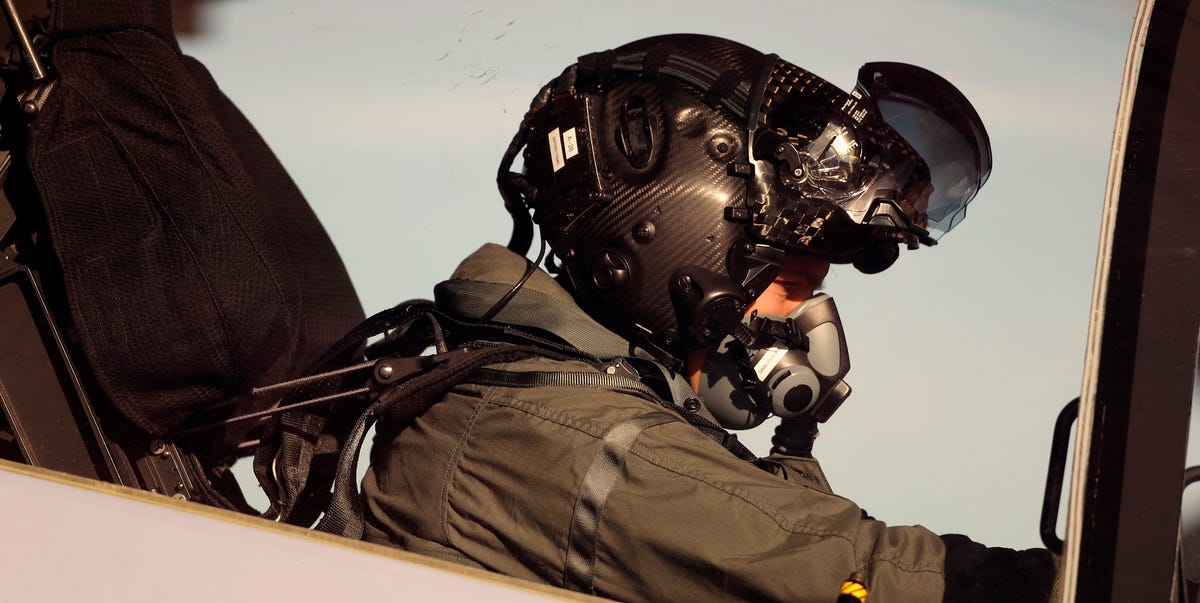
Modern cockpits are magnificent little thunderstorms of electricity. Displays glow, radios chatter, radar scans, helmet systems track head movement, wires carry alternating current, and navigation equipment quietly argues with satellites. Put a human being in the middle of that electronic orchestra for thousands of hours, and a reasonable question follows: could cockpit electromagnetic fields be harming pilotsor even contributing to fatal accidents and disease?
The alarming version of the claim has an excellent headline and a weak conclusion. Cockpit electromagnetic fields are real. Some aircraft expose pilots to magnetic-field levels above those commonly measured in homes and offices. The Pentagon has also funded research into whether the electromagnetic environment in advanced military cockpits could affect neurological performance. However, these facts do not establish that electromagnetic fields are killing pilots. At present, the evidence supports continued investigation, not a verdict.
Why Did the Cockpit EMF Question Take Off?
Public attention surged after the Defense Advanced Research Projects Agency launched the Impact of Cockpit Electro-Magnetics on Aircrew Neurology project, mercifully shortened to ICEMAN. The research effort was designed to measure electromagnetic fields and radio-frequency noise in representative cockpits, test possible effects on brain activity, physiology, behavior, and sensing equipment, and explore ways to reduce any harmful effects. Phase II work was publicly announced in 2022, showing that the question was serious enough to study rather than dismiss with a shrug and a joke about aluminum-foil flight helmets.
The military concern focused heavily on spatial disorientation: a pilot temporarily loses an accurate sense of the aircraft’s attitude, altitude, direction, or motion. Spatial disorientation is already a known aviation hazard, especially at night, in clouds, during high workload, or when visual and vestibular signals conflict. The ICEMAN hypothesis asked whether cockpit-generated electromagnetic or radio-frequency signals might add another neurological stressor. That is a research questionnot proof that electronics caused any particular crash.
“Electromagnetic Radiation” Is Not One Thing
Much of the confusion comes from putting every kind of radiation into one ominous bucket. The electromagnetic spectrum includes low-frequency electric and magnetic fields, radio waves, microwaves, infrared, visible light, ultraviolet light, X-rays, and gamma rays. They do not interact with the body in the same way.
Nonionizing Fields Inside the Aircraft
Aircraft wiring, power systems, displays, communications equipment, radar components, headsets, and other electronics can generate nonionizing electric, magnetic, and radio-frequency fields. Nonionizing energy generally lacks enough photon energy to directly remove electrons from atoms or break DNA bonds in the way X-rays can. At sufficiently high intensities, radio-frequency energy can heat tissue, which is why exposure limits exist. The Federal Communications Commission notes that very high RF exposure can be harmful through tissue heating, but that does not mean every detectable RF field is dangerous.
Ionizing Radiation From Space
Cosmic ionizing radiation is a different issue. High-energy particles from space interact with the atmosphere and create secondary radiation. Exposure increases with altitude and generally varies with latitude, route, flight time, and solar conditions. Unlike ordinary cockpit radio noise, ionizing radiation can damage DNA and is an established cancer hazard. U.S. aviation and occupational-health agencies therefore treat cosmic radiation as a legitimate aircrew exposure.
That distinction matters. Saying “pilots are exposed to radiation” is true, but it does not identify which radiation, at what dose, for how long, or with what biological effect. Without those details, the sentence is about as medically useful as saying an airplane contains metal.
What Have Cockpit Measurements Actually Found?
A frequently cited commercial-aircraft study measured low-frequency magnetic fields on Boeing 737-200, Boeing 747-400, Boeing 767-300ER, and Airbus A320 flight decks. Across approximately 1,008 block hours, reported exposure levels varied by aircraft type. Harmonic geometric means ranged from about 6.7 milligauss on the 767 to 12.7 milligauss on the older 737 model. Those values were higher than the roughly 0.8 to 1 milligauss described by the researchers as typical of homes or offices.
That finding is important, but “higher than home” is not the same as “high enough to cause disease.” A cockpit is an electrically dense workplace, so elevated measurements are not surprising. To determine health risk, researchers need frequency-specific exposure data, field strength, peak patterns, distance from sources, duty cycles, aircraft type, cumulative career exposure, and a credible biological outcome. A meter reading alone cannot convict the cockpit.
Government cancer and environmental-health reviews remain cautious. The National Institute of Environmental Health Sciences says the limited adult studies do not show evidence linking EMF exposure with adult leukemia, brain cancer, or breast cancer. The National Cancer Institute similarly describes the evidence as mixed and emphasizes that epidemiological associations can be affected by exposure misclassification, bias, and confounding.
Could Cockpit EMF Cause Spatial Disorientation?
This is the most intriguing part of the debate because it concerns short-term performance rather than cancer decades later. In a modern fighter, the pilot may be surrounded by strong, complex, rapidly changing signals from radar, communications, electronic warfare systems, helmet-mounted displays, tracking equipment, power converters, and data links. Military pilots also operate under vibration, acceleration, oxygen changes, noise, heat, stress, sleep loss, and extreme cognitive demand. Separating one possible electromagnetic effect from that crowded list is scientifically difficult.
There are known biological effects from sufficiently intense or specially patterned electromagnetic exposure. Strong RF energy can heat tissue, and certain pulsed microwave conditions can produce auditory sensations. But demonstrating a phenomenon in a laboratory does not establish that ordinary cockpit exposure reaches the necessary intensity or waveform, nor that it causes operational confusion. ICEMAN was created precisely because those exposure-response details were not settled.
The responsible conclusion is therefore narrow: cockpit EMF is a plausible variable worth measuring in advanced aircraft, especially when unexplained symptoms or sensor interference occur. It is not currently an established cause of spatial-disorientation crashes.
Are Pilots Dying From Cancer at Unusual Rates?
Some studies have reported increased risks or mortality for selected cancers among pilots and other aircrew, particularly melanoma. A U.S. cohort study of 5,964 commercial cockpit crew found lower mortality from all causes, all cancers, and cardiovascular disease than in the general population. It also found elevated melanoma mortality and an increase in central nervous system cancer mortality with increasing estimated cumulative cosmic-radiation dose. The authors called for more research rather than assigning the findings to cockpit EMF.
A large pooled analysis involving more than 93,000 aircrew members from 10 countries likewise found substantially lower overall mortality among male cockpit crew, while malignant melanoma mortality was elevated. Brain-cancer and leukemia mortality were broadly similar to the general population in that analysis. This pattern does not resemble a broad hidden epidemic caused by cockpit electronics. It does suggest that particular occupational exposures and cancer types deserve targeted follow-up.
The Healthy-Worker Effect
Pilots are medically screened, trained, and generally healthier at hiring than the average population. That can make their overall mortality look unusually low, a phenomenon researchers call the healthy-worker effect. It can also hide smaller occupation-related risks within an otherwise healthy group. Consequently, neither “pilots live longer” nor “pilots have more melanoma” settles the EMF question by itself.
What Risks Have Stronger Evidence?
Cosmic Ionizing Radiation
For long-term biological risk, cosmic radiation has a clearer mechanism and a better-established occupational basis than cockpit EMF. Dose rises with altitude, higher-latitude routes, and time aloft. The FAA maintains tools and research programs for estimating exposure, including its CARI software, while NIOSH continues studying links with cancer and reproductive outcomes.
Circadian Disruption and Fatigue
Crossing time zones, flying through the biological night, irregular rosters, early reports, and reduced sleep can impair attention, reaction time, judgment, and mood. NIOSH identifies circadian disruption alongside cosmic radiation when discussing aircrew cancer concerns. In accident prevention, fatigue and spatial disorientation are also far more established hazards than an unproven electromagnetic mechanism.
Ultraviolet Exposure and Melanoma
Melanoma repeatedly appears in pilot studies, but its explanation is not simple. Recreational sun exposure, skin type, socioeconomic patterns, screening behavior, altitude-related light exposure, and cockpit-window transmission may all contribute. The FAA has measured aircraft-windscreen optical transmission, and aviation researchers continue debating the role of ultraviolet exposure. A melanoma signal is therefore a reason for sun protection and screeningnot proof that instrument-panel magnetic fields are carcinogenic.
What Would Convincing Evidence Look Like?
To show that cockpit electromagnetic fields are harming pilots, researchers would need more than anecdotes and elevated meter readings. Strong evidence would include replicated measurements across aircraft models; personal exposure monitoring over entire careers; clear frequency and waveform data; a dose-response relationship; comparison groups with similar schedules and cosmic-radiation exposure; control for age, sleep, sun exposure, smoking, fuel and solvent exposure, and medical surveillance; and a biologically credible mechanism that matches real cockpit intensities.
For accident research, investigators would also need time-synchronized EMF measurements, flight-recorder data, physiological monitoring, equipment status, workload, visibility, acceleration, oxygen information, and pilot history. That is a demanding standard, but aviation safety is not improved by blaming the spookiest invisible force in the room.
Practical Steps That Make Sense Now
Airlines, militaries, and aircraft manufacturers do not need to choose between panic and inaction. They can map electric, magnetic, and RF fields by aircraft type; identify unusually strong hotspots; verify shielding and grounding; investigate electromagnetic interference; monitor new helmet and display systems; and design wiring and transmitters to reduce unnecessary exposure. Occupational-health programs can track cumulative cosmic-radiation dose, fatigue, sleep disruption, and relevant cancer outcomes.
Pilots can focus on evidence-based precautions: follow fatigue-reporting procedures, protect sleep, use sun protection outside the aircraft, receive routine skin examinations when appropriate, discuss unusual neurological symptoms with an aviation medical examiner, and report repeated cockpit symptoms tied to a specific aircraft or system. Buying an “EMF-neutralizing” sticker from a website featuring six exclamation marks is not on the checklist.
The Verdict: Are Cockpit Electromagnetic Fields Killing Pilots?
No reliable body of evidence currently shows that cockpit electromagnetic fields are killing pilots. The fields exist, commercial flight decks can have higher low-frequency magnetic levels than homes and offices, and advanced military cockpits deserve careful exposure research. Yet the leap from measurable exposure to fatal causation has not been demonstrated.
The scientifically honest answer is neither “impossible” nor “confirmed.” It is “unproven, actively investigable, and probably less important than several better-established aviation hazards.” Cosmic ionizing radiation, circadian disruption, fatigue, ultraviolet exposure, and conventional spatial disorientation all have stronger evidence or clearer mechanisms. Cockpit EMF should remain on the research radarjust not be promoted to public enemy number one before the data land.
Experiences From the Flight Deck: What the Concern Feels Like in Practice
The following scenarios are synthesized from common aviation operating conditions and published research questions; they are not personal testimony or proof of EMF injury.
Scenario 1: The Night Fighter Mission
Imagine a pilot launching after sunset in a high-performance aircraft. The cockpit is dark except for instrument lighting and helmet imagery. Radios are active, radar is scanning, tactical data are updating, and the aircraft is accelerating while the pilot interprets several layers of information. Outside, there may be almost no natural horizon. Inside, the balance organs feel motion that the eyes cannot independently confirm.
A brief sensation of tilting or descending can occur even when the aircraft is stable. This is classic territory for spatial disorientation. Because electromagnetic fields are also present, it is tempting to connect one invisible phenomenon with the other. Yet darkness, vestibular illusion, acceleration, fatigue, workload, and stress already provide powerful explanations. The operational lesson is to trust validated instruments, maintain disciplined cross-checks, and investigate additional variables without allowing them to replace established aeromedical science.
Scenario 2: The Long-Haul Airline Rotation
Now picture a commercial pilot completing several long sectors across time zones. The pilot spends hours near displays, wiring, radios, and power equipment while also receiving cosmic radiation at altitude. Sleep occurs at biologically awkward times, meals move around, and daylight arrives when the body expects darkness. After several duties, fatigue may feel like mental fog, slow recall, irritability, headache, or a mild sense of unreality.
Those symptoms are genuine but nonspecific. Sleep debt, dehydration, cabin pressure, illness, caffeine timing, stress, and circadian disruption can all contribute. A pilot who labels every bad day “EMF exposure” may miss a more likely and treatable cause. Structured reporting is more useful: record the aircraft type, seat position, route, duty time, sleep history, systems in use, symptom onset, and whether another crewmember noticed the same pattern.
Scenario 3: A Repeatable Aircraft-Specific Symptom
Suppose several pilots report headaches or unusual sensations only in one aircraft or after a particular system is activated. That does not prove neurological injury, but it is exactly the pattern a safety program should investigate. Engineers can measure fields across frequencies, inspect shielding and grounding, test headsets and power supplies, examine ventilation, and compare the aircraft with another example of the same model.
The cause might be electromagnetic exposure, interference with equipment, an acoustic tone, faulty ventilation, fumes, lighting flicker, vibration, or coincidence. Aviation advances by investigating weak signals before they become strong ones, but a good investigation keeps several hypotheses alive. Its purpose is not to validate the most dramatic theory; it is to identify the actual hazard.
The Most Useful Experience-Based Takeaway
Pilots work where small effects can matter. A minor distraction on a sofa is annoying; during a low-level turn in poor visibility, it can become consequential. That justifies conservative design, transparent exposure measurements, and serious symptom reporting. It does not justify declaring that cockpit electromagnetic fields are silently killing aircrew.
The practical attitude is disciplined curiosity: measure first, compare carefully, control known risks, and let confidence arrive after the evidencenot five miles ahead of it.
Note: This article is for general educational purposes and does not provide medical, occupational-health, or flight-safety advice. Pilots with persistent or aircraft-specific symptoms should use their organization’s reporting process and consult an aviation medical professional.