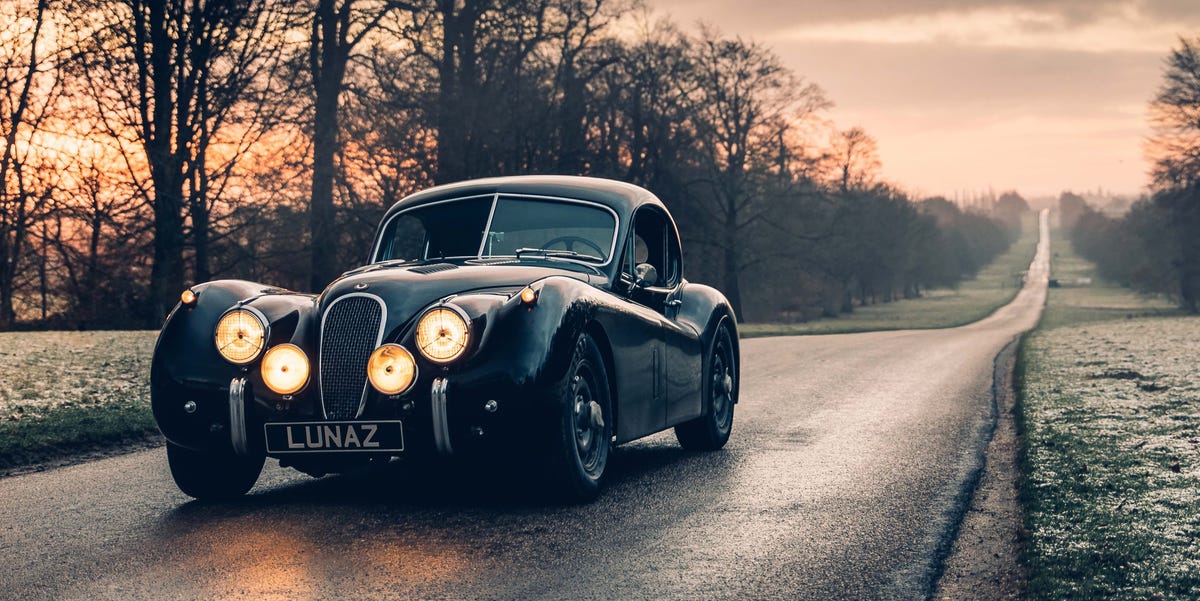
Some cars are not merely transportation. A Jaguar XK120 is a sculpture that happens to have wheels. A Rolls-Royce Phantom V is less a sedan and more a rolling embassy with picnic-table manners. So when a U.K. startup says it wants to turn these classics into electric cars, the first reaction from traditionalists is predictable: clutch the pearls, guard the carburetors, and hide the walnut dashboard polish.
Yet that is exactly the point. Lunaz, a British luxury automotive house based near Silverstone, has built its identity around restoring, remastering, and electrifying famous classic cars. The company has worked with icons associated with Jaguar, Rolls-Royce, Bentley, Range Rover, and Aston Martin, creating one-off commissions that keep the old-world silhouette but replace the smoky, temperamental mechanical drama with modern electric power.
This is not the backyard version of “I found a motor on the internet and now my classic car makes spaceship noises.” Lunaz’s approach is closer to couture tailoring: strip the car down, document it, rebuild it, modernize the brakes, suspension, steering, electronics, and cabin, then install an EV powertrain designed around the car’s character. The result is a new kind of classic EV conversion: part restoration, part engineering project, part philosophical argument at a very expensive dinner party.
Why Electrify a Classic Jaguar or Rolls-Royce?
Classic cars are romantic, but they are not always practical. They leak, smell, hesitate, overheat, and sometimes communicate exclusively through mysterious dashboard lights and emotional blackmail. A vintage Jaguar can make a short Sunday drive feel like a heroic expedition. A classic Rolls-Royce may glide like royalty, but keeping it perfectly tuned requires patience, expertise, and a bank account that does not flinch easily.
Electric conversion offers a different promise: keep the beauty, lose the fuss. By replacing the gasoline engine, fuel system, and old mechanical components with electric motors and battery packs, companies like Lunaz aim to make historic cars smoother, cleaner, quieter, and easier to use in modern cities. Owners get instant torque instead of a cold-start ritual. They get fewer fluids, fewer fumes, and fewer roadside conversations that begin with, “Well, it was running beautifully yesterday.”
The business case is also tied to the future of urban driving. Around the world, cities are tightening emissions rules, expanding low-emission zones, and encouraging cleaner transportation. For owners of collectible vehicles, especially those who want to use them rather than store them under a silk cover like a sleeping dragon, electrification can help preserve road access.
Meet Lunaz: The Startup Behind the Spark
Lunaz was founded in 2018 by David Lorenz and gained attention for re-engineering classic cars from brands such as Rolls-Royce, Jaguar, Bentley, and Range Rover. The company’s technical leadership has included Jon Hilton, a former Formula 1 engineering figure, which helps explain why its conversions are marketed as precision remastering rather than simple swaps.
Early projects included a 1953 Jaguar XK120, a 1956 Rolls-Royce Silver Cloud, and a 1961 Rolls-Royce Phantom V. These were not random choices. They are among the most visually recognized British classics: long hoods, elegant proportions, chrome details, and enough old-school charisma to make modern crossovers look like rolling refrigerators.
Lunaz positions itself carefully. It restores and remasters existing vehicles for customers; it does not claim to manufacture new Jaguars or Rolls-Royces, nor is it officially affiliated with those automakers. That distinction matters in the classic car world, where badges, trademarks, provenance, and originality can cause debates longer than a Thanksgiving argument about who ruined the stuffing.
The Jaguar XK120: A Sports Car Reborn with Silent Speed
The Jaguar XK120 is a natural candidate for an electric restomod because it was sensational in its own era. When introduced, it became famous for its beauty and performance. With its flowing fenders, compact cockpit, and impossibly elegant profile, it looked fast even when parked. Electrifying one is a bold move because the XK120’s engine is part of its legend, but the car’s design also suits the EV mission: light, sleek, dramatic, and emotionally magnetic.
Reports on Lunaz’s early XK120 conversion described a substantial battery pack and strong electric output, giving the classic roadster modern performance while preserving its vintage shape. That is the core appeal of an electric Jaguar classic: the car still looks like it belongs outside a country hotel in 1953, but it can move with the smooth, immediate response of a modern EV.
For drivers, this changes the relationship with the car. Instead of managing old gears, fuel smell, vibration, and mechanical uncertainty, the driver gets a cleaner, calmer experience. The irony is delicious: by removing the engine, the car may become more usable. Purists may object, but usability is not a minor point. A classic that can be driven regularly has a better chance of being enjoyed than one trapped forever in a climate-controlled garage, admired only by dust particles and insurance appraisers.
Rolls-Royce Phantom V and Silver Cloud: Electric Luxury Makes Strange Sense
If any classic brand fits electric power philosophically, it may be Rolls-Royce. Rolls-Royce has long emphasized silence, smoothness, and effortless progress. In that sense, an electric motor is not a rebellion against the brand’s spirit; it is almost an exaggerated version of it. A gasoline engine in a Rolls-Royce was always supposed to disappear into the background. An electric motor simply takes the hint.
The Phantom V, with its stately proportions and chauffeur-driven aura, becomes especially interesting as an EV. It was never meant to be a corner-carving sports sedan. It was meant to arrive. Quietly. Importantly. Preferably in front of a building with columns. An electric conversion enhances that theater by making the movement even more silent and smooth.
Lunaz also explored electrified Rolls-Royce Silver Cloud models. The Silver Cloud is smaller and more graceful than the Phantom V, with a shape that still looks formal but not quite as diplomatic. In electric form, it becomes a luxury classic that can glide through modern streets without exhaust fumes or mechanical grumbling. It is the kind of car that says, “I enjoy tradition, but I also know where the charging port is.”
How a Classic EV Conversion Actually Works
A serious electric classic car conversion is not as simple as pulling out an engine and dropping in batteries like luggage. A classic car is a system of weight balance, structure, braking ability, cooling needs, steering feel, and emotional expectation. Change one thing and several other things start raising their hands.
1. The Car Is Assessed and Documented
High-end builders typically begin with a deep inspection. The condition of the body, chassis, suspension points, wiring, and interior must be understood before any major work begins. Many classic cars have lived colorful lives. Some have been restored beautifully; others have been repaired with optimism, filler, and the kind of wiring that makes electricians whisper prayers.
2. The Vehicle Is Stripped and Restored
The best conversions usually include a full restoration. Paint, metalwork, trim, leather, wood, instruments, and seals may all be renewed or upgraded. Lunaz’s method has been described as a full remastering process, with thousands of hours of craftsmanship in some builds. That is why these cars cost far more than ordinary EV conversions. Buyers are not only purchasing a powertrain; they are commissioning a reborn object.
3. The Electric Powertrain Is Integrated
The original engine and gearbox are removed, often in a reversible way when possible. Battery modules are positioned to preserve weight distribution, usually in areas formerly occupied by the engine, transmission, or fuel tank. Electric motors, control systems, inverters, chargers, and cooling components are added. The goal is not only range and power, but drivability.
4. Brakes, Steering, and Suspension Are Modernized
Adding electric power without upgrading the rest of the car would be like giving a ballroom dancer rocket shoes. Fun for two seconds, then deeply concerning. High-end conversions typically receive improved brakes, steering assistance, suspension tuning, and sometimes modern safety and comfort features. This helps the car handle the instant torque and extra battery weight.
5. The Interior Becomes Quietly Modern
Modern touches are often hidden or integrated discreetly. Owners may request navigation, USB ports, Wi-Fi, reversing cameras, upgraded climate systems, improved audio, or custom displays. The trick is to add convenience without making the dashboard look like someone glued a tablet to Queen Elizabeth’s writing desk.
The Purist Debate: Preservation or Automotive Heresy?
Classic EV conversions create strong feelings because cars are emotional machines. For many collectors, the engine is the soul of the vehicle. The sound, smell, vibration, gearshift, and maintenance rituals are part of the experience. Remove the engine, they argue, and the car becomes a beautiful shell with a different personality.
That argument deserves respect. A matching-numbers collector car with historical importance should not be casually modified. A rare, museum-grade example may be more valuable and meaningful when preserved as originally built. Some cars are historical documents, and nobody wants to see the Magna Carta laminated for “durability.”
But there is another side. Not every classic is a perfect survivor. Some have already lost original engines, been heavily restored, or undergone decades of changes. For these cars, a carefully documented and reversible electric conversion can be a legitimate form of preservation. It keeps the body, design, craftsmanship, and road presence alive while making the car usable in a world moving toward electrification.
The best conversions do not treat history as disposable. They treat it as the main attraction. The electric system is there to support the car, not to turn it into a generic battery-powered appliance.
Why Wealthy Collectors Are Paying Attention
The market for electric classic cars is not aimed at budget commuters. Lunaz builds are luxury commissions, and early pricing reported by automotive outlets placed some projects well into six-figure territory before even considering the donor car. Other high-end conversion companies also operate in that rarefied world, where “bespoke” is a polite word meaning “please do not ask if this comes in a discount bundle.”
There are several reasons affluent collectors are interested. First, exclusivity. A one-off electric Rolls-Royce or Jaguar is not something likely to appear in every driveway. Second, convenience. A classic car that starts reliably, drives quietly, and can be used in city traffic is more attractive to owners who actually want to enjoy it. Third, sustainability. While converting a classic car is not automatically an environmental miracle, extending the life of an existing vehicle can be appealing when compared with building an entirely new luxury object from scratch.
There is also image. An electric classic says something different from a new supercar. It suggests taste, nostalgia, technical curiosity, and a willingness to annoy at least three purists before breakfast.
The Wider Classic EV Conversion Trend
Lunaz is not alone. The electric restomod market includes companies such as Everrati, Electrogenic, RBW, Kindred Motorworks, and others working on classics ranging from Porsche 911s and Land Rovers to Minis, Broncos, and MG-inspired sports cars. The scene is diverse: some firms offer complete luxury commissions, while others develop conversion kits or modular systems.
In the United States, the specialty automotive world has also been paying closer attention to EV swaps. Organizations and aftermarket companies have discussed the technical challenges of electric drivetrain swaps, including battery safety, integration, charging, wiring, and proper engineering standards. This matters because the future of the category depends on quality. A beautifully converted classic can win skeptics. A badly converted one can make the entire idea look like a science fair project with leather seats.
The best companies in this space understand that electric conversion is not just about horsepower. It is about restraint. Too much acceleration can ruin the character of a classic. Too much screen technology can spoil the cabin. Too little engineering can make the car unsafe. The sweet spot is modernization that feels like it was always meant to be there.
Challenges Facing Electric Classic Cars
Despite the excitement, classic EV conversions face real obstacles. Cost is the most obvious. A premium conversion can cost more than a new luxury EV, sometimes much more. That limits the customer base and makes the market dependent on wealthy collectors.
Weight is another challenge. Batteries are heavy, and classic cars were not designed around them. Engineers must manage ride height, handling, braking, chassis stress, and safety. Range can also be limited depending on vehicle size and battery packaging. A giant Rolls-Royce can accept a larger pack than a compact roadster, but every car requires compromise.
Regulation and registration vary by market. Converting a classic can affect inspection, insurance, emissions classification, and historical status. Documentation is essential. Owners should understand how the conversion changes the car’s legal identity and market value.
Finally, there is cultural resistance. Many enthusiasts still prefer the original engine experience. That will not vanish, nor should it. The classic car world is big enough for concours originality, sympathetic restoration, hot rods, restomods, and electric conversions. The garage has room for more than one religion.
Specific Examples That Show the Idea Works
The Jaguar XK120 demonstrates how electrification can make a classic sports car quicker and more accessible while preserving its elegant design. The Rolls-Royce Phantom V shows how electric power can align with a luxury car’s historic obsession with silence and smoothness. The Silver Cloud illustrates how a stately grand tourer can be made more usable without losing its formal charm.
Meanwhile, Lunaz’s later work with Range Rover Classics and Aston Martin models shows that the company’s broader strategy is not limited to one body style. The same basic formula can be applied to grand limousines, sports cars, luxury SUVs, and bespoke collector pieces: restore the car, respect the shape, modernize the systems, and tune the driving experience for the customer.
This is where the startup story becomes more than a novelty. Electrifying a single Jaguar is interesting. Building a repeatable luxury process around classic electrification is a business model. Whether that model becomes large or stays boutique, it has already influenced how collectors think about the future of heritage vehicles.
Experience Section: What It Feels Like to Imagine Driving an Electric Classic
Picture walking up to a restored Jaguar XK120 on a cool Saturday morning. The chrome is bright enough to make the sun reconsider its career choices. The leather smells rich, the steering wheel is thin, and the bodywork looks like it was shaped by someone who believed wind should be flattered, not defeated. In a gasoline XK120, you would expect a mechanical ceremony: fuel, ignition, idle, vibration, and that charming moment when the car decides whether it is in the mood.
In an electric conversion, the ritual changes. You press a button or turn a key, and the car wakes up almost silently. At first, it feels strange. Your eyes say 1950s sports car. Your ears say luxury elevator. Then the motor delivers instant torque, and the car moves with a clean surge that no carburetor can imitate. The experience is not identical to the original, and that is the point. It becomes a parallel version of the classic: less oily, less noisy, but still deeply theatrical.
Now imagine the Rolls-Royce Phantom V. You do not climb into it; you enter it, as if arriving for a private meeting with history. The door closes with dignity. The cabin has wood, leather, metal, and the kind of space that makes modern cars feel emotionally unavailable. In gasoline form, the Phantom was already quiet. In electric form, the silence becomes almost architectural. The car glides forward as if pulled by invisible butlers.
For a chauffeur-driven owner, that could be ideal. City traffic becomes less stressful. The cabin becomes calmer. No exhaust smell seeps into the atmosphere. The car still looks like it belongs outside a palace, but it behaves like something designed for a low-emission city center. There is humor in that contrast: a massive vintage Rolls-Royce quietly obeying the future while looking like it just left a 1960s state banquet.
The most interesting emotional shift is confidence. Many classic cars are adored but not trusted. Owners love them, yet they plan trips around temperature, traffic, parts availability, and the possibility of becoming decorative roadside furniture. A well-executed electric conversion can reduce that anxiety. You may still treat the car with respect, but you no longer have to negotiate with it every time you want coffee across town.
Of course, something is lost. Engine sound matters. Gear changes matter. The smell of warm oil and old leather is part of the memory. For some enthusiasts, replacing a straight-six Jaguar engine or a Rolls-Royce V8 is like replacing a jazz band with noise-canceling headphones. Technically smoother? Yes. Emotionally complicated? Also yes.
But something is gained too: access, reliability, cleanliness, and a new kind of usability. The car can become less of a museum piece and more of a living machine. It can attend weddings, glide through city streets, appear at hotels, or take a relaxed Sunday drive without making the owner pack tools, fluids, and a motivational speech.
That is why the best electric classic cars do not feel like replacements. They feel like alternate endings. The original story remains valuable. The electric version simply asks: what if this beautiful machine could keep its face, keep its manners, and learn a few new tricks?
Conclusion: A Spark-Plug Funeral or a New Golden Age?
The idea of turning Jaguar and Rolls-Royce classics into electric cars will never please everyone, and that is fine. Great cars inspire arguments. If nobody is offended, delighted, fascinated, or slightly confused, the car probably is not interesting enough.
Lunaz and similar U.K. startups are not trying to replace the entire classic car world. They are creating a new lane within it. For some vehicles and some owners, originality will remain sacred. For others, carefully engineered electrification offers a way to make old cars usable, clean, and relevant without erasing their visual magic.
A Jaguar XK120 with electric power is still a breathtaking shape. A Rolls-Royce Phantom V without exhaust is still a majestic object. The question is not whether every classic should become electric. The better question is whether some classics deserve a second life designed for the roads, rules, and expectations of the future.
For owners who want beauty without breakdowns, elegance without emissions, and nostalgia without the smell of unburned fuel, the answer may be yes. The future of classic cars might not roar in every case. Sometimes, it may simply glide away in silence, looking absolutely magnificent while doing it.