For decades, prosthetic limbs have been described with words that sound like they escaped from a sci-fi convention: bionic, robotic, smart, neural, powered, AI-assisted. That language is exciting, but it can also hide a stubborn truth. A prosthesis is not just a machine attached to a person. It is part of a living system. And living systems are delightfully messy.
To make better prostheses, we need better biology. Not just better motors. Not just lighter carbon fiber. Not just another app that promises to “optimize gait” while the user still has a sore residual limb at 5 p.m. The future of prosthetic technology depends on understanding nerves, muscles, bones, skin, blood flow, healing, pain, movement, and the brain’s uncanny ability to decide whether a device feels like “me” or “that expensive thing strapped to me.”
This is the big shift happening in modern prosthetics research: engineers are no longer trying only to build smarter limbs. They are trying to build better conversations between the body and the limb. That means biology is no longer the background scenery. Biology is the main character.
Why Traditional Prostheses Still Feel Limited
Traditional prosthetic design has solved many problems beautifully. A modern prosthetic foot can store and release energy. A myoelectric hand can open, close, grip, pinch, and rotate. A powered knee can help with stairs, ramps, and uneven ground. These are not small achievements. They are engineering miracles with shoe sizes.
Still, many users abandon or underuse advanced prostheses. The reason is rarely that the device looks too “low-tech.” In many cases, the problem is that the device does not communicate naturally with the body. It may be strong but numb, precise but slow, clever but exhausting. Imagine using a smartphone with the screen turned off and being told, “Don’t worry, the processor is excellent.” That is how some high-end prostheses can feel when they lack natural feedback.
Most biological limbs do not need constant supervision. You can pick up a coffee cup without staring at your fingers like they are wild animals. Your nervous system uses touch, pressure, proprioception, muscle stretch, joint angle, vibration, temperature, and pain signals to guide motion automatically. A prosthesis that does not return useful sensory information forces the user to compensate with vision, concentration, and repetition. That works, but it is tiring. Biology does the invisible work that makes movement feel effortless.
The Missing Ingredient: Sensory Feedback
The human body is not a one-way remote control. It is a feedback loop. Muscles send signals out, but nerves also send information back. This return traffic tells the brain whether the hand is gripping too hard, whether the foot landed on gravel, whether the knee is bending, and whether the object being held is a paper cup or a bowling ball with confidence issues.
Many prosthetic limbs can receive commands from the body, especially through muscle electrical activity. But fewer can return sensation in a way that feels natural, useful, and stable over time. That is why sensory feedback has become one of the most important frontiers in prosthetic biology.
Touch Is More Than a Luxury Feature
Touch helps with control, safety, and embodiment. A prosthetic hand with pressure sensors may be able to detect grip force, but that data must become meaningful to the user. Researchers have explored ways to stimulate peripheral nerves, muscles, skin, or even specific areas of the brain so the person can feel information from the prosthetic device.
When touch feedback works well, the user may not need to stare at the prosthesis during every movement. Tasks such as holding a child’s hand, lifting a soft object, or gripping a tool can become more intuitive. A hand that can feel is not only more functional. It can feel less like equipment and more like part of the body.
Proprioception: The Body’s Built-In GPS
Proprioception is the sense of where your body is in space. It is why you can close your eyes and still touch your nose without first filing a flight plan. In limb loss, proprioceptive pathways are disrupted. The brain may still want information about ankle angle, finger position, or muscle stretch, but the original biological loop has been cut.
Better prostheses need to restore some version of this loop. Without proprioception, users often rely heavily on visual feedback. With more natural position feedback, movement can become smoother, faster, and less mentally demanding. This is especially important for lower-limb prostheses, where walking safely depends on split-second adjustments.
Muscles Are Not Just Motors
In engineering language, muscles are often compared to actuators. That comparison is useful, but incomplete. Muscles are not simply biological motors that pull on bones. They are also sensors. They stretch, contract, signal, stabilize, fatigue, recover, and communicate with the nervous system.
One major challenge in amputation surgery is that natural muscle pairs are often separated. In an intact limb, many movements depend on agonist and antagonist muscles working as partners. One contracts while the other stretches, creating both motion and feedback. Traditional amputation can disrupt this relationship, leaving the nervous system with less useful information.
The Promise of the Agonist-Antagonist Myoneural Interface
The agonist-antagonist myoneural interface, often called AMI, is a surgical approach designed to preserve or recreate dynamic muscle pairs after amputation. Instead of treating the residual limb as a passive attachment site, AMI treats it as a living control center. Reconnected muscle pairs can produce signals that better reflect intended movement and may also return more meaningful sensory feedback to the nervous system.
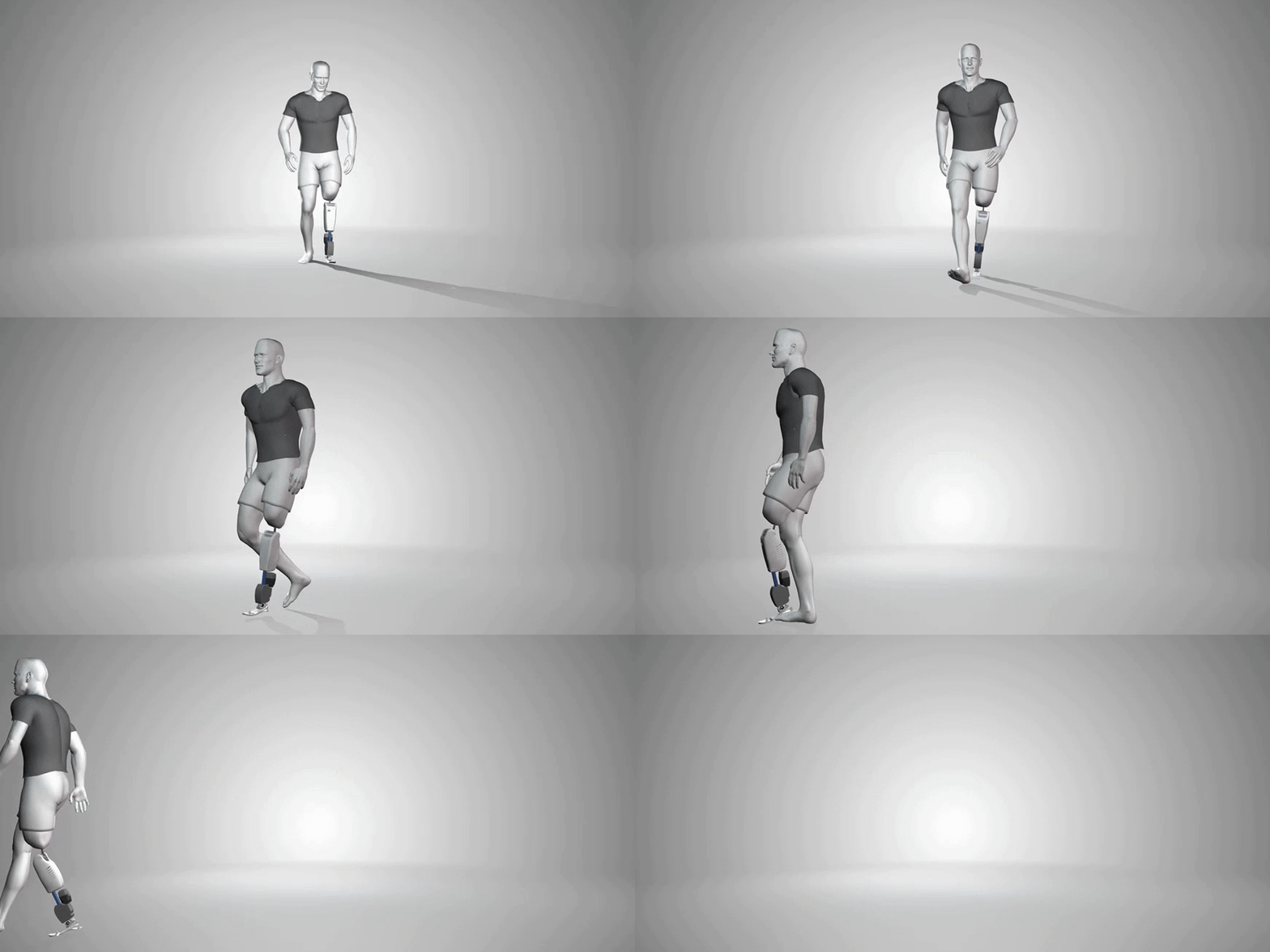
This matters because the prosthesis can respond to biological signals that are closer to natural movement commands. In lower-limb applications, AMI-based approaches have shown that a prosthetic leg can be driven more directly by the user’s nervous system. The goal is not merely to make a leg move. The goal is to make walking feel less like operating machinery and more like walking.
Bones, Sockets, and the Biology of Attachment
The socket is one of the most important and least glamorous parts of prosthetic care. It is also where many frustrations live. A socket must transfer force between the body and the device while dealing with skin, sweat, pressure, volume changes, scar tissue, bone shape, and daily comfort. That is a lot of responsibility for something most people never think about unless it starts hurting.
Even a brilliant prosthetic foot can be unpleasant if the socket causes skin breakdown or unstable fit. Residual limbs change throughout the day. Heat, activity, fluid shifts, and tissue sensitivity can all affect comfort. This is why prosthetic success is not just a question of buying better hardware. It is a question of designing around living tissue.
Osseointegration: Direct Connection to Bone
Osseointegration offers an alternative for some people with limb loss. Instead of attaching the prosthesis through a socket, surgeons implant a metal anchor into the bone, allowing the prosthetic limb to connect directly. This can improve stability, range of motion, and ease of use for selected patients, especially those who struggle with socket-related problems.
However, osseointegration is not magic. It involves surgery, rehabilitation, infection risk, bone loading, and long-term care. The biological interface must remain healthy. The skin opening where the implant exits the body must be managed carefully. Again, the story is not “metal beats socket.” The real story is that prosthetic attachment must respect biology.
Nerves Need Better Interfaces
If a prosthesis is going to feel and move naturally, it needs access to neural information. That sounds simple until one remembers that nerves are delicate, tiny, active, and not especially interested in being treated like USB ports.
Researchers are developing peripheral nerve interfaces, implanted electrodes, regenerative interfaces, targeted muscle reinnervation, and brain-computer interfaces. Each approach has strengths and trade-offs. A peripheral nerve interface may access signals closer to the missing limb. A muscle-based interface may provide more robust signals. A brain-computer interface may be useful when pathways below the brain are unavailable. No single method wins every category.
Targeted Muscle Reinnervation
Targeted muscle reinnervation, or TMR, redirects remaining nerves to new muscle targets. When the person thinks about moving the missing limb, those reinnervated muscles generate signals that can help control a prosthesis. TMR can also help some people with nerve pain or neuroma-related issues, making it important not only for device control but also for post-amputation biology.
Regenerative Peripheral Nerve Interfaces
Regenerative peripheral nerve interfaces are designed to give severed nerves a healthier biological target, often using small pieces of muscle or other tissue. The goal is to improve signal quality and reduce painful nerve problems. In plain English: instead of letting nerves shout into the void, researchers try to give them something useful to talk to.
The Brain Must Accept the Prosthesis
A prosthesis can be mechanically impressive and still feel foreign. Embodiment is the sense that the device belongs to the body. It is not just a poetic idea. It affects function, attention, confidence, and long-term use.
The brain constantly updates its body map. A tool used frequently can become partially incorporated into movement planning. A prosthesis, however, asks for something more intimate: “Please treat this device as a limb.” Sensory feedback, reliable control, comfort, timing, and visual appearance can all influence whether that request succeeds.
Better biology means designing prostheses that work with the brain’s expectations. A delayed signal may feel unnatural. A vibration pattern may be useful but not intuitive. A hand that closes when the user expects it to open can quickly become frustrating. Biological timing matters. Neural meaning matters. Comfort matters. The brain is the strictest product reviewer in the world, and it does not care about the brochure.
Why AI Alone Will Not Save Prosthetics
Artificial intelligence can help prosthetic systems decode complex signals, adapt to user patterns, and improve movement prediction. Machine learning may make myoelectric control more flexible and reduce the need for rigid command patterns. That is promising.
But AI cannot replace biology. A smarter algorithm still needs good biological input. If electrodes receive noisy signals because of sweat, socket shift, muscle fatigue, or poor contact, the algorithm has to guess. If the body receives no feedback, the user still has to supervise movement visually. AI can improve the conversation, but it cannot hold both sides of the conversation by itself.
The best future is not artificial intelligence versus human biology. It is artificial intelligence trained to respect biology: adapting to muscle changes, learning user intent, adjusting feedback, and supporting movement without turning every step into a software update.
Better Biology Also Means Better Care Systems
Prosthetic innovation is often presented as a device story, but it is also a care story. People with limb loss need surgeons, prosthetists, physical therapists, occupational therapists, pain specialists, psychologists, primary care clinicians, and peer support. The device is one chapter. Rehabilitation is the plot.
In the United States, limb loss is closely connected with vascular disease, diabetes, trauma, infection, cancer, and congenital limb difference. That means better prostheses must also fit into prevention, wound care, mental health support, insurance coverage, and long-term follow-up. A high-tech limb that is unaffordable, hard to repair, or poorly matched to daily life is not a breakthrough for the person who cannot use it.
Data Matters, Too
Better biology requires better data. Limb-loss registries and long-term outcome tracking can help researchers understand which surgeries, prosthetic designs, rehabilitation approaches, and care pathways work best for different people. Without good data, the field risks designing for the loudest success stories instead of the broad reality of users’ lives.
That reality includes elderly patients, people with diabetes, children with limb differences, veterans, athletes, workers, rural patients, and people who simply want to cook dinner without turning the kitchen into a prosthetic obstacle course.
Specific Examples of Biology-First Prosthetic Innovation
1. Nervous-System-Driven Walking
Recent AMI-based lower-limb research shows how reconnecting muscle pairs can improve neural control of a powered prosthetic leg. Instead of relying only on robotic sensors, the system uses the person’s own biological signals to help drive movement. This approach points toward prostheses that respond more naturally to intention and terrain.
2. Prosthetic Hands That Restore Touch
Research teams have shown that electrical stimulation of peripheral nerves or brain regions can create touch-like sensations. When users receive feedback from a prosthetic hand, they may grip objects more accurately and feel more connected to the device. The long-term challenge is making these systems safe, durable, affordable, and practical outside the lab.
3. Osseointegrated Limbs
For selected users, direct skeletal attachment can reduce socket problems and improve mechanical connection. This is especially meaningful for people with short residual limbs or persistent socket discomfort. It also reminds us that prosthetic success depends on the interface, not just the limb.
4. Surgical Interfaces Designed Before the Prosthesis
The old model often treated surgery and prosthetic fitting as separate phases. The new model increasingly asks surgeons and prosthetists to think together. How can the residual limb be shaped to improve control? How can nerves be managed to reduce pain and generate better signals? How can muscle pairs be preserved? The best prosthesis may begin in the operating room.
The Future of Prostheses Is Bio-Integrated
The next generation of prostheses will likely be less about “robot limbs” and more about bio-integrated systems. That means powered joints, implanted sensors, nerve interfaces, adaptive algorithms, osseointegrated anchors, soft materials, regenerative medicine, and rehabilitation plans designed as one ecosystem.
In this future, the prosthesis does not merely attach to the body. It listens to the body. It returns information. It adapts to healing, fatigue, growth, and aging. It becomes less like a tool and more like a partner in movement.
That future will require patience. Biology does not move at the speed of a product launch. Clinical trials take time. Surgical methods must prove safety. Implants must last. Insurance systems must catch up. Users must be included from the beginning, not invited at the end to pose for a promotional photo while everyone pretends the charging cable is not annoying.
Experience-Based Reflections: What Better Biology Feels Like in Real Life
When people talk about prosthetic progress, they often focus on dramatic moments: climbing stairs, lifting weights, running on a track, shaking hands, or using a robotic finger to pick up a grape without turning it into jam. Those moments matter, but everyday experience is where prosthetic design truly succeeds or fails.
Imagine waking up and putting on a prosthetic leg. The first question is not, “How advanced is the carbon fiber?” The first question is, “Does this fit today?” A residual limb can feel different from morning to evening. It may be slightly swollen, tender, dry, warm, or sensitive. A socket that felt fine yesterday can become irritating after a long walk or a hot afternoon. Better biology means designing systems that acknowledge these changes instead of treating the body like a fixed mechanical part.
Now imagine using a prosthetic hand to make breakfast. Without sensory feedback, the user may need to watch every movement closely. Is the egg held too tightly? Is the cup slipping? Did the fingers fully close around the spoon? Vision becomes the substitute for touch. That works until attention is divided. Real life is full of distractions: phones ring, dogs bark, children ask questions, and toast burns because toast has no respect for biomechanics. A prosthetic hand that can return pressure or position feedback could reduce the mental workload of simple tasks.
There is also the emotional experience of trust. A prosthetic limb becomes useful when the person can trust it without constant negotiation. Trust grows when the device responds predictably, fits comfortably, and gives the body enough information to move confidently. That trust is biological as much as mechanical. The nervous system learns patterns. The skin learns pressure. Muscles learn timing. The brain learns whether the prosthesis deserves a place in the body map.
Rehabilitation adds another layer. Learning to use a prosthesis is not like buying a new pair of shoes, although shoes can also be dramatic if they are terrible. It is closer to learning a new physical language. The user must coordinate muscles, balance, posture, attention, and feedback. Therapists help translate between the person, the device, and the goals of daily life. Better biology can make this learning process more natural by giving clearer signals and reducing discomfort.
The most meaningful prosthetic improvements may not always look futuristic. A better socket liner, a smarter surgical nerve interface, a more stable bone connection, a feedback pattern that prevents overgripping, or a rehabilitation plan that respects fatigue can change daily life more than a flashy feature. For users, the question is not whether the prosthesis impresses an audience. The question is whether it helps them live with less friction.
That is why the phrase “better biology” matters. It reminds designers that the human body is not an accessory to the prosthesis. The prosthesis is an accessory to the human body. The body heals, adapts, complains, compensates, and learns. If technology ignores that, it will always feel slightly separate. If technology works with that, prostheses can become more intuitive, more comfortable, and more deeply personal.
Conclusion: The Best Prosthesis Starts With the Person
To make better prostheses, we need better biology because movement is not just mechanical. It is sensory, neural, muscular, skeletal, emotional, and social. A great prosthesis must do more than move. It must communicate. It must fit living tissue. It must respect pain, fatigue, healing, and identity. It must help the user feel capable without demanding constant attention.
The future of prosthetics will not be won by the shiniest robot hand or the most dramatic promotional video. It will be won by designs that understand the living body in detail. Better motors will help. Better batteries will help. Better AI will help. But the biggest breakthroughs will come from restoring the biological loops that make movement feel natural.
In other words, the next great prosthetic revolution may not begin with a machine. It may begin with a nerve, a muscle, a bone, a surgeon, a therapist, and a user saying, “This finally feels like it belongs.”