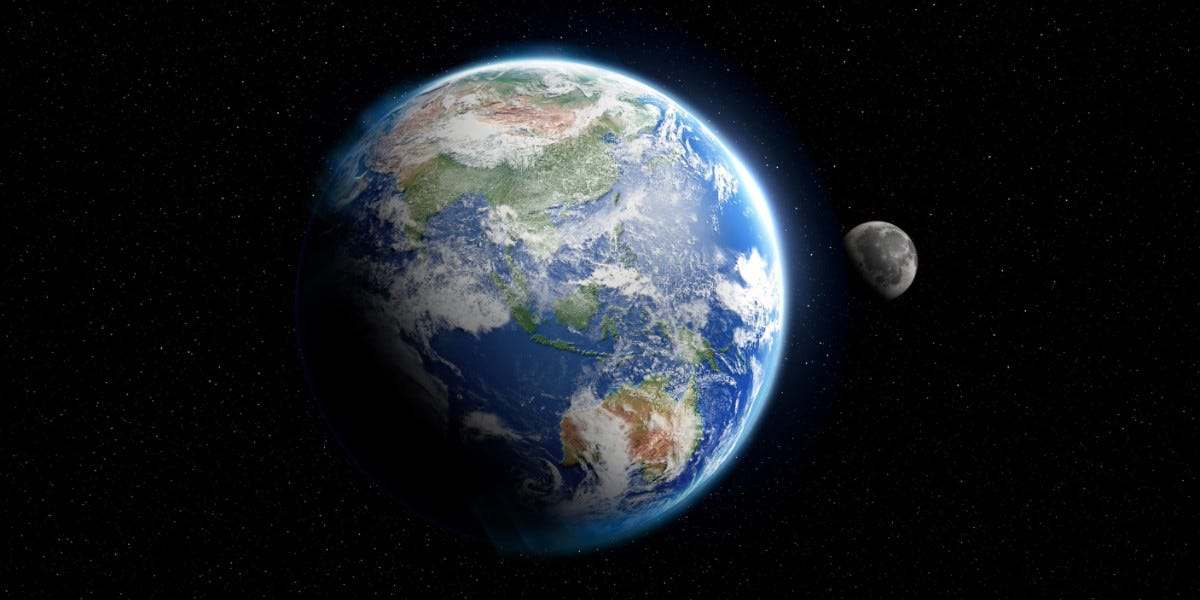
Earth is easy to take for granted because, well, we already live here. It is the planet of unpaid bills, overwatered houseplants, coffee stains, and weather forecasts that somehow still surprise us. But zoom out for a second and our world starts looking absolutely outrageous in the best possible way. It is a rocky planet with a breathable atmosphere, liquid water on the surface, a magnetic shield, moving tectonic plates, one very helpful moon, and enough biological variety to fill jungles, deserts, coral reefs, and your backyard bird feeder.
In other words, Earth is not just “nice.” It is wildly, almost suspiciously, impressive. From the deep ocean to the upper atmosphere, this planet is packed with features that make it scientifically fascinating and emotionally humbling. The more you learn about it, the more it feels like we are all riding through space on a miracle with clouds. Here are 20 amazing Earth facts that prove our home planet deserves a standing ovation, or at least a respectful slow clap.
20 Amazing Facts About Earth
1. Earth is the only world we know that hosts life.
That alone should stop the scroll. Scientists have found plenty of planets outside our solar system, but Earth is still the only place we know that is inhabited by living things. From bacteria to blue whales, life has turned this planet from a ball of rock into a roaring, blooming, crawling masterpiece.
2. Earth is about 4.54 billion years old.
That number is so big it practically wears a cape. Earth has been around long enough to build continents, crash them together, split them apart, freeze over, warm up, and support life through astonishing changes. Human history is a blink. Earth’s story is a library.
3. Our planet formed from dust and gas around 4.5 billion years ago.
Earth did not arrive fully decorated. It formed when gravity pulled swirling material together in the early solar system. Over time, that raw beginning became a layered planet with a core, mantle, crust, oceans, and an atmosphere that made life possible. Talk about a long-term makeover.
4. About 71 percent of Earth’s surface is covered by ocean.
Earth is often called the blue planet for good reason. Space images show more ocean than land, and that watery coverage helps regulate climate, move heat around the globe, and support an extraordinary amount of life. This planet is less “rock with puddles” and more “ocean with continents attached.”
5. Around 97 percent of Earth’s water is in the ocean.
Most of the water on Earth is salty, which is great news if you are a sea turtle and terrible news if you are trying to fill a glass. The small fraction that is fresh has to support ecosystems, agriculture, and people. Suddenly, every lake and river starts to feel a lot more precious.
6. Most freshwater is locked in ice or stored underground.
Here is the twist: even the freshwater Earth has is not mostly sitting around in easy-to-pour form. Much of it is frozen in glaciers and ice caps, and a huge portion of the rest is underground. The amount found in rivers and lakes is tiny compared with the planet’s full water budget.
7. Earth’s atmosphere is mostly nitrogen and oxygen.
The air we breathe is roughly 78 percent nitrogen and 21 percent oxygen, plus trace gases. It sounds simple, but this blend is a big part of what makes Earth habitable. It helps regulate temperature, supports breathing and photosynthesis, and makes daily life possible without anyone needing a space helmet.
8. That atmosphere is a shield, not just a sky decoration.
Earth’s atmosphere filters harmful radiation and burns up many incoming meteoroids before they can strike the surface. So yes, the sky is pretty, but it is also doing security work around the clock. It is the ultimate unsung bodyguard.
9. A full Earth rotation is not exactly 24 hours.
Our everyday solar day is 24 hours, but a sidereal day, the time Earth takes to rotate once relative to distant stars, is about 23 hours and 56 minutes. Earth is spinning with remarkable precision, even if Monday mornings still feel much longer.
10. Earth’s 23.4-degree tilt is why we get seasons.
Summer and winter are not caused by Earth being dramatically closer to or farther from the Sun. They happen because our planet is tilted on its axis. That tilt changes how sunlight reaches each hemisphere throughout the year. In short, seasons are a geometry story, not a distance drama.
11. Earth is not a perfect sphere.
It is slightly oblate, meaning it bulges at the equator because of rotation. So if you pictured Earth as a flawless marble, science would like a gentle word. It is more like a very elegant, slightly squished cosmic basketball.
12. The Moon helps keep Earth steady.
Earth has one moon, and it is doing more than brightening up poetry. The Moon helps stabilize our planet’s wobble, making Earth’s climate less chaotic over long stretches of time. Without that stabilizing effect, conditions here could be much more extreme.
13. The Moon also drives the tides.
The Moon’s gravity pulls on Earth’s oceans, creating tidal bulges. As Earth rotates through them, most coastlines experience two high tides and two low tides in roughly a lunar day, which lasts about 24 hours and 50 minutes. The Moon is basically conducting a global water ballet.
14. Earth’s magnetic field is generated deep inside the planet.
The magnetic field comes largely from motion in the molten outer core. This geodynamo helps protect Earth from charged particles and solar wind. It is one of the main reasons our planet holds onto the conditions that make life possible.
15. The magnetic field gives us auroras.
When charged particles interact with gases high in the atmosphere near Earth’s poles, the sky lights up in shimmering curtains of color. The northern and southern lights are not just beautiful. They are visible proof that Earth is actively defending itself in space.
16. Earth’s tectonic plates are always moving.
The ground beneath your feet feels steady, but tectonic plates are creeping along at rates similar to fingernail growth. That slow motion reshapes coastlines, builds mountain ranges, triggers earthquakes, and powers volcanoes. Earth is not a still planet. It is a living machine in slow motion.
17. The ocean floor is constantly being renewed and recycled.
New crust forms at mid-ocean ridges, while older oceanic crust sinks back into Earth at subduction zones. This recycling system is one of the great engines of plate tectonics. It means parts of the seafloor are much younger than many rocks on land.
18. Most of Earth’s volcanoes are underwater.
We tend to picture volcanoes as dramatic mountains on land, but many are hidden beneath the oceans. In fact, Earth’s longest mountain range is also underwater, stretching along the mid-ocean ridge system. The planet has been doing huge geologic work in places most people never see.
19. The deepest known place on Earth is Challenger Deep.
Located in the Mariana Trench, Challenger Deep reaches roughly 10,935 meters, or 35,876 feet. That is so deep it makes even the tallest mountain feel a bit less smug. Earth is not only broad and complex. It is vertically dramatic.
20. Tiny ocean life helps produce roughly half of Earth’s oxygen.
Phytoplankton may be microscopic, but they are overachievers on a planetary scale. These drifting organisms help generate about half of the oxygen on Earth. So while forests deserve their applause, the ocean’s smallest workers have earned a full encore.
Why These Earth Facts Matter
These Earth facts are not just fun trivia for science class or a handy way to sound impressive at dinner. They reveal how interconnected the planet really is. Oceans shape climate. Ice stores freshwater. Tectonic plates reshape continents. The Moon influences tides. The atmosphere and magnetic field protect life. Nothing on Earth works alone.
That is part of what makes our planet so amazing. It is not simply that Earth has mountains, water, air, and life. It is that these systems interact constantly, balancing, shifting, protecting, and transforming one another. Earth is a network, not a collection. A system, not a shelf of separate parts. And the more we understand that, the more obvious it becomes that this planet is worth protecting with much more enthusiasm and much less procrastination.
What These Earth Facts Feel Like in Real Life
Reading about Earth is one thing. Feeling it is another. The facts become real the moment you stand on a beach at low tide and realize the ocean has quietly moved an enormous volume of water while you were busy checking your phone. Tide pools shimmer. Crabs sidestep like tiny comedians. Seaweed clings to rocks like it pays rent. Suddenly, gravity is not an abstract concept from a textbook. It is right there in your shoes, your salt-sticky hands, and the rhythm of the shore.
The same thing happens in the mountains. You can read that tectonic plates move at about the speed your fingernails grow, but that idea lands differently when you are staring up at a jagged ridgeline that exists because continents crashed into each other for millions of years. It makes the landscape feel less like scenery and more like a sentence in a very long geological novel. You are not just looking at a mountain. You are looking at pressure, time, heat, motion, and patience turned into stone.
Then there is the sky, Earth’s most dramatic multitasker. Watch a storm build over an open field and you get a front-row seat to the atmosphere doing what it does best: moving energy around in spectacular fashion. Clouds stack. Wind shifts. The air changes smell, which is one of Earth’s underrated tricks. A few moments later, rain taps the ground, plants perk up, and the whole place feels reset. The atmosphere is no longer just a layer of gas. It becomes something you can hear on the roof and feel on your skin.
Night adds another layer of wonder. Step outside where the city lights thin out and look up. The Moon hangs there like Earth’s loyal sidekick, bright enough to cast shadows, powerful enough to tug on oceans, steady enough to help calm our planet’s wobble over long spans of time. If you have ever walked outside under a full moon and felt the world go quiet for a second, that feeling is not imaginary. It is perspective. The sky has a way of reminding you that your to-do list is real, sure, but so is orbital mechanics.
And perhaps the most moving Earth experience is the simplest one: noticing life everywhere. Moss in a sidewalk crack. A bird building a nest in a parking lot sign. Wildflowers pushing through gravel. The planet is full of organisms making a living in places that look, at first glance, impossible. That matches what science tells us about life on Earth: it thrives in astonishing niches, from deep underground to polar ice to the open ocean. Once you start noticing that persistence, Earth stops feeling ordinary. It feels resilient, inventive, and a little bit magical.
That is the real power of these amazing Earth facts. They turn everyday experiences into evidence of something much bigger. A gust of wind becomes atmospheric science. A coastline becomes lunar influence. A mountain becomes plate tectonics. A breath becomes the gift of plankton, forests, and a stable atmosphere. Earth is not only a planet we study. It is a planet we experience every day, often without realizing how extraordinary those experiences are. The trick is not that Earth needs to become more amazing. It already is. We just need to look up, look down, and pay better attention.
Conclusion
Earth is amazing not because of one headline fact, but because of the whole outrageous combination. It is ancient, active, watery, tilted, shielded, moon-assisted, oxygen-rich, and full of life in places that seem impossible. It builds mountains, recycles crust, glows at the poles, stores freshwater in ice, and lets microscopic ocean life help power the air we breathe. Frankly, it is doing a lot.
So the next time Earth feels ordinary, remember this: ordinary planets do not usually come with stable seasons, global oceans, tectonic plates, protective magnetospheres, and ecosystems capable of turning sunlight into forests, reefs, and breakfast. Our home planet is not just beautiful. It is a scientific marvel with excellent scenery.