Everyhings, do not drive into fountains, do not attempt to smuggle a suspiciously large pineapple through airport security. Easy enough. Then there are the unwritten rules: the invisible social instructions that locals learn by watching, listening, and occasionally being corrected by a disappointed aunt.
For tourists, these travel etiquette rules can be tricky. Nobody hands you a laminated card at passport control explaining that you should not stand in a bike lane, yell on a train, flush toilet paper everywhere, or walk into a sacred site dressed like you are heading to a pool party. Yet these small details can shape whether you come across as a thoughtful visitor or a human air horn with a selfie stick.
Note: Customs vary by city, region, age group, religion, and individual preference. These are practical cultural etiquette tips, not universal laws. Observe what locals do, ask politely when unsure, and remember that curiosity travels better than confidence on turbo mode.
Why Unwritten Travel Rules Matter
Travel is not about perfectly performing another culture. Nobody expects a visitor to arrive fluent in every local custom, transport system, hand gesture, and breakfast pastry protocol. What matters is showing that you understand you are a guest.
The best tourists do not try to become locals in 48 hours. They simply avoid making life harder for the people who actually live there. They step aside instead of blocking sidewalks, lower their voices when a space is quiet, learn a greeting before asking for Wi-Fi, and do not treat homes, temples, markets, or memorials like background props for content.
Here are 30 common answers to the question: What’s an unwritten rule in your country that tourists always seem to break?
30 Unwritten Rules Tourists Should Know Before Traveling
-
Japan: Keep your public-transport volume below “podcast host.”
On many Japanese trains, buses, and subways, quiet is a shared courtesy. Loud phone calls, speakerphone conversations, and dramatic reunion scenes may earn you a few very polite but very meaningful looks. Put your phone on silent, avoid chatting loudly, and let the train soundtrack remain mostly train.
-
Thailand: Your feet are not conversation tools.
In Thailand, feet are commonly viewed as the lowest and least respectful part of the body. Pointing your soles at people, religious objects, or images of the monarchy can be considered rude. Use your hands to indicate directions, and do not prop your feet on chairs unless you want your vacation photos to include an accidental etiquette lesson.
-
France: Say “bonjour” before launching into your request.
Walking into a bakery, shop, hotel, or small business and immediately asking for something can sound abrupt. A simple “Bonjour” acknowledges the other person before business begins. Think of it as social ignition: no greeting, no smooth takeoff.
-
England: Stand on the right side of the escalator.
In London and many other parts of England, commuters often stand on the right and walk on the left. Blocking both sides of an escalator is the fastest way to become a temporary public monument while everyone else tries to get to work.
-
Italy: Do not treat every coffee like a giant dessert milkshake.
Ordering a cappuccino after a heavy dinner is not illegal, and no Italian coffee police will leap from behind the espresso machine. Still, many locals see milk-heavy coffee as a morning drink. If you want to blend in, order an espresso after lunch or dinner and save the foamy mountain for breakfast.
-
Spain: Dinner may happen later than your stomach expects.
Many visitors arrive at a restaurant at 6:00 p.m. ready for dinner, only to discover they are basically early enough to help set the tables. In many Spanish cities, dinner often begins later in the evening. Adjust your meal schedule, enjoy a snack, and accept that your internal clock may need a vacation too.
-
Germany: Do not casually ignore pedestrian signals.
Crossing against a red pedestrian light may be common in some places, but in Germany it can draw disapproving looks, especially when children are nearby. The point is less about acting robotic and more about respecting a shared expectation of order and safety.
-
The Netherlands: Bike lanes are not decorative sidewalks.
Amsterdam bike lanes can look invitingly smooth and empty for roughly three seconds. Then a cyclist appears at impressive speed. Keep out of marked bike lanes, look both ways before stepping across them, and never assume a bike bell is merely festive background music.
-
Sweden: Give people personal space.
In Sweden, strangers often value a comfortable bubble of personal space. Standing too close in a line, chatting intensely with someone who is clearly enjoying silence, or sitting right beside a stranger on an otherwise empty bus may feel overly familiar.
-
Finland: Sauna time is not a loud networking event.
Sauna culture in Finland is deeply rooted and often calm, practical, and respectful. Follow the house rules, do not make the experience weird, and remember that a sauna is not the place to perform your stand-up comedy routine at maximum volume.
-
Switzerland: Quiet hours are taken seriously.
In many Swiss communities, noisy behavior during certain evening, Sunday, or holiday hours can be frowned upon or restricted. Do not assume your vacation rental is a private concert venue. A late-night furniture-dragging session may not make you popular with the people living one wall away.
-
Greece: Check before flushing toilet paper.
In some Greek islands and older buildings, plumbing systems cannot handle toilet paper well. If there is a bin beside the toilet and a sign asking you to use it, follow the instructions. Your future self, the host, and the plumbing system will all be grateful.
-
Turkey: Dress respectfully in religious spaces.
When visiting mosques, modest clothing is expected, and shoes are typically removed before entering prayer areas. Bring a scarf or cover-up if you plan to visit religious sites, and avoid treating a sacred space like a fashion runway with stained-glass lighting.
-
Morocco: Ask before photographing people.
Markets, medinas, and busy streets can be visually irresistible, but local people are not automatically part of your photo package. Ask before taking close-up portraits, especially of vendors, performers, children, or anyone who is clearly not inviting attention.
-
Egypt: Sacred sites are not climbing gyms.
Ancient monuments may look dramatic enough to climb, lean on, or pose dramatically beside, but many sites have strict preservation rules. Respect barriers, avoid touching fragile carvings, and remember that history has survived thousands of years without needing your sneaker in the frame.
-
United Arab Emirates: Public behavior requires extra awareness.
Dubai and Abu Dhabi are international cities, but visitors should still dress thoughtfully in public places, behave respectfully, and avoid assuming every nightlife habit from home translates perfectly. Beachwear belongs at the beach, and public affection can be viewed differently than in many Western destinations.
-
Saudi Arabia: Do not confuse hospitality with permission to ignore local norms.
Visitors may encounter generous hospitality, but social expectations around dress, public behavior, religion, and alcohol differ significantly from those in many countries. Read current local guidance before you go, especially because some cultural expectations overlap with formal laws.
-
India: Use your right hand for eating and giving items.
In many parts of India, the right hand is traditionally used for eating, handing over money, and offering gifts. It is a small adjustment that signals awareness and respect, especially when sharing food or interacting in traditional settings.
-
China: Do not plant chopsticks upright in rice.
Standing chopsticks vertically in a bowl of rice can resemble incense used in funeral rituals. Rest them across the bowl or on a chopstick holder instead. It is a tiny detail, but avoiding it is much easier than trying to explain that you were merely multitasking with noodles.
-
South Korea: Offer and receive with two hands when appropriate.
When receiving a business card, drink, gift, or other item from an older person or someone in a formal setting, using both hands or supporting one wrist with the other can show respect. You do not need to choreograph every transaction, but a little attention goes a long way.
-
Vietnam: Dress modestly at pagodas and temples.
Vietnam is relaxed in many daily settings, but religious spaces call for more care. Cover shoulders and knees when possible, remove hats when appropriate, and keep your voice low. Bonus tip: do not stand in the middle of a doorway for a group photo while everyone else is trying to enter.
-
Singapore: Cleanliness is not a suggestion.
Singapore is famous for its orderly public spaces. Littering, vandalism, and other disruptive behavior can lead to penalties, but even beyond the rules, locals value shared cleanliness. Throw away your trash, respect queues, and do not leave your bubble tea cup wandering around the city alone.
-
Indonesia: Watch where you step in Bali.
In Bali, small daily offerings may be placed on sidewalks, steps, and outside homes or businesses. They are part of local Hindu traditions, not discarded decorations. Walk carefully, avoid stepping on them, and respect ceremonies that may temporarily change traffic or business hours.
-
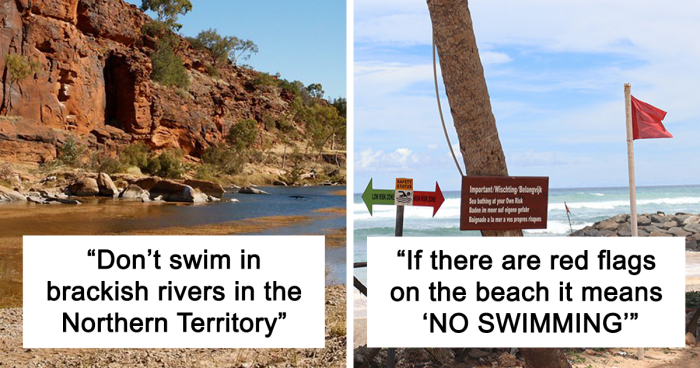
Australia: Respect the beach flags.
Australia’s beaches are beautiful, but currents and surf conditions can be dangerous. Swim between the red-and-yellow flags where lifeguards patrol, rather than assuming the emptiest section of beach is your secret VIP lagoon.
-
New Zealand: Clean your outdoor gear.
New Zealand takes biosecurity seriously. Muddy hiking boots, camping equipment, and food items can carry pests or diseases that threaten fragile ecosystems. Follow airport declarations honestly and clean your gear before moving between trails or regions.
-
Mexico: Do not skip the greeting ritual.
In many Mexican social settings, jumping directly into a request can feel rushed. Say hello, ask how someone is doing, and say goodbye properly. Efficiency is useful, but warmth is often part of the transaction too.
-
Brazil: Expect warmer greetings and closer conversation.
Brazilian social interactions can be more physically expressive than visitors expect. A cheek kiss, handshake, hug, or casual touch may be normal among acquaintances. Do not panic, but also follow the other person’s lead rather than launching into an awkward international greeting freestyle.
-
Argentina: Dinner may start when your home country is thinking about pajamas.
Late meals are common in many Argentine cities, particularly in Buenos Aires. Arriving at a restaurant too early can make you feel like the unofficial manager. Plan for a later dinner, relax into the pace, and understand that the evening may still be getting started at 10:00 p.m.
-
Canada: Queue politely and keep public interactions gentle.
Canada is not one giant apology machine, despite every joke you have heard. Still, politeness, orderly lines, and a considerate tone matter in many public settings. Cutting a queue or acting aggressively over minor inconveniences will stand out for all the wrong reasons.
-
United States: Remember that prices often exclude tax and tipping is customary.
Many visitors are surprised when the final bill is higher than the menu price because sales tax is added later. Tipping is also expected in many service situations, particularly restaurants, bars, taxis, hotels, and personal services. It can feel confusing, but learning the basics before your first meal saves awkward math and side-eye.
How to Avoid Breaking Unwritten Rules While Traveling
You do not need to memorize a thousand etiquette rules before you zip your suitcase. Start with a short pre-trip checklist: learn a few greetings, check local laws, understand basic tipping expectations, research dress codes for religious sites, and read up on public transportation behavior.
Once you arrive, the simplest method is observation. Watch what locals do in restaurants, queues, elevators, markets, temples, and public transit. Are people speaking softly? Are they removing shoes? Are they standing farther apart than you normally would? Are they using a special lane, basket, door, or payment method? Copy the pattern rather than inventing one.
When you are uncertain, ask. A polite question such as, “Is there a local custom I should know?” can prevent a mistake and often starts a friendly conversation. Nobody expects perfection. They usually appreciate effort.
What Travelers Learn After Breaking an Unwritten Rule
The funny thing about travel etiquette is that most people do not truly understand it until they get something slightly wrong. Not catastrophically wrong, ideally. More like standing on the wrong side of an escalator while twenty commuters silently calculate whether they can squeeze around you. Or ordering dinner at 5:30 p.m. in a city where the kitchen will not even consider turning on a stove until the sun has emotionally recovered from the afternoon.
These little mistakes can feel embarrassing in the moment, but they are often the beginning of better travel. The traveler who accidentally speaks too loudly on a train learns to notice the mood of public spaces. The visitor who walks into a temple wearing the wrong outfit learns to pack a scarf, a light overshirt, or longer pants. The person who blocks a bike lane in Amsterdam learns that bicycles are not cute urban accessories; they are serious transportation with bells, brakes, and places to be.
There is also a difference between being uninformed and being dismissive. Most locals understand that visitors will not know every custom. The problem usually begins when someone decides that local habits are silly, inconvenient, or beneath them. Complaining that dinner is “too late,” that a city is “too quiet,” that people are “too formal,” or that public rules are “too strict” often says more about the traveler than the destination.
A better approach is to treat unfamiliar customs as part of the experience. Maybe you are used to eating dinner at 6:00 p.m., but now you are sharing small plates at 10:00 p.m. on a warm street in Spain. Maybe you normally take phone calls anywhere, but now you are learning how peaceful a train ride can be when nobody is narrating an argument about printer cartridges. Maybe you thought a local greeting was unnecessary, but then you realize that one “bonjour,” “sawasdee,” “xin chào,” or “hola” changes the entire tone of an interaction.
Respectful travel does not mean walking around terrified of making a mistake. That would turn a vacation into a hostage negotiation with a guidebook. It means being humble enough to notice, flexible enough to adapt, and kind enough to accept correction without becoming defensive. A smile, a quick apology, and a willingness to adjust usually fix most small etiquette mishaps.
In the end, unwritten rules are not traps designed to catch tourists. They are clues about how people share space, show respect, protect traditions, and move through daily life. Learn a few before you go, pick up more as you travel, and leave each place a little easier for the next person to enjoy. That is the kind of souvenir no airport shop can sell.
Conclusion
Every destination has its own rhythm, from quiet trains in Japan and bike lanes in the Netherlands to late dinners in Argentina and greeting rituals in Mexico. You do not have to become a cultural expert before boarding a plane. You just need enough awareness to observe, ask questions, and avoid treating another country like a theme park built for your convenience.
The most memorable travelers are not the ones who perfectly imitate locals. They are the ones who stay curious, respect shared spaces, laugh at their small mistakes, and leave people thinking, “That visitor was actually lovely.”