Note: This article is based on publicly reported entertainment coverage and dermatology guidance from reputable U.S. sources, including celebrity news outlets, dermatology organizations, medical centers, and health publications. It is written for web publication in standard American English.
Selena Gomez Turns an Awkward “Mustache” Question Into a Masterclass in Confidence
Selena Gomez has spent most of her life under lights so bright they could probably toast a bagel. As a singer, actress, beauty founder, producer, and one of the most watched women on the internet, she knows that every haircut, facial expression, outfit, photo angle, and “wait, did she look tired?” moment can turn into a public discussion. So when a fan asked her how she shaves her “mustache,” Gomez could have ignored it, snapped back, or filed the comment under “Things People Should Maybe Keep in Their Drafts.”
Instead, she laughed. Then she answered with the kind of relaxed honesty that made the moment instantly more interesting than the question itself.
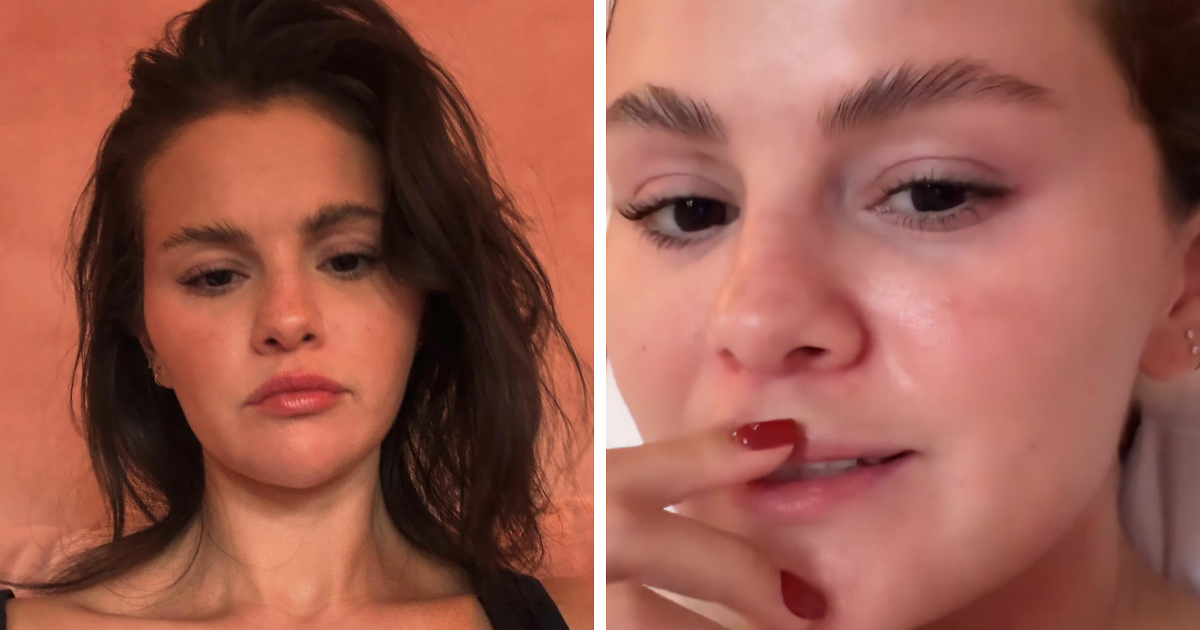
In a makeup-free Instagram video, Gomez addressed the comment directly, explaining that the shadow above her upper lip was not facial hair at all. It was melasma, a common skin condition that causes brown or gray-brown patches, often on sun-exposed areas of the face. Rather than acting embarrassed, she calmly clarified what people were seeing and used the moment to remind fans that skin is skin: sometimes glowy, sometimes blotchy, sometimes dramatic for no reason, and always more human than a filtered selfie suggests.
The Selena Gomez mustache response quickly caught attention because it did more than shut down an awkward fan question. It reframed the conversation. In a culture where women’s faces are examined with the precision of a museum security system, Gomez showed that humor and information can be more powerful than defensiveness. Her response was brilliant because it was simple: “I get it, but here’s what it actually is.” No shame. No lecture. No 14-slide PowerPoint titled Please Stop Zooming Into My Face.
What Did Selena Gomez Say About Her “Mustache”?
The viral moment began when Gomez said someone had asked her how she shaves her mustache. She laughed while recounting it, then pointed out that the darker area above her lip was caused by melasma. She also said she takes care of it and emphasized the importance of sunscreen, especially given her health history with lupus.
That response landed well for several reasons. First, it was refreshingly unbothered. Gomez did not treat the question like a scandal. Second, she corrected misinformation without humiliating the person who asked it. Third, she turned a beauty-standard jab into a useful mini-lesson about hyperpigmentation, sun protection, and the fact that not every shadow on a face is hair.
It also helped that Gomez has long been open about her health and appearance. She has discussed lupus, a kidney transplant, medication-related weight changes, acne, mental health, and public body shaming. For many fans, this latest moment felt consistent with her larger message: bodies change, faces change, health matters, and strangers on the internet do not get voting rights over your self-worth.
What Is Melasma, and Why Can It Look Like an Upper-Lip Shadow?
Melasma is a form of hyperpigmentation, meaning the skin produces extra pigment in certain areas. It often appears on the cheeks, forehead, bridge of the nose, chin, and above the upper lip. When melasma shows up over the lip, people sometimes call it a “melasma mustache” because the discoloration can create the appearance of a faint shadow. Despite the nickname, it has nothing to do with shaving, stubble, or actual facial hair.
Common triggers include sun exposure, heat, visible light, hormonal changes, pregnancy, birth control, genetics, and certain medications. Dermatologists often stress that melasma can be stubborn. It may fade, flare, improve, return, or act like it has a personal grudge against your skincare routine.
For the upper-lip area, sun exposure is a major factor. That part of the face gets plenty of light, and many people forget to apply sunscreen carefully around the mouth. Add sweat, lip licking, waxing irritation, or skin sensitivity, and the area can become even more prone to discoloration.
The key takeaway from Gomez’s comment is important: a darker patch above the lip is not automatically a “mustache.” Sometimes it is pigmentation. Sometimes it is facial hair. Sometimes it is both. And sometimes it is simply a human face existing in natural lighting, which, frankly, should not require a congressional hearing.
Why Her Response Mattered Beyond Celebrity Gossip
At first glance, the story may seem like another small celebrity internet moment. A fan asks a blunt question, Selena Gomez responds, social media reacts, everyone moves on to the next viral eyebrow. But this exchange matters because it touches a bigger issue: the intense policing of women’s appearances online.
Women are expected to look natural, but not too natural. Polished, but not “trying too hard.” Youthful, but not fake. Flawless, but also relatable. If they wear makeup, someone complains. If they go makeup-free, someone zooms in like they are investigating a crime scene. Gomez’s response pushed back against that exhausting cycle by refusing to treat a normal skin condition as a failure.
It also helped normalize conversations about melasma. Many people deal with upper-lip hyperpigmentation and feel self-conscious about it, especially because it can be mistaken for hair. When a highly visible celebrity casually says, “That is melasma,” it gives others language for something they may have been quietly worrying about.
That is why the Selena Gomez melasma moment spread so widely. It was not just about one fan question. It was about the relief of seeing a famous woman respond to appearance commentary with humor instead of shame.
Melasma, Facial Hair, and the Confusing World of Beauty Standards
Let’s be honest: the beauty world has made the upper lip weirdly complicated. A person can have peach fuzz, hormonal facial hair, post-wax irritation, sun spots, melasma, acne marks, or a little shadow caused by lighting. Yet online, everything gets flattened into a single cruel label.
Facial hair on women is also far more common than beauty advertising tends to admit. Many women remove upper-lip hair by shaving, waxing, threading, bleaching, dermaplaning, using depilatory creams, or choosing laser hair removal. Others leave it alone. All of those choices are valid. The problem is not facial hair. The problem is the idea that women must pretend their bodies do not grow hair at all, as if everyone emerged from a luxury candle factory.
Melasma adds another layer because it is not removed by shaving. In fact, aggressive hair removal can sometimes irritate the skin and make discoloration look worse for some people. That is why anyone dealing with upper-lip shadow should first figure out what they are treating: hair, pigment, irritation, or a combination.
How to Tell the Difference Between Facial Hair and Melasma
Facial hair usually has texture. You can see or feel hairs, even if they are fine. Melasma, on the other hand, appears as a flat patch of darker skin. It does not feel raised, and it does not disappear after shaving. It may look more noticeable after sun exposure or during hormonal changes.
If the shadow remains even when the area is hair-free, pigmentation may be involved. If the skin looks darker in a symmetrical patch or follows the shape of the upper lip, melasma is possible. A dermatologist can diagnose melasma and rule out other causes of hyperpigmentation, such as post-inflammatory marks, sun spots, or skin irritation.
What Dermatologists Usually Recommend for Melasma
Melasma treatment often begins with sun protection. This may sound boring, but sunscreen is the main character here. Broad-spectrum SPF 30 or higher, reapplied as needed, is one of the most important steps for preventing melasma from getting darker. Hats, shade, and avoiding peak sun can also help.
Many dermatologists recommend tinted mineral sunscreens for melasma because formulas containing iron oxides may help protect against visible light, which can worsen pigmentation in some people. This is especially relevant for people with medium to deeper skin tones, who may be more prone to certain types of hyperpigmentation.
Treatment options may include prescription creams such as hydroquinone, azelaic acid, tretinoin, corticosteroid combinations, or other pigment-targeting ingredients. Some people may benefit from chemical peels, laser treatments, or microneedling, but procedures should be approached carefully because irritation can sometimes worsen pigmentation.
The important point is that melasma is manageable, not a moral failure. It is also common. Nobody needs to apologize because their skin developed a patch with main-character energy.
What About Shaving the Face? Is It Bad?
Since the fan’s question involved shaving, it is worth addressing the beauty myth that refuses to retire: shaving facial hair does not make it grow back thicker, darker, or faster. Shaving cuts hair at the surface. It does not change the follicle, your hormones, or the hair’s biological personality.
Face shaving and dermaplaning can remove peach fuzz and dead skin cells, which may make skin feel smoother and help makeup apply more evenly. But it is not for everyone. People with active acne, inflamed skin, eczema flare-ups, open cuts, or very sensitive skin should be cautious. Using a dull blade, shaving dry skin, or going over the same area too many times can lead to irritation, razor bumps, or ingrown hairs.
For safer shaving, dermatologists generally recommend wetting the skin, using a gentle shaving cream or gel, shaving in the direction of hair growth, rinsing the blade after each pass, and replacing blades regularly. Afterward, a bland moisturizer and sunscreen are smart choices. Your skin should feel cared for, not like it just survived a tiny lawn mower incident.
Why Selena Gomez’s Honesty Resonates With Fans
Selena Gomez has built a public image around vulnerability without turning every vulnerable moment into a performance. Her openness about lupus, mental health, therapy, body-image pressure, and beauty rumors has made her relatable to people who are tired of celebrity perfection being sold as effortless.
Her “mustache” response fits that pattern. She did not pretend the comment was kind. She did not overexplain. She did not invite people to keep analyzing her face. She simply laughed, clarified the truth, and moved on. That balance is rare online, where every comment can become a battlefield.
Fans praised the way she handled the question because it modeled a healthier response to scrutiny. Instead of absorbing the embarrassment, she handed back the awkwardness. That is a subtle but powerful move. The shame did not belong to her.
The Bigger Conversation: Stop Treating Women’s Faces Like Public Property
One reason this story struck a nerve is that so many people know what it feels like to have a normal feature turned into a “problem.” A little upper-lip hair. A breakout. Smile lines. Dark circles. Texture. Pigmentation. A scar. A birthmark. A skin condition. The internet can make people feel as though every visible detail requires correction.
But real skin is not a product photo. It has pores, pigment, hair, oil, dryness, redness, and occasional betrayal. Even celebrities with access to top dermatologists, makeup artists, lighting experts, and expensive skincare are still human. If Selena Gomez can have melasma, then maybe the rest of us can stop acting shocked when our faces do face things.
The healthiest beauty culture is not one where nobody removes hair, treats pigmentation, or enjoys makeup. It is one where people can choose what they want without being mocked, shamed, or interrogated. Want to shave? Great. Want to treat melasma? Great. Want to wear sunscreen and ignore everyone? Also great. Want to name your upper-lip shadow “Gary” and move on with your life? Honestly, Gary has range.
How to Respond When Someone Comments on Your Appearance
Gomez’s reaction offers a surprisingly useful template. When someone makes an intrusive comment, you do not have to match their energy. You can correct them calmly, make a joke, set a boundary, or say nothing at all. The best response is the one that protects your peace.
For example, if someone asks about upper-lip hair or discoloration, you might say, “It is just pigmentation,” or “That is my skin, and I am not worried about it,” or “My dermatologist and I have it covered.” If the comment is rude, you can keep it even shorter: “That is personal,” or “What an odd thing to ask out loud.”
Humor can help, but it should never be required. Selena Gomez laughed because she wanted to. Nobody owes the internet a charming reaction to an invasive question.
Practical Skincare Lessons From the Selena Gomez Melasma Moment
1. Sunscreen Is Not Optional If You Deal With Hyperpigmentation
If melasma or dark spots are a concern, daily sunscreen is essential. Apply it around the mouth, upper lip, nose, and hairline, since these areas are easy to miss. Reapply when outdoors, sweating, or spending long periods in bright conditions.
2. Do Not Treat Pigmentation Like Hair
If the shadow is melasma, shaving will not fix it. Waxing or harsh exfoliation may even irritate the area. Start by identifying the cause before choosing a treatment.
3. Gentle Skincare Usually Wins
Over-scrubbing, strong acids, and random “miracle” brightening hacks can backfire. Melasma often requires patience and consistency, not a bathroom counter full of products that look like a chemistry final.
4. See a Dermatologist When Pigmentation Persists
A dermatologist can confirm whether the issue is melasma, post-inflammatory hyperpigmentation, sun damage, or something else. They can also recommend treatments suited to your skin tone, sensitivity, and medical history.
Experiences Related to Selena Gomez’s “Mustache” Response
Many people who followed the Selena Gomez mustache story probably recognized the situation instantly. Maybe not because they are celebrities with millions of followers, but because they have stood in front of a bathroom mirror wondering whether that upper-lip shadow was hair, pigment, lighting, or the universe being unnecessarily creative before breakfast.
One common experience is the “car mirror discovery.” Indoor lighting says, “You look fine.” Then the car mirror, powered by direct sunlight and emotional violence, announces every pore, hair, and patch of discoloration like breaking news. A person may suddenly notice an upper-lip shadow that was invisible ten minutes earlier. That does not mean something is wrong. It means natural light has no chill.
Another relatable experience is trying the wrong fix. Someone thinks they have upper-lip hair, so they shave or wax. The hair may go away, but the shadow remains because the real issue is melasma or hyperpigmentation. Then frustration sets in. This is why Gomez’s clarification mattered: naming the condition helps people avoid treating the wrong problem. It is like bringing a snow shovel to a beach cleanupenthusiastic, but not exactly targeted.
There is also the emotional side. Upper-lip discoloration can feel embarrassing because it sits in the center of the face, right where people look when talking. Some people become hyper-aware of it during conversations, photos, video calls, or dates. They may angle their face, avoid bright light, overapply concealer, or check the mirror repeatedly. The stress is real, even when the condition is medically harmless.
For people with facial hair, the experience can be equally loaded. A little peach fuzz is normal, yet many women learn early that visible hair is something to hide. The first time someone comments on it, the embarrassment can stick for years. That is why public responses like Gomez’s are helpful. She made the topic less mysterious and less shameful. She reminded people that a face can have texture, pigment, and history without needing an apology letter.
Some readers may also relate to managing skin issues while dealing with health conditions. Gomez has been open about lupus, and chronic illness can affect appearance in many ways, from medication side effects to fatigue, swelling, inflammation, and skin changes. When outsiders comment only on appearance, they often miss the health story underneath. A person’s face may reflect stress, treatment, hormones, sunlight, or genetics. It is rarely as simple as a stranger’s comment makes it sound.
The best experience to take from this moment is not that everyone should respond exactly like Selena Gomez. It is that you are allowed to respond without shame. You can laugh. You can explain. You can ignore. You can set a boundary. You can treat the condition, remove the hair, wear makeup, skip makeup, or do absolutely nothing. The goal is not to win approval from people who zoom in on your face. The goal is to live comfortably in your own skin, SPF included.
Conclusion: Selena Gomez’s Best Beauty Advice Was Really About Self-Respect
Selena Gomez’s brilliant response to the fan who asked how she shaves her “mustache” worked because it was honest, funny, and quietly educational. She corrected the assumption, explained that the shadow was melasma, and reminded people that sunscreen and skin care matter. More importantly, she refused to turn a normal skin issue into a source of embarrassment.
The viral exchange also opened a larger conversation about melasma, facial hair, body image, and the unrealistic standards placed on women’s faces. Whether someone is dealing with upper-lip pigmentation, peach fuzz, acne, scars, or any other visible skin concern, the message is the same: your face does not need to be flawless to be worthy of kindness.
In the end, Gomez did more than answer a grooming question. She showed how to meet awkward scrutiny with grace, humor, and a little dermatology. That is a beauty routine worth copying.