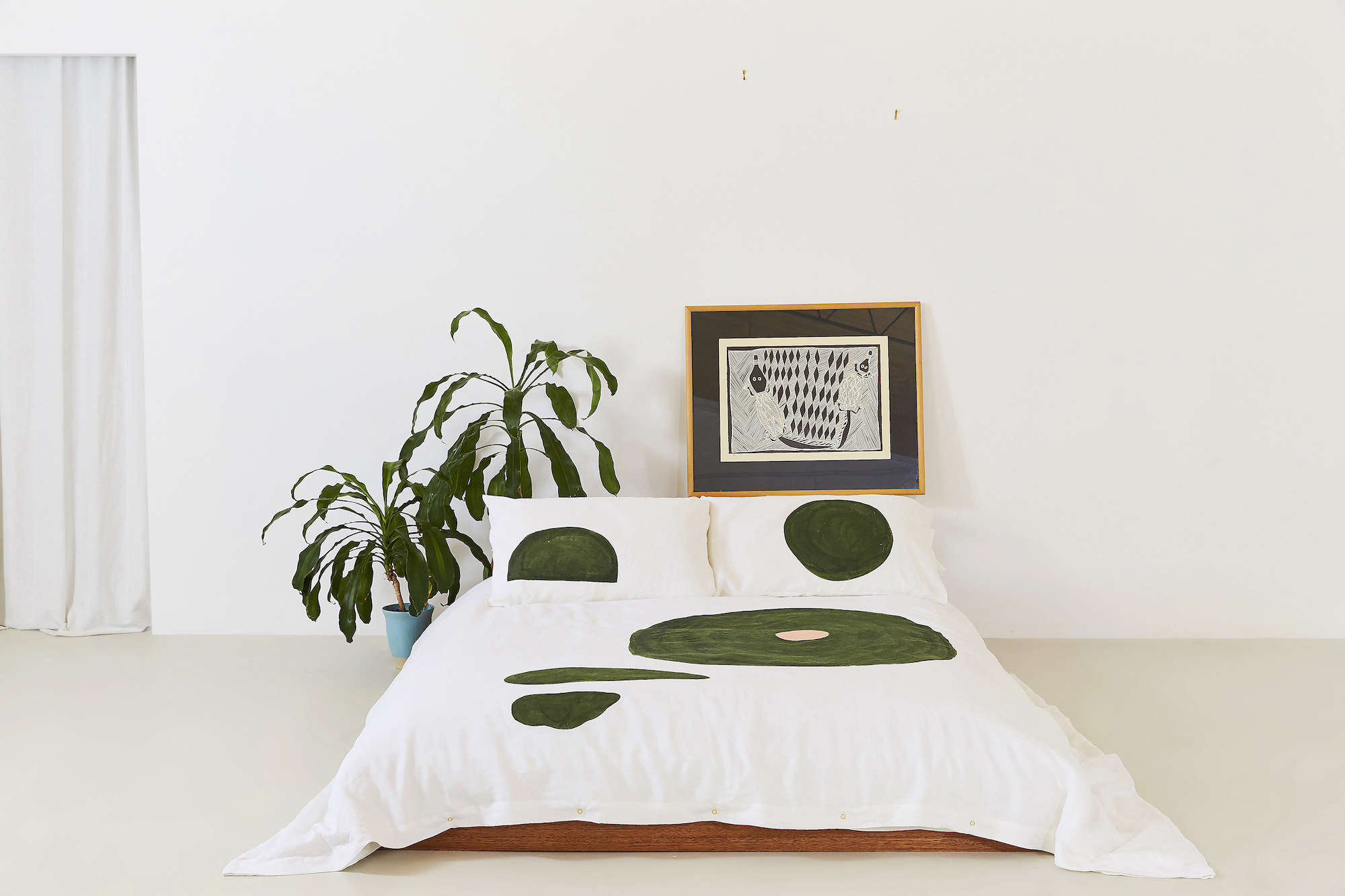
Some bedding is just bedding. And some bedding walks into your bedroom like it owns the place, lights a candle, tells your stress to leave, and somehow makes your entire room look more expensive. The Olive Daily Meditation Duvet Cover falls firmly into the second category.
If the name sounds poetic, that’s because it is. This is not a “basic beige bag of fabric” situation. The Olive Daily Meditation Duvet Cover is associated with The Vallentine Project and has been featured by design-focused publications for its art-forward look, linen construction, and bedroom-as-sanctuary energy. It’s the kind of duvet cover that feels less like an accessory and more like a mood board you can sleep in.
In this guide, we’ll break down what makes this duvet cover style compelling, why olive green works so well in bedrooms, how linen bedding supports comfort, how to style it without making your room look like a plant store exploded (unless that’s your dream), and how to care for it so it stays beautiful. We’ll also end with experience-based ideas to help you imagine how this type of duvet cover fits into real life.
What Is the Olive Daily Meditation Duvet Cover, Exactly?
The Olive Daily Meditation Duvet Cover is best understood as a design-led linen duvet cover with a strong artistic identity. Coverage in the design space has described The Vallentine Project’s bedding as hand-painted linen with expressive, graphic patterns and a small-batch feel. That matters because it puts this item in a different category than mass-market “olive duvet cover set” listings.
In other words: this is less “grab it with paper towels at checkout” and more “I have taste, and I’d like my bed to prove it.”
The product naming also does something clever. “Olive” references the earthy green tone, while “Daily Meditation” suggests a bedroom routine rooted in calm, focus, and wellbeing. Whether or not your bedtime ritual includes meditation, chamomile tea, or dramatically flopping face-first into pillows after answering emails, the branding speaks to a bigger trend: people want bedrooms that feel restorative.
Why Olive Green Works So Well in a Bedroom
Olive green has become a favorite in interior design because it behaves like a color and a neutral at the same time. It brings nature indoors, but without the bright, high-energy feeling of grass green or lime. Olive is grounded, mature, and versatile. It can go earthy, modern, vintage, bohemian, or quietly luxe depending on what you pair it with.
In bedroom design, green tones are often associated with a calming, restful atmosphere. Design publications regularly feature green bedrooms because the color plays well with natural textures like wood, linen, rattan, and brushed metals. Olive in particular feels cozy without becoming heavy, especially when balanced with cream, soft white, warm beige, or pale clay accents.
Best Color Pairings for an Olive Duvet Cover
- Cream and warm white: Clean contrast, softens the richness of olive.
- Natural wood tones: Oak, walnut, and cane textures make olive feel organic and grounded.
- Rust, terracotta, or clay: Warm earthy accents that add depth without competing.
- Black accents: Great for a more modern, graphic look (think lamp bases, frames, or hardware).
- Brass or antique gold: Adds warmth and a slightly elevated finish.
- Soft blush or dusty pink: A surprisingly beautiful combination if you want a layered, designer feel.
If you’re decorating a small bedroom, olive bedding can still work beautifully. The trick is to keep surrounding elements airy: lighter walls, breathable curtains, and fewer bulky decorative pillows. (Yes, I said it. You don’t need nine throw pillows unless your bed is also a sculpture.)
Why Linen Duvet Covers Are So Popular
The material matters as much as the color. A linen duvet cover tends to appeal to people who care about both comfort and aesthetics. Linen has that slightly rumpled, lived-in texture that makes a bed look effortlessly styled, even when you absolutely did not do a full “styling session” and just smoothed things with one hand while holding coffee in the other.
Linen bedding is also widely loved for breathability and airflow. Bedding guides and sleep-focused reviews frequently highlight linen as a strong option for hot sleepers or anyone who wants better temperature regulation through the night. Linen also softens over time with use and washing, which is one reason people stick with it once they make the switch.
Linen Pros
- Breathable and comfortable in many climates
- Textural, high-end look without looking too “perfect”
- Often gets softer over time
- Works well with minimalist, rustic, modern, and eclectic bedrooms
- Pairs beautifully with earthy colors like olive, sage, sand, and terracotta
Linen Trade-Offs (Because We Believe in Honesty)
- Wrinkles are part of the look (feature, not bug)
- Can feel more textured than smooth cotton when brand-new
- Premium linen bedding is often expensive
- Care labels matter, especially for painted or specialty-finished fabrics
If you want the Olive Daily Meditation Duvet Cover vibe, embracing the natural texture of linen is part of the experience. This isn’t shiny hotel bedding. It’s more like “artful retreat meets human who reads design blogs and owns a ceramic mug they call their favorite.”
Duvet Cover vs. Comforter: Why the Cover Format Is a Smart Choice
A lot of people use the words “duvet” and “comforter” interchangeably, but they aren’t the same thing. A duvet setup typically includes an insert (the fluffy part) plus a removable duvet cover (the stylish outer layer). A comforter is usually a single piece.
That difference becomes important if you like changing your bedroom style, care about laundry convenience, or want to protect a pricier insert. With a duvet cover, you can swap the look seasonally or when your style changeswithout replacing the whole insert. It’s one of the easiest ways to refresh a bedroom without repainting walls or buying furniture.
Why a Duvet Cover Makes Sense for This Type of Product
- Design flexibility: You’re investing in a visual statement piece that can transform the room.
- Easier routine cleaning: The cover is typically easier to wash than a bulky insert.
- Insert protection: Helps keep the duvet insert cleaner for longer.
- Seasonal adaptability: Change insert warmth level while keeping the same cover aesthetic.
One practical note: duvet sizes and coverage can vary by brand, and some duvet covers may run shorter on the sides than expected. Always check measurements and compare them to your insert before buying. If you love an oversized, draped look, sizing strategy matters.
How the “Meditation” Angle Fits Modern Bedroom Design
The word “meditation” in the product name is more than marketing flair. It taps into a very real shift in how people think about bedrooms: not just as places to sleep, but as recovery spaces.
Public health and sleep guidance consistently emphasizes sleep-friendly environments that are cool, quiet, and relaxing. Sleep organizations also point to the importance of bedroom comfort, light, temperature, and wind-down habits. In that context, a duvet cover like this is part of a bigger system: it supports the sensory feel of the room, which can make it easier to maintain a bedtime routine.
And if you actually practice meditation, even better. Mindfulness and relaxation techniques are commonly recommended as part of a healthy wind-down routine for people dealing with bedtime stress, racing thoughts, or sleep disruption. No, a duvet cover does not magically solve insomnia. But a comfortable, calming bedroom setup can absolutely support better habits.
Create a “Daily Meditation” Bedtime Setup (No Guru Required)
- Keep the room cool and quiet. Comfort starts with environment, not just bedding.
- Use layered lighting. Table lamps or warm bulbs beat overhead “interrogation room” lighting.
- Choose breathable bedding. Linen duvet covers pair well with inserts matched to your climate.
- Cut screen time before bed. Your brain will complain less than you think.
- Add one calming ritual. Breathwork, stretching, journaling, or five minutes of mindfulness.
- Let the bed look inviting. A beautiful duvet cover can become a cue that it’s time to rest.
Styling Ideas for an Olive Daily Meditation Duvet Cover
Because this piece leans artistic, styling is all about balance. Let the duvet cover be the focal point and use supporting textures and colors to frame it.
Look 1: Earthy Minimalist Retreat
- Cream sheets
- Oak nightstands
- Matte ceramic lamp
- One textured throw in oatmeal or flax
- Small plant or branch arrangement
This approach gives you a calm, grounded room that feels intentional without being fussy.
Look 2: Artful Boho-Modern Bedroom
- Olive duvet as the anchor
- Rust or clay accent pillows
- Patterned rug with muted reds/charcoal
- Brass reading light
- Framed abstract artwork
Great for people who want personality and warmth without going full maximalist.
Look 3: Quiet Luxury Meets Nature
- High-quality white or ivory sheets
- Dark wood bed frame
- Tailored bench at foot of bed
- Subtle black accents
- Minimal decor, strong materials
Olive reads surprisingly sophisticated when the palette is restrained and the materials do the talking.
Care and Maintenance Tips for a Linen Duvet Cover
If you’re investing in a statement duvet coverespecially a linen or artisan-style piececare is not the place to improvise. General cleaning guidance for duvet covers often recommends washing the cover more frequently than the insert, commonly every one to two weeks depending on season, sweat, and whether you use a top sheet.
The insert itself usually needs less frequent cleaning than the cover, especially when protected by both a duvet cover and top sheet. But here’s the key point: always follow the product’s care label first, especially if the fabric is hand-painted, specialty-dyed, or treated.
Smart Care Habits (That Future You Will Appreciate)
- Check the label before the first wash.
- Wash on a gentle cycle when appropriate for the fabric.
- Use mild detergent and avoid harsh bleach unless specifically allowed.
- Dry fully before putting it back on the bed to prevent musty smells.
- Rotate bedding sets if possible to reduce wear.
- Use corner ties (if included) to keep the insert from shifting.
Also, let’s talk about the famously annoying part: putting the duvet cover back on. You are not bad at laundry. This task is objectively weird. The easiest method is to lay the insert flat, align corners, turn the cover inside out to grab and secure the corners, then roll or flip it into place. Once you do it a couple of times, you’ll feel like you unlocked a domestic side quest.
Who Should Buy a Duvet Cover Like This?
The Olive Daily Meditation Duvet Cover is a strong choice if you:
- Want your bedding to act as a design statement
- Prefer earthy, calming color palettes
- Like the relaxed texture of linen
- Value a bedroom that feels restorative and intentional
- Are willing to invest in premium or artisan-style bedding
It may be less ideal if you want ultra-smooth, wrinkle-free bedding, a very low-maintenance look, or a tight budget-first setup. That doesn’t mean you can’t get the vibe on a budgetyou absolutely canbut the original piece sits closer to the design-investment end of the spectrum.
Final Thoughts
The Olive Daily Meditation Duvet Cover stands out because it combines three things people increasingly want from a bedroom: visual warmth, tactile comfort, and a sense of wellbeing. The olive color anchors the room, the linen construction supports a breathable and relaxed look, and the “daily meditation” concept aligns perfectly with today’s sleep-and-sanctuary mindset.
Whether you buy this exact piece or use it as inspiration for your own olive linen bedding setup, the lesson is the same: your bed is not just a place to collapse at the end of the day. It’s the center of your room, the center of your routine, andon the right nightsthe center of your peace.
Experience-Based Notes: Living With an Olive Daily Meditation Duvet Cover (Extended Section)
To make this more practical, let’s talk about the experience of using a duvet cover like this in everyday lifenot as a glossy catalog fantasy, but as a real object in a real home where laundry piles happen and someone occasionally eats crackers in bed.
The first thing most people notice is the visual shift. An olive duvet cover changes the room instantly, even if nothing else changes. If your bedroom was feeling flat or “temporary,” the bed suddenly looks intentional. The color grounds the space. White sheets look brighter. Wood furniture looks richer. Even inexpensive décor can look more curated because the bedding creates a stronger focal point.
The second experience is tactile. Linen doesn’t usually perform like silky sateen on day one. Instead, it feels textured, breathable, and substantial. For many people, that texture becomes part of the charm. It reads relaxed rather than stiff, and after repeated washing and use, it typically softens into that broken-in feel people love. If you’ve only used smooth cotton before, the transition can take a week or twobut then you may become one of those people who talks about flax fibers at brunch.
Another real-world benefit is how this style of duvet cover supports a bedtime cue. This sounds small, but it matters. When your bed looks calming and finished, you’re more likely to treat bedtime like a routine rather than an accidental crash landing. Many people find that making the bed in the morning becomes easier to maintain when the bedding itself feels like part of the room’s personality. You’re not just “straightening blankets”; you’re resetting your space.
There’s also a seasonal advantage. In warmer months, an olive linen duvet cover can still feel light and breathable when paired with the right insert. In cooler months, you can keep the same cover and swap in a warmer insert or add a throw blanket at the foot of the bed. That flexibility is one reason duvet-cover systems are so practical: your room keeps the same design identity while comfort changes with the weather.
The most common challenge people mention is maintenance logisticsspecifically, reassembling the duvet after washing. The good news is that this gets easier fast. Once you learn a reliable corner-and-roll method (and use corner ties if the cover has them), the process becomes more routine than frustrating. Pro tip: do it in daylight, not at 10:47 p.m. when you’re already tired and suddenly at war with fabric geometry.
Finally, there’s the emotional side of the experience. A piece with a name like “Daily Meditation” invites a different relationship with the bedroom. You may start dimming lights earlier. You may keep a book on the nightstand instead of your phone. You may pair the bedding with a short stretch, a breathing exercise, or just five quiet minutes before sleep. The duvet cover isn’t doing the meditation for you, of coursebut it can become part of the environment that makes those habits easier to repeat.
And that’s really the best case for this kind of bedding: it doesn’t just decorate your bed. It supports the life you want to live around itcalmer evenings, a more restful room, and a bedroom that feels like it belongs to an actual adult with excellent taste (even if there’s still a laundry basket in the corner, which, respectfully, is none of our business).