Some vacation rentals impress guests with a pool, a game room, or a breakfast buffet ambitious enough to require its own zip code. High above Norway’s Lysefjord, however, a collection of tiny houses takes a much simpler approach: build a beautifully designed cabin, aim nearly every window at the water, and let the landscape handle the entertainment.
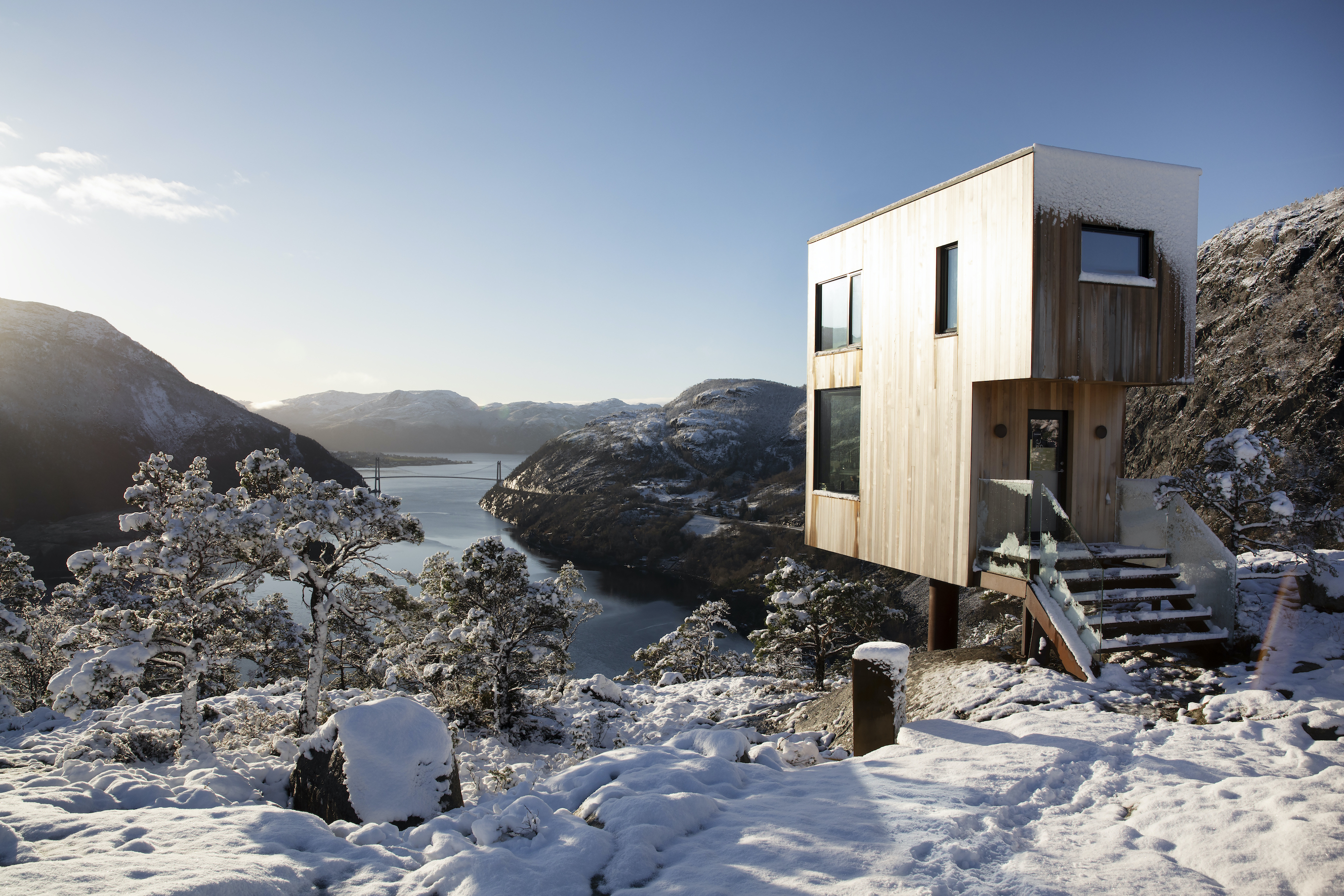
The Bolder, a secluded retreat near Stavanger in southwestern Norway, offers architect-designed lodges perched among pine trees, ancient boulders, and steep mountainsides. Its compact Sky Lodges are especially memorable. From a distance, they resemble minimalist wooden boxes hovering above the rocky terrain. From inside, they feel less like ordinary vacation rentals and more like private viewing platforms with beds, kitchens, and thankfully, indoor plumbing.
This is not tiny-house living as a test of how many kitchen utensils can be stored beneath one staircase. It is a carefully composed travel experience in which limited space encourages guests to slow down, look outward, and appreciate the scale of the fjord. The house may be small, but the scenery is showing off.
A Tiny House Designed Around One Enormous View
The Bolder currently consists of six distinctive lodges overlooking Lysefjord. The original Sky Lodges were designed as compact two-story cubes, while later cabins were developed with Norwegian architecture firm Snøhetta. Across the property, the central idea remains consistent: architecture should frame the landscape rather than compete with it.
That philosophy becomes obvious the moment a guest steps inside. Large windows direct attention toward the water, cliffs, and changing sky. Furniture is restrained, sightlines remain open, and visual clutter is kept under control. There is no need for a giant abstract painting above the sofa when an actual fjord is performing outside.
The cabins also demonstrate why a tiny vacation rental can feel luxurious without being large. Luxury here comes from privacy, silence, craftsmanship, and access to a location that would be difficult to experience from a conventional hotel room. Instead of a corridor filled with housekeeping carts and mysteriously enthusiastic elevator music, guests get a private perch in the Norwegian wilderness.
The Sky Lodges Nearly Float Above the Ground
The Sky Lodges are wrapped in cedar and supported by a single structural column, a design intended to reduce the amount of ground disturbed by construction. The two-level cubes may even move slightly during strong winds, an effect that reinforces their elevated, floating character. Anyone who has ever wanted to sleep in the clouds can do so here, although the clouds occasionally bring rain and have no respect for freshly styled hair.
Raising a small building above rocky terrain can preserve more of the original landscape than leveling a broad foundation. It also gives occupants clearer views across trees and boulders. Similar low-impact ideas appear in other Norwegian cabin projects, including compact structures mounted on columns or carefully positioned to avoid unnecessary damage to stone, vegetation, and existing trees.
Scandinavian Interiors That Make Every Inch Work
Inside, the tiny house favors pale surfaces, warm wood, dark accents, and carefully selected furniture. The effect is unmistakably Scandinavian but not sterile. Natural textures soften the clean lines, while the surrounding landscape provides constantly changing color. A gray morning creates one atmosphere; late-afternoon sunlight creates another. The interior does not need seasonal redecorating because the windows are already handling that department.
The lodges include proper bathrooms, showers, heating, sleeping areas, and well-equipped kitchens. Some feature Vipp kitchens and floor-to-ceiling glazing, allowing guests to prepare dinner without losing sight of the fjord. The compact plan organizes these essentials vertically and efficiently instead of scattering them across several thousand square feet.
Why the Small Layout Feels Surprisingly Spacious
Tiny houses often feel cramped when they contain too many objects, low ceilings, poor lighting, or furniture designed for much larger rooms. The cabins at The Bolder avoid those problems through large windows, built-in elements, a controlled material palette, and strong visual connections between levels.
When the eye can travel through glass toward miles of open water, the perceived boundary of the room expands. The cabin’s dimensions remain modest, of course, but the experience does not. This is a useful lesson for any small-space design: a clear view, natural light, and uncluttered circulation can contribute more to comfort than squeezing in another decorative cabinet full of things no guest knows how to use.
Other compact retreats in Norway follow a similar model. Birdbox cabins place simple hotel-like rooms in remote natural settings, while glass-fronted lodges and treehouses use carefully positioned openings to transform a small interior into an immersive landscape experience.
Lysefjord Is More Than a Pretty Background
Lysefjord extends roughly 26 miles through the Ryfylke region near Stavanger. Its deep water is bordered by dramatic rock formations, waterfalls, mountain farms, and some of Norway’s most recognizable hiking landmarks. Preikestolen, also known as Pulpit Rock, rises about 1,982 feet above the fjord, while Kjerag attracts experienced hikers farther inland.
From a cabin above the fjord, guests can watch the landscape shift by the hour. Low clouds may conceal the upper cliffs in the morning. Sunlight can illuminate the water by midday. At dusk, the cliffs become silhouettes, and isolated boats leave temporary lines across the surface.
This constant movement explains why large televisions are unnecessary. The fjord is the screen, the picture quality is exceptional, and the programming includes weather, wildlife, passing boats, and the occasional cloud that appears to have missed an appointment elsewhere.
A Natural Base for Outdoor Adventures
A stay near Lysefjord can combine quiet cabin time with hiking, kayaking, scenic boating, and regional road trips. Travelers can view Preikestolen from the water on a fjord cruise or hike to the plateau for a radically different perspective. Quiet-running electric and hybrid sightseeing boats are increasingly available on Norwegian waterways, offering a calmer way to experience cliffs and waterfalls.
Stavanger also gives the trip an urban counterpoint. Before or after retreating into the landscape, visitors can explore its historic wooden neighborhoods, museums, harbor, restaurants, and contemporary cultural scene. The combination works well: spend a day eating seafood and wandering city streets, then return to a cabin where the loudest evening disturbance may be the wind asking whether the windows are securely closed.
The Norwegian Cabin Tradition, Reimagined
Cabin holidays are deeply established in Norway. Traditional “hytter” range from basic shelters without running water to polished contemporary lodges with designer furniture and panoramic glazing. What connects them is not a specific level of luxury but the idea of leaving ordinary routines behind and spending meaningful time close to nature.
The Bolder translates that tradition into a high-design vacation rental. The cabins remain small and immersed in the outdoors, but the experience includes modern heating, comfortable beds, private bathrooms, and refined interiors. It is less about roughing it and more about removing distractions.
That balance has become increasingly attractive to travelers who want memorable accommodations rather than a generic room that could be located in almost any city. A property with strong architecture can become part of the destination itself. Guests are not merely staying near Lysefjord; they are experiencing the fjord through a structure designed specifically for it.
Who Would Love This Norway Tiny-House Vacation?
This kind of rental is especially appealing to couples, design lovers, photographers, hikers, and travelers who value privacy. It suits guests who are comfortable spending long stretches reading, cooking, talking, or simply watching the weather. In other words, it is excellent for people who do not require a nightclub downstairs and a frozen-drink machine within sprinting distance.
It can also work for a special occasion. An anniversary, honeymoon, proposal trip, or milestone birthday gains extra drama when the accommodation appears to hover over a fjord. Just remember that an engagement ring dropped outdoors may require a search team, climbing equipment, and a very awkward insurance claim.
Who Might Prefer a Different Stay?
Travelers with limited mobility should confirm access conditions before booking, since cliffside and forest settings can involve slopes, uneven ground, steps, or outdoor walking. Families and larger groups should also check the capacity and layout of each lodge carefully. A tiny house can create togetherness, but four adults sharing a compact cabin may discover togetherness in quantities not previously considered medically advisable.
Guests who need shops, restaurants, and nightlife immediately outside the door may be happier dividing their trip between Stavanger and the fjord. The remote atmosphere is the main attraction, but it also requires planning.
Practical Tips for Planning a Fjord Cabin Stay
Reserve Early
Norwegian cabins are popular during holidays and peak travel periods, while distinctive properties have only a limited number of units. Booking well in advance gives travelers a better chance of securing preferred dates and a specific lodge.
Plan Meals Before Arrival
A good kitchen makes self-catering enjoyable, but ingredients do not magically emerge from minimalist cabinetry. Buy groceries before heading to the property, especially when arriving late or traveling outside the busiest season. Pack simple meals that require few ingredients, then add local bread, cheese, seafood, berries, or pastries when available.
Dress for Rapidly Changing Weather
Conditions around western Norway can change quickly. Bring waterproof outerwear, layers, reliable shoes, and a small daypack even when the forecast appears friendly. Norwegian weather occasionally treats forecasts as polite suggestions.
Allow Time to Do Nothing
It is tempting to fill every day with famous hikes and cruises, but the cabin itself is one of the major experiences. Leave an unscheduled morning or afternoon for coffee, reading, photography, or a slow meal. Paying for a world-class view and then spending the entire visit rushing away from it would be an impressive act of logistical self-sabotage.
How to Travel More Responsibly in the Fjords
Norway’s dramatic landscapes are also sensitive environments. Visitors can reduce their impact by choosing certified operators, using public or shared transportation where practical, respecting marked trails, carrying out waste, and avoiding unnecessary disturbance to wildlife and vegetation. Norway’s official travel guidance recommends looking for recognized environmental certifications and choosing lower-impact transportation options.
Staying in a small cabin does not automatically make a trip sustainable, but compact architecture can require fewer materials and less energy than a large building. At The Bolder, several lodges are elevated to reduce their physical footprint, reinforcing the idea that the landscape should remain the dominant feature.
Responsible behavior also means supporting nearby businesses and treating the region as a living community rather than a giant outdoor photography studio. Buy food locally, hire regional guides, follow parking rules, and visit busy attractions at less crowded times when possible.
The Extended Experience: What Three Days in a Fjord Tiny House Could Feel Like
You arrive in the afternoon after traveling from Stavanger, leaving busier roads behind as the landscape grows steeper and greener. The final approach immediately resets your sense of scale. Mountains rise where suburban buildings would normally stand, and glimpses of water appear between pines. By the time you reach the lodge, checking email feels like a hobby practiced by people in another century.
The first surprise is how solid and comfortable the tiny house feels. Photographs emphasize its dramatic position, but they cannot fully convey the warmth of the wood, the quiet of the interior, or the strange pleasure of placing a suitcase in a room where nearly every object has a clear purpose. You walk to the window, sit down, and temporarily forget why you were walking.
Dinner becomes the evening’s main event. You prepare something uncomplicated in the compact kitchenperhaps pasta, local fish, or soup with good bread. Cooking takes longer than expected because someone keeps stopping to photograph the same fjord under slightly different clouds. The resulting collection contains 47 images, all apparently essential.
As daylight fades, the glass reflects the cabin interior while the water remains visible beyond it. The room feels like a lantern suspended above the landscape. There is no pressure to go anywhere. You read, talk, or listen to the wind move through the trees. Sleep comes easily, helped by darkness, fresh air, and the satisfying knowledge that tomorrow’s commute is approximately twelve steps to the coffee maker.
The second morning begins slowly. Mist hangs over the fjord, muting the mountains and making the landscape look unfinished. You make coffee, wrap yourself in a blanket, and watch sections of cliff gradually emerge. This may be the moment when the tiny house makes the most sense. A larger rental would offer more rooms, but more rooms would merely provide additional places from which to wish you were sitting by this window.
Later, you head out for a fjord cruise, kayak excursion, or hike. From the water, the cliffs appear even larger, and Preikestolen becomes a distant ledge high above the boat. From a trail, the fjord becomes a blue ribbon far below. Either perspective makes the cabin seem delightfully improbable: a small human shelter balanced within a landscape created on a geological scale.
After returning, you prepare another simple meal and discover that the lodge has changed again. Afternoon light warms the wood, and the water takes on a metallic shine. You notice details missed the previous day: moss around a rock, a distant waterfall, the shadow of a cloud crossing the opposite mountain.
On the final morning, packing takes only a few minutes because the cabin never encouraged you to unpack half your possessions. You drink one last coffee by the glass and feel the mild sadness that accompanies leaving a place where life has briefly become uncomplicated.
The appeal of this Norway tiny house is not simply that it looks spectacular in photographs. Its real achievement is that architecture, landscape, and routine work together. The building provides comfort without isolating guests from nature. The view supplies drama without demanding a schedule. And the small floor plan quietly reminds visitors that a memorable vacation may require less space, fewer distractions, and a much better window.
Conclusion
A tiny house overlooking Lysefjord offers something conventional luxury hotels often struggle to deliver: a genuine sense of place. The architecture is memorable, but it never overwhelms the setting. Instead, cedar walls, elevated foundations, compact rooms, and panoramic windows guide attention back toward the cliffs and water.
For travelers who love Scandinavian design, remote vacation rentals, outdoor adventures, and scenery large enough to make everyday problems seem temporarily ridiculous, The Bolder belongs high on the Norway wish list. Just be warned: after waking up above a fjord, the view from an ordinary bedroom window may need time to rebuild its confidence.