Merging onto the highway should feel like joining a moving conversation, not jumping into a stampede wearing roller skates. Yet for many drivers, the on-ramp is where palms get sweaty, mirrors suddenly look confusing, and the right lane seems full of people who all decided to become race car villains at the same time.
The good news? Safe highway merging is not magic. It is a repeatable driving skill built on scanning early, matching speed, signaling clearly, choosing a safe gap, checking blind spots, and moving smoothly. Whether you are a new driver, a nervous driver, or someone who has been merging with the confidence of a startled squirrel, these nine steps will help you enter freeway traffic calmly and safely.
This guide explains how to merge onto the highway without crashing, using practical examples, beginner-friendly language, and a few reality checks. Because yes, the highway is fast. No, you should not stop at the end of the acceleration lane unless traffic or signs force you to. And absolutely yes, your turn signal is not a decorative holiday light.
Why Highway Merging Feels So Intense
Highway merging combines several driving tasks at once. You must control speed, read road signs, watch vehicles ahead, check traffic beside and behind you, judge distance, and decide when to move into a lane where cars may be traveling 55, 65, or 70 mph. That is a lot of brain tabs open at once.
The purpose of an entrance ramp and acceleration lane is to give you time to build speed and blend into traffic. The problem starts when drivers treat the ramp like a driveway, creep along too slowly, wait too long to scan, or panic at the merge point. Safe merging requires preparation before the lane ends, not a last-second prayer to the traffic gods.
How to Merge Onto the Highway Without Crashing: 9 Steps
1. Pick the Correct Ramp and Read the Signs Early
Before you worry about merging, make sure you are entering the correct highway and direction. Look for route shields, freeway entrance signs, lane arrows, ramp meters, yield signs, and any special lane markings. A smooth merge begins before your tires even touch the acceleration lane.
If you realize you are on the wrong ramp, do not swerve across painted lines, stop suddenly, or attempt a heroic U-turn. Continue safely, exit when possible, and reroute. GPS may sigh dramatically, but it will survive. Your car, passengers, and insurance premium will appreciate the calm choice.
Also watch for ramp design. Some ramps are long and straight, while others curve tightly before opening into an acceleration lane. On curved ramps, keep your speed controlled until the road straightens, then accelerate as traffic conditions allow.
2. Start Scanning Traffic Before the Merge Lane
Many drivers wait until the very end of the ramp to look left. That is like opening a cookbook after the kitchen is already on fire. Start scanning highway traffic as soon as you can see it.
Use your mirrors and quick glances to understand the flow. Is traffic moving fast or slow? Are there large trucks in the right lane? Is the nearest vehicle gaining on you, holding steady, or falling behind? Are drivers leaving gaps, or is the lane packed bumper to bumper?
Your goal is to build a mental picture of traffic before you need to act. When you scan early, the merge becomes a planned move instead of a sudden emergency.
3. Signal Early, Clearly, and Like You Mean It
Turn on your signal early enough to tell other drivers what you plan to do. A signal does not give you automatic right-of-way, but it does give surrounding drivers useful information. It says, “Hello, fellow motorists. I would like to join your lane, preferably without drama.”
Do not wait until your front bumper is already leaning into the lane. Late signaling surprises people. No signaling makes people guess. And guessing at highway speed is a terrible group activity.
After you merge, cancel the signal if your vehicle does not do it automatically. Leaving it blinking for the next three miles tells everyone you may be merging into a cornfield, a guardrail, or another dimension.
4. Use the Acceleration Lane to Match Highway Speed
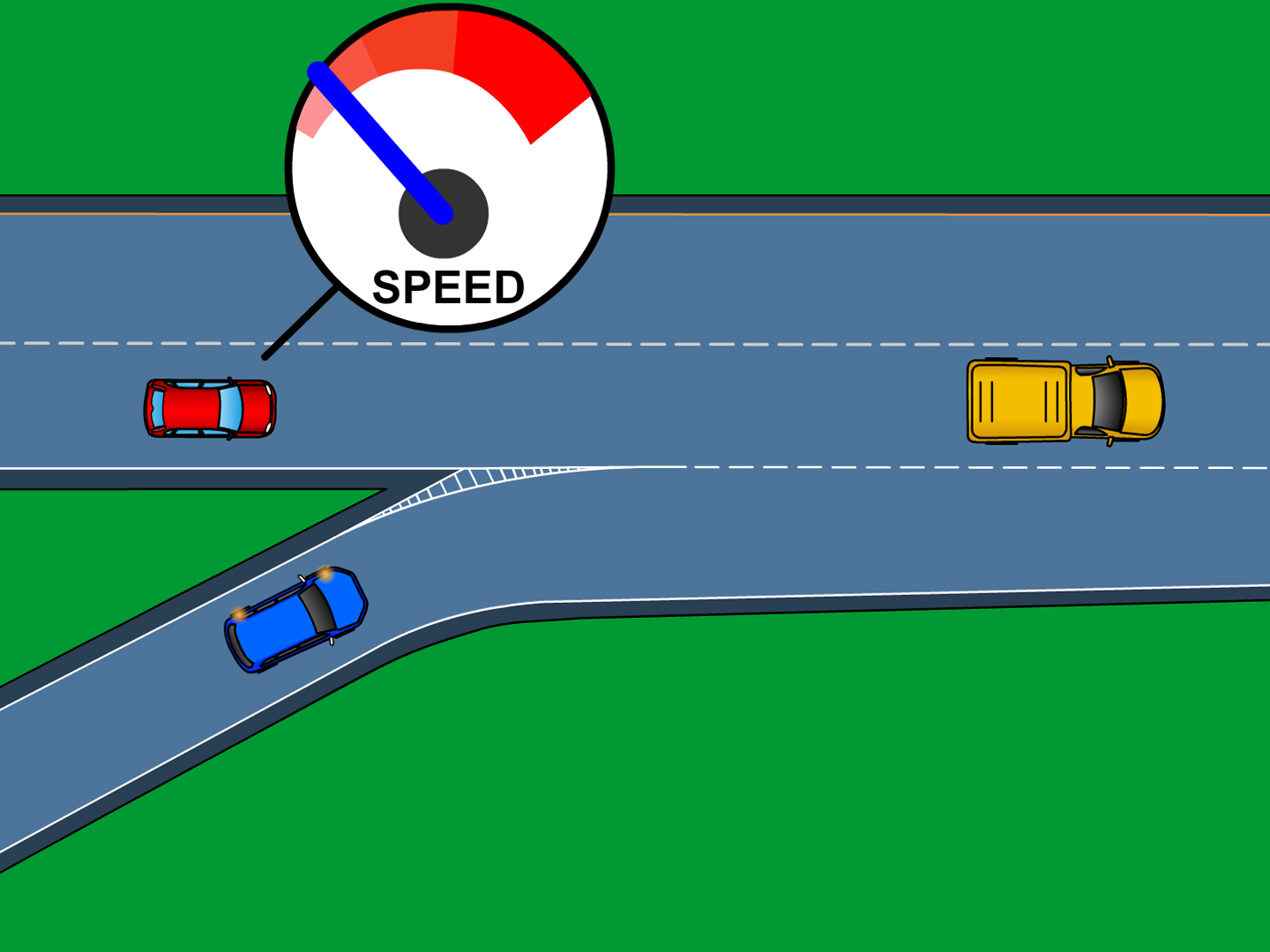
The acceleration lane exists for a reason: it helps you reach a speed close to the traffic you are joining. One of the biggest merging mistakes is entering the highway much slower than surrounding vehicles. When your car is crawling and highway traffic is flying, other drivers must brake, swerve, or make quick decisions to avoid you.
As the ramp straightens, accelerate smoothly. Match the flow of traffic as closely as possible while obeying the posted speed limit and adjusting for weather, visibility, road work, and traffic density.
This does not mean flooring the gas like you are auditioning for an action movie. It means building speed with purpose. Too slow is dangerous. Too fast is also dangerous. The sweet spot is controlled, confident acceleration that lets you blend into the right lane without forcing others to slam on the brakes.
5. Choose a Safe Gap, Not a Fantasy Gap
A safe gap is a space large enough for you to enter without cutting off the driver behind you or tailgating the driver ahead. A fantasy gap is the tiny space you imagine will work because you are nervous and the lane is ending. Choose the first one.
Look for a gap between vehicles in the right lane. Ask yourself: Can I enter this space smoothly? Will the vehicle behind me have enough room? Am I matching speed well enough to avoid becoming a rolling roadblock?
If the gap is slightly ahead, adjust your speed to meet it. If the gap is behind, ease off the accelerator slightly while still moving with the lane. Small speed adjustments are usually better than hard braking. You are not trying to win the merge. You are trying to make it boring. Boring is beautiful on the highway.
6. Check Mirrors, Then Check Your Blind Spot
Your mirrors are essential, but they do not show everything. Before moving over, check your rearview mirror, side mirror, and blind spot with a quick shoulder glance. Keep the glance brief. Your car goes where your eyes linger, so do not stare sideways long enough to write a novel about the sedan beside you.
Blind-spot warning technology can help, but it does not replace your responsibility as the driver. Sensors can be blocked, delayed, or limited by weather and vehicle design. Use technology as an assistant, not as the boss of your eyeballs.
Motorcycles are especially easy to miss. So are small cars tucked beside larger vehicles. A quick blind-spot check can be the difference between a clean merge and a very expensive “I didn’t see them” moment.
7. Merge Smoothly Into the Lane
Once you have matched speed, found a safe gap, signaled, checked mirrors, and checked your blind spot, move into the lane smoothly. Do not jerk the wheel. Do not drift halfway across the line and hover there like a confused shopping cart. Make one controlled movement into the center of the lane.
A good merge should feel uneventful. You enter the gap, center the vehicle, maintain speed, and continue scanning. If another driver slightly adjusts to help you, acknowledge the cooperation by driving predictably, not by braking in front of them as a thank-you gift.
After merging, create a safe following distance. If you ended up close to the vehicle ahead, ease off the gas and rebuild space gradually. Do not immediately change lanes again unless necessary. Give yourself a few seconds to settle into highway flow.
8. Know What to Do If the Merge Lane Is Ending
Sometimes traffic is heavy, the ramp is short, or drivers in the right lane are not making space. If the merge lane is ending and you still do not have a safe gap, stay calm. Adjust your speed, continue signaling, and look for the safest available opening.
Stopping at the end of an acceleration lane is usually a last resort, not a normal strategy. It can increase the risk of being hit from behind because drivers behind you may be accelerating too. However, if traffic is completely blocked, a sign requires you to stop or yield, or there is no safe opening, stopping may be necessary.
Never drive into the shoulder, gore area, or painted triangle to force a merge. Those areas are not bonus lanes. They are road-design zones meant to separate traffic paths, and using them recklessly can create a crash hazard.
9. Be Predictable, Patient, and Cooperative
Safe merging is not just about you. Drivers already on the highway should stay alert and, when safe, make space for entering vehicles by adjusting speed or moving left. But as the merging driver, you must not assume others will move over. Your job is to enter safely.
Predictability beats politeness when traffic is moving fast. Do not wave wildly, brake suddenly, or speed up and slow down in a confusing pattern. Choose your gap, communicate with your signal, and move smoothly.
Patience matters too. If you miss one gap, another will come. A missed exit, delayed merge, or awkward ramp is not the end of the world. Crashing because you forced the issue is much worse than arriving 20 seconds later.
Common Highway Merging Mistakes to Avoid
Merging Too Slowly
Entering a fast highway at a much lower speed than traffic is one of the most common beginner errors. It feels safe because you are going slower, but it can actually create danger by forcing highway drivers to react quickly.
Waiting Until the Last Second
If you wait until the lane ends to decide what to do, you remove your own options. Scan early, signal early, and choose a gap early.
Assuming the Other Driver Will Move
Sometimes drivers will move left to help. Sometimes they cannot. Sometimes they will not. You still need a safe plan.
Cutting Across Solid Lines
Do not merge before lane markings allow it. Solid lines, gore areas, and shoulders are there for safety and traffic organization.
Overusing the Brake
Hard braking in an acceleration lane can surprise drivers behind you. Use smooth speed adjustments whenever possible.
Special Situations: Trucks, Rain, Night, and Heavy Traffic
Merging Near Large Trucks
Large trucks need more space to slow down and have larger blind spots. Avoid merging directly in front of a truck unless you have plenty of room. If a truck is beside you, do not linger in its blind spot. Either let it pass or adjust your speed to merge safely behind or ahead with generous space.
Merging in Rain or Bad Weather
In rain, snow, fog, or poor visibility, increase following distance and accelerate more gently. Wet roads reduce traction, and sudden steering or braking can cause skids. Your goal is still to match traffic, but you must respect the conditions.
Merging at Night
At night, judging speed and distance becomes harder. Use mirrors carefully, check headlights in the lane you plan to enter, and avoid assuming a faraway set of lights is moving slowly. It may be approaching faster than it appears.
Merging in Stop-and-Go Traffic
When traffic is crawling, merging becomes less about matching highway speed and more about cooperation. Signal, maintain low steady speed, and merge one vehicle at a time when a gap opens. In lane closures, zipper merging may be used, where drivers use both lanes up to the merge point and then alternate. Follow local signs and traffic-control instructions.
Quick Example: A Clean Highway Merge
Imagine you enter a long on-ramp. You check the highway and see three cars in the right lane. The first is slightly ahead, the second is beside your expected merge point, and the third is farther back. You signal early and accelerate. Instead of trying to squeeze in front of the second car, you ease off slightly and aim for the space behind it. You check your mirror, glance over your shoulder, confirm the gap, and move smoothly into the lane. No honking, no braking, no cinematic soundtrack. Perfect.
That is the goal: not bravery, not aggression, not “teaching someone a lesson.” Just a smooth, quiet merge that everyone forgets five seconds later.
Extra Experience: What Real-World Highway Merging Teaches You
The first big lesson from real-world merging is that confidence comes from repetition, not from pretending you are fearless. Many new drivers grip the wheel tightly because everything feels fast. That is normal. The fix is not to avoid highways forever. The fix is to practice during lower-traffic times with a calm licensed driver or instructor, then gradually build up to busier conditions.
Start with ramps that have long acceleration lanes. These give you more time to scan, signal, adjust speed, and merge. Avoid beginning your practice on short urban ramps during rush hour unless you enjoy turning your nervous system into soup. Early weekend mornings can be ideal because traffic is lighter but still present enough to practice real merging.
Another experience-based tip: do not stare only at the car you are afraid of. Nervous drivers often lock onto one vehicle in the right lane and forget to read the whole traffic pattern. Instead, watch groups of vehicles. Is the right lane forming a gap after a truck? Is a car moving left to pass? Is traffic slowing ahead because of an exit? The more you see, the better your decisions become.
You will also learn that speed matching feels strange at first. A beginner may think, “I am going too fast,” when in reality they are finally reaching the speed needed to merge safely. This is why practice matters. Your sense of speed becomes more accurate as your experience grows.
Do not let one bad merge define you. Every driver has had an awkward moment: a gap disappeared, a ramp was shorter than expected, or another driver acted like sharing the road was a personal insult. Review what happened without beating yourself up. Did you scan early enough? Did you accelerate soon enough? Did you choose the wrong gap? Turn the moment into information, not panic.
Passengers can also affect merging. A loud passenger, ringing phone, or complicated GPS instruction can distract you at the exact moment you need focus. Before entering a highway, reduce distractions. Ask passengers to pause conversation, set your route in advance, and keep both hands ready. The merge lane is not the ideal place to debate lunch options or discover that your coffee lid has betrayed you.
With time, good merging becomes almost invisible. You will scan early, signal, match speed, check your blind spot, and enter the lane without overthinking each movement. That is not luck. That is skill becoming habit.
Conclusion
Learning how to merge onto the highway without crashing is really about learning how to cooperate with speed. The safest drivers are not the most aggressive or the most timid. They are the most predictable. They use the ramp properly, build speed, signal early, look for a real gap, check blind spots, and move smoothly.
Remember the nine steps: choose the correct ramp, scan early, signal clearly, use the acceleration lane, find a safe gap, check mirrors and blind spots, merge smoothly, respond calmly if the lane ends, and drive cooperatively. Do those consistently, and highway merging becomes less like a boss fight and more like entering an automatic door: smooth, timed, and surprisingly satisfying.
The next time you approach an on-ramp, breathe, look ahead, and trust the process. The highway is not asking for perfection. It is asking for attention, patience, and a driver who does not treat the merge lane like a cliff.