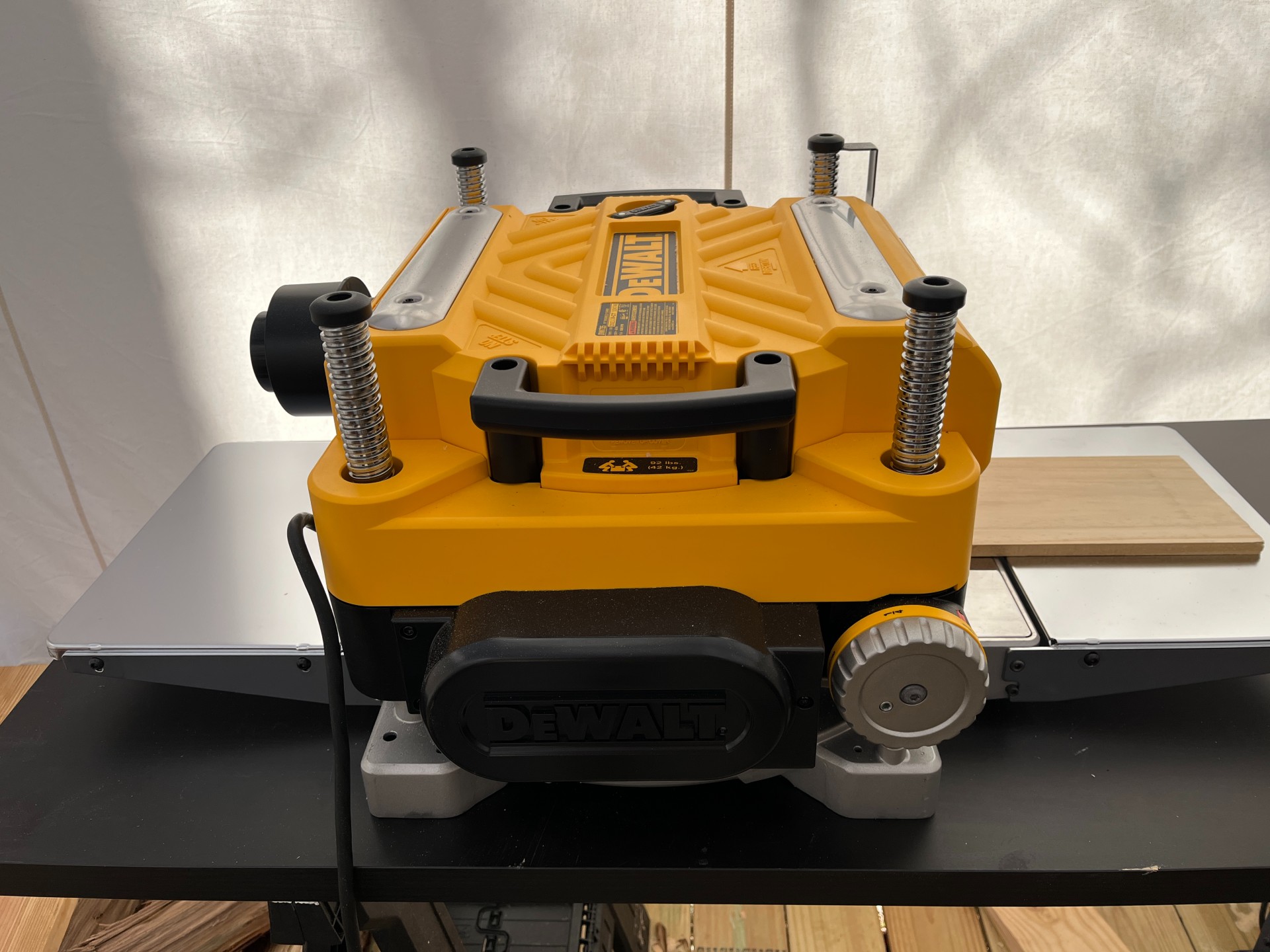
If your woodworking projects keep starting with “perfectly good” boards that somehow look like potato chips wearing lumber costumes, a thickness planer may be the shop upgrade you’ve been circling. The DeWalt DW735 planer has been one of the most talked-about benchtop thickness planers for years, and Bob Vila’s hands-on testing gives a useful real-world look at why this yellow-and-black machine has earned such a strong following among DIY woodworkers, remodelers, furniture builders, and serious garage-shop tinkerers.
This DeWalt Planer DW735 review breaks down what the tool does well, where it asks for patience, and whether it deserves a spot in your shop. The short version: the DW735 is not the cheapest planer, not the lightest planer, and absolutely not the quietest thing you will plug into a wall. But it is powerful, accurate, stable, and capable of turning rough lumber into project-ready boards with impressive consistency.
What Is the DeWalt DW735 Thickness Planer?
The DeWalt DW735 is a 13-inch, three-knife, two-speed benchtop thickness planer powered by a 15-amp motor. It is designed to shave boards down to a consistent thickness, smooth rough surfaces, and help woodworkers create matching stock for cabinets, tables, shelves, trim, cutting boards, and furniture parts.
A planer is not the same thing as a jointer. A jointer flattens one face or straightens one edge. A thickness planer makes the opposite face parallel and brings the board down to your target thickness. Used together, the two machines are a dream team. Used carefully with a sled, the planer can also help flatten wider boards that do not fit on a small jointer. In Bob Vila’s testing, the DW735 was used both with a jointer and with a shop-built sled, which is exactly how many small-shop woodworkers would use it in real life.
Key DeWalt DW735 Specs
- Motor: 15 amp
- Planing width: Up to 13 inches
- Planing thickness: Up to 6 inches
- Maximum depth of cut: 1/8 inch on narrower boards
- Cutterhead: Three straight knives
- Cutterhead speed: 10,000 RPM
- Feed speeds: 14 feet per minute or 26 feet per minute
- Cuts per inch: 179 CPI for finishing or 96 CPI for faster stock removal
- Weight: About 92 pounds
- Dust system: Fan-assisted chip ejection
These numbers matter because they explain the machine’s personality. The 15-amp motor gives it the muscle to handle wider cuts. The 13-inch capacity makes it more flexible than many smaller benchtop planers. The two-speed gearbox lets users choose between fast dimensioning and smoother finishing. And that 92-pound weight, while inconvenient when moving the tool, helps keep the planer planted when boards are running through it.
Design and Build Quality: Heavy, Stable, and Shop-Ready
The first thing most owners notice about the DW735 is the weight. This is technically a benchtop planer, but “benchtop” does not mean “pick it up with one hand while sipping coffee.” At roughly 92 pounds, the DW735 is more portable than a floor-standing industrial planer, but it is heavy enough that most users will want a dedicated stand, rolling cart, or workstation.
That weight is not wasted. The planer has a solid base, a four-post carriage system, and an automatic carriage lock designed to reduce movement during cuts. That stability helps minimize snipe, which is the annoying deeper cut that can appear at the beginning or end of a board. Snipe is the woodworking equivalent of getting a stain on your shirt right before leaving the house: not always disastrous, but definitely rude.
The DW735 also includes a large thickness scale, a material removal gauge, and a turret depth stop. These features make it easier to sneak up on a final thickness rather than accidentally turning a beautiful walnut board into expensive kindling.
Performance: Where the DW735 Earns Its Reputation
In Bob Vila’s test, the DeWalt DW735 was used over a couple of months for practical shop tasks such as preparing boards for glue-ups, surfacing panels after gluing, and dimensioning rough-cut lumber. That type of testing is more useful than simply running one perfect pine board through the machine in a showroom. Real shops deal with mixed hardwoods, glued panels, inconsistent boards, and the occasional piece of lumber that seems emotionally committed to being difficult.
The DW735 performs especially well when asked to make boards consistent. That is its main job, and it does it with confidence. Users can run multiple boards through at the same setting and end up with stock that matches closely enough for furniture parts, cabinet components, shelving, and trim. For woodworkers who buy rough lumber from sawmills or reclaim old boards, this can save money and open up far more creative options.
Two-Speed Gearbox: Fast Removal or Smooth Finish
One of the most useful features is the two-speed gearbox. Speed 2 feeds boards faster and produces 96 cuts per inch, which is best for removing material efficiently. Speed 1 slows the feed rate and produces 179 cuts per inch, giving a smoother surface on the final pass.
In practice, many users will do the rough work on the faster setting, then switch to the slower finishing speed for the final pass. This can reduce sanding time, especially on hardwoods. It will not eliminate sanding completely, because woodworking likes to keep us humble, but it can leave a surface that feels surprisingly refined for a portable thickness planer.
Cut Quality: Smooth, Accurate, and Consistent
The three-knife cutterhead does a clean job when the blades are sharp and the feed rate is matched to the wood. Straight-grain maple, oak, poplar, pine, cherry, and walnut should come through well when users take reasonable passes. Figured grain, knots, reversing grain, and very hard lumber require more caution. For those boards, lighter cuts and the slower feed speed are the smarter approach.
The DW735 can remove up to 1/8 inch per pass on narrower boards, but that does not mean every pass should be that aggressive. A planer is happier when it is not being treated like a wood-eating monster truck. Taking lighter passes reduces strain on the motor, improves surface quality, limits tear-out, and helps extend knife life.
Dust and Chip Collection: Powerful, But Demanding
The fan-assisted chip ejection system is one of the DW735’s best features and one of the reasons it feels so productive. This planer throws chips with enthusiasm. That is helpful because chips clear the cutterhead quickly, but it also means you need proper dust collection. A small shop vacuum may clog or struggle because the DW735 produces a high volume of chips fast.
For best results, pair the planer with a real dust collector or a well-sized chip collection setup. Without good collection, the machine can turn a tidy workspace into a hamster bedding factory in a shocking hurry. The good news is that when connected properly, chip evacuation is strong and efficient.
Ease of Use: Friendly Controls, Serious Machine
The DW735 is approachable, but it is still a serious woodworking machine. The height adjustment is smooth, the scale is easy to read, and the material removal gauge helps users see how much wood will be removed before making the cut. That gauge is especially useful for beginners because it encourages controlled passes instead of guesswork.
Board support matters. The base DW735 does not always include infeed and outfeed extension tables, depending on the package purchased. The DW735X kit usually includes those tables and extra knives. If you buy the standard DW735, adding tables or building support into your planer station can help reduce snipe and make longer boards easier to manage.
What We Like About the DeWalt DW735
1. Excellent Power for a Benchtop Planer
The 15-amp motor gives the DW735 the strength needed for hardwoods and wider boards. It is not a commercial cabinet-shop planer, but it bridges the gap between entry-level lunchbox planers and full-size stationary machines remarkably well.
2. Impressive Finish on the Final Pass
The slower feed speed is more than a marketing feature. It genuinely helps produce a cleaner surface, especially when the knives are sharp and the cut is light.
3. Helpful Accuracy Features
The material removal gauge, turret depth stop, and large thickness scale make setup easier and reduce mistakes. These small details matter when you are trying to match several boards for a tabletop or cabinet face frame.
4. Reduced Snipe Compared With Many Benchtop Planers
No portable planer is magically immune to snipe, but the automatic carriage lock and four-post design help keep it under control. Proper board support improves results even more.
5. Strong Chip Ejection
The fan-assisted chip system clears debris aggressively. With a good dust collector, the DW735 keeps the cutterhead area cleaner and helps maintain consistent cutting.
What We Do Not Like
1. It Is Heavy
The DW735 is not the planer you casually move from shelf to bench every Saturday morning. Plan on a stand, cart, or permanent bench location.
2. It Is Loud
This machine has a powerful motor, fast cutterhead, and fan-assisted chip ejection. Translation: wear hearing protection. Your ears will thank you, and your neighbors may still wonder what kind of aircraft you are building in the garage.
3. It Needs Real Dust Collection
The chip ejection system is powerful enough that weak collection setups can clog or make a mess. Budget for proper dust management if you do not already have it.
4. Knife Costs Add Up
The straight knives are replaceable and reversible, but blades are a consumable. If you plane dirty reclaimed lumber, abrasive hardwoods, or boards with hidden grit, expect knife life to shorten.
Who Should Buy the DeWalt DW735?
The DeWalt DW735 is a smart buy for woodworkers who want consistent thickness, smoother rough lumber, and better control over material preparation. It is ideal for serious DIYers, furniture builders, remodelers, cabinet hobbyists, and small-shop woodworkers who are not ready for a large stationary planer.
It also makes sense for anyone who buys rough-sawn lumber. Rough boards are often cheaper than surfaced lumber, and they give you more control over final dimensions. Over time, a planer can pay for itself by letting you purchase better wood more economically. It also allows you to use locally milled boards, reclaimed stock, and custom thicknesses that big-box stores do not carry.
However, casual users who only need to plane a few boards per year may find the DW735 expensive and bulky. If your projects are mostly small crafts, light pine boards, or occasional repairs, a less expensive planer might be enough. But if you care about repeatable results, the DW735 is one of the strongest benchtop options available.
DeWalt DW735 vs. Cheaper Benchtop Planers
Cheaper planers can absolutely work, especially for beginners. Many will handle softwood and light hardwood use without complaint. The difference shows up in power, stability, finish quality, ease of adjustment, and long-term satisfaction. The DW735 feels more refined. It has better controls, a stronger chip ejection system, a more stable carriage, and the two-speed gearbox that many budget planers lack.
That does not mean everyone needs it. But for woodworkers who have already outgrown entry-level tools, the DW735 feels like a meaningful upgrade rather than a small improvement. It is the kind of machine that makes you start looking at rough lumber stacks with dangerous optimism.
Tips for Getting the Best Results From the DW735
- Take light passes: Small cuts improve finish and reduce strain.
- Use the slow feed speed for final passes: It leaves a cleaner surface.
- Support long boards: Infeed and outfeed support help reduce snipe.
- Check grain direction: Feed boards in the direction that minimizes tear-out.
- Keep blades sharp: Dull knives cause rough surfaces and extra motor strain.
- Use dust collection: This planer produces chips like it is training for the Olympics.
- Avoid dirty lumber: Grit, nails, staples, and sand can damage knives quickly.
Final Verdict: Is the DeWalt DW735 Worth It?
Yes, the DeWalt DW735 planer is worth it for woodworkers who need reliable thicknessing, strong power, and a smoother finish than many entry-level machines can provide. Bob Vila’s testing supports what many shop owners have said for years: the DW735 is heavy, capable, accurate, and built for serious use in a home or small professional shop.
Its biggest drawbacks are weight, noise, price, and the need for good dust collection. But those are manageable trade-offs if you want a benchtop planer that can handle real projects. For furniture parts, glued panels, rough lumber, cutting boards, shelves, and custom trim, the DW735 brings a level of control that can change how you buy and prepare wood.
In other words, this is not just a tool that makes boards thinner. It makes your woodworking options wider.
Additional Experience Notes: Living With the DeWalt DW735 in a Real Shop
Using a planer like the DeWalt DW735 changes the rhythm of a woodworking project. Before owning a capable thickness planer, many DIYers design around whatever lumber is available at the home center. Boards are accepted as-is: slightly cupped, slightly mismatched, and sometimes slightly offensive to the laws of geometry. Once a planer enters the shop, the process becomes more intentional. You can buy thicker stock, flatten one face, plane the opposite side, and bring every board to the same final dimension.
One of the most satisfying experiences with the DW735 is preparing boards for glue-ups. Imagine making a tabletop from several hardwood boards. If each piece is a slightly different thickness, the glue-up becomes stressful, the sanding takes forever, and the finished surface may still show uneven transitions. With the DW735, boards can be planed in batches using the same setting. The result is a cleaner glue-up, fewer sanding headaches, and less time wondering why a “simple weekend project” has started demanding emotional support snacks.
The machine is also useful for reclaimed lumber, but with one major warning: inspect every board carefully. Old wood may contain nails, screws, staples, gravel, finish residue, or mystery metal that has been hiding since the previous century. A metal detector is a smart investment if reclaimed wood is part of your workflow. The DW735’s knives are good, but they are not enchanted. Hitting a hidden nail can chip a blade instantly.
Another real-world lesson is that dust collection should not be treated as optional. This planer creates a surprising amount of chips even during short sessions. A few passes on wide boards can fill a collection bag faster than expected. Without adequate collection, chips can pile up around the machine, clog hoses, or spray across the shop. With proper dust management, the workflow feels smoother, safer, and far less chaotic.
Noise is another part of the ownership experience. The DW735 is loud enough that hearing protection should be automatic, not an afterthought. It is best used during reasonable hours if your shop is attached to a home or located near neighbors. The sound is not a deal-breaker, but it is part of the tool’s personality. Think of it as the planer announcing, very confidently, that lumber is being improved.
The best habit is to approach final thickness slowly. Rather than trying to reach the target dimension in one or two heavy passes, take multiple light passes and measure often. Switch to the slower feed speed for the final pass, especially on hardwood or figured stock. This simple routine helps produce cleaner boards and makes the DW735 feel less like a rough construction tool and more like a precision shop machine.
Overall, living with the DeWalt DW735 is about respecting what it does best. It is powerful, accurate, and productive, but it rewards patience, sharp knives, good dust collection, and thoughtful setup. For many woodworkers, that trade-off is easy to accept. Once you experience the freedom of turning rough, uneven boards into clean, matching project stock, it is hard to go back to buying only pre-surfaced lumber.