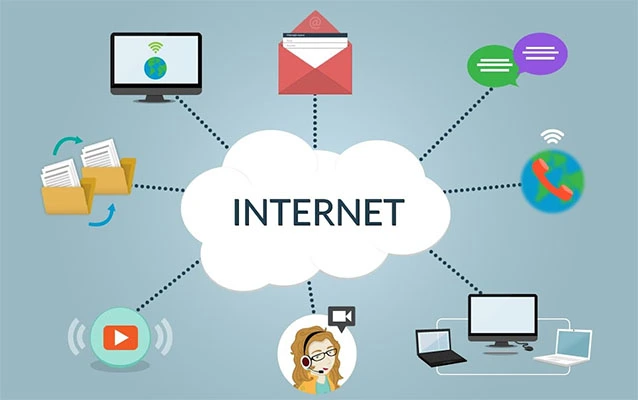
The internet began as the world’s greatest group project: a giant library, a global town square, a matchmaking service, a review board, a classroom, a marketplace, and occasionally a place to watch a raccoon steal cat food at 2 a.m. It promised connection, convenience, creativity, and access. In many ways, it delivered. The problem is that the internet also has the rare talent of taking a perfectly good idea and feeding it into a machine powered by ads, algorithms, outrage, bots, scammers, and people named “TruthWarrior7462” who are absolutely furious about soup.
To be fair, the internet did not ruin these ideas completely. Online reviews still help us avoid suspicious motels. Social media still reunites old friends. Search engines still answer questions faster than a confused uncle with a toolbox. But many of the internet’s best concepts have been stretched, gamified, monetized, and spammed until they feel like a used car with a fresh air freshener hanging from the mirror.
Below are five great ideas the internet did not invent from scratch, but certainly scaledthen accidentally dropped on the kitchen floor. Let’s look at what went wrong, why it matters, and how users can still get value from these tools without needing a digital hazmat suit.
1. Online Reviews: From Helpful Advice to Five-Star Theater
The original great idea
Online reviews were supposed to democratize consumer wisdom. Before reviews, choosing a restaurant, hotel, plumber, laptop, or dentist often meant relying on ads, word of mouth, or blind faith. The internet changed that. Suddenly, ordinary customers could warn each other: “The tacos are amazing,” “The hotel elevator sounds haunted,” or “This vacuum cleaner has the emotional strength of a lettuce leaf.”
At their best, online reviews are public service announcements from people who already spent the money. They help small businesses build trust, push bad companies to improve, and give shoppers a sense of what to expect before clicking “buy now.” That is a beautiful thing.
How the internet ruined it
Then came fake reviews, paid praise, review bombing, competitor sabotage, influencer “recommendations,” and suspiciously poetic five-star testimonials from accounts created yesterday. Now, a product can have 8,000 glowing reviews and still arrive looking like it was assembled during a thunderstorm by a raccoon with a coupon code.
The problem is not just dishonesty. It is review inflation. Everything is either “life-changing” or “the worst thing that has ever happened to humanity.” A perfectly fine coffee mug becomes “a spiritual experience,” while a delayed package earns a one-star review for the mug itself, as if ceramic personally controls logistics.
The best way to use reviews now is to read them like a detective, not a fan. Look for specific details, verified purchases, balanced comments, repeated complaints, and photos from real users. Ignore reviews that sound like press releases wearing sneakers. The internet did not destroy reviews entirely, but it did turn them into a talent show where honesty has to compete with marketing copy.
2. Social Media: From Connection to Competitive Existing
The original great idea
Social media promised something genuinely lovely: staying connected. Grandparents could see baby photos instantly. Old classmates could reconnect. Artists could find audiences. Small businesses could reach customers without buying a billboard next to a highway exit. Communities could organize, share resources, and support one another across distance.
In the early days, posting online felt like leaving a note on a digital fridge. “Here’s my dog.” “Here’s my lunch.” “Here’s a blurry vacation photo where everyone looks sunburned and happy.” Harmless. Human. A little awkward, but in a charming way.
How the internet ruined it
Then the feeds got smarter, which is a polite way of saying they got hungrier. Social media platforms learned that outrage, envy, fear, and conflict keep people scrolling. The internet took friendship and added performance metrics: likes, shares, follower counts, views, streaks, reactions, and the soul-crushing phrase “personal brand.”
Now people do not simply attend a concert; they document that they attended a concert. They do not simply eat brunch; they stage evidence of brunch. They do not simply have opinions; they launch them into the arena, where strangers arrive carrying pitchforks, screenshots, and a suspicious amount of free time.
Online harassment has made many people less willing to participate publicly, especially when a simple post can become a magnet for insults or dogpiling. Social media also creates the illusion that everyone else is richer, happier, fitter, better dressed, and somehow always in Italy. The result is connection with a side order of comparison anxiety.
Still, social media can be useful when used intentionally. Follow people who teach, inspire, or make you laugh without making you hate yourself. Mute generously. Unfollow without guilt. Remember that the feed is not reality; it is reality after lighting, editing, cropping, and a suspicious motivational caption.
3. Online Dating: From Expanded Possibility to Swipe Fatigue
The original great idea
Online dating solved a real problem: meeting compatible people is hard. Not everyone wants to find love through a friend’s chaotic dinner party or by pretending to enjoy rock climbing. Dating apps gave people access to a wider pool, more filters, and the ability to say what they wanted upfront. For busy adults, introverts, people in small towns, and those looking for specific values or lifestyles, that was revolutionary.
At its best, online dating is practical optimism. It says, “Your person may not live three blocks away, but maybe they are out there, also wondering why everyone is holding a fish in their profile photo.”
How the internet ruined it
The trouble started when romance became an interface. Swiping turned people into cards. Messaging became a game of timing, wit, and emotional risk management. Profiles became mini-ad campaigns where everyone loves travel, tacos, dogs, and “good vibes,” which is not a personality so much as a decorative pillow.
Online dating also created new safety and trust problems. Users may encounter fake profiles, scams, harassment, misleading photos, ghosting, and conversations that disappear faster than free samples at a warehouse store. The abundance of choice can make people less patient, because there is always another profile waiting. That sounds exciting until it begins to feel like shopping for a human being in a poorly organized clearance section.
Dating apps are not hopeless. Plenty of people meet partners online. But success requires treating the process less like a slot machine and more like a careful introduction. Clear intentions, healthy boundaries, video calls before meeting, public first dates, and a willingness to leave bad conversations early all matter. The internet did not ruin love. It just made everyone write product descriptions for themselves.
4. Free Information: From Global Library to Confetti Cannon of Confusion
The original great idea
The internet gave ordinary people access to information on a scale previous generations could barely imagine. Want to learn how photosynthesis works? Need a recipe for banana bread? Curious about mortgage terms, the history of jazz, basic coding, or why your washing machine sounds like a helicopter? The answer is probably online.
This is one of the internet’s greatest achievements. Knowledge that once required libraries, experts, expensive books, or formal classes became searchable from a kitchen table. For students, workers, hobbyists, patients, travelers, and lifelong learners, the web opened doors.
How the internet ruined it
Unfortunately, giving everyone access to information also gave everyone access to misinformation, half-information, fake expertise, recycled myths, and confident nonsense in high-definition video. Search results can blur the line between expert guidance, sponsored content, outdated posts, personal anecdotes, and someone’s cousin’s “research” filmed in a parked car.
The internet rewards speed and emotion more easily than accuracy. False claims can spread quickly because they are surprising, dramatic, or perfectly designed to confirm what people already believe. Meanwhile, careful explanations often move at the speed of a librarian pushing a cart uphill.
That does not mean the internet is useless for learning. It means users need better habits. Check the source. Look for dates. Compare multiple reputable references. Be suspicious of miracle claims, absolute certainty, and headlines that make your blood pressure stand up and salute. Good information still exists online, but it now lives in the same neighborhood as scams, myths, and AI-generated filler wearing a lab coat.
5. Personal Branding: From Showing Your Work to Becoming the Work
The original great idea
Personal branding began as a practical idea: show people what you can do. Writers could share essays. Designers could post portfolios. Chefs could display recipes. Job seekers could highlight skills. Entrepreneurs could build trust before anyone bought from them. The internet made it possible to be discovered without waiting for a gatekeeper to hand over a microphone.
For creators and professionals, this is powerful. A strong online presence can create opportunities, build communities, and make talent visible. The internet gave independent voices a stage, and many used it brilliantly.
How the internet ruined it
Then personal branding mutated into a 24/7 performance review. People began packaging every hobby, opinion, meal, outfit, struggle, vacation, career milestone, and quiet Sunday morning into content. Rest became content. Productivity became content. Vulnerability became content. Even “being authentic” became a strategy, which is roughly as authentic as a plastic plant giving gardening advice.
The pressure to be visible can make ordinary life feel insufficient. If you do not post the achievement, did it happen? If you do not share the lesson, did you learn it? If your breakfast does not support your brand values, are you even digesting with purpose?
The healthiest personal brands still begin with substance. Do good work. Share useful ideas. Let some parts of your life stay private. A real reputation is built by consistency, skill, generosity, and trustnot by turning yourself into a walking newsletter with cheekbones.
Why Good Internet Ideas Go Bad
These five examples have one thing in common: the original idea was human, but the internet made it measurable, scalable, and profitable. Once an idea can be tracked, ranked, optimized, and monetized, it changes. Reviews become reputation weapons. Friendships become engagement graphs. Dating becomes a funnel. Information becomes content inventory. Identity becomes brand strategy.
The internet also reduces friction. That is both its superpower and its curse. It is easier to publish, connect, shop, learn, flirt, promote, and complain. It is also easier to lie, harass, fake, spam, exaggerate, and manipulate. When every action is one tap away, wisdom has to work harder than impulse.
Another problem is scale. A neighborhood rumor can hurt people. An online rumor can circle the world before breakfast. One fake review is annoying. Thousands can distort a market. One rude comment is unpleasant. A mob of strangers can become terrifying. The internet magnifies behavior, and magnification does not automatically improve the thing being magnified. A mosquito under a microscope is still a mosquito; now it just looks like it has a business plan.
How to Use the Internet Without Letting It Use You
The answer is not to abandon the internet and move to a cabin where the strongest signal comes from a suspicious squirrel. The internet is still useful, creative, funny, educational, and sometimes genuinely beautiful. The goal is to use it with more intention.
Read slower
Before reacting, sharing, buying, or believing, pause. Fast emotion is the favorite snack of bad information. A few extra seconds can prevent a bad purchase, a foolish argument, or the accidental sharing of nonsense dressed as breaking news.
Trust patterns, not single signals
One review, one post, one video, one screenshot, or one message rarely tells the whole story. Look for patterns across reliable sources. Good judgment is usually boring, which is why it works.
Protect your attention
Your attention is valuable. Platforms know this. Scammers know this. Advertisers know this. The only person who sometimes forgets is you, usually around midnight while watching a video titled “Man Builds Underground Mansion for Hamster.” Curate your feeds, set limits, and remember that not everything deserves access to your brain.
Keep private life private
Not every good meal, friendship, opinion, family moment, or personal struggle needs to become public content. Privacy is not failure. It is maintenance for the soul.
Real-Life Experiences: What It Feels Like When the Internet Ruins a Good Idea
Most people do not experience the internet’s problems as abstract “digital culture trends.” They experience them in small, irritating, very human moments. You buy a product because the reviews look fantastic, then open the box and wonder whether everyone else received a different item from a parallel universe. You search for a simple answer and end up comparing twelve articles, three videos, two forums, and one comment from a person who claims vinegar can fix both your dishwasher and your personality. You open a social app for five minutes and emerge forty minutes later with no memory of why you started, but a strong opinion about a stranger’s kitchen renovation.
One common experience is review regret. Imagine booking a weekend stay at a “charming boutique hotel” based on glowing praise. The photos show soft lighting, crisp sheets, and a lobby that appears to smell like expensive candles. Then you arrive and discover that “boutique” means “small,” “historic” means “creaky,” and “vibrant nightlife nearby” means your window is directly above a bar where someone is loudly celebrating a birthday until 1:47 a.m. The reviews were not necessarily all fake, but they were incomplete. The internet gave you information, just not wisdom.
Another familiar experience is social media whiplash. A friend posts a harmless vacation photo. Someone comments with a joke. Someone else misunderstands the joke. A third person turns it into a moral debate. Suddenly, a beach picture has become a courtroom drama with emojis. The original purposesharing a happy momentgets buried under performance, interpretation, and the strange online belief that every post is a public referendum.
Then there is dating app exhaustion. At first, the options feel exciting. You can meet people outside your usual circle. You can filter for interests and values. But after enough repetitive conversations, vague profiles, disappearing matches, and messages that begin with “hey” and never recover, the process can feel less like romance and more like unpaid administrative work. People start optimizing themselves instead of expressing themselves. A profile becomes a sales page. A conversation becomes a test. The human being behind the screen gets flattened into prompts, photos, and timing.
Information overload may be the most universal experience of all. The internet gives us answers, but it also gives us too many answers. When every topic has a thousand voices, confidence becomes difficult. You may start by researching a health question, a financial decision, or a home repair and end by needing a nap, a spreadsheet, and possibly a responsible adult. The modern challenge is not finding information; it is finding information that deserves to be trusted.
Personal branding creates its own quiet pressure. People feel they must be constantly visible, clever, polished, and productive. A hobby is no longer just a hobby; it is a potential niche. A career update becomes a story arc. A lesson learned becomes a post. Over time, the line between living and presenting can blur. The internet rewards the appearance of momentum, even when real growth is slow, private, and deeply unphotogenic.
The lesson from these experiences is not that the internet is bad. It is that good tools become strange when every human behavior is turned into data, content, or competition. The best defense is not cynicism; it is discernment. Use reviews, but read carefully. Use social media, but set boundaries. Use dating apps, but protect your dignity. Use search engines, but verify. Build a reputation, but keep a real life behind it. The internet may have ruined a few great ideas, but it has not ruined our ability to choose better habits.
Conclusion: The Internet Did Not Break EverythingIt Just Needs Adult Supervision
The internet is still one of the most powerful tools humanity has ever built. It connects people, spreads knowledge, supports businesses, launches careers, exposes wrongdoing, and teaches us how to fold fitted sheetswell, it tries. But the internet also turns good ideas into messy systems when attention, money, and ego get involved.
Online reviews, social media, dating apps, free information, and personal branding all began with promise. They still have value. The trick is remembering that technology should serve human life, not replace it, rank it, distort it, or turn it into an endless scrollable audition.
Use the internet. Enjoy it. Learn from it. Laugh at it. Just do not believe every review, chase every trend, trust every profile, share every headline, or turn every breakfast into a brand statement. Some things are better when they remain offline, unranked, unfiltered, and gloriously unoptimized.