Some home accessories whisper. Others politely clear their throat. Then there are vintage demijohn bottles, which walk into a room like an old-world traveler carrying stories, sunlight, and possibly a dramatic French vineyard memory. Large, rounded, narrow-necked, and often wrapped in wicker, these bottles are the kind of decor piece that looks expensive even when it is simply sitting on the floor doing absolutely nothing.
That is the quiet magic of a vintage demijohn bottle. It began life as a hardworking container for liquids such as wine, vinegar, cider, oils, and spirits, but today it has become a favorite accessory for farmhouse homes, cottage interiors, coastal rooms, rustic spaces, and even modern minimalist designs that need a little soul. Think of it as the decorative equivalent of a linen shirt: relaxed, textured, timeless, and never trying too hard.
In this guide, we will explore what demijohn bottles are, why collectors and designers love them, how to style them, what to look for when buying one, and how to use them without turning your living room into an antique shop that forgot to install aisles.
What Are Vintage Demijohn Bottles?
A demijohn bottle is a large, narrow-necked glass or stoneware vessel traditionally used to store and transport liquids. Many classic examples were protected by woven wicker or basket coverings, which helped prevent breakage and made the heavy bottles easier to move. The word is commonly linked to the French phrase dame-jeanne, often translated as “Lady Jane,” which gives the bottle a surprisingly elegant backstory for something once used to haul gallons of liquid.
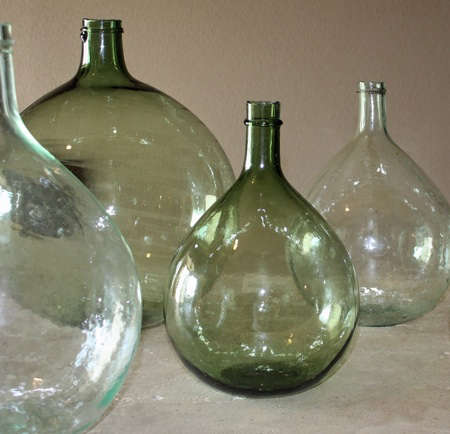
Vintage demijohns usually have a rounded or teardrop shape, a small mouth, thick glass, and subtle imperfections. Those bubbles, waves, and color variations are not defects; they are part of the charm. Unlike mass-produced decorative bottles that look like they came from a factory with perfect posture, old demijohns have character. Some lean a little. Some carry scuffs. Some have uneven glass that catches light like pond water on a sunny afternoon.
Demijohn vs. Carboy: Are They the Same?
The terms demijohn and carboy are often used together, and the difference can be fuzzy. In general, both refer to large containers for liquids. Carboys are commonly associated with fermentation, brewing, laboratory use, or industrial storage, while demijohns often refer to decorative, older, or wicker-wrapped versions used historically in homes, farms, cellars, and markets. In interior design, “demijohn” usually sounds more romantic. “Carboy” sounds like it might be wearing safety goggles.
A Brief History of Demijohn Bottles
Demijohn bottles have been used for centuries across Europe, the Mediterranean, and eventually the United States. Their purpose was practical: they could hold generous amounts of liquid, and their narrow necks helped control pouring and sealing. Farmers, winemakers, merchants, and households used them for wine, cider, vinegar, olive oil, and other valuable liquids.
Before plastic jugs and lightweight shipping containers existed, glass was a trusted material because it did not easily affect flavor or aroma. The problem, of course, is that glass breaks. That is where wicker came in. The woven exterior acted like a protective jacket, helping absorb bumps during transport. It also added handles and grip, which mattered when a full bottle could be heavy enough to make your arms reconsider their life choices.
In the 19th and early 20th centuries, demijohns and carboys became part of both commercial and household storage. American glass manufacturers produced large utility bottles, while many decorative examples found in today’s homes were imported from France, Italy, Spain, Hungary, and other European regions. Their green, blue-green, amber, and clear glass tones now make them especially appealing as vintage home accessories.
Why Vintage Demijohn Bottles Are Popular Home Accessories
The appeal of vintage demijohn bottles comes from a rare combination: they are sculptural, historical, neutral, and useful. They fill space without clutter. They add texture without shouting. They look good empty, which is more than most of us can say before coffee.
They Add Instant Character
A new room can feel too shiny if every object is fresh from a showroom. Vintage demijohn bottles solve that problem by adding age, patina, and a sense of collected style. Place one beside a fireplace, under a console table, near a bookshelf, or in an entryway, and suddenly the room feels layered rather than assembled overnight.
They Work With Many Decor Styles
Demijohns are surprisingly flexible. A clear glass demijohn can suit a modern coastal home. A green glass bottle with worn wicker feels right in farmhouse decor. A smoky blue-green piece can soften industrial interiors. A cluster of different sizes can bring warmth to a cottagecore, French country, or Mediterranean-inspired space.
They Bring Texture and Light
Glass reflects light, while wicker absorbs it. That contrast makes wicker demijohn bottles visually rich. Put one near a window and the glass glows softly. Put one near a lamp and it becomes a moody accent. Put one in a dark corner and it says, “I am here, and I have excellent bone structure.”
Common Types of Vintage Demijohn Bottles
Not all demijohns look alike. Their size, color, shape, and wrapping style can vary widely, which is wonderful news for collectors and slightly dangerous news for anyone with an empty shelf.
Wicker-Wrapped Demijohn Bottles
These are among the most recognizable. The bottle is partially or fully encased in woven wicker, cane, or straw. Some have handles, lids, or decorative weaving patterns. They look especially good in rustic, farmhouse, and French country interiors because the natural fiber softens the shine of the glass.
Green Glass Demijohns
Green and olive glass demijohn bottles are popular because they feel earthy and vintage. Their color pairs well with wood, linen, stone, terracotta, brass, and plants. They are ideal for living rooms, dining rooms, kitchens, and covered patios.
Clear Glass Demijohns
Clear demijohns feel lighter and more modern. They are excellent for coastal interiors, Scandinavian-inspired rooms, and minimalist spaces. Use them when you want shape and scale without adding too much visual weight.
Blue-Green and Aqua Demijohns
Aqua glass has a dreamy, watery quality. These bottles are beautiful in bathrooms, sunrooms, beach houses, and rooms with white walls or pale wood. They also look gorgeous with dried grasses, eucalyptus, olive branches, or bare sculptural stems.
How to Decorate With Vintage Demijohn Bottles
The best way to style a demijohn is to let it breathe. These bottles are large, and their shape is already interesting. You do not need to surround one with twelve candles, a framed quote, three ceramic birds, and a tiny ladder. Unless the tiny ladder is emotionally important to you, in which case, proceed carefully.
Use One as a Statement Floor Piece
A large vintage demijohn bottle can stand alone on the floor beside a fireplace, cabinet, reading chair, or staircase. This works especially well with oversized bottles that would look awkward on furniture. Add a few tall branches if you want height, or leave it empty for a cleaner look.
Style a Pair Under a Console Table
Console tables often have empty space underneath. A pair of demijohn bottles fills that gap beautifully. Choose bottles in different heights to avoid a stiff, matching-set effect. One wicker-wrapped bottle beside one plain glass bottle creates balance and texture.
Turn It Into an Oversized Vase
Demijohns make excellent vessels for long-stemmed arrangements. Dried pampas grass, olive branches, cherry blossoms, eucalyptus, curly willow, or tall seasonal stems can all work. Because the neck is narrow, arrangements naturally stay upright. The bottle basically does the floral arranging for you, which is very generous of it.
Create a Dining Table Centerpiece
For a long farmhouse table, use one medium demijohn as the anchor and surround it with low bowls, linen napkins, taper candles, or small seasonal accents. Keep the arrangement low enough that guests can still see one another. A centerpiece should not require people to lean sideways like they are watching a tennis match.
Group Several for a Collected Look
If you love vintage accessories, group demijohn bottles in odd numbers, such as three or five. Mix sizes, glass colors, and textures. To keep the display from looking chaotic, repeat one element: similar color tones, similar heights, or the same material nearby, such as wood or wicker.
Best Rooms for Demijohn Bottle Decor
One reason vintage demijohn bottles remain popular is that they can move around the house without looking lost. They are not locked into one room or one season.
Living Room
In a living room, a demijohn bottle can act as a sculptural accessory. Place it near a fireplace, beside a sofa, on a low shelf, or in a corner that needs height. Pair it with books, baskets, natural wood, and soft textiles.
Kitchen
Kitchens are natural homes for demijohns because these bottles began as practical storage vessels. A small or medium demijohn on open shelving can reinforce a vintage pantry look. Just avoid placing fragile antique glass where it might be bumped during everyday cooking chaos.
Dining Room
Demijohns look especially appropriate in dining rooms because of their historical connection to wine, cider, vinegar, and oils. Use them on a sideboard, buffet, or dining table. Add branches or leave them empty for a more refined display.
Entryway
An entryway needs personality quickly. A vintage demijohn bottle under a bench or console table adds instant warmth. It says, “Welcome, we have taste,” without requiring a welcome sign shaped like a rooster.
Bedroom
In a bedroom, choose smaller demijohns or clear glass versions for a softer effect. They work on dressers, beside vintage mirrors, or near woven baskets. Add dried lavender or simple branches for a calm, natural feel.
How to Choose an Authentic Vintage Demijohn Bottle
Buying a vintage demijohn bottle is part treasure hunt, part inspection mission. The goal is to find a piece that looks beautiful, feels sturdy, and fits your space.
Check the Glass
Older glass often has bubbles, waviness, uneven thickness, and subtle color shifts. These details can suggest age and handblown or early production methods. Perfectly smooth, identical glass may still be attractive, but it may be newer reproduction glass.
Look at the Wicker
Original wicker can show wear, fading, or small breaks. That patina is part of the appeal, but the structure should still feel stable. If the wicker is crumbling badly, think twice unless you plan to use the bottle only as a display piece in a low-traffic area.
Consider Size and Scale
Demijohns can be small enough for a shelf or large enough to dominate a corner. Measure before buying. A bottle that looks charming at a flea market may look enormous in a small apartment, like it is quietly preparing to charge rent.
Inspect for Cracks
Small scratches are usually fine. Cracks are different. A cracked demijohn can weaken over time, especially if it is moved often or used with water. If you want to use it as a vase, make sure it is watertight and structurally sound.
Decorating Mistakes to Avoid
Vintage demijohn bottles are easy to style, but a few common mistakes can make them look awkward.
Do Not Overfill the Bottle
A demijohn already has strong shape. If you stuff it with too many flowers, branches, lights, ribbons, and decorative picks, the result can feel busy. Choose one purpose at a time: vase, lamp, sculptural object, or seasonal accent.
Avoid Too Many Similar Bottles in One Spot
Collections are wonderful, but too many identical demijohns can make a room look like a storage cellar. Mix them with other objects, such as books, trays, ceramics, woven baskets, framed art, or plants.
Do Not Ignore Safety
Large glass bottles should be placed where children, pets, and busy foot traffic are less likely to knock them over. If you use string lights inside, choose low-heat LED lights and avoid overloading the bottle with cords or hardware.
Seasonal Styling Ideas for Vintage Demijohn Bottles
One great thing about demijohn decor is that it can change with the seasons without needing a full design makeover.
Spring
Add flowering branches, fresh greenery, or pale linen accents. Clear and aqua glass work beautifully in spring because they keep the room feeling light.
Summer
Use simple coastal elements such as driftwood, seagrass baskets, white ceramics, and airy cotton textiles. A blue-green demijohn near a sunny window can feel like a vacation without the airport snacks.
Fall
Pair green or amber demijohn bottles with dried grasses, wheat, branches, copper accents, and warm wood tones. The natural textures create a cozy harvest look without needing a pumpkin army.
Winter
Use bare branches, evergreen stems, pinecones, or soft LED lights. A demijohn with subtle lights inside can add glow to a mantel, sideboard, or entryway.
Are Vintage Demijohn Bottles Worth Collecting?
For many people, yes. Vintage demijohn bottles are collectible because they combine beauty, history, and function. Their value depends on age, size, color, condition, origin, glass quality, and whether the wicker covering is original. Rare colors, unusual shapes, handblown details, and intact basket coverings can increase desirability.
However, you do not need a museum-quality piece to enjoy the look. A simple vintage-inspired demijohn can still bring warmth to a room. If you are decorating rather than collecting seriously, focus on shape, color, condition, and how well the bottle fits your home.
Cleaning and Caring for Vintage Demijohn Bottles
Clean old demijohns gently. Use warm water, mild dish soap, and patience. Avoid harsh chemicals, especially on wicker. For dusty basket coverings, use a soft brush or dry cloth. If the inside is cloudy, a mixture of warm water and uncooked rice can sometimes help loosen residue when gently swirled. Do not shake aggressively; antique glass deserves respect, not a workout class.
If your demijohn has labels, seals, or fragile wicker, preserve them rather than scrubbing them away. Those details are part of the bottle’s identity. Store or display the bottle away from spots where it might fall, freeze, or experience sudden temperature changes.
Experience-Based Styling Notes: Living With Vintage Demijohn Bottles
The first thing many decorators learn about vintage demijohn bottles is that scale matters more than almost anything else. A large bottle may look modest in a warehouse-style antique store, but once it enters a small living room, it suddenly becomes the main character. The best experience is usually to start with one strong piece, place it in three or four possible locations, and observe how the room reacts. A demijohn beside a fireplace may feel grounded and intentional. The same bottle in the middle of a narrow hallway may feel like an obstacle course with excellent patina.
Another practical lesson is that empty can be enough. Many people feel the urge to fill every vessel with something. With demijohn bottles, restraint often looks more expensive. A large green glass bottle on its own can act like sculpture. Its curves, color, and surface texture already bring movement. When sunlight passes through the glass, the bottle changes throughout the day. Morning light may make it bright and fresh; evening light can turn it moody and antique.
When using demijohns as vases, long stems usually work better than short flowers. Tall branches, dried grasses, or simple greenery match the height and strength of the bottle. Small bouquets can look swallowed by the narrow neck and oversized base. If you want flowers, choose fewer stems with longer lines. The goal is elegance, not a floral traffic jam.
In real home styling, demijohns also work best when they connect with nearby materials. A wicker-wrapped bottle looks natural beside a rattan chair, jute rug, woven tray, or cane cabinet. A clear glass demijohn feels more at home near pale woods, white walls, and linen curtains. A blue-green bottle can echo artwork, pillows, ceramics, or coastal accents. This kind of repetition makes the bottle feel chosen rather than randomly adopted from a flea market.
One of the most reliable uses is the “awkward corner fix.” Many rooms have a corner that is too small for furniture but too empty to ignore. A large demijohn with bare branches can solve the problem instantly. It adds height without bulk, texture without mess, and personality without demanding a full redesign. It is also easier than buying a ficus and pretending you know its emotional needs.
For shelves and tabletops, smaller demijohns are easier to manage. Pair one with stacked books, a small framed print, or a low bowl. The round shape balances straight lines, making shelves feel less rigid. Avoid lining up too many bottles in a row unless you want the display to resemble a very stylish science lab.
The best long-term advice is to treat vintage demijohn bottles as flexible accessories. Move them seasonally. Try them empty, with branches, with lights, or grouped with baskets. Let the bottle earn its place in the room. A good demijohn does not just decorate a space; it gives the space a little history, a little texture, and a charming excuse to say, “Oh that old thing?” when guests inevitably ask about it.
Conclusion: Why Vintage Demijohn Bottles Still Feel Fresh
Vintage demijohn bottles have survived changing trends because they are more than pretty containers. They are pieces of everyday history that now serve as sculptural home accessories. Their rounded shapes soften rooms, their glass colors catch the light, and their wicker coverings add organic texture. Whether used as a floor accent, oversized vase, table centerpiece, or collected display, a demijohn bottle brings warmth and quiet drama to a home.
The secret is not to overthink it. Choose a bottle with character, place it where it has room to shine, and let its age do the decorating. In a world full of fast decor, vintage demijohns remind us that the best accessories often come with a past, a purpose, and just enough mystery to make a room interesting.
Note: This article is written in original American English for web publication and includes only the body HTML content requested.