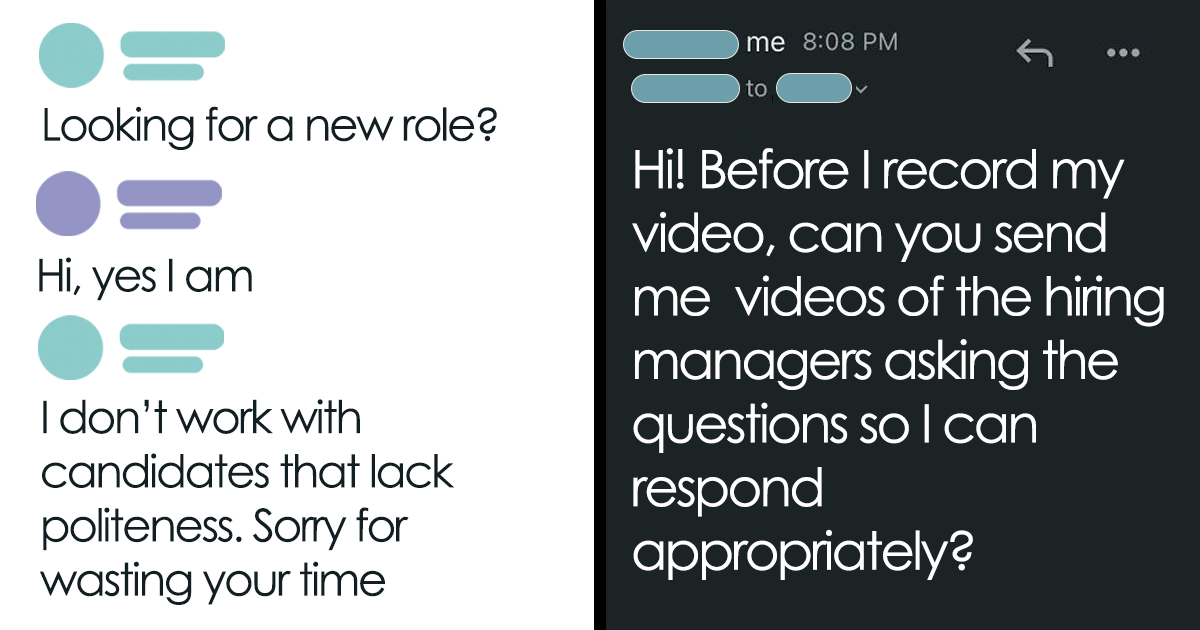
Job hunting used to sound simple: polish your resume, write a polite cover letter, put on a shirt that says “I am employable,” and wait for opportunity to knock. Today, opportunity often knocks, asks for seven years of experience in a tool invented last Tuesday, requests a custom unpaid project, ghosts you for six weeks, and then reposts the job with “urgent hiring” in the title.
Across job boards, career forums, Reddit communities, workplace surveys, and viral social posts, applicants have been sharing the same complaint: many job listings no longer feel like invitations to apply. They feel like riddles written by a committee, a robot, and someone’s uncle who still thinks “computer skills” means knowing how to turn on a printer.
The frustration is not just whining from candidates who want corner offices and free cold brew. A lot of job seekers are running into real problems: so-called entry-level roles that demand mid-career experience, pay ranges that vanish like socks in a dryer, “remote” jobs that require daily office attendance, and interview processes longer than some celebrity marriages. The result is a hiring landscape where good candidates waste time, employers miss talent, and everyone ends up needing a snack.
Below are 30 of the most ridiculous unrealistic job requirements people say they have encountered while trying to find work, along with what they reveal about modern hiring.
Why Unrealistic Job Requirements Are Everywhere
Unrealistic job requirements usually come from three places: fear, laziness, and broken hiring systems. Some employers are afraid to hire the wrong person, so they write a wish list for a mythical employee who is young, experienced, affordable, local, flexible, certified, passionate, humble, available immediately, and somehow thrilled to earn “competitive pay” that is never actually named.
Other postings are created by copying old job descriptions without asking whether the listed tools, degrees, certifications, and years of experience are still necessary. Then there are automated hiring systems that reward keyword matching over common sense. A candidate may have the ability to do the work, but if their resume does not contain the exact phrase “stakeholder synergy optimization,” they may be rejected before a human even sees them.
The job market also contains a growing trust problem. Many applicants believe some postings are not active openings at all. These “ghost jobs” may be kept online for talent pipelines, internal optics, or because nobody bothered to remove them. For applicants, that feels like tossing resumes into a haunted mailbox.
30 Ridiculous Job Requirements People Keep Running Into
1. Entry-Level Job, Five Years of Experience
This is the classic. The job title says “Junior Assistant Coordinator,” but the requirements demand five years of experience, advanced software knowledge, leadership history, and the emotional strength of a lighthouse keeper. Entry-level should mean a person can enter. If candidates need half a decade of experience, the job is not entry-level; it is mid-level wearing a tiny hat.
2. Ten Years of Experience in a Tool That Has Existed for Three
Tech candidates often laugh, then cry, when companies request impossible timelines. A posting may ask for eight years of experience in a framework, platform, or AI tool that only recently became mainstream. This usually means the hiring team does not understand the technology, but it still expects applicants to bend time like a low-budget superhero.
3. A Master’s Degree for Near-Minimum Wage
Some employers want graduate-level education, specialized knowledge, and professional polish, then offer pay that barely covers rent, groceries, and one emotionally necessary burrito. Education has value, but if a job requires advanced credentials, the compensation should not look like it was assembled from couch change.
4. “Must Be Passionate” About Data Entry
Passion is wonderful. Passion helps artists paint, nurses heal, and entrepreneurs survive paperwork. But not every job needs to be a life calling. Sometimes a person can be reliable, accurate, and pleasant without claiming that spreadsheet formatting is their destiny.
5. Remote Position, Must Live Within 10 Minutes of the Office
Remote work has become a magnet for confusion. Some listings advertise “fully remote,” then reveal that employees must attend in-person meetings three days a week. That is not remote. That is an office job with Wi-Fi and commitment issues.
6. Must Own Expensive Equipment for a Low-Paid Role
Candidates have seen roles requiring them to provide their own laptop, camera, software subscriptions, headset, car, phone plan, or home office setup. For freelance work, equipment expectations may make sense. For regular employment, asking applicants to fund the company’s operating costs is a bold little tap dance.
7. Unpaid Trial Projects That Look Like Real Client Work
Work samples can be useful. But some companies request detailed marketing plans, design concepts, code fixes, writing assignments, or strategic audits before hiring anyone. When the project is large enough to be used by the business, it should be paid. “Show us your skills” should not secretly mean “complete our Q3 backlog.”
8. Available Nights, Weekends, Holidays, and Also Normal Business Hours
Some job descriptions ask for unlimited availability while paying for limited hours. Candidates are expected to be on call, flexible, responsive, cheerful, and somehow not human. Flexibility is a two-way street; otherwise, it is just a company borrowing your life without asking nicely.
9. “Fast-Paced Environment” as a Warning Label
Fast-paced can mean exciting, but in many job ads it means understaffed, chaotic, and held together by one exhausted person named Brenda. Applicants have learned to read between the lines. “Wear many hats” often means “We lost the hat budget.”
10. Must Be a Self-Starter, Team Player, Leader, Follower, Visionary, and Detail-Oriented Unicorn
Some listings pack every positive trait into one paragraph until the ideal candidate sounds less like a person and more like a corporate horoscope. Employers should decide what matters most. Nobody can be the bold visionary, quiet executor, charismatic networker, patient analyst, and office golden retriever all at once.
11. A Bachelor’s Degree for a Job That Clearly Does Not Need One
Degree requirements are falling in some industries, but plenty of postings still use them as a lazy filter. For roles where skills can be demonstrated through portfolios, certifications, apprenticeships, or experience, insisting on a four-year degree can block capable candidates who simply took a different path.
12. “Competitive Salary” With No Salary Listed
Competitive with what? Other companies? A mystery envelope? A raccoon guarding a coin jar? Job seekers increasingly want pay transparency because applying takes time. If the salary is truly competitive, employers should not have to hide it behind interpretive dance.
13. Must Have Industry Experience for an Industry That Claims It Cannot Find Workers
Many companies say there is a talent shortage, then reject people who could learn the work quickly. If an industry needs new talent, it has to build pathways for newcomers. You cannot complain that nobody knows your niche software while refusing to train anyone on your niche software.
14. Multiple Certifications for an Assistant-Level Role
Certifications can prove expertise, especially in regulated fields. But stacking unnecessary credentials onto junior roles creates a gatekeeping wall. If the job mainly involves scheduling, customer support, or basic operations, requiring a small alphabet after someone’s name may be overkill.
15. Must Have a Car for a Desk Job
Some office roles ask for reliable transportation even when travel is not part of the work. Of course, employees need to arrive on time if the job is on-site. But “must own a car” can exclude people who use public transit, bike, walk, or live in cities where parking costs more than emotional stability.
16. “Rock Star” or “Ninja” Required
Unless the company is hiring for a concert tour or a stealth mission, applicants are generally tired of being asked to become rock stars and ninjas. Most people just want clear expectations, fair pay, decent management, and a workplace where replying-all is not treated as a personality trait.
17. Must Be Comfortable With Ambiguity, but Also Follow Strict Processes
This requirement can be reasonable in growing companies, but it becomes ridiculous when paired with rigid approvals, outdated tools, and managers who panic if a comma moves. Candidates can handle ambiguity. What they cannot handle is being blamed for not reading minds professionally.
18. Three to Six Interview Rounds for a Job Paying $18 an Hour
Interviewing matters, but some processes have become absurdly long. Phone screen, recruiter call, manager interview, panel interview, assessment, executive chat, culture interview, reference check, and then silence. At some point, applicants are no longer applying for a job; they are competing in a docuseries.
19. Must Accept “Family Culture” Without Family Benefits
When companies say “we are a family,” job seekers often hear “boundaries may be treated as suspicious.” A healthy workplace can be friendly and supportive without pretending employment is Thanksgiving dinner. Real families argue over pie; companies should offer clear expectations and paid time off.
20. Recent Graduate, but Must Already Have Managed a Team
New graduates may have leadership experience from internships, student organizations, military service, volunteer work, or part-time jobs. But requiring formal management history for a role aimed at new grads is strange. Employers cannot demand a fresh start and a long track record in the same breath.
21. Must Be Willing to Relocate With No Relocation Support
Relocation is expensive. Deposits, movers, travel, temporary housing, and lost local support add up quickly. Asking candidates to move across the country for an uncertain role, especially without assistance, narrows the pool to people who can afford risk. That is not merit-based hiring; that is wallet-based hiring.
22. “Unlimited PTO” That Nobody Is Encouraged to Use
Unlimited paid time off can be great when managed well. But candidates have learned to ask questions. If employees feel guilty taking vacation, “unlimited” becomes decorative language. A benefit that exists only in the handbook is not a benefit; it is office wallpaper.
23. Must Be an Expert in Five Jobs at Once
Marketing roles are especially famous for this. One posting may ask for SEO, paid ads, graphic design, copywriting, analytics, video editing, email automation, influencer outreach, web development, brand strategy, and event planning. Congratulations, you are not hiring a coordinator. You are hiring an entire agency in one pair of shoes.
24. Must Have Open Availability, but the Schedule Changes Weekly
Retail, food service, and customer support applicants often encounter schedules that are both unpredictable and mandatory. People have childcare, classes, second jobs, medical appointments, and lives. “Open availability” may sound convenient for employers, but it can make financial planning nearly impossible for workers.
25. Must Work Well Under Pressure Because the Company Refuses to Fix the Pressure
Every job has stress. The problem is when stress is treated as a permanent business model. If the same emergencies happen every week, they are no longer emergencies. They are operations failures wearing a tiny firefighter helmet.
26. Personality Test Before a Human Conversation
Assessments can help in specific contexts, but some applicants are asked to take personality tests, cognitive tests, one-way video interviews, and behavioral quizzes before speaking to a person. It creates the eerie feeling of auditioning for a vending machine.
27. Must Be “Like a Founder” Without Founder Equity
Startups sometimes ask employees to act with founder-level ownership, sacrifice, and urgency. That can be inspiring when paired with equity, transparency, and respect. Without those things, “think like an owner” may simply mean “care as much as the owner while owning none of it.”
28. Must Tolerate Low Pay Because the Company Has a Mission
Mission-driven work matters. Nonprofits, education, health care, sustainability, and community organizations often attract people who care deeply. But purpose does not pay rent by itself. Workers can believe in the mission and still need dental care, groceries, and a functioning chair.
29. Must Submit References Before Any Serious Interview
References are valuable near the end of the process. Asking for them too early can put candidates in an awkward spot, especially if they are employed and searching confidentially. Nobody wants their current manager getting a surprise phone call because they clicked “apply” during lunch.
30. Must Be Grateful for the Opportunity, Even When the Process Is a Mess
Perhaps the most unrealistic requirement is emotional: applicants are expected to remain enthusiastic no matter how confusing, delayed, underpaid, or impersonal the process becomes. Gratitude is nice. But respect goes both ways. Candidates are evaluating employers too, and a chaotic hiring process is often a preview of the workplace.
What These Ridiculous Requirements Reveal About Hiring
At first glance, these examples are funny. They belong in screenshots, memes, and group chats where everyone replies with “absolutely not.” But beneath the humor is a serious issue: unrealistic job requirements distort the labor market.
When job postings ask for too much, qualified people self-select out. Women, career changers, first-generation professionals, people without traditional degrees, older workers, people with disabilities, and applicants from underrepresented backgrounds may be more likely to skip roles where they do not meet every line. Employers then complain about a small applicant pool, even though the job description chased good people away with a broom.
Unrealistic requirements also slow hiring. A company looking for a perfect candidate may reject strong candidates for months. Meanwhile, the team burns out, work piles up, and the job gets reposted with even more urgency. This is how a “must be detail-oriented” bullet point becomes a department-wide cry for help.
How Job Seekers Can Respond Without Losing Their Minds
Applicants cannot fix the entire hiring system by themselves, but they can protect their time. First, treat job descriptions as wish lists, not sacred tablets. If you meet most of the important requirements and can prove relevant skills, apply. Many employers list nice-to-have qualifications as if they are mandatory because the job description was written by ambition, not reality.
Second, look for signals of seriousness. Is the job posted on the company’s career page? Does it include a clear salary range? Is the role specific about responsibilities? Has the posting been online for months without updates? Are the interview steps explained early? A legitimate opportunity usually becomes clearer as you move through the process, not foggier.
Third, ask direct questions politely. “Can you share the salary range?” “How many interview rounds are expected?” “Is this role actively budgeted and open?” “What are the top three must-have skills?” Good employers will appreciate clarity. Bad employers may act offended, which is also useful information. A red flag waving itself saves you arm strength.
How Employers Can Write Better Job Requirements
Employers who want stronger candidates should start by separating must-haves from nice-to-haves. If a skill can be learned in 30 days, it probably should not be treated like a legal requirement. If a degree is not truly necessary, remove it. If experience matters, be honest about the level and pay accordingly.
Good job descriptions explain the work, the tools, the team, the schedule, the salary range, and the hiring process. They do not need to sound like a motivational poster trapped in a blender. Candidates want clarity more than corporate poetry.
Companies should also pay for substantial work tests, shorten interview loops, communicate timelines, and close the loop with applicants. These basic acts of professionalism make a company stand out because, sadly, the bar is sometimes lying on the floor wearing a name tag.
Experience Section: What It Feels Like to Face Unrealistic Job Requirements
Anyone who has spent real time job hunting knows the emotional rhythm. At first, you feel hopeful. You open a job board with a fresh cup of coffee and the optimism of a person who has not yet seen the phrase “entry-level senior specialist.” You find a role that sounds promising. The title fits. The company looks decent. The first few lines are friendly. Then the requirements begin.
Suddenly, the employer wants five years of experience, three software platforms, a bachelor’s degree, a certification, weekend availability, experience managing vendors, comfort with ambiguity, advanced Excel, basic HTML, social media strategy, event planning, customer support, and “a positive attitude.” The salary is not listed. The location says remote, but the description says “must commute as needed,” which could mean once a quarter or every time the CEO misses seeing people in chairs.
You apply anyway because job seekers have become philosophers of compromise. Maybe they do not really need all of that. Maybe the recruiter will understand transferable skills. Maybe the applicant tracking system will behave like a reasonable adult. Then nothing happens. Two weeks pass. The posting remains online. You wonder whether your resume disappeared into a server room where abandoned PDFs gather dust and whisper about cover letters.
For career changers, the experience can be especially strange. You may have managed budgets, trained coworkers, solved customer problems, handled deadlines, learned tools quickly, and survived meetings that should have been emails. Yet a posting may reject you because your previous title does not match the new industry’s vocabulary. It is frustrating to know you can do the work but not have the exact keyword costume required to enter the room.
Recent graduates face a different version of the same maze. They are told to gain experience, but the jobs that would give them experience require experience first. Internships may be unpaid or low-paid. Junior roles may demand portfolios that are difficult to build without client work. The whole thing can feel like being told to bring a ladder to buy your first ladder.
Experienced professionals are not immune either. Older workers may encounter coded language such as “digital native,” “high-energy culture,” or “recent graduate preferred.” Parents returning to work may be asked to explain resume gaps as if caregiving were not project management with higher stakes and fewer lunch breaks. Workers with disabilities may see vague demands for constant availability, rapid multitasking, or “thick skin” and wonder whether accommodation will be treated as a problem instead of a legal and human expectation.
The healthiest response is not to internalize every rejection. A ridiculous job requirement is not proof that you are unqualified for work. Sometimes it is proof that the employer has not defined the role, priced it correctly, or updated a template since 2014. Job seekers should keep improving their materials, networking, building proof of skills, and applying strategically. But they should also remember that hiring is a two-sided evaluation. If a company’s first impression is confusion, secrecy, and impossible demands, that is information.
The best job postings make candidates feel informed, not tricked. They describe a real role for a real person at a real salary. Until more employers figure that out, applicants will continue sharing screenshots, laughing through the frustration, and asking the eternal question: “Who exactly do they think is applying for this?”
Conclusion
Unrealistic job requirements are more than internet comedy. They are symptoms of a hiring culture that often confuses caution with clarity and wishful thinking with strategy. When employers demand impossible combinations of experience, education, availability, passion, and low pay, they do not attract better candidates. They repel honest ones.
The good news is that better hiring is not complicated. Clear expectations, realistic qualifications, transparent compensation, respectful communication, and reasonable interview steps can instantly improve the process. Job seekers are not asking for magic. They are asking for jobs that make sense. And considering some postings out there, “makes sense” would already be a thrilling innovation.