Note: This article is for educational and entertainment purposes. Powerball is a game of chance, not a guaranteed money-making strategy. Play responsibly, set a budget, and never spend money you cannot afford to lose.
Powerball is the lottery game that makes office break rooms louder, gas station lines longer, and otherwise sensible adults suddenly discuss whether they would buy a private island or “just a modest lake house.” It is simple to play, exciting to watch, and famous for jackpots that can grow into hundreds of millionsor even more than a billiondollars.
But before you start practicing your “I’m retiring effective immediately” speech, it helps to understand how Powerball actually works. The rules are not complicated, but the details matter: how many numbers you choose, what the Powerball number means, how prizes are paid, what Power Play does, and why your odds of winning the jackpot are, politely speaking, not exactly friendly.
This guide explains how to play Powerball, the basic rules, prize tiers, odds, add-on options, and practical tips for playing smarter. You will not find magic numbers here, because lottery balls do not care about birthdays, lucky socks, or the fact that your cat stared meaningfully at the number 17. What you will find is a clear, useful, and realistic guide to enjoying the game without confusing hope with strategy.
What Is Powerball?
Powerball is a multi-state lottery game available in most U.S. lottery jurisdictions. Players buy a ticket, choose a set of numbers, and wait for a drawing. If the numbers on your ticket match the numbers drawn, you win a prize. The more numbers you match, the bigger the prize.
Powerball is best known for its massive jackpot, but there are actually nine ways to win. That means you do not have to match every number to take home money. You can win smaller prizes by matching only the red Powerball number, matching a few white balls, or matching five white balls without the Powerball.
Drawings are typically held three times a week: Monday, Wednesday, and Saturday at 10:59 p.m. Eastern Time. Ticket sales cut-off times vary by state, so it is always smart to check the rules in the state where you are buying your ticket. Waiting until the last minute is a classic lottery tradition, but it is also how people end up sprinting into a convenience store at 9:58 p.m. like they are training for the Olympics.
How to Play Powerball: The Basic Rules
Playing Powerball is easy. The hardest part is deciding whether to choose your own numbers or let the machine do the work with a Quick Pick.
Step 1: Choose Five White Ball Numbers
First, choose five numbers from 1 to 69. These are called the white ball numbers. You cannot repeat the same white ball number within a single play. For example, you could choose 4, 16, 28, 41, and 63, but you could not choose 4, 4, 16, 28, and 41.
Step 2: Choose One Red Powerball Number
Next, choose one Powerball number from 1 to 26. This is the red ball number. Your Powerball number can be the same as one of your white ball numbers because it comes from a separate pool. So yes, you could choose 12 as a white ball number and 12 as your Powerball number. The lottery will not call the number police.
Step 3: Buy Your Ticket
A standard Powerball play costs $2. You can usually buy tickets from authorized lottery retailers in participating states and jurisdictions. Some states also offer legal online lottery purchasing options, but availability depends on local law.
Step 4: Choose Optional Add-Ons
Depending on where you play, you may be able to add Power Play or Double Play for an extra $1 each per play. These options can increase certain prizes or give you another chance to win in a separate drawing. More on those in a moment.
Step 5: Check the Drawing Results
After the drawing, compare your ticket with the winning numbers. You can check results through your state lottery website, the official Powerball website, lottery retailers, mobile apps, or local broadcasts. Always keep your ticket safe because the ticket is your proof of purchase.
Quick Pick vs. Choosing Your Own Numbers
When buying a Powerball ticket, you can pick your own numbers or ask for a Quick Pick, which lets the lottery terminal randomly generate your numbers.
Many players love choosing their own numbers. Birthdays, anniversaries, jersey numbers, lucky numbers, and “that number I keep seeing everywhere” are all common choices. The problem is that birthdays limit many players to numbers 1 through 31, while Powerball uses white balls from 1 to 69. That does not make birthday numbers worse in terms of mathematical odds, but it may mean you are ignoring many available numbers.
Quick Pick is simple, fast, and random. Since Powerball drawings are random, a Quick Pick has the same chance of winning as hand-picked numbers. The lottery balls do not know whether your numbers came from a machine, a dream, or a fortune cookie. Every number combination has the same jackpot odds.
Powerball Prize Tiers: Nine Ways to Win
Powerball has nine prize levels. The jackpot is the superstar, but smaller prizes are much more common. Here is a simplified look at how the prize structure works for a standard $2 play, excluding California’s pari-mutuel prize rules and any special state-specific variations.
| Match | Typical Prize | Approximate Odds |
|---|---|---|
| 5 white balls + Powerball | Jackpot | 1 in 292,201,338 |
| 5 white balls | $1 million | 1 in 11,688,053.52 |
| 4 white balls + Powerball | $50,000 | 1 in 913,129.18 |
| 4 white balls | $100 | 1 in 36,525.17 |
| 3 white balls + Powerball | $100 | 1 in 14,494.11 |
| 3 white balls | $7 | 1 in 579.76 |
| 2 white balls + Powerball | $7 | 1 in 701.33 |
| 1 white ball + Powerball | $4 | 1 in 91.98 |
| Powerball only | $4 | 1 in 38.32 |
The overall odds of winning any Powerball prize are about 1 in 24.87. That sounds much more cheerful than the jackpot odds, but remember that “any prize” includes the $4 prize. Winning $4 is fun, but it may not require calling a family meeting.
What Is Power Play?
Power Play is an optional add-on that costs $1 extra per play. It can multiply non-jackpot prizes by 2, 3, 4, 5, or sometimes 10 times. The 10X multiplier is only available when the advertised jackpot annuity is $150 million or less.
There is one important exception: the Match 5 prize does not multiply by 3X, 4X, 5X, or 10X. With Power Play, the $1 million Match 5 prize becomes $2 million, no matter which multiplier is drawn.
Power Play does not apply to the jackpot. If you win the jackpot, congratulationsyou do not need a multiplier. You need a lawyer, a financial advisor, a tax professional, and possibly a very calm chair to sit in.
What Is Double Play?
Double Play is another optional add-on available in select jurisdictions. For an extra $1 per play, your same Powerball numbers are entered into a separate drawing after the main Powerball drawing. Double Play has its own prize structure and a top cash prize of $10 million.
Power Play does not apply to Double Play prizes. Double Play is not available everywhere, so check your local lottery rules before assuming you can add it to your ticket.
How Do You Win the Powerball Jackpot?
To win the Powerball jackpot, you must match all five white ball numbers and the red Powerball number in the same drawing. The order of the five white ball numbers does not matter. If the winning white balls are 3, 18, 27, 44, and 61, your ticket can list those five numbers in any order. The Powerball number, however, must match the red Powerball drawn.
The jackpot starts at a set amount and grows when no ticket wins the top prize. That is how Powerball jackpots can roll over and become enormous. More ticket sales can help push the advertised jackpot higher, which is why giant jackpots often create long lines and sudden group texts from coworkers who have not spoken since the holiday party.
Powerball Jackpot: Cash Option vs. Annuity
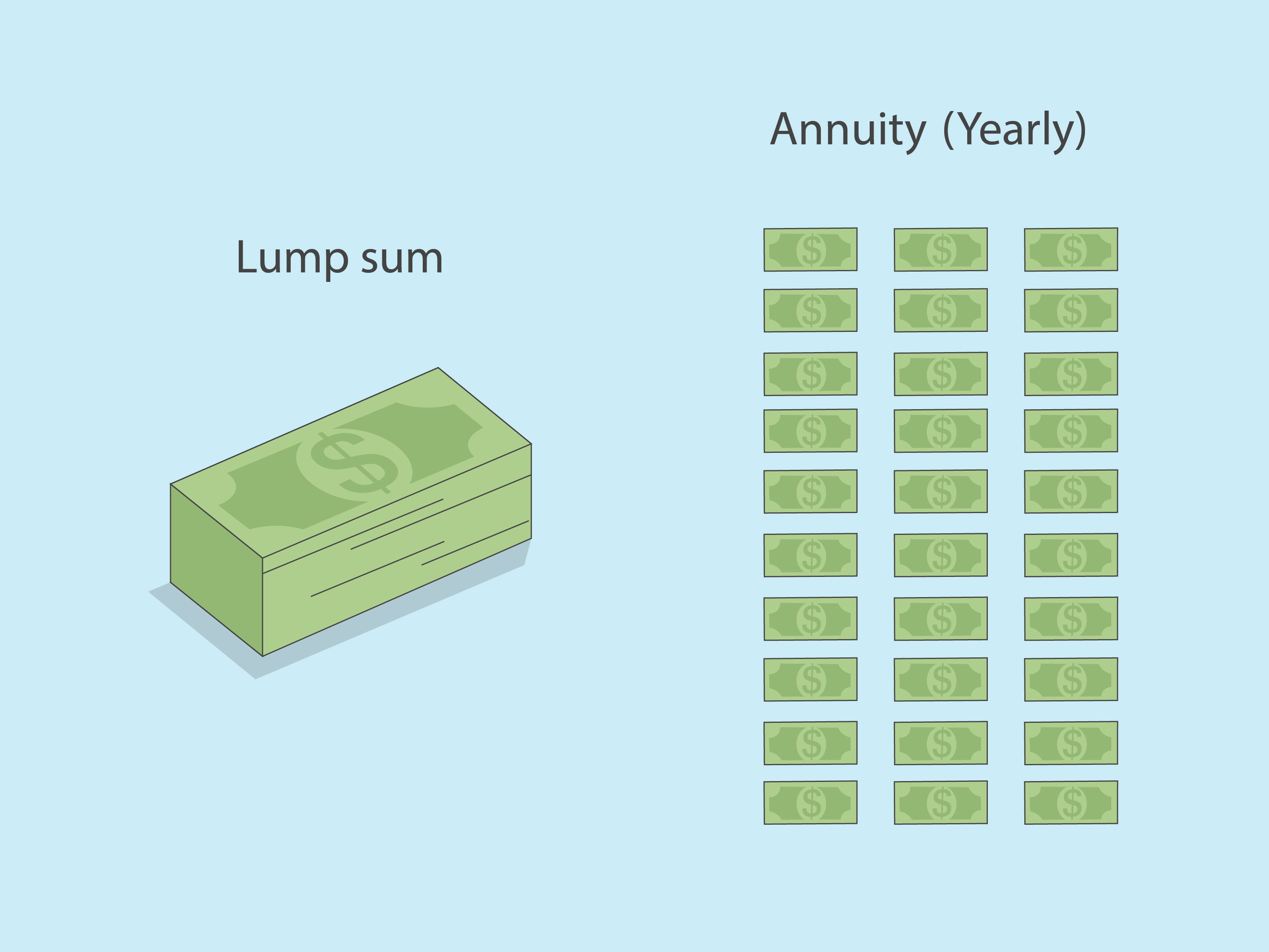
If you win the jackpot, you typically choose between two payment options: the annuity or the cash option.
Annuity Option
The annuity pays the jackpot over 30 payments across 29 years. The payments increase over time. This option is designed to provide long-term income rather than one huge payment at once.
Cash Option
The cash option is a one-time lump sum payment. It is usually much smaller than the advertised annuity jackpot because the advertised jackpot reflects the total value of payments over time. Many winners choose the cash option because it provides immediate control over the money, but it also requires serious planning.
Either way, taxes matter. Lottery winnings are generally taxable income at the federal level, and state taxes may also apply depending on where you bought the ticket and where you live. Large prizes may have tax withholding upfront, but withholding is not always the final tax bill. Jackpot winners should speak with qualified tax and financial professionals before claiming a prize.
Can You Improve Your Odds of Winning Powerball?
Technically, yesbut only in the most literal sense. Buying more tickets gives you more number combinations, which increases your chance of winning. If you buy one ticket, your jackpot odds are 1 in 292,201,338. If you buy two different tickets, you have two chances. But even then, your odds are still extremely small.
There is no number pattern, software trick, “hot number” system, or secret calendar method that can predict a random Powerball drawing. Past winning numbers do not influence future drawings. A number that has not appeared in a while is not “due.” Lottery balls do not have memory, guilt, or a sense of fairness.
The smartest way to “win” at Powerball is to play for entertainment, not investment. Set a spending limit before you buy. Consider joining an office pool if you want more combinations for less personal cost. And remember: the only guaranteed winner in lottery math is the person who sells you a calculator.
Powerball Pools: Playing With a Group
Lottery pools are popular because they let players buy more tickets together. For example, if 10 coworkers each contribute $5, the group can buy 25 standard Powerball plays. That gives the group more combinations than one person buying a single ticket.
However, group play needs clear rules. Before buying tickets, write down who is participating, how much each person contributed, which tickets belong to the group, and how prizes will be split. Take photos or make copies of the tickets and share them with everyone in the pool. It may feel overly serious when the prize is $7, but if the ticket wins $100 million, suddenly everyone becomes a contract scholar.
Common Powerball Mistakes to Avoid
Forgetting to Sign the Ticket
In many places, signing the back of your ticket helps establish ownership. Rules vary, but unsigned tickets can create problems if they are lost or stolen. Treat your ticket like cash.
Missing the Claim Deadline
Powerball prize claim deadlines vary by jurisdiction, often ranging from 90 days to one year. Check the back of your ticket or your state lottery website. A winning ticket that expires is basically a very expensive bookmark.
Buying From Unofficial Sellers
Only buy tickets from authorized lottery retailers or legal state-approved online channels. Avoid anyone claiming they can sell “guaranteed winning” tickets or special access to lottery entries.
Assuming a Small Prize Is Not Worth Checking
Many players only look for the jackpot numbers and forget there are smaller prize tiers. Always scan your ticket or check it carefully. A $4 win may not change your life, but it can buy your next ticketor a celebratory snack.
Responsible Play: The Most Important Rule
Powerball can be fun, but it should stay fun. The best approach is to decide how much you are comfortable spending before you play. Do not chase losses, do not borrow money for tickets, and do not treat lottery play as a financial plan.
If gambling stops feeling entertaining and starts feeling stressful, it is time to pause. Help is available through responsible gambling resources, including national and state helplines. Playing responsibly is not about being boring; it is about making sure a game stays a game.
Practical Experiences and Real-World Tips for Playing Powerball
Most people do not play Powerball because they believe they have cracked the code. They play because it is a tiny ticket to a very large daydream. That daydream might involve paying off debt, helping family, buying a house, starting a charity, traveling the world, or finally ordering guacamole without checking the price. The experience is part math, part imagination, and part “what if?”
One useful experience many regular players share is to make Powerball a planned entertainment expense. Think of it like buying a movie ticket. You are paying for a few days of anticipation, a conversation starter, and the fun of checking numbers. If you win something, great. If not, you still had your little adventure. This mindset prevents Powerball from becoming stressful or financially risky.
Another practical tip is to keep your tickets organized. Put them in the same place every time, such as a wallet pocket, drawer, envelope, or small folder. If you play multiple drawings in advance, write the drawing dates clearly on your ticket or keep a note in your phone. Many people have experienced the mini-panic of finding an old ticket and wondering, “Wait, was this from last week or the Ice Age?” Organization saves headaches.
If you play in a group, treat it like a simple business arrangement even if everyone involved is friendly. A lottery pool can be fun, but money has a magical ability to make people suddenly remember conversations differently. Create a group chat, list participants, record contributions, and send pictures of the tickets before the drawing. This does not make you dramatic. It makes you the responsible adult in the room, which is less glamorous than being the jackpot winner but still useful.
Many experienced players also recommend avoiding emotional spending when jackpots get huge. Big jackpots are exciting, but the odds do not become easier just because the prize has more zeros. A $1 billion jackpot and a $40 million jackpot are both extremely difficult to win. Decide your limit before the hype arrives. Otherwise, the giant billboard number can whisper, “Just one more ticket,” like a very persuasive vending machine.
It is also wise to think ahead about what you would do if you actually won a major prize. This does not mean ordering a yacht catalog today. It means understanding the basics: sign the ticket, secure it, stay calm, check your state’s claim rules, and contact reputable legal, tax, and financial professionals before making public announcements. The first move after a life-changing win should not be posting a selfie with the ticket and the caption “Guess who’s rich?” That is how chaos gets invited to dinner.
Finally, remember that small wins are part of the experience. Matching only the Powerball or winning $7 may not be headline material, but it is still a win. Enjoy it, laugh about it, and keep perspective. Powerball is entertainment with a possibility attached. The best players know the rules, respect the odds, protect their money, and let the dream be fun without letting it drive the car.
Conclusion
Powerball is easy to play: choose five white ball numbers from 1 to 69, choose one red Powerball number from 1 to 26, buy your ticket, and check the results after the drawing. The game offers nine ways to win, from a small $4 prize to a life-changing jackpot. Optional features like Power Play and Double Play can add extra excitement, depending on where you play.
But the most important lesson is simple: Powerball is a game of chance. There is no guaranteed way to win the jackpot, no secret number pattern, and no strategy that can overpower randomness. The best approach is to understand the rules, play within a budget, check your tickets carefully, and enjoy the fun of imagining what might happen if those six numbers finally line up.
In other words, dream bigbut keep your wallet grounded.