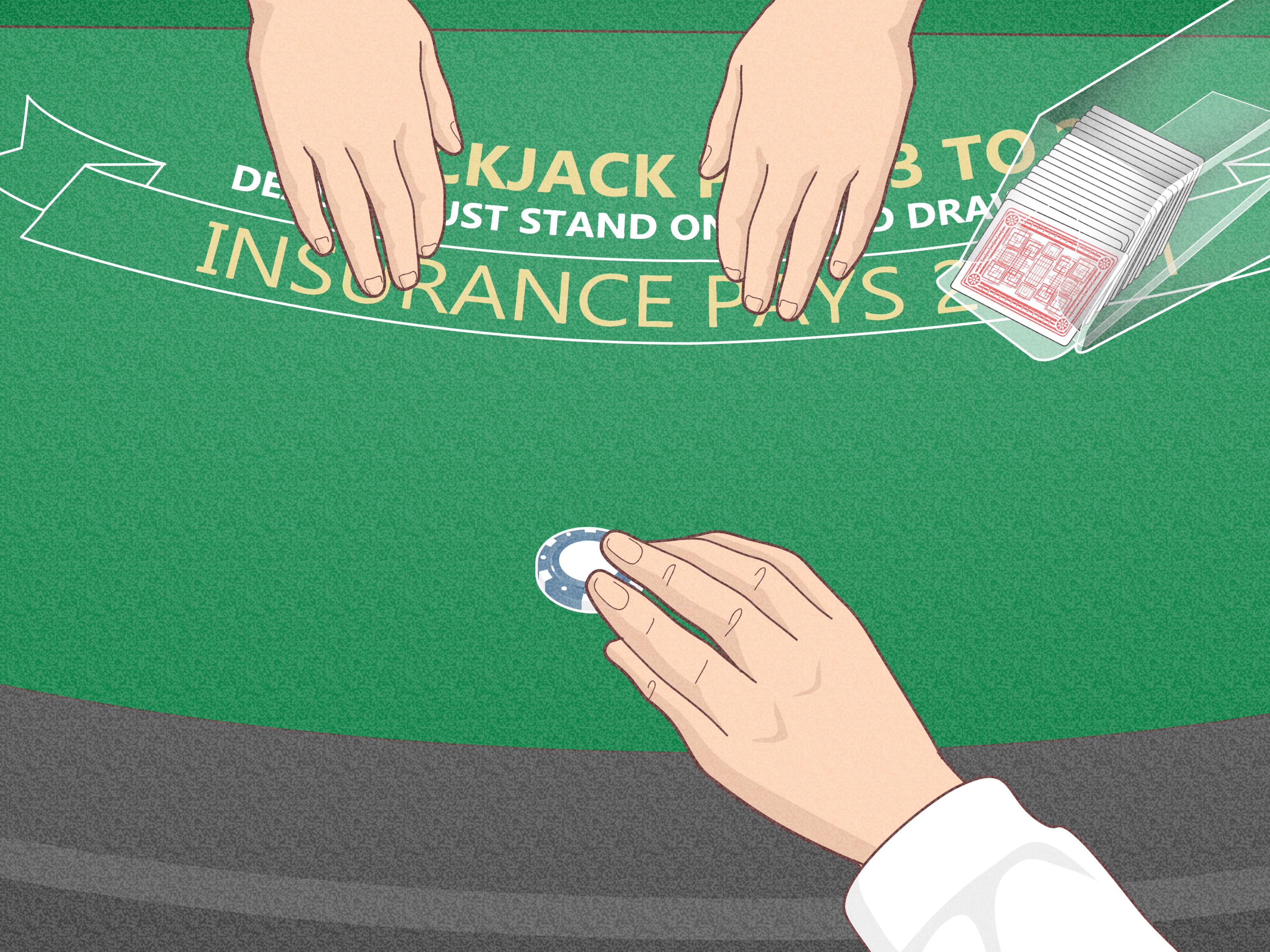
Blackjack is one of the rare casino games where skill actually matters. That does not mean the dealer is secretly terrified of your lucky socks, and it definitely does not mean every player can stroll into a casino, count a few cards, and retire before dessert. But it does mean that blackjack rewards discipline, math, memory, and patience more than most table games.
Card counting is the famous strategy behind that idea. It is not magic. It is not cheating when done only in your head. And despite what movies suggest, it does not require a photographic memory, sunglasses indoors, or a dramatic slow-motion walk through Las Vegas. At its core, counting cards in blackjack means tracking whether the remaining shoe is rich in high cards or low cards, then adjusting your bets and decisions when the math becomes more favorable.
This guide explains how to count cards in blackjack using the popular Hi-Lo card counting system, how to use the running count and true count, what table rules to look for, and how to avoid the common beginner mistakes that turn “advantage play” into “expensive arithmetic practice.”
What Is Card Counting in Blackjack?
Card counting is a blackjack strategy that tracks cards already dealt to estimate the makeup of the cards still left in the deck or shoe. Since blackjack cards are not replaced after every hand in traditional shoe games, the past gives clues about the future.
High cards, especially tens, face cards, and aces, generally help the player more than the dealer. Why? A deck rich in high cards increases the chance of hitting a natural blackjack, improves double-down opportunities, and makes dealer busts more likely when the dealer is forced to hit stiff hands. Low cards, especially 2 through 6, often help the dealer survive those stiff hands.
So the card counter is asking one simple question: “Are there more player-friendly high cards left than usual?” If yes, the player may raise their bet. If no, the player keeps bets small or leaves the table. Glamorous? Not really. Useful? Potentially, if practiced correctly.
Is Counting Cards Illegal?
Counting cards with your brain is generally not illegal in the United States. You are using observation, memory, and arithmetic, not a hidden device or outside computer. However, casinos are private businesses and can usually refuse service, change shuffle procedures, limit your bets, ask you to leave, or ban you from playing if they believe you are an advantage player.
That is an important distinction: legal does not mean welcome. Casinos enjoy skilled blackjack players about as much as cats enjoy bubble baths. Some jurisdictions have special rules, and laws can vary, so players should always follow local regulations and casino policies. Never use electronic devices, marked cards, team signals where prohibited, or any method that crosses into cheating.
Why Card Counting Works
Blackjack is a game of changing probabilities. In roulette, the wheel does not remember the last spin. In slot machines, the next result is not influenced by the previous one. But in blackjack, when a card comes out of the shoe, it is no longer available until the shuffle. That changes the odds.
Imagine a six-deck shoe where many small cards have already appeared. That means the remaining cards contain a higher concentration of tens and aces. This is good for the player because blackjacks pay extra at good tables, double-down hands become stronger, and the dealer is more likely to break when drawing from a weak total.
Card counting does not tell you the next card. It does not whisper, “The next card is the queen of hearts, act casual.” It simply tells you whether the remaining shoe is favorable, neutral, or unfavorable. The edge is small, but in gambling, small edges are everything.
The Hi-Lo Card Counting System
The Hi-Lo system is the most widely taught beginner card counting method because it is simple, balanced, and practical. Each card is assigned a value:
Hi-Lo Card Values
- Cards 2, 3, 4, 5, and 6: +1
- Cards 7, 8, and 9: 0
- Cards 10, Jack, Queen, King, and Ace: -1
As cards are dealt, you add or subtract based on these values. This creates your running count. Low cards increase the count because their removal leaves more high cards in the shoe. High cards decrease the count because their removal makes the shoe less favorable.
Here is a quick example. Suppose the cards dealt are 5, King, 2, 8, Ace, and 6. The count would be:
5 = +1, King = -1, 2 = +1, 8 = 0, Ace = -1, 6 = +1
The running count is +1. Nothing thrilling yet. No confetti. But if the running count keeps climbing, the shoe may become worth attacking with larger bets.
Step-by-Step: How to Count Cards in Blackjack
Step 1: Learn Basic Blackjack Strategy First
Before counting cards, learn basic strategy. This is not optional. Counting without basic strategy is like putting a racing spoiler on a shopping cart. Basic strategy tells you the mathematically best move for your hand against the dealer’s upcard: hit, stand, double, split, or surrender when available.
Card counting builds on basic strategy. It does not replace it. Most hands should still be played according to basic strategy, with only selected deviations when the count is high or low enough.
Step 2: Keep a Running Count
Start with zero after the shuffle. As every exposed card appears, adjust the count using the Hi-Lo values. Count your cards, the dealer’s upcard, the dealer’s hole card when revealed, and cards dealt to other players. Every visible card matters.
For practice, take a single deck at home and count through it one card at a time. Since Hi-Lo is a balanced system, a complete deck should end at zero. If it does not, either the deck is missing a card or your brain wandered off to think about tacos. Try again.
Step 3: Convert the Running Count to a True Count
In multi-deck blackjack, the running count alone is not enough. A running count of +6 is much stronger with one deck remaining than with five decks remaining. That is why players use the true count.
The formula is simple:
True Count = Running Count ÷ Estimated Decks Remaining
For example, if the running count is +8 and about four decks remain, the true count is +2. If the running count is +8 and only two decks remain, the true count is +4. The second situation is much more favorable.
Step 4: Adjust Your Bets When the Count Is Favorable
The main profit from card counting comes from betting more when the shoe is favorable and less when it is not. Many beginners misunderstand this and think card counting is mostly about making fancy playing decisions. In reality, bet sizing is the engine.
When the true count is low or negative, keep your bet small. When the true count rises, increase your bet in a controlled way. The key word is controlled. Suddenly jumping from $10 to $500 while staring intensely at the discard tray is a great way to attract attention and possibly a polite invitation to play literally anything else.
Step 5: Learn a Few Key Strategy Deviations
Advanced counters use index plays, also called deviations, to adjust basic strategy based on the count. For example, a hand like 16 against a dealer 10 is usually miserable, like choosing between stepping on a rake or a slightly different rake. Basic strategy often says to hit, but at certain counts, standing can become better because the remaining shoe is rich in high cards.
Beginners should not try to memorize dozens of deviations immediately. Start with the most valuable ones, such as insurance decisions at high counts, standing on certain stiff hands, and doubling more aggressively in favorable situations. Accuracy beats complexity every time.
Best Blackjack Table Rules for Card Counters
Even the best card counting strategy struggles against bad rules. Before sitting down, inspect the table like you are buying a used car from a magician.
Look for 3:2 Blackjack Payouts
A natural blackjack should pay 3:2, meaning a $10 bet wins $15. Many modern tables pay only 6:5, meaning the same $10 blackjack wins $12. That small-looking difference is a big hit to the player. Serious blackjack players generally avoid 6:5 games whenever possible.
Prefer Fewer Decks, But Watch the Rules
All else being equal, fewer decks are better for the player and better for card counters. Single-deck and double-deck games can be attractive, but casinos often attach worse rules or watch them more closely. A good six-deck shoe with deep penetration can be better than a flashy double-deck game with poor rules and constant shuffling.
Deck Penetration Matters
Deck penetration refers to how much of the shoe is dealt before the casino reshuffles. Deeper penetration gives card counters more useful information. If a dealer shuffles after only half the shoe, the count has less time to become valuable. If the dealer deals most of the shoe before shuffling, the count becomes more meaningful.
Avoid Continuous Shuffling Machines
Continuous shuffling machines constantly recycle cards back into play, which largely destroys the usefulness of traditional card counting. Automatic shufflers are not always the same thing, but continuous shufflers are usually bad news for counters.
Top Tips to Beat the House Edge
1. Do Not Skip Basic Strategy
Basic strategy is your foundation. Without it, you may give the casino a larger edge than your count can overcome. Print a chart, study it, quiz yourself, and practice until common hands become automatic.
2. Practice Until Counting Feels Boring
At home, count down a deck until you can finish accurately and quickly. Then add distractions: music, conversation, background noise, or a friend asking if you have seen their phone every eight seconds. Casinos are loud, bright, and designed to break concentration. Your count must survive chaos.
3. Learn Deck Estimation
True count conversion depends on estimating how many decks remain. Practice looking at a discard tray and judging whether half a deck, one deck, two decks, or more have been played. This skill is less glamorous than memorizing card tags, but it is critical.
4. Use a Sensible Bet Spread
A bet spread is the difference between your smallest and largest wager. For example, a player might bet one unit at neutral or negative counts and increase gradually as the true count rises. The right spread depends on game rules, bankroll, table minimums, and tolerance for attention.
5. Manage Your Bankroll Like an Adult
Card counting does not eliminate variance. You can play correctly and still lose many sessions in a row. That is not the universe insulting you personally; it is probability doing push-ups. Set a bankroll, divide it into units, and never gamble money needed for bills, rent, savings, or emergencies.
6. Avoid Insurance Unless the Count Supports It
Insurance is offered when the dealer shows an ace. For most casual players, it is usually a bad bet. For counters, insurance can become correct at a sufficiently high true count because the shoe contains more ten-value cards. This is one of the classic examples of how counting changes decisions.
7. Stay Calm and Act Normal
Casinos watch betting patterns. A player who bets tiny during bad counts and suddenly launches moon rockets during good counts may attract attention. You do not need to perform a full theater production, but stay relaxed, tip occasionally if appropriate, avoid lectures at the table, and do not announce, “Excellent, the true count is now plus five!”
Common Beginner Mistakes
Counting Only Your Own Cards
Every exposed card matters, including other players’ cards and dealer cards. If you count only your own hand, you are not counting the table; you are doing a tiny math hobby.
Forgetting the True Count
In shoe games, the running count must be adjusted for decks remaining. A high running count early in a six-deck shoe may not be as powerful as it looks.
Overbetting Too Soon
Beginners often get excited when the count rises and overbet their bankroll. This increases risk and attracts attention. A smooth, disciplined bet ramp is safer and more professional.
Playing Bad Tables
A 6:5 blackjack table, poor double-down rules, shallow penetration, or continuous shuffling can crush your advantage. Table selection is part of the strategy.
Believing Card Counting Guarantees Profit
Card counting can create a mathematical edge under the right conditions, but it never guarantees a win in any session. Long-term expectation and short-term results are different animals. One is math; the other is a raccoon with a credit card.
Can You Count Cards Online?
Traditional card counting usually does not work well in standard online blackjack because digital games often reshuffle after every hand. Live dealer blackjack may deal from a shoe, but rules, penetration, table limits, and speed vary widely. Many live games shuffle too frequently or use formats that make counting impractical.
If you play online, treat it as entertainment first. Use licensed operators, understand the rules, and set strict limits before starting. Do not assume that a strategy designed for a physical shoe game will transfer perfectly to online blackjack.
Responsible Gambling Reminder
Card counting is often discussed as a way to beat the house, but gambling should never be treated as guaranteed income. Set financial and time limits before you play. Use only disposable entertainment money. Stop when you reach your limit, whether you are winning or losing. If gambling stops being fun or starts affecting your finances, relationships, sleep, or mood, step away and seek help from responsible-gaming resources.
Real-World Experience: What Practicing Card Counting Actually Feels Like
Learning how to count cards in blackjack sounds exciting until you actually sit at a kitchen table with a deck of cards and realize your biggest opponent is not the casinoit is your own attention span. The first few practice sessions are humbling. You flip cards one by one, confidently adding and subtracting, only to reach the end of the deck at +3 instead of zero. At that moment, the deck seems to smirk.
The best experience-based advice is to slow down before trying to speed up. New players often want to count a deck in record time because they read that skilled counters can do it quickly. Speed is useful, but accuracy is everything. A fast wrong count is just a stylish mistake. Start by counting one card at a time. Then count two cards at a time, canceling high and low cards together. For example, a 5 and a King cancel to zero. A 3 and an Ace cancel to zero. This pairing technique makes real table counting much easier.
Another practical lesson is that casino conditions are nothing like home practice. At home, the cards are quiet, the lighting is normal, and nobody is celebrating a side bet like they just discovered electricity. In a casino, dealers move quickly, players talk, chips clatter, cocktail servers pass by, and someone at third base may make a decision that causes the entire table to groan dramatically. You must be able to keep the running count while still acting like a normal social human being.
One useful training exercise is to practice while watching television. Flip through a deck while a show plays in the background. Then try counting while someone talks to you. Eventually, practice with multiple hands on the table. Deal cards to three or four imaginary players, count all exposed cards, and make basic strategy decisions at the same time. This builds the multitasking skill needed for real blackjack.
Deck estimation is another skill that feels awkward at first. Many beginners understand the true count formula but struggle to estimate decks remaining. The solution is visual repetition. Stack one deck, then two decks, then three decks, and look at the height. Use a discard tray if possible. Over time, your eye becomes better at judging whether the shoe has about one deck, two decks, or four decks left.
Bankroll discipline is where many enthusiastic beginners fail. A favorable count does not mean the next hand is guaranteed. You might raise your bet at a high true count and immediately receive a hard 16 while the dealer flips blackjack. That does not mean the system failed. It means variance showed up wearing boots. The goal is not to win every hand; it is to make mathematically better decisions over many hands.
Finally, the emotional side matters. Counting cards requires patience during boring stretches and composure during losing streaks. The best counters are not reckless gamblers. They are careful, repetitive, slightly nerdy decision-makers who respect the math. If you can treat blackjack like a disciplined skill instead of a heroic movie scene, you will have a much better chance of understanding what card counting canand cannotdo.
Conclusion
Card counting in blackjack is a real strategy based on probability, deck composition, and disciplined betting. The Hi-Lo system gives beginners a practical way to track whether the remaining cards favor the player or the house. By learning basic strategy, keeping a running count, converting to a true count, choosing better table rules, and managing your bankroll carefully, you can reduce the house edge and sometimes gain a small mathematical advantage.
But the word “small” deserves respect. Card counting is not a shortcut to easy money. It takes practice, emotional control, table selection, and a clear understanding of risk. The house can still win tonight, tomorrow, and next Tuesday. Your job is not to predict every card; it is to make better decisions than the average player and let the math work over time.