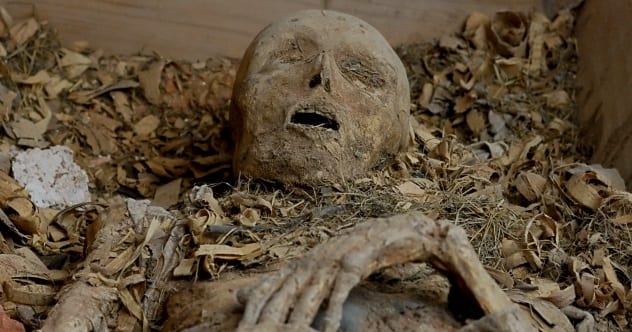
Most people handle death with a funeral, a memorial, a casserole from a neighbor, and perhaps a long stare into the middle distance. But throughout history, a handful of people have responded to loss, fear, fraud, loneliness, or obsession in ways that sound like the plot of a midnight horror movie written by a sleep-deprived tax accountant.
This article looks at 10 real cases of people who lived with human corpses, kept bodies inside homes, or refused to let the dead leave their daily lives. The point is not to celebrate the shocking details. It is to understand the strange mix of grief, denial, mental illness, isolation, financial pressure, and criminal concealment that can turn a home into a place where the boundary between life and death becomes alarmingly blurred.
To keep things respectful, the descriptions below avoid graphic detail. The real fascination here is psychological and social: Why did these people do it? How did no one notice sooner? And what do these cases reveal about loneliness, bureaucracy, and the human brain when it simply refuses to say goodbye?
Why Do Stories About Living With Corpses Fascinate People?
Stories about people living with human corpses hit a nerve because they disturb one of society’s strongest assumptions: when someone dies, the living take action. We call relatives, contact authorities, arrange burial or cremation, and create rituals to mark the transition. These rituals exist for practical reasons, but they also help the mind accept reality.
In these cases, that process breaks down. Sometimes the motive is grief. Sometimes it is fear of being alone. Sometimes it is money. In a few cases, it is a disturbing obsession or an attempt to hide a crime. What connects them all is avoidance. The person living with the corpse keeps the world outside from knowing what has happened, and in doing so, creates a private reality that cannot last forever.
1. Carl Tanzler and the Body of Elena de Hoyos
Few cases are as infamous as that of Carl Tanzler, also known as Count Carl von Cosel. In 1930s Key West, Florida, Tanzler worked in a hospital where he met Elena de Hoyos, a young woman being treated for tuberculosis. After her death, he became fixated on her memory in a way that went far beyond mourning.
Reports say Tanzler removed her body from its resting place in 1933 and kept it in his home for several years. He reportedly tried to preserve the illusion that she was still part of his domestic life. The case was discovered in 1940, when relatives and authorities intervened.
The Tanzler case is often framed as a “macabre love story,” but that phrase gives it too much perfume and not enough reality. Elena could not consent to any of what happened. The case is better understood as a disturbing example of obsession, denial, and the danger of turning another human being into an object of fantasy.
2. Jean Stevens, the Widow Who Kept Her Husband and Twin Sister Close
Jean Stevens of Wyalusing, Pennsylvania, became widely known after authorities discovered that she had kept the bodies of her husband, James, and her twin sister, June, inside her home. Unlike cases driven purely by fraud or concealment, Stevens appeared to be motivated by grief and attachment.
She reportedly spoke to them, cared for their presence, and treated them as companions. To outsiders, this was deeply unsettling. To Stevens, it seems to have been a way to soften the unbearable silence left by two major losses.
Her story raises an uncomfortable question: when grief becomes denial, where does compassion end and intervention begin? Authorities did not treat her as a violent threat, but the case still showed how isolation can twist mourning into something that alarms an entire community.
3. Le Van, the Vietnamese Widower Who Could Not Let Go
Le Van, a man from Vietnam, drew international attention after reports said he had kept the remains of his wife near him for years. According to Reuters and Vietnamese media reports, he said his actions came from love and his inability to sleep apart from her after her death.
His case is often discussed through the lens of grief rather than crime. Local authorities reportedly urged him to rebury his wife properly, but he resisted. To many readers, the story feels impossible to understand. To grief counselors, however, the pattern is more recognizable: a person loses a central relationship and refuses to accept the finality of that loss.
Le Van’s story is tragic because it shows how devotion, when detached from reality, can become harmful. Love may explain the behavior, but it does not make it healthy.
4. Linda Chase and the Roommate in the Chair
Linda Chase of Jackson, Michigan, lived with the body of her longtime roommate, Charles Zigler, after his death. Reports said Zigler’s body was found in a chair, and Chase told reporters that she continued talking to him and watching NASCAR with him because she did not want to be alone.
Her explanation was heartbreaking in its simplicity: loneliness. Chase was later connected to fraud charges involving benefits, but her public comments suggested emotional dependence also played a major role. She did not describe the situation as a scheme first. She described it as companionship.
This is what makes the case so haunting. It is easy to call the situation bizarre. It is harder to sit with the fact that some people are so isolated that silence feels more frightening than reality itself.
5. Penelope Sharon Jordan and Her Mother’s Body
Penelope Sharon Jordan of Sebastian, Florida, was sentenced after keeping her mother’s body in a bedroom for years while continuing to collect government benefits. Prosecutors said the payments included Social Security and military survivor benefits.
This case differs from those rooted mainly in grief. Financial motive was central. Jordan admitted to concealing her mother’s death and was ordered to repay a large amount of money. Authorities found no signs of foul play in her mother’s death, but the concealment itself became a federal matter.
Jordan’s case illustrates a different pattern: the dead person is not being kept as a companion but as part of a deception. It is a grim reminder that bureaucracy often assumes people will report deaths honestly. When they do not, the fraud may continue until a welfare check, complaint, or unrelated investigation exposes the truth.
6. Leigh Ann Sabine and the Secret of Her Husband John
Leigh Ann Sabine’s case shocked South Wales after her death, when the body of her husband, John Sabine, was discovered years after he had disappeared. Investigators concluded that she had concealed his body for nearly two decades.
Sabine was remembered by acquaintances as colorful, talkative, and theatrical. That public personality may have helped her deflect suspicion. The case became especially disturbing because the truth emerged only after her own death, leaving investigators to reconstruct what had happened from evidence, witness accounts, and the long trail of her stories.
This case shows how a hidden corpse can become part of a larger performance. Sabine did not merely avoid reporting a death; she built a life around absence, explanation, and misdirection.
7. Anatoly Moskvin and the Bodies in His Apartment
Russian historian Anatoly Moskvin was arrested after authorities found numerous mummified bodies in his apartment. Reports said he had taken remains from cemeteries and arranged them in his home in doll-like forms.
Moskvin’s case is among the most disturbing on this list, not because of graphic details, but because of the scale and the violation of families’ grief. He reportedly viewed his actions through a delusional or distorted personal logic, but the result was a profound desecration of the dead and a nightmare for the families involved.
This case is a reminder that intelligence and education do not prevent severe psychological disturbance. A person may be academically accomplished and still be dangerously disconnected from moral and social reality.
8. Linda Kosuda-Bigazzi and the Hidden Death of a UConn Professor
Linda Kosuda-Bigazzi of Connecticut pleaded guilty to manslaughter and larceny after the death of her husband, Dr. Pierluigi Bigazzi, a professor at UConn Health. Authorities said his body was found in the couple’s home during a welfare check after his employer had not heard from him for months.
Investigators said paychecks continued to be deposited after his death. This made the case not only a domestic tragedy but also a financial crime. The body was concealed, the outside world was misled, and the normal systems that should have confirmed his well-being failed until concern from work triggered action.
The case highlights how institutions sometimes become the first alarm bell. A workplace asking, “Where is this person?” can do what neighbors, relatives, or routine paperwork may not.
9. Yumi Yoshino and the Fear of Losing Her Home
In Tokyo, Yumi Yoshino was reported to have hidden her mother’s body in a freezer for years. According to reports, she told police she feared being forced to leave the apartment if her mother’s death became known.
That motive may sound strange at first, but it points to a very real pressure: housing insecurity. Fear of losing shelter can drive desperate decisions. Yoshino’s case is not just about death; it is about dependence, poverty anxiety, and the terrifying thought of being displaced.
Of course, fear does not justify concealing a death. But it does help explain why some people choose avoidance over action. When a person believes that reporting the truth will destroy their life, they may hide from reality until reality knocks down the door.
10. Robert Haxby and the Case of Mary Margaret Haxby-Jones
The San Diego case involving Mary Margaret Haxby-Jones became public after her body was discovered in a chest freezer at a home where she had once lived. Later reporting indicated that her late husband, Robert Haxby, was believed to have concealed the body years earlier.
Authorities said Haxby-Jones may have been dead or missing for up to nine years. The case was investigated as suspicious because of where the body was found, though the exact circumstances were difficult to resolve after so much time had passed.
This case demonstrates a practical problem investigators often face: the longer a death is hidden, the harder it becomes to reconstruct the truth. Time erases records, memories fade, witnesses move away, and the dead lose the chance to have their final days properly understood.
Common Patterns in Cases Where People Live With Corpses
1. Loneliness Can Become Dangerous
Several cases on this list involve people who seemed unable to face being alone. Linda Chase’s statement that she did not want to be alone is one of the clearest examples. Jean Stevens’ case also suggests that companionship, however impossible, became more emotionally tolerable than final separation.
2. Grief Can Turn Into Denial
Healthy grief accepts reality slowly. Unhealthy grief tries to negotiate with it forever. In cases like Le Van and Jean Stevens, the dead remained part of daily life because the living person could not complete the emotional process of goodbye.
3. Money Can Motivate Concealment
Cases involving pensions, paychecks, or benefits show another pattern. When someone hides a death to keep receiving money, the corpse becomes evidence of a financial lie. These cases are less about attachment and more about fraud, fear, or survival through deception.
4. Mental Illness Can Distort Reality
Some cases involve beliefs or behaviors that appear disconnected from ordinary reality. This does not excuse harm, but it matters for understanding. A person experiencing severe psychological disturbance may create a private logic that feels real to them, even when it is dangerous and deeply wrong.
5. Communities Often Notice Too Late
Neighbors may smell something unusual, relatives may be blocked from visiting, employers may stop hearing from a worker, or officials may notice suspicious paperwork. In many cases, the truth comes out only because someone insists on checking. The lesson is simple: welfare checks save facts from disappearing.
Experience-Based Reflections: What These Stories Teach Us About Death, Grief, and Human Avoidance
Reading about people who lived with human corpses can feel like staring into a dark window. At first, the stories seem unbelievable. Then, after a while, they begin to reveal something painfully ordinary: people are often terrible at facing endings. We avoid difficult phone calls. We delay medical appointments. We ignore unpaid bills. Most of the time, avoidance creates inconvenience. In these cases, avoidance became a life-altering disaster.
One experience many people can relate to is the strange stillness after losing someone close. The house does not immediately understand that a person is gone. Their chair is still there. Their cup may still be in the cabinet. Their clothes still hang with the quiet confidence of things expecting to be used again. For most families, rituals help transform that stillness into memory. The funeral, the obituary, the gathering, and the paperwork are not just administrative steps; they are reality anchors.
When those anchors are missing, grief can float into dangerous waters. A person may start pretending nothing has changed. They may keep a room untouched for years. They may speak to the absent person out loud. In itself, talking to a lost loved one is not unusual. Many grieving people do it. The danger begins when the person refuses to report the death, keeps the body, and blocks the outside world from intervening.
These cases also show why social connection matters. A person with regular visitors, strong family ties, attentive neighbors, and healthcare support is less likely to vanish into a private crisis. Isolation gives denial room to grow. It also allows fraud to continue. When no one asks questions, a false version of life can keep moving on paper long after reality has stopped.
There is also a lesson for communities: concern should not be treated as nosiness when someone disappears from ordinary life. If an elderly neighbor is no longer seen, if a coworker suddenly stops responding, or if a relative is always “unavailable” for months, it may be worth checking through proper, respectful channels. Not every silence hides something terrible, but every person deserves to be accounted for.
Finally, these stories remind us that death requires both compassion and procedure. It may sound cold to say that forms, calls, and official reports matter, but they do. They protect the dignity of the person who died. They protect families from uncertainty. They protect communities from deception. And sometimes, they protect the living from becoming trapped in a fantasy they cannot escape on their own.
Conclusion
The stories of people who lived with human corpses are unsettling not because they belong to another world, but because they begin with recognizable human emotions: grief, fear, loneliness, obsession, and desperation. Most people experience those emotions without crossing serious boundaries. A few do not.
From Carl Tanzler’s obsession in Key West to Jean Stevens’ refusal to part with loved ones, from Linda Chase’s loneliness to financial concealment cases involving pensions and paychecks, each story reveals a different reason someone might try to keep death hidden inside a home. The result is always the same: the truth waits, but it does not disappear.
For readers, the takeaway is not simply “people are strange,” although, yes, people are sometimes extremely strange. The deeper lesson is that grief needs support, isolation needs attention, and death needs honesty. When those things are missing, the home can become a place where reality is postponeduntil someone finally opens the door.