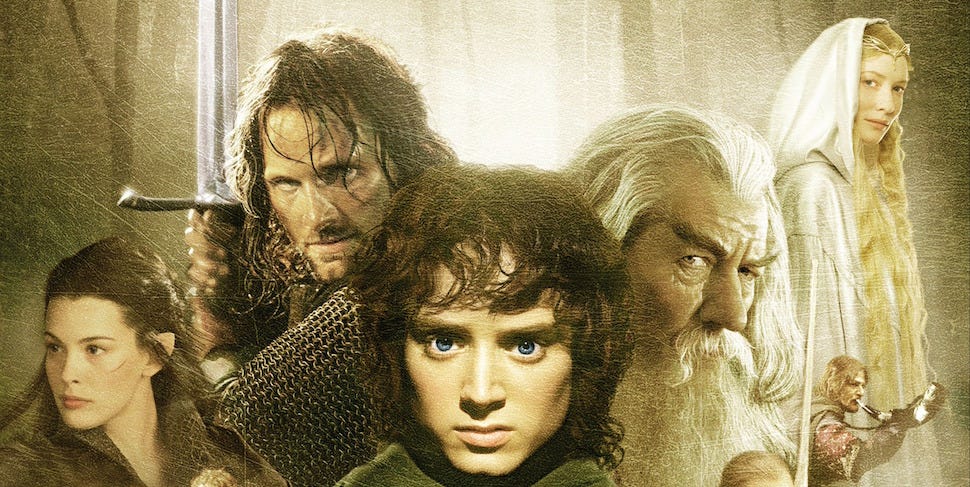
If you heard “Amazon is making a Lord of the Rings TV show” and immediately pictured Frodo polishing the One Ring, Aragorn brooding handsomely in a corner, and Gandalf shouting at a bridge like it owes him rent, you are not alone. But Amazon’s series, officially titled The Lord of the Rings: The Rings of Power, is not a remake of Peter Jackson’s movie trilogy, not a retelling of The Hobbit, and not a cozy nine-hour walking documentary about getting to Mordor with poor footwear.
So what is Amazon’s Lord of the Rings TV show actually about? In plain English, it is about how Middle-earth became the dangerous, ring-haunted world we know from The Lord of the Rings. The series takes place thousands of years before Frodo’s journey and explores the Second Age of Middle-earth: the rise of Sauron, the forging of the Rings of Power, the glory and downfall of Númenor, the politics of Elves and Dwarves, and the slow arrival of a shadow that everyone really should have noticed earlier. You know, standard neighborhood drama.
The show blends Tolkien’s established mythology with new characters and storylines designed for television. That means familiar names appearGaladriel, Elrond, Sauron, Isildur, Elendil, Celebrimborbut the story is not simply “younger versions of characters doing fantasy internships.” It is bigger than that. It is a prequel about temptation, pride, power, memory, friendship, and the terrible habit powerful people have of saying, “This mysterious magical gift seems completely safe.”
The Short Answer: It Is About the Second Age of Middle-earth
The biggest key to understanding Amazon’s Lord of the Rings TV show is the timeline. The Rings of Power is set during the Second Age, a vast period of Middle-earth history that occurs long before Bilbo finds the One Ring and long before Frodo inherits the most stressful piece of jewelry in literature.
The Second Age is one of Tolkien’s most dramatic historical periods. It includes the rise of the island kingdom of Númenor, the forging of the Rings of Power, Sauron’s return after the defeat of his former master Morgoth, the creation of the One Ring, and the events that eventually lead to the Last Alliance of Elves and Men. In other words, the show is not about the quest to destroy the Ring. It is about how the Ring problem began in the first place.
That is an important distinction for SEO and for fans alike. People searching “what is Amazon’s Lord of the Rings show about” may expect a direct prequel to the films. The better way to describe it is this: The Rings of Power is a mythic origin story for the political, magical, and emotional disasters that later define The Lord of the Rings.
What Is The Rings of Power Actually About?
At its core, The Rings of Power is about the return of evil in an age when many people believe evil has already been defeated. That is the show’s most Tolkien-ish idea, and also, frankly, a very relatable one. Anyone who has ever cleaned their room only to find laundry returning the next day understands the concept.
Season 1 begins in a Middle-earth trying to move on after the war against Morgoth. Many Elves want peace. Some leaders believe the worst is behind them. Galadriel, however, is not convinced. She believes Sauron is still out there, hiding, waiting, rebuilding. Her obsession drives much of the early story, and the show frames her not as the serene queen viewers remember from the films, but as a warrior shaped by loss and suspicion.
From there, the series branches into several major storylines: Elven politics in Lindon and Eregion, Dwarven life in Khazad-dûm, human tension in the Southlands, the rise of Númenor, and the wandering adventures of Harfoot characters connected to a mysterious stranger. These threads are designed to show Middle-earth before it hardens into the world of the Third Age.
The Main Storyline: Sauron’s Comeback Tour
Every great fantasy story needs a villain, and Sauron is not exactly shy about applying for the position. In The Lord of the Rings, he is already the great shadow over Middle-earth. In The Rings of Power, the show asks a more interesting question: how does a dark lord become a dark lord again after defeat?
Season 1 plays with mystery. Sauron is not simply introduced wearing a name tag that says “Hello, I am evil.” Instead, the show hides him in plain sight and uses identity, deception, and trust as major themes. By the end of Season 1, the reveal that Halbrand is Sauron reframes much of what viewers have already seen. Galadriel’s desperate hunt for darkness has led her uncomfortably close to it.
Season 2 then moves the story more directly into classic Tolkien territory. Sauron becomes a master manipulator, using charm, disguise, and psychological pressure rather than merely stomping around like a smoky fantasy bulldozer. His connection to Celebrimbor and the forging of the Rings becomes central. This is where the title finally starts earning its rent.
The Rings Themselves: Pretty, Powerful, and Extremely Suspicious
The Rings of Power are not just magical accessories. They are political tools, spiritual traps, and symbols of the desire to preserve, control, and dominate. The Elves want to stop fading. Dwarves seek strength and prosperity. Men desire order, greatness, and survival. Sauron understands these desires and turns them into a system of control.
That is what makes the ring-forging storyline so important. The show is not merely saying, “Look, shiny objects!” It is exploring why wise people might accept dangerous gifts when those gifts appear to solve urgent problems. Tolkien’s world often treats evil as something that corrupts through good intentions, not just obvious villainy. The series leans into that idea by making the Rings feel both wondrous and alarming.
Celebrimbor, the legendary Elven-smith, becomes one of the most important characters in this part of the story. His ambition is not cartoonishly evil. He wants to create something lasting and beautiful. Unfortunately, ambition plus flattery plus Sauron equals a recipe that should probably come with a warning label.
Galadriel’s Role: Not the Lady of Lothlórien Yet
One of the most debated parts of Amazon’s Lord of the Rings show is its version of Galadriel. Viewers who know her from the films remember a calm, almost untouchable figure of wisdom. In The Rings of Power, she is younger, angrier, and far more restless. She is not yet the ethereal ruler who can make even a casual conversation feel like a prophecy.
The show uses Galadriel as a bridge between ancient grief and future wisdom. She has lost people. She has fought darkness. She is certain Sauron remains a threat, but her certainty also makes her vulnerable to mistakes. That tension gives the series one of its strongest character arcs: how does someone who is right about evil avoid being consumed by the hunt for it?
This version of Galadriel may not satisfy every fan, but it gives the show a central emotional engine. She is not just there to look majestic near trees. She is there to wrestle with pride, guilt, vengeance, and the uncomfortable realization that recognizing evil does not automatically make a person immune to manipulation.
Númenor: The Island Kingdom With a Giant Ego Problem
Númenor is one of the biggest reasons The Rings of Power exists. In Tolkien’s mythology, Númenor is a mighty island civilization of Men, blessed with long life, skill, wealth, and power. Naturally, because this is high fantasy and not a brochure for responsible governance, things become complicated.
The show introduces Númenor as a grand maritime kingdom with political divisions, cultural pride, and deep anxiety about its relationship with the Elves. Characters such as Elendil, Isildur, Míriel, and Pharazôn connect this storyline to the future of Middle-earth. Even casual fans may recognize Isildur as the man who later cuts the Ring from Sauron’s hand and then makes the legendary bad decision of keeping it.
Númenor’s story is about mortality, envy, nationalism, faith, and decline. It asks what happens when a blessed society starts believing it deserves more than it has been given. The answer, in Tolkien’s world, is usually “nothing good, please secure all loose objects.”
Elrond, Durin, and the Dwarves of Khazad-dûm
Not every part of the show is doom, deception, and magical panic. One of the most warmly received storylines involves Elrond and Prince Durin IV. Their friendship gives The Rings of Power a humanor rather Elf-and-Dwarfcenter. It also lets the series explore Khazad-dûm before it becomes the ruined Moria seen in The Lord of the Rings.
Khazad-dûm in this era is alive, bright, and powerful. The Dwarves have families, politics, music, mining traditions, and a society that feels more fully developed than the brief glimpses in earlier screen adaptations. Durin and Disa bring humor and warmth, while the discovery of mithril gives the story a mythic resource with major consequences.
Elrond’s arc is equally important. He begins as a diplomat and friend, not yet the grave Lord of Rivendell. Through him, the series explores loyalty, compromise, and the cost of political service. His bond with Durin matters because Middle-earth’s future depends not only on armies and kings, but also on friendships strong enough to survive distrust.
The Harfoots and the Stranger: Why Are Proto-Hobbits Here?
The Harfoots are one of the show’s more controversial additions, mostly because Hobbits are not central players in the major Second Age events Tolkien summarized. But their inclusion makes sense from a television perspective. A Lord of the Rings show without any small, food-loving wanderers would feel like a birthday party without cake: technically possible, emotionally suspicious.
Nori Brandyfoot and Poppy Proudfellow bring a ground-level view of Middle-earth. They are not kings, smiths, warriors, or immortal beings with perfect hair. They are ordinary people trying to survive in a dangerous world. Their storyline with the Stranger adds mystery and wonder, eventually connecting to the larger mythology of wizards and the struggle against darkness.
The Harfoot sections also reinforce a major Tolkien theme: history is not shaped only by the powerful. Small people matter. Quiet kindness matters. A good friend with snacks may not defeat Sauron single-handedly, but never underestimate the moral importance of snacks.
Is Amazon’s Lord of the Rings Show Based on The Silmarillion?
This is one of the most common questions. The simple answer is: not directly. Amazon’s series draws primarily from material related to The Lord of the Rings and its appendices, which include summaries of Second Age events. The show does not function as a straight adaptation of The Silmarillion, even though many of the events it dramatizes are connected to the same broad mythology.
That matters because the Second Age material is not written like a modern novel. Tolkien often presented it as history, legend, timeline, genealogy, and mythic summary. A television series needs scenes, dialogue, emotional arcs, recurring characters, cliffhangers, and enough dramatic tension to make viewers click “next episode” instead of wandering off to reorganize the spice cabinet.
As a result, The Rings of Power expands, compresses, and invents. It creates new characters, rearranges timelines, and fills gaps between major lore events. Fans may debate those choices, but the basic goal is clear: turn Tolkien’s legendary history into a multi-season drama.
How Many Seasons Is The Rings of Power Supposed to Have?
Amazon originally developed The Rings of Power as a large-scale, multi-season project, and the series has already released two seasons. A third season has been confirmed, continuing the story after Season 2’s deeper focus on Sauron, the Rings, Eregion, and the growing darkness across Middle-earth.
The long-term shape of the series appears designed to move toward the biggest Second Age milestones: Sauron’s open rise, the distribution and corruption connected to the Rings, Númenor’s worsening political and spiritual crisis, and eventually the road toward the Last Alliance. The show is not there yet, but the map is hanging on the wall. It has a very ominous red circle around “bad decisions made by powerful people.”
What Will Future Seasons Likely Cover?
Based on the Second Age timeline and the show’s current direction, future seasons will likely continue tracking Sauron’s transformation from hidden manipulator to open threat. The forging and use of the Rings should become even more important, especially as different peoples of Middle-earth respond to power in different ways.
Númenor will almost certainly grow more central. The kingdom’s internal divisions, the rise of Pharazôn, the role of Míriel, and the destinies of Elendil and Isildur all point toward one of Tolkien’s grandest tragedies. Viewers who only know the films may be surprised by how much Númenor matters. Without Númenor, there is no Gondor as we know it. Without Isildur, there is no famous Ring-related mistake to haunt everyone later.
Meanwhile, Elrond, Galadriel, Gil-galad, Celebrimbor, Durin, Disa, Nori, and the Stranger give the show multiple emotional lanes. Some storylines are mythic and political. Others are intimate and personal. The best version of The Rings of Power is not just a checklist of lore events; it is a story about people living through history before they realize it will become legend.
Why the Show Feels Different From the Movies
One reason viewers react strongly to The Rings of Power is that it feels familiar and unfamiliar at the same time. The visual language often nods toward the grandeur associated with Middle-earth on screen: sweeping landscapes, ancient cities, glowing forges, solemn Elves, and music that sounds like it has been aging in a mythic barrel for three thousand years.
But structurally, the show is different from the films. The movies follow a relatively direct quest narrative: take the Ring to Mordor. The series is a sprawling ensemble drama. It moves between kingdoms, species, political factions, and mysteries. There is no single road to follow. Instead, there are many roads, several of which lead directly into disaster with excellent production design.
That makes the show slower in some places and broader in scope. It is less about one mission and more about a civilization-level slide toward crisis. Viewers who enjoy lore, politics, mythic tragedy, and character-based world-building may find that appealing. Viewers who want immediate fellowship-style momentum may need to adjust expectations.
So, What Is the Real Point of the Show?
The real point of Amazon’s Lord of the Rings TV show is to dramatize the question behind the entire mythology: how does evil return, and why do good people fail to stop it in time?
The Rings of Power is about warning signs. It is about people dismissing danger because peace is more comfortable. It is about leaders choosing pride over humility. It is about artists and rulers wanting to preserve beauty, strength, and order so badly that they become vulnerable to corruption. It is about Sauron understanding that conquest does not always begin with armies. Sometimes it begins with advice, flattery, and a very impressive workshop presentation.
That is why the show matters within Tolkien’s universe. The Third Age is the age of consequences. The Second Age is the age of causes. Amazon’s series is asking viewers to watch the trap being built, piece by piece, while many characters believe they are building salvation.
Viewer Experience: Watching The Rings of Power as a Curious Tolkien Fan
Watching The Rings of Power can feel a little like entering a museum where half the exhibits are ancient masterpieces and half are brand-new interactive displays with dramatic lighting. You recognize the atmosphere immediately: Elvish elegance, Dwarven stonework, human ambition, mysterious strangers, ominous maps, and the unmistakable feeling that someone is about to make a choice future generations will complain about for centuries.
The best way to experience the show is not to treat it as a replacement for the books or the films. It works better as a guided return to Middle-earth through a different doorway. If the films are a heroic journey, the series is more like a historical epic. It asks viewers to care about institutions, alliances, old wounds, and slow-building corruption. That can be rewarding, especially if you enjoy seeing how legends form before they become legends.
For casual viewers, the early episodes may feel crowded. There are Elves discussing fading light, Dwarves arguing under mountains, Harfoots migrating with secret rules, humans living in uneasy villages, Númenóreans debating their future, and Galadriel chasing evil with the intensity of someone who has not taken a relaxing weekend in several centuries. It is a lot. The trick is to focus less on memorizing every name and more on following the emotional direction of each storyline.
Galadriel’s story is about grief and obsession. Elrond’s is about loyalty and diplomacy. Durin’s is about family and legacy. Númenor’s is about pride and fear. Nori’s is about curiosity and compassion. Sauron’s is about deception and control. Once those lanes become clear, the show is much easier to follow.
The series is also fun to watch with a mix of people. A deep Tolkien fan may pause every ten minutes to explain why a name matters, while a casual viewer may simply ask, “Is that guy evil or just wearing suspicious lighting?” Both reactions are valid. In fact, the show benefits from that range. It has enough lore to invite analysis and enough spectacle to entertain viewers who came mainly for mountains, monsters, and magical jewelry with poor ethical boundaries.
My strongest viewing advice is this: let the show be about the journey into darkness, not just the destination. Everyone knows Sauron becomes a world-ending problem. The interesting part is seeing how he gets there, who helps without realizing it, who resists too late, and who grows into the heroes history will need. That is where The Rings of Power becomes more than a prequel. It becomes a story about temptation before catastrophe, hope before ruin, and the tiny decisions that echo across ages.
Conclusion
Amazon’s Lord of the Rings TV show is actually about the making of the world that Frodo, Aragorn, Gandalf, and the Fellowship later inherit. The Rings of Power explores the Second Age of Middle-earth, focusing on Sauron’s return, the forging of the Rings, the rise and moral danger of Númenor, the strength of Khazad-dûm, and the early paths of legendary figures such as Galadriel, Elrond, Isildur, and Elendil.
It is not simply a nostalgia machine, although it certainly knows where the nostalgia buttons are hidden. It is a mythic prequel about power: who wants it, who fears losing it, who uses it, and who is quietly corrupted by the belief that they can control it. In other words, it is very much a Tolkien story. It just starts long before the hobbit with the Ring enters the chat.
Editorial note: This article is based on current public information from official Prime Video materials, Amazon announcements, Tolkien-related context, and reputable entertainment reporting. Source links are not included by request.