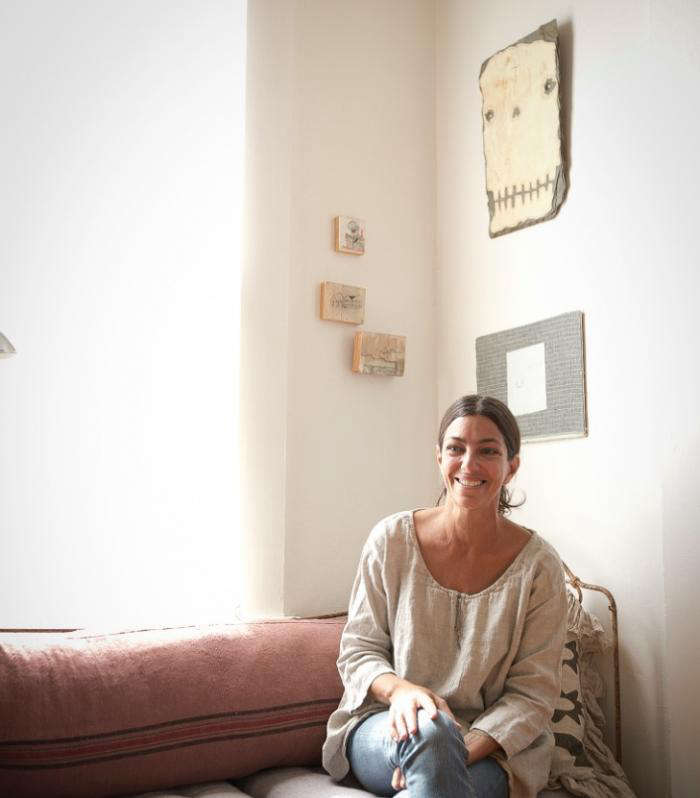
Some creative careers begin with a business plan, a prestigious degree, and a spreadsheet containing words such as “scalability.” Jess Brown’s career began with a laundry mistake.
A bag of cashmere sweaters intended for the dry cleaner went through the wash and emerged considerably smaller, which is the polite way of saying they had been transformed into very expensive felt. Rather than mourn the sweaters forever, Brown cut into the shrunken cashmere and turned it into soft dolls for her daughter. That practical act of rescue eventually grew into a recognizable line of handmade rag dolls, a clothing collection, international collaborations, and an influential Northern California design business.
The story of West Marin’s accidental doll maker is therefore about much more than toys. It is about seeing possibility in damaged materials, allowing family life to shape creative work, and building a distinctive brand without sanding away every charming imperfection.
A Small Geographic Clarification
The famous “West Marin” description requires a tiny map-reading footnote. Brown has long been associated with Petaluma, a Sonoma County city located near the pastoral communities, coastal roads, farms, and creative culture of West Marin. The original profile appeared as part of a broader feature about “West Marin and Beyond,” making the title more regional shorthand than strict county geography.
Still, the label feels aesthetically accurate. Brown’s work reflects the qualities people often associate with this part of Northern California: weathered wood, foggy beaches, flea-market treasures, old farmhouses, practical clothing, natural fibers, and an ability to make simplicity look suspiciously elegant.
The Cashmere Accident That Started Everything
Brown began making dolls for her children in 1998. The earliest versions were created from the accidentally felted cashmere sweaters and antique textile remnants she already loved collecting. Those first dolls were not conceived as luxury objects or future design icons. They were personal gifts made by a mother experimenting with materials at home.
The accident mattered because felted cashmere behaves differently from an ordinary sweater. After shrinking, the fibers become denser and less likely to unravel, making the material surprisingly useful for small sewn forms. What had become unwearable clothing was suddenly excellent doll hair, hats, jackets, and bodies.
There is a useful creative lesson hiding in that laundry basket. Brown did not restore the sweaters to their original purpose; she accepted that the original purpose was gone. Her solution was not repair in the traditional sense but reinvention. The mistake became a material prompt.
Plenty of people have shrunk a sweater. Most respond with disbelief, bargaining, and several minutes of holding it against their torso as if determination might restore the sleeves. Brown responded with scissors and thread. That difference turned a domestic mishap into a design language.
From Schoolteacher to Textile Designer
Brown did not begin her professional life as a formally trained fashion designer or master seamstress. She worked as a teacher in San Francisco for approximately 11 years. Her first serious experiments with sewing arrived after the birth of her daughter, Stella, when she struggled to find children’s clothing that matched her taste.
She created a small clothing line called Bluebird, drawing inspiration from antique pinafores, bloomers, and unfussy garments that allowed children to move. The project introduced several ideas that would continue throughout her later work: vintage references, natural materials, relaxed construction, useful objects, and clothing that becomes better when it is actually worn.
After the family moved to Petaluma in search of a simpler rhythm, Brown became involved in local retail and opened Maude, a shop that brought together her own designs and carefully selected goods. Retail taught her what attracted customers, how objects communicated when placed together, and why presentation matters even when the product is intentionally humble.
Her teaching background also remained relevant. Teachers observe how children use things rather than merely how adults expect children to use them. Brown’s dolls were meant to be carried, dressed, dragged through imaginary adventures, tucked into beds, and occasionally subjected to alarming tea-party menus. They were beautiful, but they were not designed to spend their lives under museum glass looking nervous.
What Makes a Jess Brown Doll Recognizable?
A Jess Brown doll is remarkably simple at first glance. The body is long and soft. The face is spare, typically defined by embroidered star-like eyes and a tiny heart-shaped mouth. The limbs are slender, the silhouette is slightly elongated, and the clothing often appears to have come from an unusually stylish attic.
Natural and Reclaimed Materials
Over time, Brown developed the dolls using cotton muslin, linen, cashmere, antique trims, buttons, remnants, and other carefully chosen textiles. Some bodies were hand-dyed with black tea, producing subtle variations rather than a factory-perfect uniform color. Historical descriptions of the dolls also note the use of corn-fiber stuffing and recycled or vintage materials.
The fabrics are central to each doll’s personality. A faded floral dress may suggest someone who knows the location of every wild blackberry patch. A checked coat creates a tiny schoolmistress. A cashmere cap makes another doll appear ready to offer strong opinions about Scandinavian furniture.
Faces That Leave Room for Imagination
The minimal expression is equally important. A highly detailed plastic face tells a child exactly what a doll looks like and may even suggest how it feels. Brown’s simplified features leave more emotional space. The same doll can be sleepy during breakfast, heroic before lunch, furious about an imaginary dragon at three, and completely forgiving by bedtime.
This open-ended quality connects the dolls to the long history of homemade cloth toys. Rag dolls have traditionally been assembled from whatever families had available, including fabric scraps, worn clothing, yarn, and stuffing. Their value came from familiarity and use rather than mechanical features or licensed characters.
Clothes With Their Own Design Vocabulary
The wardrobes helped move Brown’s creations beyond the conventional toy market. Her dolls wear pinafores, bloomers, scarves, coats, textured collars, simple dresses, and limited-edition outfits made from designer remnants. The garments are miniature, but they carry the same balance of bohemian ease and vintage structure found in Brown’s clothing for adults.
When a Handmade Doll Entered the Fashion World
The transition from family craft to recognized design brand did not happen overnight. Brown refined the form for years, sold through independent shops, developed relationships with other designers, and built a following among parents, collectors, stylists, and retailers.
A major turning point came when the dolls received national exposure in Martha Stewart Living. Brown later described the magazine feature as a breakthrough that caused demand to rise sharply. A studio practice that had grown gradually now needed to produce hundreds of handmade dolls while maintaining the irregular details that made each one desirable.
Luxury fashion soon entered the story. Bottega Veneta commissioned Brown to create special dolls, including 14 life-size versions for fashion-week window displays. These towering figures stood roughly five feet ten inches tall and wore custom black-and-white clothing. A form developed at a kitchen-table scale had become a fashion mannequin without losing its stitched eyes or eccentric charm.
The collaboration was clever because Brown’s dolls already behaved like miniature fashion models. Their long proportions and sophisticated clothes appealed to adults as much as children. Enlarging them did not feel like a gimmick; it revealed a quality that had been present all along.
Growing Without Making the Dolls Feel Mass-Produced
Success introduced a difficult problem: how does a handmade business meet substantial demand without turning the product into the very thing customers were trying to avoid?
Brown expanded production with a small team in Northern California. In interviews from the business’s rapid-growth period, she described a group of local makers producing several hundred dolls per month. The process still depended on hand cutting, sewing, dye variation, textile selection, and individual finishing.
That balance is harder than it looks. Handmade production cannot simply be accelerated by pressing a large green button marked “More Whimsy.” Skilled workers must be trained, materials sourced, safety requirements followed, quality checked, orders managed, and customers reminded that an object made by people will not possess the icy uniformity of an injection-molded toy.
Brown also faced the familiar challenge of protecting an easily recognizable design. Simple-looking objects are often copied precisely because outsiders mistake visual restraint for an absence of creative labor. Yet the final silhouette is only the visible result of years spent adjusting proportions, refining techniques, sourcing textiles, developing clothing, and creating a coherent identity.
The Making of a Modern Heirloom
In 2014, Brown published The Making of a Rag Doll: Design & Sew Modern Heirlooms. The book shared a doll pattern, construction guidance, and instructions for accessories including dresses, an apron, knickers, a coat, hats, bags, and a small quilt.
Sharing a pattern was significant. The book did not merely sell the appearance of handmade life; it invited readers to experience the slow process behind it. A finished doll might look effortless, but anyone who has attempted to turn a narrow stuffed arm right-side out knows that “effortless” is often what craft looks like after the maker has quietly argued with a wooden turning tool for 20 minutes.
Home sewing also changes the meaning of the object. The maker chooses the skin tone, hair material, expression, clothing, and scraps that carry family memories. A dress can come from a grandparent’s blouse. A coat can be cut from a damaged wool skirt. A tiny bag can use the last recognizable square of fabric from a childhood curtain.
That is how a new doll becomes an heirloom before it has even had time to become old.
Textile Reuse Before “Upcycling” Became a Marketing Department
Brown’s early use of damaged sweaters and vintage remnants now reads as part of the wider movement toward textile reuse. The environmental case is substantial. According to U.S. Environmental Protection Agency data, Americans generated millions of tons of textile waste in 2018, with far more material entering landfills than being recycled.
A single handmade doll cannot solve the textile-waste problem. It can, however, demonstrate a different relationship with fabric. Instead of treating cloth as anonymous yardage with a short useful life, Brown’s work emphasizes patina, previous use, irregular fading, and emotional value.
Old textiles are not automatically environmentally perfect. Materials still require cleaning, preparation, transportation, and responsible handling. Toys must also comply with safety standards. Nevertheless, using suitable remnants can extend the life of high-quality fabrics and reduce the assumption that creative work always requires newly manufactured material.
More importantly, the dolls make reuse desirable. Sustainability works better when the reused object does not feel like a punishment. Brown’s dolls do not announce, “Congratulations, this used to be laundry.” They look intentional, collectible, and deeply considered.
Why the Dolls Appeal to Adults
Although originally created for children, the dolls moved naturally into fashion, interiors, and lifestyle retail. Their muted bodies, vintage textiles, and sophisticated clothing make them visually comfortable in design-conscious homes. A doll placed on a linen-covered bed or old wooden chair can function as a toy, a textile object, a character, and a piece of soft sculpture.
For adults, the attraction may also involve nostalgia without excessive sweetness. Brown’s dolls recall handmade childhood objects, but they avoid cartoonish smiles and aggressively cheerful colors. They appear calm, a little mysterious, and possibly better dressed than their owners.
The wear that develops through play is part of the point. Brown has repeatedly emphasized making objects that can be used, loved, repaired, and used again. A loose seam is not necessarily the end of the doll’s life. It may simply be the moment when another person adds a stitch and becomes part of its history.
Extended Experience: What Living With a Handmade Rag Doll Feels Like
To understand the appeal of West Marin’s accidental doll maker, imagine encountering one of the dolls away from a polished product photograph. Place it on a chair in an ordinary room, where afternoon light reveals the uneven tea-dyed muslin, the tiny stitches around the eyes, and a dress made from fabric whose pattern is too small and strange to belong to modern mass production.
The first experience is tactile. The doll does not have the hard resistance of molded plastic. It bends when lifted. Its arms hang naturally, its clothing wrinkles, and its body responds to the person holding it. Cashmere hair feels different from linen skin. An antique cotton dress may be crisp in one area and soft in another. The materials make the doll feel less like a sealed product and more like a small collection of fabric memories.
The second experience is imaginative. Because the face is not fixed in a broad grin, the doll changes with the story being told. Lean it against a pillow and it looks tired. Sit it upright beside a stack of books and it becomes serious. Add a scarf and suddenly it is leaving for a railway station, although no one has constructed a railway and the nearest available transportation is a cardboard box.
For a child, dressing the doll can become as important as the doll itself. Simple clothes are easier to understand than elaborate fasteners and plastic accessories. A child can watch an adult sew a skirt, select a scrap for a bag, or repair a torn seam. The object quietly teaches that belongings are not magically born in stores. Someone chooses the material, cuts the shape, joins the edges, and fixes the mistakes.
For an adult maker, attempting a rag doll offers a different experience. The body pattern may appear straightforward, but simplicity makes proportion unforgiving. An arm that is slightly too wide changes the entire silhouette. Stuffing must be distributed evenly without making the doll rigid. Embroidered eyes placed a fraction too high can produce an expression somewhere between “dreamy poet” and “surprised owl.”
Then comes the wardrobe, where a modest scrap pile becomes dangerously entertaining. A faded floral remnant suggests a dress. Wool becomes a coat. A narrow ribbon becomes a belt. Soon the doll has three outfits, a handbag, bedding, and a social calendar more active than the maker’s.
The most meaningful experience arrives later, after the object has been used. The dress loses some stiffness. The body becomes softer from handling. A stitch is repaired in thread that does not perfectly match. The doll may acquire a new name, a dramatic personal history, and a permanent place on a child’s bed. It is no longer simply a Jess Brown-inspired design or an example of textile upcycling. It has become one family’s doll.
That transformation explains why handmade toys endure. Their imperfections make room for participation. The maker begins the story, but the owner finishes it through play, repair, memory, and time.
Conclusion: A Creative Career Sewn From a Mistake
Jess Brown’s story demonstrates that accidental beginnings do not produce accidental success. The shrunken sweaters supplied the first material, but the lasting business came from years of observation, refinement, disciplined production, thoughtful sourcing, and a strong visual point of view.
Her handmade rag dolls connect several worlds that are often treated separately: children’s play, fashion, domestic craft, sustainable design, collecting, and small-scale manufacturing. They can sit beside a child at breakfast, appear in a luxury window display, inspire a home-sewing project, and preserve a fragment of antique cloth.
The original cashmere may have been ruined as clothing, but it was not wasted. It simply needed a doll maker who had not yet realized she was one.