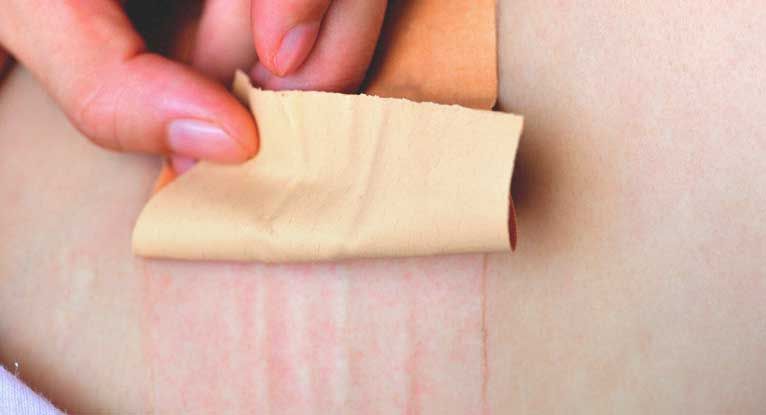
Transdermal patches make taking medicine look almost suspiciously easy: peel, stick, and continue with your day. Yet that small adhesive square is a carefully designed drug-delivery system. Applying it to the wrong location, exposing it to heat, forgetting to remove the previous patch, or throwing it where a child can find it may change a convenient treatment into a serious safety problem.
Different patches deliver different medicines, including nicotine, hormones, pain medication, motion-sickness medicine, blood pressure drugs, and treatments for neurologic conditions. Their application sites, schedules, and precautions are not interchangeable. The instructions packaged with your specific product must therefore outrank any general adviceincluding the guidance below.
What Is a Transdermal Patch?
A transdermal patch is an adhesive system that releases medication through the skin. The medicine crosses the outer skin layers and is absorbed gradually, often producing a steadier effect than a pill that enters the bloodstream all at once and then declines.
Patches may deliver medicine for several hours, a full day, several days, or an entire week. Common examples include nicotine patches for smoking cessation, estrogen and contraceptive patches, nitroglycerin for angina, scopolamine for motion sickness, clonidine for blood pressure, rivastigmine for dementia symptoms, rotigotine for Parkinson’s disease, methylphenidate for attention-deficit/hyperactivity disorder, and opioid patches for carefully selected patients with severe chronic pain.
Do not assume that every adhesive medicated product works systemically. Some topical patches are designed mainly to treat a localized painful area. Even so, they can still have important dosing limits, interactions, and disposal requirements.
Before Applying a Transdermal Patch
Read the product-specific instructions
Before opening the pouch, confirm the medicine name, strength, application schedule, recommended body location, and prescribed wearing time. Check whether the product can remain on during bathing, swimming, or exercise. These details differ substantially among brands.
For example, a scopolamine patch is normally placed behind the ear, while certain methylphenidate patches belong on the hip. A nicotine patch generally goes on the upper body, and some hormone patches are applied only to specified areas of the abdomen, buttocks, back, or upper arm. “Somewhere on the skin” is not an adequate interpretation of the label.
Confirm that the old patch is gone
Before applying a replacement, inspect the previous application site and make sure the old patch has been removed. This sounds obvious until a transparent patch hides on someone’s back like a tiny pharmaceutical ninja.
Wearing an old patch and a new one at the same time may deliver too much medicine. This can be particularly dangerous with opioids, nicotine, blood pressure medication, and other potent drugs. Caregivers should perform a deliberate patch count during every change.
Choose healthy skin
Use only an application area permitted by the product instructions. In general, the site should be flat, clean, completely dry, and free of irritation. Avoid skin that is:
- Cut, scraped, burned, swollen, infected, or covered by a rash
- Oily, heavily scarred, or recently treated with radiation
- Covered with lotion, powder, cream, oil, or makeup
- Located in a fold or beneath a tight waistband
- Likely to experience repeated rubbing from clothing
If hair could interfere with adhesion, follow the package directions. Many patches instruct users to clip hair close to the skin rather than shave immediately beforehand, since shaving can create tiny cuts and irritation. Certain products provide different guidance, such as shaving the location several days in advance.
Rotate application sites
Place each new patch on a different approved area. Rotation helps reduce redness, itching, and adhesive-related irritation. Some products allow a location to be reused after about a week, while others specify a longer interval. Keep a simple rotation record if remembering previous sites requires more detective work than expected.
How to Apply a Transdermal Patch Step by Step
-
Wash and dry your hands. Clean hands help prevent dirt, oils, and medication residue from reaching the patch or your eyes.
-
Prepare the approved application site. Follow the medication instructions regarding cleaning. Some products permit mild soap and water, while others specify plain water only. Pat the skin completely dry and do not apply moisturizer afterward.
-
Inspect the sealed pouch. Do not use a patch if the package is open, torn, or damaged. Check the expiration date and verify the prescribed strength.
-
Open the pouch carefully. Use the tear notch or opening method shown in the instructions. Do not allow scissors to slice the patch itself. Open the package only when you are ready to apply the medicine.
-
Remove part of the protective liner. Hold the patch by its edges and avoid touching the medicated adhesive. Many products have a two-part liner so one section can be attached before the remaining backing is removed.
-
Place the adhesive side on the skin. Apply it smoothly to the selected location without creating folds, wrinkles, or trapped edges.
-
Press firmly. Use your palm for the time stated on the label, commonly between 10 and 30 seconds. Pay particular attention to the edges. Do not rub unless the instructions specifically tell you to do so.
-
Wash your hands again. Medication transferred to the fingers could reach the eyes, mouth, another person, or a pet. Handwashing is especially important after handling scopolamine, nicotine, capsaicin, or opioid patches.
-
Record the change. Note the date, time, location, dose, and scheduled removal time. A phone reminder or paper calendar can prevent missed changes and accidental double dosing.
What Not to Do With a Medication Patch
Do not cut the patch
Never cut, puncture, or alter a transdermal patch unless a pharmacist or prescriber has confirmed that the exact product is designed for it. Damaging some patches can interfere with controlled drug delivery and may release medication too quickly. With potent medicines such as fentanyl, that mistake can cause a fatal overdose.
If the prescribed strength is unavailable or feels too strong, do not perform arts and crafts with the medication. Contact the pharmacy or prescribing professional.
Do not add patches on your own
Use only the number prescribed or printed on the over-the-counter label. More patches do not simply create “more effective” treatment. They create a larger dose, sometimes with dangerous consequences.
Do not place products under the patch
Lotions, oils, powders, cosmetics, and ointments may weaken adhesion or alter drug absorption. Apply the patch to bare skin unless the manufacturer or healthcare professional has given specific instructions otherwise.
Do not improvise with tape or bandages
Instructions for a loose patch vary. Some manufacturers allow first-aid tape around the edges; others instruct users to discard the loose patch and apply a new one. Covering the entire system with an airtight bandage could change heat and moisture around it. Follow the product guide rather than wrapping it like a leaky garden hose.
How to Care for a Patch While Wearing It
Check it regularly
Look at the patch at least once a day and after bathing, swimming, heavy sweating, or vigorous activity. Confirm that it remains flat and securely attached. Check less visible locations with a mirror or ask a caregiver for assistance.
Be cautious with heat
Heat can increase skin blood flow and may accelerate the release or absorption of medicine from certain patches. Avoid placing heating pads, electric blankets, heat lamps, heated waterbeds, or hot-water bottles over a medicated patch unless the product information clearly permits it.
Hot tubs, saunas, prolonged hot baths, intense sunlight, strenuous exercise, and fever can also matter for some drugs. Opioid patches deserve particular caution because excessive absorption can suppress breathing. Scopolamine can reduce sweating and interfere with temperature regulation, making hot environments especially concerning.
Tell medical personnel about your patch
Before surgery, electrical procedures, cardioversion, or magnetic resonance imaging, tell the medical team what patch you are wearing and where it is located. Some transdermal systems contain metallic components that may heat during an MRI and burn the skin. Do not remove a prescribed patch for a procedure without discussing when and how it should be replaced.
What If the Patch Falls Off?
First, find the detached patch and keep it away from children, pets, and other people. Then consult the Medication Guide. Depending on the product, you may be told to press it back into place, secure only its edges, replace it with a new patch, or contact a healthcare professional.
Do not reapply a patch that has folded onto itself, become dirty, lost its adhesive, or stuck to another surface. Never use household glue. Medication delivery is already complicated enough without introducing craft supplies.
If a replacement is required, apply it to a different approved location. Whether the normal change schedule stays the same or restarts depends on the medicine. A contraceptive patch, for example, has specific backup-birth-control rules based on how long it was detached. When uncertain, ask a pharmacist rather than guessing or applying two patches.
Removing and Disposing of a Used Patch
-
Slowly peel the patch away from the skin without touching the adhesive more than necessary.
-
Fold it in half with the sticky sides pressed together.
-
Place it in the disposal pouch or container supplied with the product, if available.
-
Dispose of it exactly as directed on the label, keeping it inaccessible to children, pets, and anyone for whom it was not prescribed.
-
Wash your hands and gently clean the former application area as instructed.
A used patch may still contain a significant amount of medicine. It should never be left on a nightstand, stuck to a trash-can lid, or dropped into an open wastebasket. Drug take-back programs are generally preferred for unused medication. Most patches can enter household trash when prepared according to their instructions, but certain high-risk products have special disposal rules.
Fentanyl patches are a notable example. Their FDA-approved instructions may direct users to fold and immediately flush used patches when an appropriate take-back option is not readily available. Do not flush other medications unless the product label or current FDA disposal guidance specifically tells you to do so.
Skin Reactions and Warning Signs
Mild temporary redness, itching, or tingling can occur beneath some patches. Rotating locations and applying patches only to healthy, dry skin may help. Contact a healthcare professional if irritation is severe, spreads beyond the patch, forms blisters, causes swelling, or does not improve after removal.
Seek urgent help for possible overdose or a serious allergic reaction. Warning signs can include trouble breathing, extreme sleepiness, inability to wake, fainting, severe dizziness, confusion, facial or throat swelling, widespread hives, or a dangerously abnormal heartbeat. Remove the patch if emergency instructions for that medicine say to do so, but remember that medication already absorbed through the skin may continue working after removal.
If a child or pet touches, chews, swallows, or becomes stuck to a medicated patch, remove the product from contact and obtain poison or emergency guidance immediately. Do not wait for symptoms to appear.
Common Questions About Applying Transdermal Patches
Can I shower while wearing one?
Many patches tolerate normal showering, but not all do. Diclofenac, capsaicin, hormone, nicotine, and neurologic drug products can have different water-exposure instructions. Read the exact label before bathing or swimming.
Can I place a new patch on the same spot?
Usually not right away. Rotating sites reduces irritation and adhesion problems. Follow the minimum reuse interval specified for your medication.
Can I apply it immediately after a shower?
Only if the instructions permit it and the skin has cooled and dried completely. Warm, damp skin may affect adhesion and potentially influence absorption.
What if adhesive remains on my skin?
Follow the manufacturer’s removal instructions. Some patches permit mild soap and water or a small amount of mineral or baby oil after removal. Avoid harsh solvents, aggressive scrubbing, or applying oil near a new patch.
What should I do if I miss a change?
Do not automatically double the dose. Apply or replace the patch according to the product’s missed-dose instructions and contact a pharmacist if those directions are unclear. The safest response differs by medication and by how late the change is.
Real-World Experiences and Practical Lessons
The following composite situations reflect common patch-use challenges rather than individual medical advice. They show why small habits can make transdermal treatment safer and easier.
The invisible old patch
A caregiver applies a fresh weekly patch, then discovers the previous one still attached near the patient’s shoulder blade. The older patch was nearly transparent and had survived several showers. A better routine is to remove the old patch first, fold and dispose of it, document its removal, and only then open the new pouch. Some caregivers draw a simple body map showing each application site. It is not glamorous, but neither is explaining an accidental double dose in the emergency department.
The lotion problem
Someone applies a hormone patch after using body lotion. By lunchtime, one edge is curling; by dinner, the patch is attempting an escape. The practical lesson is to reserve a clean, product-free area for patch days. When the skin requires washing, it should be dried completely before application. Pressing for the full labeled time also matters. A five-second pat is not necessarily equivalent to 30 seconds of firm contact.
The heating-pad mistake
A patient with chronic pain places a heating pad over a medication patch because both products are intended to make discomfort better. Unfortunately, the combination may increase medication delivery for certain systems. The safer habit is to treat heat as a potential drug interaction. Check the patch instructions before using a heating pad, sauna, hot tub, or electric blanket, and ask a pharmacist if fever or unavoidable heat exposure occurs.
The patch that falls off at the pool
A patch detaches while someone is swimming. The person cannot remember whether it should be replaced or whether the medication schedule should restart. A useful solution is to photograph the key instructions or keep the Medication Guide accessible on the phone. The loose patch should be found promptly, folded adhesive-side inward, and secured away from other swimmers, children, and pets. The next action should come from the product directionsnot a guess based on another patch used years earlier.
The irritated application site
A daily patch is repeatedly placed on the same convenient part of the upper arm. After several days, the skin becomes red and itchy, and adhesion worsens. Site rotation typically solves the logistical half of this problem. A small calendar can assign locations such as left upper arm, right upper arm, left shoulder, and right shoulder, provided all are approved for that particular medicine. Persistent or severe reactions still require professional advice because irritation may result from the adhesive, the medication, or another skin condition.
The safer travel routine
Travel introduces time-zone changes, hot cars, shared hotel rooms, and curious children. Experienced users keep patches in their original labeled pouches, carry only the needed supply in a secure location, and set alarms based on the prescribed interval. They also bring disposal bags and avoid storing medication in a vehicle where temperatures can climb rapidly. A written medicine list helps airport, emergency, and imaging personnel identify the patch if care is needed away from home.
The common theme is wonderfully unexciting: read the instructions, build a repeatable routine, and treat every patch as active medicine before, during, and after use. Convenience works best when it travels with consistency.
Conclusion
Applying a transdermal patch safely involves more than finding an empty piece of skin. Verify the medicine and schedule, remove the old patch, select an approved healthy location, prepare the skin correctly, apply firm pressure, rotate sites, avoid unsafe heat, and dispose of the used system immediately.
Because transdermal patches vary widely, the package instructions and advice from your pharmacist or prescriber should always guide product-specific decisions. When a patch falls off, causes a reaction, is applied incorrectly, or may have exposed another person, get professional guidance promptly instead of improvising.