What would life be like if you had height and width, but absolutely no depth? You could walk left. You could walk right. You could go up or down. But stepping around a chair? Sneaking past a wall? Reaching behind a couch for a lost sock? Sorry, brave explorer, that third dimension is not included in your subscription plan.
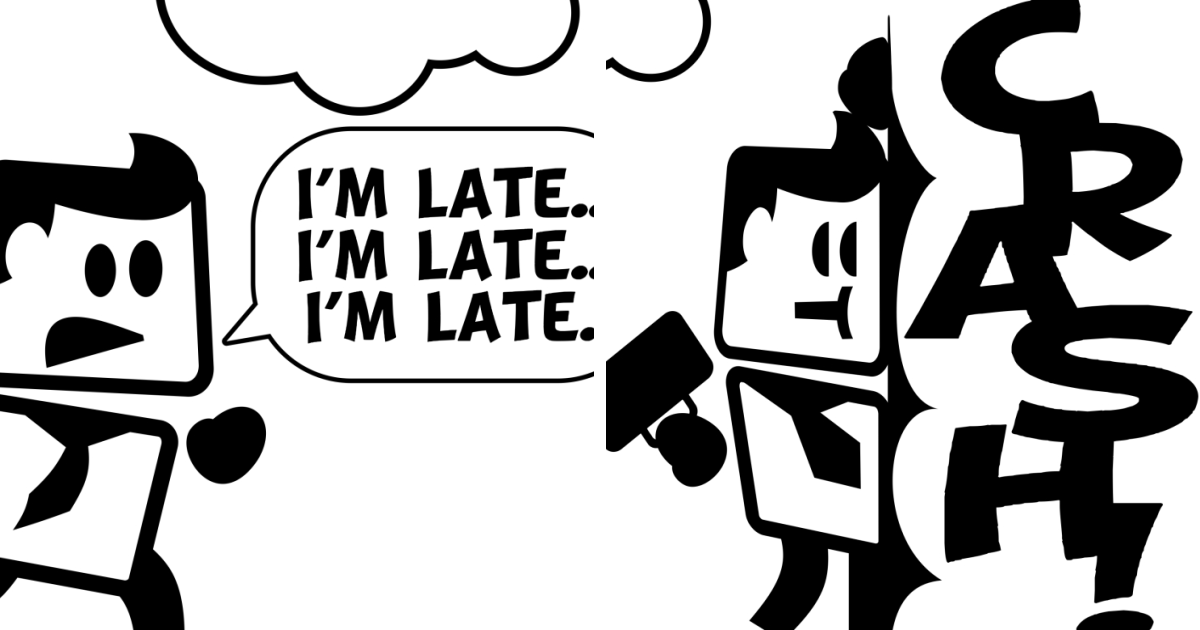
That is the playful idea behind 2D_Dan, a comic series that turns two-dimensional space into something readers can laugh at, visualize, and actually understand. Instead of explaining geometry with a dry lecture and a heroic amount of chalk dust, the series lets a flat character stumble through flat-world problems. The joke lands first. The concept sneaks in right behind it, wearing tiny educational sneakers.
At its heart, My 2D_dan Comic Series Helps Understanding Two-Dimensional Space The Fun Way is about making abstract math feel human. Two-dimensional space can sound intimidating when it appears in textbooks, coordinate planes, analytic geometry, or discussions about dimensions. But when a character cannot walk around an obstacle because “around” requires depth, suddenly the lesson becomes obvious. Poor Dan suffers. Readers learn. Everybody wins, except Dan.
What Is Two-Dimensional Space?
Two-dimensional space is a flat mathematical world described by two measurements: usually length and width, or the x-axis and y-axis on a coordinate plane. A point in 2D space can be located with two numbers, such as (3, 5). The first number tells how far to move horizontally, and the second tells how far to move vertically. That simple pair of coordinates is the basic GPS of flatland.
In school geometry, 2D space includes familiar shapes such as triangles, squares, rectangles, circles, polygons, lines, rays, and angles. These figures do not have thickness or depth. A square on paper may represent an object, but mathematically it lives on a plane. It has area, perimeter, sides, and corners, but no volume. In other words, it can host a party, but nobody can hide behind the snacks.
The difference between 2D and 3D is one of the most important ideas in geometry. A circle is 2D; a sphere is 3D. A square is 2D; a cube is 3D. A triangle is 2D; a pyramid is 3D. Adding depth changes everything. It changes how objects move, how they block each other, how we see them, and how we imagine space.
Why 2D_Dan Makes Geometry Easier To Understand
Many students memorize definitions before they understand meaning. They can repeat that a plane is flat and two-dimensional, but they may not feel what that means. Comics help bridge that gap because they combine pictures, text, timing, emotion, and cause-and-effect. A character stuck behind a line is more memorable than a paragraph saying, “In two dimensions, objects cannot pass over or around one another without an additional spatial degree of freedom.” Both are accurate. One is just much less likely to make readers flee into the woods.
2D_Dan works because the comic treats dimensional limits as everyday problems. In a three-dimensional world, we solve tiny spatial puzzles without thinking. We walk around furniture. We lift a cup over a plate. We open a drawer. We pass behind people in a hallway. But in a 2D world, those ordinary moves can become impossible or absurd.
That absurdity is the teaching engine. The reader laughs because Dan’s problem is silly. Then the reader realizes the silliness has a logical reason. The comic has quietly introduced spatial reasoning, plane geometry, obstruction, perspective, and dimensional constraints.
Example: Why Obstacles Are a Big Deal in 2D
Imagine Dan walking along a flat plane. A wall appears in front of him. In our 3D world, a person might walk around it, climb over it, or pass behind it. Dan has fewer options. If the wall stretches across his available path, it is not merely inconvenient; it is a full mathematical blockade. There is no “behind” in the way we understand it, because behindness depends on depth.
This is where the comic becomes more than a joke. It shows that dimensions are not just labels. They determine what kinds of movement are possible. They shape the rules of reality. Dan’s world is not broken. It is perfectly consistent. It is just brutally flat.
The Coordinate Plane: Dan’s Invisible Street Map
One of the easiest ways to connect 2D_Dan to classroom math is through the coordinate plane. The coordinate plane uses two number lines: the horizontal x-axis and the vertical y-axis. Where they cross is called the origin. Every point on the plane can be described using an ordered pair, such as (2, -4).
For students, coordinates can feel like mysterious math codes. A comic character can make them feel like directions. If Dan starts at (0, 0), walks three units right, and climbs two units up, he lands at (3, 2). If he slides left five units, he moves to (-2, 2). Suddenly graphing points becomes less like decoding alien messages and more like tracking a very flat man having a very complicated day.
The comic format also helps explain quadrants. Dan might live in Quadrant I, get lost in Quadrant II, panic in Quadrant III, and accidentally schedule a meeting in Quadrant IV. Each location is defined by positive or negative x and y values. That may sound technical, but with a recurring character, the grid becomes a neighborhood.
How Comics Support Visual Learning
Comics are powerful because they are multimodal. They do not rely only on words. They use images, panels, speech bubbles, motion lines, expressions, spacing, and sequencing. Readers must follow what happens from one panel to the next. This makes comics especially useful for topics that involve movement, relationships, and spatial change.
Geometry is a visual subject. Students need to see shapes, compare positions, imagine transformations, and understand how one object relates to another. A comic can show a shape rotating, a character sliding along an axis, a barrier blocking movement, or a flat world becoming confusing when viewed from a 3D perspective. That visual storytelling creates a mental model.
In educational terms, comics give learners multiple ways to access the same idea. A student can read the dialogue, observe the drawing, infer the joke, and connect the scene to a math concept. That layered experience helps geometry feel less abstract and more approachable.
2D Space Is Funny Because It Breaks Our Assumptions
The humor of 2D_Dan comes from the gap between our 3D assumptions and Dan’s 2D reality. We expect a character to dodge an object, reach behind something, or look around a corner. When Dan cannot do those things, the punchline reveals the hidden rule: depth matters.
This is why the comic has such strong educational potential. It does not simply tell readers that two-dimensional space has no depth. It lets them experience the consequences. The reader’s brain says, “Wait, why can’t he just move around it?” Then the answer arrives: because “around” is not the same in 2D.
That moment of surprise is valuable. Surprise makes people pay attention. Humor lowers anxiety. Story gives concepts a place to live. Together, they make mathematical ideas easier to remember.
What 2D_Dan Can Teach About Shapes
Because Dan lives in a flat world, shapes are not just classroom decorations. They are neighbors, buildings, vehicles, walls, food, tools, and disasters waiting politely for their panel. A circle might roll through town. A triangle might create a sharp traffic hazard. A rectangle might become an apartment complex with suspiciously little storage space.
Through this world, readers can learn about basic 2D shapes naturally. A square has four equal sides. A rectangle has opposite sides equal. A triangle has three sides. A circle has no corners. Polygons are closed figures made from line segments. These definitions matter, but they become more memorable when each shape has a role in a story.
The series can also introduce area and perimeter. If Dan buys a flat carpet, he may need to know how much surface it covers. That is area. If he builds a fence around his yard, he needs the distance around the outside. That is perimeter. If he orders a circular pizza, he may discover that sharing slices in a two-dimensional universe is still emotionally difficult.
Transformations: Sliding, Flipping, and Turning Dan’s World
Another strong connection between 2D_Dan and geometry is transformation. In math, transformations move or change figures on a plane. A translation slides a shape. A reflection flips it. A rotation turns it. A dilation makes it larger or smaller.
These ideas can be hard to understand from definitions alone. But in a comic, Dan can be translated across town, reflected in a mirror, rotated by a suspiciously powerful ceiling fan, or enlarged after stepping into a mad scientist’s photocopier. The scene may be ridiculous, but the math is real.
For example, if Dan moves five units right and two units up, that is a translation. If he sees a mirror image of himself across the y-axis, that is a reflection. If his entire neighborhood turns 90 degrees around the origin, that is a rotationand probably a zoning violation.
Why Flatland Stories Still Matter
The idea of using a two-dimensional world to understand dimensions is not new. Stories about flat worlds have long helped people imagine what it means to live with fewer dimensions and how strange higher dimensions might seem. These stories work because they give readers a familiar viewpoint, then gently remove something they normally take for granted.
2D_Dan continues that tradition in a modern, comic-strip style. Instead of presenting dimensions as a distant philosophical puzzle, it turns them into office problems, social awkwardness, transportation issues, and daily survival. That everyday setting makes the concept friendlier. You do not need an advanced math degree to understand Dan’s trouble. You only need to imagine trying to live in a world where every object is truly in the way.
How Teachers and Parents Could Use 2D_Dan
A comic like 2D_Dan can support learning in classrooms, homeschool lessons, tutoring sessions, or casual family reading. The key is not to over-explain the joke before students discover it. Let them react first. Ask what happened. Ask why Dan could not solve the problem the way a person in 3D would. Then connect the answer to geometry vocabulary.
Teachers might use one strip as a warm-up before a coordinate-plane lesson. Students could identify where Dan is standing, map his movement, or draw a grid under the scene. In another activity, students could redesign a 3D object as a 2D obstacle and explain what changes. A door, for instance, becomes much less useful when there is no depth to swing through.
Parents can use the comic even more casually. A child laughing at Dan’s flat-world disaster may be ready for a simple question: “What would happen if he had depth?” That one question opens the door to 2D versus 3D thinking.
Why Humor Belongs in Math Education
Math often gets treated like a serious castle guarded by stern numbers wearing armor. But humor can make the gate easier to enter. When learners laugh, they relax. When they relax, they are more willing to try. When they try, they begin to build confidence.
2D_Dan is not a replacement for direct instruction, practice problems, or formal geometry lessons. It is a bridge. It gives readers an intuitive hook before they meet the textbook language. Once students understand the situation, the vocabulary becomes less scary. “No depth” is no longer a phrase floating in space. It is Dan, stuck behind a hamburger, wondering where his life went wrong.
Experience Section: What Creating and Reading 2D_Dan Teaches Beyond Geometry
Working with the idea of 2D_Dan feels like building a tiny universe with strict rules and endless comic potential. The first experience is discovering that limitations can be creative fuel. In a normal comic, a character can walk around a problem. In a 2D comic about a 2D world, that easy solution disappears. Suddenly every object becomes a puzzle. A chair is not just a chair. It is a barrier. A sandwich is not just lunch. It is a topological crisis with mustard.
That constraint changes how a creator thinks. Instead of asking, “What funny thing can happen?” the better question becomes, “What normal thing becomes absurd when depth is removed?” The answer can come from almost anywhere: commuting, dating, working in an office, eating fast food, exercising, shopping, or trying to avoid a coworker in a hallway. Everyday life becomes a laboratory for spatial reasoning.
One of the most enjoyable experiences related to the topic is watching readers realize the logic behind the joke. At first, they may laugh because Dan looks helpless. Then the second layer appears. He is not foolish for failing to do what we would do. He is trapped by the rules of his world. That recognition creates a satisfying click. Readers are not just consuming a gag; they are adjusting their mental model of space.
Another valuable experience is seeing how a comic can make math feel less formal without making it less accurate. A strip can introduce the same core idea as a lesson on dimensions, but it arrives with personality. Dan can fail upward, sideways, and occasionally into a line segment. That humor keeps the topic light while preserving the concept. The math does not need to wear a tuxedo to be respected.
From a storytelling perspective, 2D_Dan also shows how character design and world rules support each other. A good flat-world comic cannot rely only on random jokes. It needs consistency. If depth does not exist in one strip, it should not magically appear in the next unless the joke explains why. That consistency makes the fictional world believable, even when the situations are ridiculous. Readers learn the rules and begin predicting outcomes, which is exactly what mathematical thinking often requires.
For educators, the experience is especially rewarding because the comic invites discussion. A single panel can lead to questions about coordinate grids, barriers, movement, perspective, shape properties, and dimensions. Students who might avoid a traditional geometry problem may happily analyze why Dan cannot reach the other side of a wall. The comic gives them permission to think before they worry about being “good at math.”
For readers, the biggest lesson may be that math is not separate from imagination. Two-dimensional space is not just something printed in a textbook. It can become a world, a character, a joke, and a story. Once readers see that, geometry feels less like memorizing labels and more like exploring rules. And when exploration begins with a confused flat man named Dan, the journey becomes much harder to forget.
Conclusion
My 2D_dan Comic Series Helps Understanding Two-Dimensional Space The Fun Way because it turns a mathematical concept into a visual, memorable, and genuinely funny experience. Two-dimensional space can be abstract when explained only through definitions, but it becomes clear when readers watch a character live inside its limitations. Dan’s flat-world problems reveal why depth matters, how movement works on a plane, and how geometry shapes reality.
The series also proves that learning does not have to be stiff to be smart. Comics can support spatial reasoning, visual learning, coordinate-plane understanding, and geometry vocabulary while still making readers smile. That combination is powerful. A laugh opens the door; the concept walks in right after it.
In the end, 2D_Dan is more than a comic about a character having a rough day in a flat universe. It is a playful reminder that math is everywhere, even in jokes. Especially in jokes. And if a two-dimensional broker with a one-dimensional friend can help readers understand space better, then maybe geometry has had a sense of humor all along.