Some dogs greet a suspicious noise with one sleepy ear twitch. Others rise like a four-legged security team that has been waiting all evening for something interesting to happen.
The best guard dogs combine courage, awareness, loyalty, physical ability, and enough intelligence to distinguish an actual threat from a delivery driver carrying your new coffee maker. They are not supposed to be unpredictable, constantly angry, or eager to bite. A genuinely capable guardian should remain calm under ordinary circumstances, respond to its handler, and recover quickly after excitement.
That distinction matters. A watchdog mainly alerts you by barking, while a guard dog has the confidence and physical presence to protect people, property, or livestock when necessary. Many traditional guardian breeds were developed for demanding work, but their strength also means they require early socialization, consistent training, secure management, and an owner who understands powerful dogs. The American Kennel Club similarly describes guardian breeds as loyal, fearless, strong, and watchful while emphasizing the importance of training and socialization.
What Makes a Guard Dog Truly Badass?
Muscles and an intimidating stare help, but they are only part of the package. The most effective protection dogs usually share several qualities:
- Stable nerves: They notice unusual activity without panicking at every bicycle, umbrella, or inflatable holiday decoration.
- Trainability: A powerful dog must reliably understand cues such as come, stay, leave it, place, and release.
- Loyalty: Guardian breeds commonly form strong bonds with their households or the animals they protect.
- Environmental awareness: They pay attention to changes in familiar surroundings.
- Controlled confidence: A good guardian is self-assured, not recklessly aggressive.
Breed tendencies provide a useful starting point, but they are not destiny. Genetics, breeding quality, health, early experiences, training, handling, and living conditions all influence an individual dog’s behavior. The ASPCA and American Veterinary Medical Association both caution against assuming that breed alone determines aggression or bite risk.
The Top 10 Badass Guard Dogs
1. German Shepherd Dog
The German Shepherd Dog is the all-purpose professional of the guard-dog world. Intelligent, athletic, courageous, and highly responsive to training, this breed has served in police work, military operations, search and rescue, assistance work, and home protection.
A well-bred German Shepherd often combines alertness around strangers with deep affection for its family. It learns complex routines quickly and usually prefers having meaningful work rather than spending the entire day examining the couch cushions. German Shepherds need daily physical exercise, obedience practice, social exposure, and mental challenges. Without those outlets, all that intelligence may be redirected toward unauthorized landscaping or advanced shoe disassembly.
Best for: Active households, experienced owners, working homes, and people committed to regular training.
Major challenge: Poor breeding or inadequate socialization can contribute to fearfulness, reactivity, or unstable behavior. Responsible breeders should perform relevant health and temperament evaluations. German Shepherds and Belgian Malinois are both widely used for police and protection work because of their confidence, loyalty, responsiveness, and working ability.
2. Rottweiler
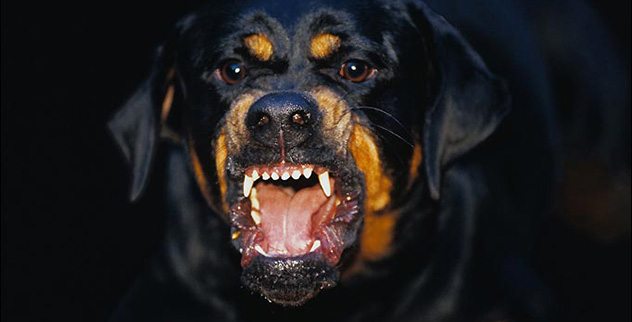
The Rottweiler looks as though someone built a dog from a bowling ball, a weight bench, and an extremely serious pair of eyebrows. Historically used for driving cattle and guarding property, the modern Rottweiler remains powerful, confident, and naturally attentive to its surroundings.
Behind that intimidating exterior, properly raised Rottweilers can be affectionate, playful, and surprisingly goofy with their families. Their protective instincts tend to emerge from loyalty rather than nonstop hostility. However, their size and strength leave little room for sloppy handling. Training should begin early and continue throughout adulthood, with special attention to polite greetings, impulse control, leash manners, and calm behavior around visitors.
Best for: Confident owners who want a devoted family guardian and can provide structure.
Major challenge: Rottweilers mature into extremely strong dogs. An untrained adolescent can tow a distracted owner down the sidewalk like luggage with wheels.
3. Doberman Pinscher
Fast, elegant, alert, and intensely connected to its people, the Doberman Pinscher is essentially a security system wearing a tuxedo. The breed was developed with personal protection in mind, and that history remains visible in its athletic build, quick reactions, and tendency to monitor household activity.
Dobermans often work close to their owners rather than independently patrolling distant property. They are intelligent, emotionally sensitive, and usually happiest when included in everyday family life. They need substantial exercise, but mental engagement is equally important. Obedience, scent games, tracking, agility, and structured play can help channel their drive.
Best for: Active owners who want a highly trainable personal guardian and close companion.
Major challenge: Dobermans may become anxious, reactive, or difficult when isolated, under-exercised, or raised without careful socialization. VCA notes that many Dobermans are affectionate yet territorial and can become excellent guardians with professional training.
4. Belgian Malinois
The Belgian Malinois is not merely energetic. It is what happens when energy drinks become sentient and learn obedience commands. Lean, explosive, intensely driven, and extraordinarily responsive, the Malinois is commonly selected for demanding military, police, detection, and protection roles.
In experienced hands, this breed can perform with breathtaking precision. In an average household with no working plan, however, the same dog may begin inventing jobs. Those jobs could include reorganizing the patio furniture, inspecting the attic without permission, or monitoring every jogger within a three-mile radius.
A Malinois needs advanced training, vigorous daily activity, problem-solving opportunities, and an owner capable of regulating high arousal. This is rarely the best first dog for someone who simply wants an intimidating pet.
Best for: Working handlers, serious dog-sport competitors, and exceptionally active, experienced owners.
Major challenge: Extreme drive and sensitivity can become reactivity or destructive behavior when the dog lacks skilled training and appropriate work. The breed standard emphasizes confidence, natural protectiveness, responsiveness, and the absence of unwarranted aggression.
5. Cane Corso
The Cane Corso is a muscular Italian mastiff with the facial expression of a nightclub bouncer who has already heard every excuse. Traditionally associated with guarding homes, farms, livestock, and property, the breed is observant, physically imposing, and deeply loyal.
Cane Corsos often form powerful attachments to their families and can be reserved with unfamiliar people. They require calm, consistent leadership rather than intimidation or force. Early exposure to different people, surfaces, locations, sounds, animals, and household routines is essential. Owners must also teach the dog that ordinary visitors and neighborhood activity are not emergencies.
Best for: Experienced large-breed owners with secure property, time for training, and realistic expectations.
Major challenge: Territorial behavior can become excessive without careful socialization and management. Their strength makes small training mistakes significantly larger. AKC guidance describes the Cane Corso as alert, strong, loyal, and naturally protective, with early training and socialization considered essential.
6. Bullmastiff
The Bullmastiff proves that a guardian does not have to bounce off the walls to be formidable. Originally developed to help estate gamekeepers deter intruders, this large mastiff was expected to track quietly, confront trespassers, and use physical presence rather than unnecessary noise.
Modern Bullmastiffs are often calm indoors, affectionate with family, and naturally watchful. Their broad head, substantial body, and steady stare can make strangers reconsider questionable decisions before the dog does anything at all. They still need obedience training, socialization, and moderate exercise, but they are generally less frantic than high-drive herding guardians.
Best for: Households wanting a calmer, imposing guardian with a strong family bond.
Major challenge: Size, drool, stubborn moments, and an impressive ability to occupy the exact section of floor you need to walk across.
7. Giant Schnauzer
The Giant Schnauzer resembles a stern professor who moonlights as a bodyguard. Developed as a working farm and driving dog, the breed is intelligent, alert, powerful, and naturally protective. Its substantial frame and dark, bearded face provide excellent visual deterrence, while its athleticism allows it to do far more than stand around looking dramatic.
Giant Schnauzers need considerable exercise and structured mental activity. They tend to learn quickly, but that intelligence comes with independent opinions. Training should be engaging, consistent, and reward-based. Socialization is especially important because territorial instincts may strengthen as the dog matures.
Best for: Active, experienced owners interested in obedience, tracking, working activities, or dog sports.
Major challenge: A bored Giant Schnauzer may create its own management position and appoint itself supervisor of the entire neighborhood. The breed is recognized as intelligent, alert, loyal, trainable, protective, and capable of territorial behavior.
8. Akita
The Akita is dignified, muscular, quiet, and often intensely loyal. Originating in Japan, this powerful breed tends to observe before reacting and may not bark without a reason. When an Akita does announce something, it is usually worth putting down your sandwich and investigating.
Akitas commonly bond closely with their households while remaining reserved around strangers. Their independence distinguishes them from handler-focused breeds such as German Shepherds and Dobermans. An Akita may understand a cue perfectly and still pause to consider whether your proposal deserves approval.
Best for: Experienced owners who appreciate independent dogs and can manage introductions carefully.
Major challenge: Some Akitas are intolerant of unfamiliar dogs, particularly dogs of the same sex. Secure handling, controlled socialization, and realistic management are crucial.
9. Anatolian Shepherd Dog
The Anatolian Shepherd Dog is a livestock guardian rather than a conventional personal-protection dog. Developed to watch over animals across large territories, it is independent, territorial, weather-resistant, and capable of making decisions without waiting for a human committee meeting.
Anatolians are often calm until they perceive a threat. They tend to patrol, observe boundaries, and become more active at night, when traditional livestock predators would be most dangerous. Their independence makes them different from obedience-driven working breeds. They need secure fencing, space, extensive socialization, and an owner who understands guardian behavior.
Best for: Farms, rural properties, livestock owners, and highly experienced handlers.
Major challenge: Their instinct to make independent security decisions can conflict with suburban life, frequent visitors, shared fences, and casual off-leash activity. Livestock guardian breeds were developed to provide steady, dependable protection for flocks and the people managing them.
10. Great Pyrenees
The Great Pyrenees looks like an enormous white cloud until it detects something suspicious. Then the cloud stands up, produces a surprisingly thunderous bark, and reminds everyone that it was bred to guard livestock from serious predators.
Great Pyrenees are typically calm, patient, and affectionate with their families, but they are also independent and naturally vigilant. They may patrol fences, bark after dark, and evaluate distant sounds that humans cannot hear. Their guarding style is usually based on presence, warning, and deterrence rather than constant pursuit.
Best for: Rural homes, livestock settings, securely fenced properties, and owners comfortable with independent behavior.
Major challenge: Night barking, roaming instincts, heavy shedding, and selective hearing. A Great Pyrenees may understand “come” yet decide that investigating a leaf two pastures away is currently more important.
How to Choose the Right Guardian Breed
The most intimidating breed is not automatically the best choice. Before bringing home a serious guardian, evaluate your experience, available space, activity level, local laws, insurance rules, family structure, visitor frequency, and training budget.
A Belgian Malinois may be phenomenal for a professional handler but overwhelming for a family that prefers two short walks and a peaceful movie night. A Great Pyrenees may excel on acreage but turn a quiet subdivision into an all-night breaking-news broadcast. A Bullmastiff may be calmer indoors, but transporting a dog of that size requires planning, strength, and possibly a vehicle that was not designed around cupholders alone.
Meet adult dogs of the breed whenever possible. Puppies are adorable, but they do not reveal the full physical power, territorial behavior, coat maintenance, exercise needs, or vocal habits that may appear at maturity. Ask breeders about temperament, health testing, socialization practices, and the behavior of related adult dogs. Rescue organizations and breed clubs can also help evaluate whether a particular dog suits your household.
Training a Guard Dog Without Creating a Liability
Responsible guard-dog ownership is not about encouraging suspicion or teaching a dog to threaten everyone near the mailbox. The goal is a confident companion that remains under control.
- Begin positive socialization during puppyhood and continue it through adulthood.
- Teach reliable obedience before attempting specialized protection work.
- Reward calm observation rather than frantic barking and lunging.
- Use secure fencing, strong equipment, identification, and supervised introductions.
- Never encourage uncontrolled aggression for entertainment or status.
- Consult a qualified trainer or veterinary behaviorist when fear, reactivity, or aggression appears.
Cornell veterinary guidance notes that reactivity is not identical to aggression, but unmanaged reactivity can escalate. It also recommends qualified, reward-based training rather than harsh methods or promises of an instant solution.
Children should always be supervised around powerful dogs, regardless of breed or previous behavior. Adults should learn stress signals such as stiffness, avoidance, lip licking, staring, and growling. Punishing a warning growl can remove the warning without resolving the dog’s discomfort.
Real-World Experiences With Serious Guard Dogs
Living with a guardian breed often feels less like owning a furry alarm system and more like entering a long-term partnership with an observant, opinionated security consultant. The experience can be deeply rewarding, but it changes everyday routines in ways first-time owners may not anticipate.
One recurring lesson is that management begins before the doorbell rings. Experienced owners do not wait for a 100-pound dog to charge toward a visitor and then begin negotiating. They teach a “place” cue, use gates or crates when needed, and create a repeatable arrival routine. The dog learns that guests enter under the owner’s direction. This reduces confusion and prevents enthusiastic guarding from turning an ordinary pizza delivery into an international incident.
Another common experience is that adolescence can be more challenging than puppyhood. A young Cane Corso, Rottweiler, or German Shepherd may suddenly become more alert to strangers as maturity approaches. A puppy that once greeted everyone may begin pausing, watching, or barking. That change does not automatically mean the dog is becoming dangerous, but it signals that training and controlled social exposure must continue. Guardian instincts are not a replacement for obedience; they make obedience more important.
Owners of high-drive breeds frequently discover that physical exercise alone is not enough. A Belgian Malinois can finish a long run and still ask what the next assignment is. German Shepherds and Giant Schnauzers may settle more reliably after combining exercise with tracking games, scent searches, structured obedience, or problem-solving tasks. Simply trying to exhaust these dogs can create increasingly fit athletes who remain bored.
Livestock guardian owners report a different rhythm. Great Pyrenees and Anatolian Shepherds may appear relaxed during the day, then become highly attentive after sunset. Their barking often has a purpose: they are warning distant animals or unfamiliar people that the property is occupied. In rural environments, that behavior can be valuable. In a neighborhood where every garbage can, raccoon, and late-night rideshare car deserves an announcement, it can become a source of conflict. Owners often use secure fencing, supervised nighttime access, indoor sleeping arrangements, and neighbor communication to balance instinct with community peace.
Many experienced owners also learn that visual deterrence is usually more useful than confrontation. A calm Doberman standing beside its handler or a Bullmastiff watching quietly from behind a gate can discourage unwanted attention without barking, lunging, or making contact. The ideal outcome is that the dog never needs to physically defend anyone.
There are humorous adjustments too. Large guardians block hallways with professional efficiency. They lean against legs as though gravity is optional. They inspect grocery bags, escort family members to the bathroom, and position themselves where they can monitor every doorway at once. Some are serious with strangers but behave like oversized comedians at home, carrying blankets around or becoming emotionally devastated when dinner is three minutes late.
The most successful experiences generally come from owners who respect the dog’s genetics without using them as an excuse. They provide training, boundaries, exercise, veterinary care, secure containment, and calm leadership. In return, a well-matched guardian can offer extraordinary companionship: alert without hysteria, courageous without recklessness, and devoted without becoming impossible to manage.
Final Verdict
The German Shepherd earns the top position for its rare balance of intelligence, versatility, courage, trainability, and practical guarding ability. The Rottweiler and Doberman are outstanding family-oriented protectors, while the Belgian Malinois is an elite working dog for expert handlers. Cane Corsos, Bullmastiffs, Giant Schnauzers, and Akitas bring serious presence and loyalty, while Anatolian Shepherds and Great Pyrenees remain formidable choices for livestock and rural property.
The most badass guard dog is ultimately not the one that looks scariest. It is the dog that can notice danger, remain emotionally stable, follow its handler, and return to calm behavior when the situation is over. That level of reliability comes from good genetics, thoughtful socialization, humane training, responsible management, and an owner willing to do the work.
Note: No breed guarantees protection or predictable behavior. Do not purchase a powerful dog solely for appearance, intimidation, or amateur attack training. Consult a veterinarian, reputable breed organization, qualified reward-based trainer, or board-certified veterinary behaviorist when selecting or managing a guardian breed.