Note: This article is based on real viral internet coverage of the Gina and George toothbrush love story, the long-running “better than Twilight” meme, and expert oral-hygiene guidance. No source links are included in the body for clean web publishing.
A Tiny Romance, Two Toothbrushes, and One Very Awkward Ending
Every once in a while, the internet reminds us that romance does not need moonlit balconies, dramatic airport reunions, or a pale vampire staring through a bedroom window like he missed the memo on privacy. Sometimes, all it needs is a blue toothbrush, a pink toothbrush, and a punchline that makes everyone laugh before immediately reaching for mouthwash.
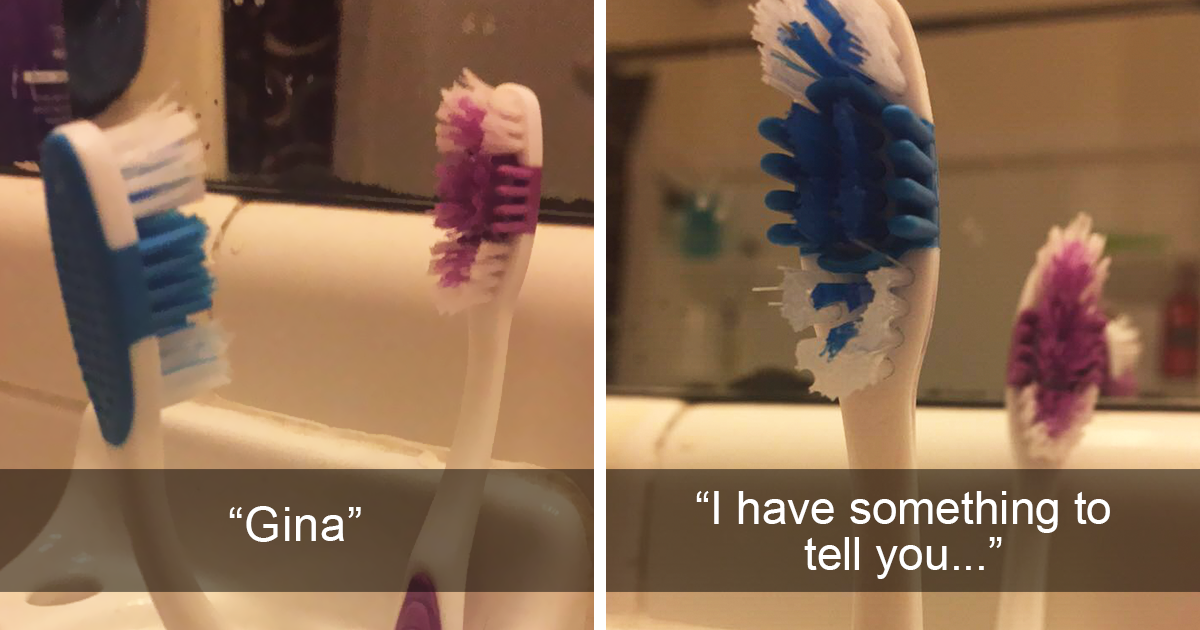
The viral story centers on George Brush, a handsome cobalt-blue toothbrush with apparently excellent emotional availability, and Gina, a neon-pink toothbrush who becomes the object of his affection. The tale was originally shared as a short visual story on Snapchat and Imgur by a creator known as Daqonium, then picked up by humor and pop-culture sites. In a handful of images, George gathers his courage, confesses his feelings, waits for Gina’s response, and receives the kind of romantic payoff that would make a soap opera prouduntil viewers remember these are toothbrushes.
That is the twist. The ending is not tragic in the Shakespearean sense. Nobody drinks poison. Nobody gets exiled. Nobody turns into a sparkly immortal and enrolls in high school forever. Instead, the uncomfortable part is much simpler: the toothbrushes get intimate. Their bristles touch. Suddenly, the viewer’s brain switches from “Aww, cute!” to “Wait, whose toothbrushes are those, and why are they making contact?” It is comedy, romance, and bathroom horror in one tiny package.
Why the Internet Fell for George and Gina
The reason this odd little love story works is that it understands something the internet loves: emotional sincerity wrapped in absurd packaging. A viewer can laugh at the idea of toothbrushes having a romance while still recognizing the structure of a real romantic scene. George has a secret. Gina hesitates. The tension builds. The payoff arrives. It is basically a three-act film, except the cast lives next to a sink and probably smells faintly of fluoride.
The story also benefits from strong visual contrast. George is blue; Gina is pink. He looks worn but determined. She looks equally used and strangely expressive despite having no face. Their “body language” comes from placement, angle, and the captions. That is what makes the short format so effective: it gives just enough detail for readers to fill in the blanks. We do the emotional work ourselves, which is why a bathroom object can suddenly feel like the lead in a romantic drama.
There is also the perfect balance of sweet and gross. If the ending were only sweet, it might be forgettable. If it were only disgusting, it might become a cheap gag. Instead, the viral toothbrush love story lands right in the middle. It lets viewers feel a tiny emotional spark, then immediately punishes them for feeling it. That is classic internet comedy: make people care, then make them question their life choices.
Is It Really Better Than Twilight?
The phrase “better than Twilight” has been part of internet culture for years. It is usually used as a joking comparison when people find a ridiculous pairing, object relationship, or accidental moment more emotionally satisfying than Bella Swan and Edward Cullen’s famous vampire romance. The joke became a meme because Twilight is one of the most recognizable modern young-adult romances, and because the series has always inspired passionate reactions from both fans and critics.
To be fair, Twilight is not some obscure book hiding in the back of a library. Stephenie Meyer’s saga became a global publishing and film phenomenon. The story of Bella, Edward, Jacob, vampires, werewolves, forbidden desire, and gloomy Washington weather helped shape an entire era of young-adult fantasy romance. The books sold in massive numbers, the films became box-office giants, and the characters remain instantly recognizable years later.
So when people say George and Gina are “better than Twilight,” they are not making a serious literary claim that two toothbrushes have more developed mythology than the Cullen family. The joke works because the toothbrush story is hilariously efficient. In a few images, it delivers longing, suspense, confession, hesitation, acceptance, and a shocking finale. Twilight takes hundreds of pages to build its romantic tension; George and Gina do it before you have time to spit.
That does not mean Twilight fans should throw garlic at the toothbrushes. The comparison is playful. Twilight succeeds because it is dramatic, emotional, and unapologetically intense. The toothbrush story succeeds because it is miniature, silly, and unreasonably committed to the bit. One is a supernatural romance with dangerous desire; the other is a micro-romance with questionable bathroom boundaries. Both understand that love stories become memorable when the audience feels somethingeven if that feeling is mild nausea.
The Secret Ingredient: Personification
Personification is the magic trick behind the whole story. Give an object a name, a desire, and a problem, and suddenly it becomes a character. A toothbrush is no longer just a tool for scrubbing molars. It becomes George Brush, a brave romantic hero with frayed bristles and a vulnerable heart. Gina becomes more than a pink bathroom item. She becomes the silent love interest whose response determines whether George’s emotional plaque gets removed or left to harden forever.
This is why audiences respond to animated lamps, talking toys, dancing kitchenware, and viral posts about lonely household objects. Humans are naturally good at seeing patterns, faces, motives, and stories where none technically exist. The internet has turned that habit into a full-time entertainment industry. A misplaced chair looks sad. A cracked mug looks wise. Two toothbrushes leaning toward each other look like star-crossed lovers who should absolutely not be stored in the same cup.
The captions make the personification stronger. They guide the audience through George’s emotional journey and create a romantic rhythm. Without the captions, the images might just look like someone rearranged bathroom supplies during a very slow afternoon. With them, viewers get a tiny drama about courage, rejection, and acceptance. That is the difference between a messy sink and a viral story.
Why the Ending Feels So Uncomfortable
The ending is uncomfortable because it turns intimacy into a hygiene question. Romance stories often use closeness as a reward: a kiss, a touch, an embrace, a long stare that lasts three seconds too long. In this story, closeness is also the punchline. Toothbrushes are personal. Very personal. They enter the mouth, meet bacteria, scrape plaque, and then stand in the bathroom pretending nothing happened. Seeing two of them “kiss” triggers a very specific kind of disgust.
Dental experts generally advise replacing toothbrushes every three to four months, sooner if the bristles are frayed, and avoiding toothbrush sharing. Clean storage matters too. Toothbrushes should be rinsed, allowed to air-dry, and kept from touching other brushes whenever possible. That advice makes the George and Gina ending even funnier because the entire romantic climax violates the spirit of basic bathroom etiquette.
That contrast is the joke. The audience is asked to enjoy the romance while knowing the practical reality is gross. It is like watching a beautiful wedding scene and realizing the cake is made of expired mayonnaise. Emotionally, you want to applaud. Practically, you want someone to step in with a replacement brush and a stern talk about germs.
What This Viral Love Story Teaches About Short-Form Storytelling
George and Gina prove that a story does not need to be long to be satisfying. It needs clarity, escalation, and a payoff. The viewer instantly understands the characters and the conflict. George loves Gina. Gina must respond. The ending must either fulfill or destroy the expectation. That is storytelling at its most compact.
This is exactly why short-form content spreads so easily. On social platforms, people are often looking for entertainment that can be consumed quickly and shared with one tap. A full novel asks for time. A film asks for attention. A micro-story asks for a few seconds and gives back a laugh. That trade is powerful, especially when the content is strange enough to make people say, “You need to see this.”
The best viral stories also invite commentary. George and Gina do not end when the images end. People keep the joke alive by debating whether it is cute, disgusting, weirdly romantic, or all three. That conversation becomes part of the content. The post is not just a story; it is a social object. People share it to express their taste, their humor, and their willingness to emotionally invest in dental equipment.
Why We Love Weird Internet Romances
Strange internet romances work because they shrink big emotions into silly containers. Love can feel overwhelming in real life. It comes with vulnerability, timing, fear, hope, and the occasional terrible text message. When those emotions are transferred onto toothbrushes, plugs, socks, or two oddly placed traffic cones, the stakes become safe. We can laugh at love without laughing at ourselves too directly.
There is comfort in absurdity. A tiny toothbrush romance gives people permission to enjoy melodrama without the commitment of a full emotional breakdown. It is sweet enough to be charming and ridiculous enough to be harmless. That is why viewers can call it better than a major romance franchise while knowing, deep down, that they are praising a bathroom gag.
The story also reminds us that the internet is very good at turning boredom into creativity. Someone looked at two worn toothbrushes and saw a romantic plot. That is either genius, procrastination, or both. The result is memorable because it feels spontaneous. It has the energy of a person making themselves laugh first and the internet laughing along afterward.
The Twilight Comparison Still Works Because Twilight Still Matters
A meme comparison only works when the reference is widely understood. Twilight remains a useful target because it has never really disappeared from pop culture. Even people who have not read the books know the basic ingredients: Bella, Edward, Jacob, vampires, werewolves, sparkly skin, rainy Forks, and a love triangle intense enough to power a small city.
The franchise’s lasting visibility gives the joke a familiar anchor. When someone says an absurd romance is “better than Twilight,” readers immediately understand the tone. It is teasing, not academic. It says, “This silly thing made me feel more than expected.” It also pokes fun at how seriously audiences can take fictional love stories. If we can argue for years about Team Edward and Team Jacob, surely the internet can spend a few minutes supporting Team George.
In a strange way, the toothbrush story and Twilight share one important quality: both are sincere within their own worlds. Twilight asks readers to believe in immortal love and supernatural danger. George and Gina ask viewers to believe that toothbrushes have feelings. Neither concept works unless the creator commits. The difference is that one comes with a mythology, and the other comes with a dental-care warning.
Experience Section: Watching the Internet Turn a Bathroom Joke Into a Love Story
The experience of encountering a viral story like George and Gina usually follows a familiar path. First comes confusion. You see the headline and think, “A love story with an uncomfortable ending? Better than Twilight? What did the internet do this time?” Then you click, promising yourself it is only for research. Three seconds later, you are emotionally invested in a blue toothbrush with commitment issues and a pink toothbrush who may or may not return his feelings.
That is the strange pleasure of internet storytelling. It catches you off guard. You are not prepared to care, so the joke lands harder. With traditional romance, you know the rules. The music swells, the couple locks eyes, someone says something dangerously poetic, and the audience braces for a kiss. With George and Gina, the same emotional pattern appears in miniature, but the characters are bathroom tools. Your brain recognizes the romance structure before your common sense can object.
Many viewers have had this exact reaction with viral micro-stories: amusement first, then surprise, then a tiny sense of betrayal. The betrayal is funny because the story tricks you into caring. You laugh at George’s confession, root for Gina to respond, and then recoil when the bristles touch. The discomfort is part of the shared experience. It gives people something to quote, comment on, and send to friends with a message like, “I hate that this is cute.”
The best part is how quickly the story becomes social. One person shares it because it is funny. Another shares it because it is gross. Someone else shares it because the phrase “better than Twilight” awakens their inner 2009 pop-culture critic. Before long, the toothbrushes are no longer just toothbrushes. They become a tiny cultural event, a shared joke, and a reminder that the internet can still make something oddly delightful out of almost nothing.
There is also a relatable human lesson hiding under the toothpaste foam: people love stories that give ordinary objects unexpected emotional lives. It makes the world feel more playful. A toothbrush cup becomes a stage. A sink becomes a romantic setting. A frayed bristle becomes character development. You may never look at your bathroom counter the same way again, which is both magical and mildly concerning.
In the end, the George and Gina experience is not about whether a toothbrush romance is truly superior to Twilight. It is about the joy of being surprised by a joke that knows exactly what it is doing. It is short, silly, memorable, and just uncomfortable enough to stick. Like any great internet moment, it makes you laugh, cringe, and immediately consider buying a new toothbrush.
Conclusion: A Love Story With Bite, Bristles, and Big Meme Energy
The viral love story of George and Gina works because it is simple, weird, and unexpectedly well-structured. It uses the language of romance, the speed of social media, and the shock of bathroom reality to create a tiny story people cannot resist sharing. The “better than Twilight” comparison is not a serious insult to a massive fantasy franchise; it is a joke about how even two toothbrushes can deliver drama when the setup is clear and the ending is unforgettable.
George and Gina may not have vampires, werewolves, or a rainy Pacific Northwest backdrop, but they do have courage, suspense, chemistry, and one deeply questionable bristle-to-bristle finale. In the crowded world of viral content, that is more than enough. Sometimes love is eternal. Sometimes love is forbidden. And sometimes love should be replaced every three to four months.