Note: This article is written for educational and editorial purposes only. It is not personal financial advice, and it should not be treated as a recommendation to buy, sell, or hold any investment.
For decades, bonds were the sensible shoes of the investment world: not flashy, not dramatic, but usually dependable enough to keep a portfolio from face-planting. Then came the worst bond bear market in history, and suddenly those sensible shoes were roller skates on a marble staircase.
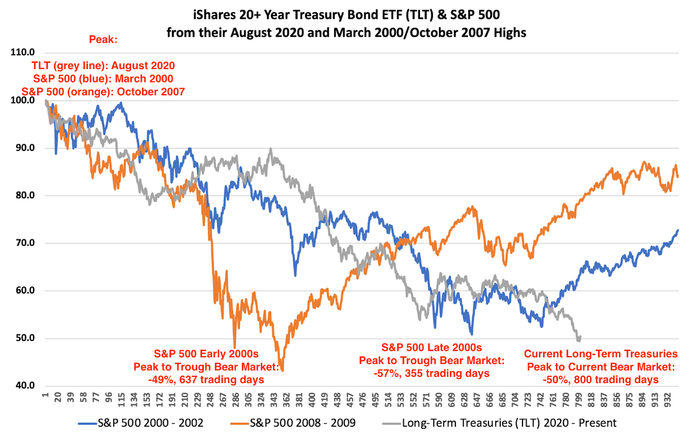
The bond market collapse that began around 2020 and intensified in 2022 was not just another routine interest-rate wobble. It was a generational reset. A market that had enjoyed roughly 40 years of falling interest rates, rising bond prices, and relatively calm total returns was hit by a brutal combination of near-zero starting yields, runaway inflation, aggressive Federal Reserve rate hikes, and a rapid repricing of long-term debt.
To understand why this period hurt so badly, we need to remember one simple bond rule: when interest rates rise, existing bond prices fall. That rule sounds harmless in a textbook. In real life, when rates rise at warp speed, it can turn conservative bond funds into surprisingly painful assets.
What Is a Bond Bear Market?
A bond bear market happens when bond prices decline for a sustained period. Unlike stocks, where a 20% drop is often used as the classic bear-market threshold, bonds are usually less volatile. That means a double-digit bond loss can feel like an earthquake in a neighborhood that normally argues over lawn height.
Bonds lose value mainly when yields rise. Suppose an investor owns an older bond paying 2%. If new bonds suddenly pay 5%, the old bond becomes less attractive. To compete, its price must fall until its total return lines up better with the new market reality. That is the mechanical cruelty of fixed income: bonds may be called “fixed,” but their prices are anything but frozen.
Why This Bond Bear Market Was So Historic
The recent bond downturn was historic because it attacked the market from several angles at once. First, yields were extremely low in 2020 and 2021. Investors buying bonds at those levels received very little income cushion. Second, many bond indexes had grown more interest-rate sensitive because years of low rates encouraged governments and companies to issue longer-term debt. Third, inflation exploded after the pandemic, forcing the Federal Reserve to raise rates quickly.
In June 2022, U.S. consumer prices were up 9.1% from a year earlier, the largest 12-month increase since 1981. That inflation shock forced policymakers to stop treating high prices like a temporary houseguest and start treating them like a raccoon in the attic. The Fed responded with one of the fastest tightening cycles in modern history, raising its target rate from near zero in March 2022 to 5.25%–5.50% by July 2023.
That move crushed existing bond prices. The S&P U.S. Aggregate Bond Index fell around 12% in 2022, while other broad U.S. bond benchmarks declined by roughly 13%. For stocks, that kind of loss is unpleasant but not shocking. For core bonds, it was a financial horror movie wearing a cardigan.
The 40-Year Bond Bull Market Finally Met Its Villain
From the early 1980s through 2020, bond investors benefited from a powerful tailwind: declining interest rates. The 10-year Treasury yield stood above 15% in 1981 and eventually fell to nearly 0.5% during the pandemic panic. As yields declined, bond prices rose. Investors earned income, capital gains, and diversification benefits. It was a beautiful machine.
But by 2020, that machine had almost run out of fuel. If a bond yields 1%, there is not much room for rates to fall further. There is, however, plenty of room for rates to rise. That asymmetry created a dangerous setup. Investors were accepting tiny yields while carrying large duration risk, often without realizing how exposed they were.
Then inflation arrived. Supply-chain problems, huge shifts in consumer demand, labor shortages, energy shocks, and pandemic-era stimulus all collided. By the time the Fed pivoted aggressively, the bond market had to reprice not gently, but violently.
Duration: The Quiet Word That Caused Loud Losses
Duration is one of the most important concepts in bond investing. In simple terms, it measures how sensitive a bond or bond fund is to changes in interest rates. A duration of five years suggests that a one-percentage-point rise in rates could cause about a 5% price decline, before considering income and other factors.
Long-duration bonds suffered the most. Long-term Treasury funds, zero-coupon bonds, and extended-maturity bond portfolios were hit especially hard because their cash flows sit far in the future. When discount rates rise, those distant payments become worth much less today.
That is why some long-term Treasury investments lost far more than broad bond indexes. In the most painful stretches, long-duration Treasury exposure behaved less like a sleepy bond allocation and more like a tech stock that forgot its password.
Why 2022 Was the Center of the Storm
The year 2022 deserves a special place in the bond-market hall of infamy. Broad investment-grade bonds declined sharply. Treasuries fell. Mortgage-backed securities struggled. Corporate bonds suffered as both interest-rate risk and credit concerns weighed on prices. Even many municipal bond funds posted losses.
The pain was especially confusing because many investors owned bonds for safety. The classic 60/40 portfolio, with 60% stocks and 40% bonds, is built on the idea that bonds can help offset equity volatility. But in 2022, stocks and bonds fell together. Inflation was the common enemy. Higher rates hurt growth-stock valuations, raised borrowing costs, and simultaneously damaged bond prices.
That made diversification feel broken. It was not permanently broken, but it was definitely having a rough day. Or, more accurately, a rough year with a nasty quarterly subscription plan.
How the Fed Became the Main Character
The Federal Reserve did not set out to create a bond bear market. Its job was to fight inflation and restore price stability. But because bonds are highly sensitive to interest-rate expectations, the Fed’s policy path became the central plotline.
When the Fed raised short-term rates, the move rippled through the yield curve. Investors demanded higher yields on Treasuries, mortgage bonds, corporate bonds, and other fixed-income securities. The 10-year Treasury yield, which had been around 0.5% early in the pandemic, climbed toward 5% in 2023. That jump affected everything from bond portfolios to mortgage rates to stock valuations.
In normal times, bonds can absorb rate changes gradually. In this cycle, the speed was the problem. A slow walk uphill is exercise. A rocket launch uphill is an insurance claim.
The Role of Inflation in the Bond Market Crash
Inflation is toxic to traditional bonds because it erodes the purchasing power of fixed interest payments. If a bond pays 2% and inflation is 8%, the investor is losing real purchasing power. Markets adjust by demanding higher yields, and higher yields push existing bond prices lower.
Inflation also changes investor psychology. During the low-inflation decades before 2020, many investors believed central banks could quickly control price pressures. The post-pandemic surge challenged that confidence. Suddenly, the market had to price a world where inflation might stay higher for longer, and where central banks might keep rates restrictive for longer than investors wanted.
That “higher for longer” mindset was a major reason the bond bear market kept dragging on even after the worst of the 2022 losses. Investors kept waiting for rate cuts. The bond market kept checking its watch. The Fed kept saying, in central-bank language, “Not so fast, buddy.”
Which Bonds Were Hit the Hardest?
Long-Term Treasuries
Long-term Treasuries were among the biggest losers because they carry high duration. A 30-year bond is extremely sensitive to rate changes. When yields surged, long-bond prices collapsed. Investors who assumed Treasuries were automatically safe learned an expensive lesson: credit safety is not the same as price stability.
Zero-Coupon Bonds
Zero-coupon bonds were hit even harder. These bonds do not make regular interest payments; instead, investors receive the payoff at maturity. Because nearly all of the value is tied to a future payment, their duration can be extremely high. In a rising-rate environment, that structure can be brutal.
Mortgage-Backed Securities
Mortgage-backed securities also struggled. Rising mortgage rates reduced refinancing activity and changed prepayment assumptions. That made the sector more complicated and less friendly to investors who expected plain-vanilla bond behavior.
Corporate Bonds
Investment-grade corporate bonds suffered from rising Treasury yields, while lower-quality corporate bonds also had to deal with credit-spread concerns. When borrowing costs rise, companies with weaker balance sheets can look riskier, especially if economic growth slows.
Why Cash Suddenly Looked Like a Genius
One strange feature of this bear market was that cash became competitive again. For years, savers earned almost nothing on money market funds, Treasury bills, and savings accounts. Then short-term yields rose sharply. Suddenly, investors could earn meaningful income without taking much duration risk.
That shift changed portfolio behavior. Some investors moved from intermediate and long-term bonds into Treasury bills, certificates of deposit, and money market funds. For the first time in years, “doing nothing” in cash paid something. Cash went from financial couch potato to respectable dinner guest.
However, cash has its own risk: reinvestment risk. If rates fall, today’s attractive short-term yields may disappear quickly. Bonds, by contrast, can lock in income for longer periods. That is why the decision between cash and bonds depends on goals, time horizon, and risk tolerance.
Did Bonds Stop Working?
No, bonds did not stop working. But the worst bond bear market in history exposed a lazy assumption: that bonds are always safe in every way. They are not. Bonds can reduce credit risk, provide income, and diversify portfolios, but they can still lose money when rates rise sharply.
The better lesson is not “avoid bonds forever.” The better lesson is “know what kind of bond risk you own.” Short-term Treasuries are not the same as long-term Treasuries. Investment-grade corporates are not the same as high-yield bonds. A bond fund with a six-year duration is not the same as a money market fund.
Bond investing is not just about asking, “What is the yield?” It is also about asking, “What could make this lose money, and how much patience do I have?”
What Investors Learned From the Worst Bond Bear Market
The first lesson is that starting yield matters. When yields are extremely low, future returns are limited and downside risk can be larger than investors expect. Low yields make bonds expensive, just as high valuations can make stocks expensive.
The second lesson is that duration should never be ignored. Investors who stretched for a little extra yield by buying longer-term bonds often accepted much more interest-rate risk than they realized. A small yield advantage can vanish quickly when rates jump.
The third lesson is that diversification still matters, but it needs to be thoughtful. A portfolio can include short-term bonds, intermediate bonds, inflation-protected securities, high-quality corporates, municipal bonds, and global fixed income. The key is understanding what each piece is supposed to do.
The fourth lesson is emotional. Bonds are supposed to be boring, so losses in bonds can feel more personal than losses in stocks. When a stock fund falls, investors may grumble but understand the risk. When a “safe” bond fund falls 15%, people start staring at statements like they were written in ancient curses.
Why the Future for Bonds May Be Better Than the Past Few Years
Ironically, the same bear market that punished bondholders also improved the future math for new bond investors. Higher yields mean more income. More income gives bond portfolios a larger cushion against price declines. Starting yields have historically been a useful guide to future bond returns, especially over multi-year periods.
That does not mean bonds are guaranteed to rally. If inflation remains stubborn, deficits worry investors, or long-term rates rise again, bond prices can still struggle. But the setup is different from 2020 and 2021. Back then, investors were buying very low yields with high rate risk. Today, many bond investors can at least earn income that looks more like income and less like a rounding error.
Experience Section: Living Through the Worst Bond Bear Market in History
The most memorable experience of this bond bear market was the shock. Many investors did not expect their bond funds to fall meaningfully. They expected stock volatility, not fixed-income drama. For years, annual reviews and retirement plans treated bonds as the calm side of the portfolio. Then 2022 arrived, and the calm side started throwing furniture.
One common experience was confusion. Investors opened statements and saw both stock funds and bond funds down at the same time. The usual comfort line“at least the bonds are helping”did not work. Retirees who held balanced portfolios felt especially frustrated because the assets designed to reduce volatility were also producing losses. Younger investors were confused too, because many had never seen a real inflation-driven rate cycle.
Another experience was the sudden popularity of boring cash. People who had ignored Treasury bills for years began talking about them at dinner like they had discovered buried treasure. Money market yields, short-term CDs, and high-yield savings accounts became interesting again. This was a major psychological shift. After a decade of “there is no alternative” thinking, investors remembered that safe income can actually exist.
Financial advisors also had to adjust conversations. Instead of simply saying bonds reduce risk, they had to explain duration, yield curves, credit risk, and reinvestment risk in plain English. That was healthy. Painful, yes, but healthy. The bear market forced investors to learn what they owned. A bond fund was no longer just “the safe bucket.” It had a maturity profile, a duration number, a credit mix, and a sensitivity to Federal Reserve policy.
For long-term investors, the experience also tested discipline. Selling a bond fund after a large decline can lock in losses, especially if the fund now holds higher-yielding securities. But holding blindly is not always wise either. Many investors used the period to rebalance, shorten duration, improve credit quality, or build bond ladders. The best decisions usually came from matching investments to actual goals: emergency savings in cash, near-term spending in short-term instruments, and longer-term income needs in diversified bonds.
The biggest personal lesson from this era is humility. Markets can embarrass any slogan. “Bonds are safe” was too simple. “The 60/40 portfolio is dead” was also too dramatic. The truth sits in the middle: bonds remain useful, but they must be understood. The worst bond bear market in history did not destroy fixed income. It reminded investors that even the quietest asset class can roar when inflation, interest rates, and complacency all show up at the same party.
Final Takeaway
The worst bond bear market in history was not a random accident. It was the result of a rare and powerful combination: ultra-low starting yields, high inflation, aggressive rate hikes, and heavy duration exposure across the fixed-income universe. It ended the illusion that bonds can never deliver serious losses and replaced it with a more realistic understanding of risk.
Still, the story is not only negative. Higher yields have restored some of the value proposition in bonds. Investors can now build portfolios with better income potential than they had during the near-zero-rate era. The key is to respect duration, diversify intelligently, and remember that “safe” should never mean “not worth examining.”