Small satellites have changed the space business. Now the fight is not just about reaching orbitit is about who can do it cheaply, often, precisely, and without turning a launch manifest into a cosmic group project.
Introduction: Welcome to the Orbital Food Fight
The small satellite launch market used to sound like a tidy little corner of the space industry. Build a compact spacecraft, book a small rocket, launch to low Earth orbit, celebrate with bad coffee and a company hoodie. Simple, right? Not anymore. The SmallSat launcher war has become one of the most fascinating battles in commercial space, mixing reusable rockets, rideshare economics, national security urgency, venture-capital hangovers, and a surprisingly dramatic amount of rocket-company attrition.
SmallSatsranging from CubeSats to spacecraft weighing hundreds of kilogramsare now central to Earth observation, broadband communications, weather monitoring, defense, Internet of Things networks, and in-orbit technology demonstrations. In 2024 alone, nearly 2,800 small satellites were launched, representing the overwhelming majority of spacecraft sent to orbit. That is not a niche. That is a stampede with solar panels.
But the launch market serving those satellites has split into two competing philosophies. On one side are big rockets offering cheap rideshare slots, led by SpaceX’s Falcon 9 Transporter missions. On the other side are dedicated small launch vehicles such as Rocket Lab’s Electron and Firefly’s Alpha, promising mission control, custom orbits, responsive launch, and less waiting around for someone else’s primary payload to decide when your spacecraft gets to leave Earth.
The result is not a polite industry debate. It is a price war, a cadence war, a reliability war, and a strategic war over who owns access to low Earth orbit.
What Is the SmallSat Launcher War?
The SmallSat launcher war is the competition among launch providers to serve the exploding demand for small satellite deployment. At its core, the conflict is about matching payloads with the right launch model. Some satellite operators care mostly about price. Others care about schedule, orbital precision, confidentiality, fast response, or control over deployment conditions.
In practical terms, the war has three major fronts:
1. Rideshare Launches
Rideshare launches put many satellites on one larger rocket. Think of it as the orbital equivalent of taking a bus: affordable, efficient, and occasionally inconvenient if your stop is not exactly where you wanted. SpaceX’s Transporter missions made this model famous by launching dozensand sometimes more than a hundredpayloads on a single Falcon 9.
2. Dedicated Small Launches
Dedicated launch providers sell the whole rocket to one customer or a small set of aligned customers. This is more like hiring a private car to the airport. It costs more, but you choose the route, the timing, and the music. Rocket Lab built Electron around this logic, offering small satellite operators precision and flexibility that a crowded rideshare may not provide.
3. Responsive and National Security Launch
Defense customers increasingly want satellites launched quickly, sometimes with little notice. That creates a niche for companies able to integrate payloads fast, operate from flexible launch sites, and hit specific orbital requirements. In this part of the war, cheap is nice, but speed and certainty can be priceless.
SpaceX Changed the Rules With Rideshare
No discussion of the SmallSat launcher war can avoid the giant stainless-steel elephant in the room: SpaceX. The company’s Falcon 9 rideshare program changed customer expectations by offering regular, relatively low-cost access to orbit. SpaceX advertises dedicated rideshare opportunities to sun-synchronous orbit and mid-inclination destinations, giving satellite companies a predictable path to space without buying an entire rocket.
The effect has been brutal for many small launch startups. If a small satellite operator can fly for a fraction of the price on a Falcon 9, why pay millions more for a dedicated small rocket? That question has chased boardrooms, investor meetings, and launch-provider pitch decks like an angry goose.
The answer is that price is not everything. Rideshare customers may have less control over exact orbit, launch date, deployment timing, and mission confidentiality. They also must comply with “do no harm” requirements designed to protect other payloads. For many CubeSats and technology demos, that is fine. For a satellite that needs a special orbit, a precise launch window, or a rapid national security response, it may not be enough.
Still, SpaceX forced the market to mature. Any small launcher that wants to survive must explain why it is better than cheap, frequent rideshare. “Because we have a cool rocket” is not a business plan, although it does look nice on a T-shirt.
Rocket Lab: The Dedicated Launch Specialist
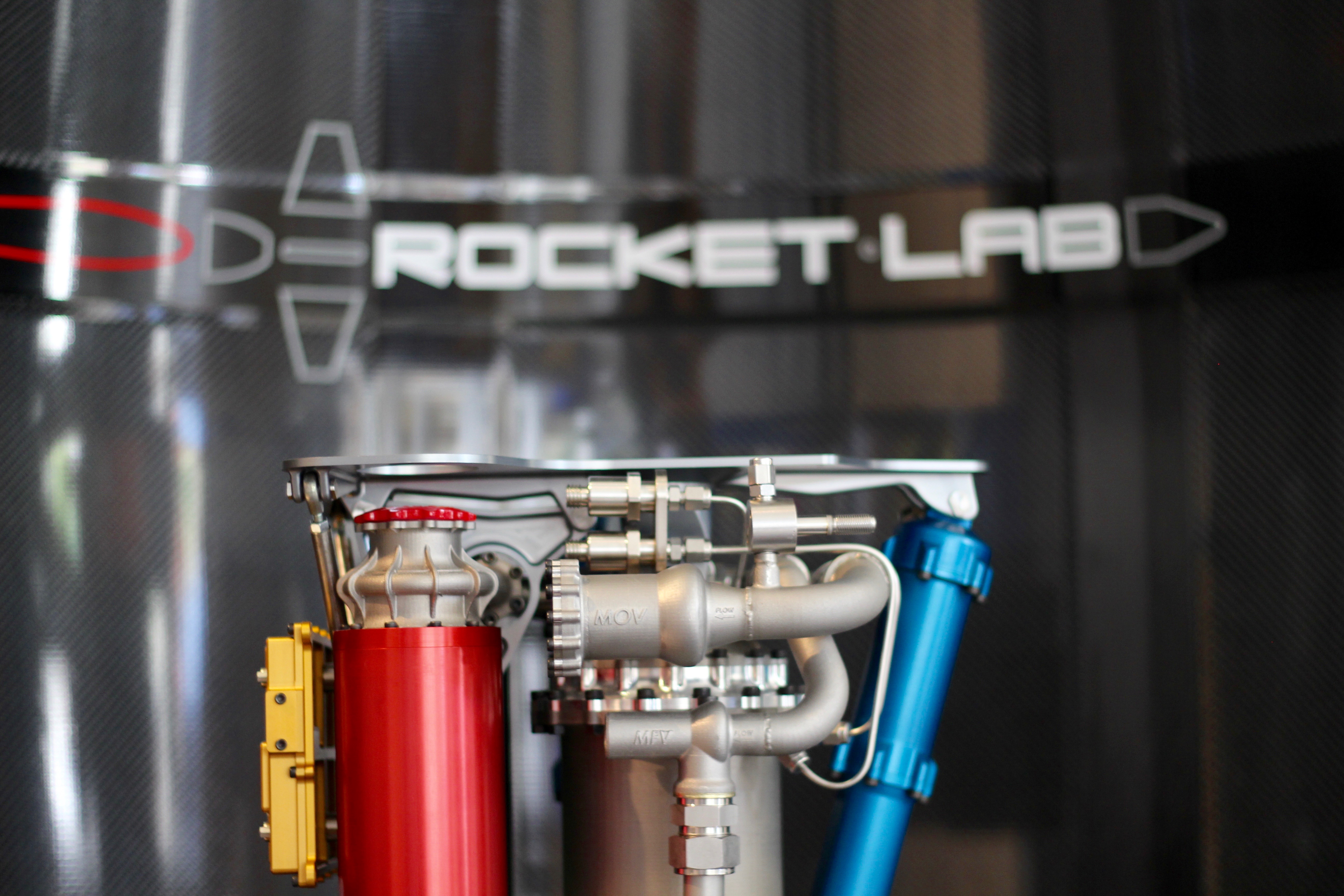
Rocket Lab is the clearest example of a company that found a real place in the SmallSat launcher war. Its Electron rocket was designed for small payloads, and the company has built a reputation around frequent launches, mission tailoring, and precise orbital insertion. Electron’s appeal is not that it can beat Falcon 9 on price per kilogram. It cannot. Its appeal is that it can give small satellite customers their own mission.
A strong example is the ADRAS-J mission for Astroscale, a space debris inspection spacecraft. That mission required tight orbital requirements so the satellite could approach and inspect a derelict rocket stage. This is exactly where dedicated launch earns its premium: when the spacecraft is not just “going to space,” but going to a very particular place at a very particular time.
Rocket Lab is also trying to move up the weight class. Its Neutron vehicle is designed as a reusable medium-lift rocket aimed at constellation deployment, government missions, and competition closer to Falcon 9 territory. That shift says something important about the market: even the most successful dedicated small launcher sees limits in small rockets alone. The future may belong to companies that combine small launch, medium launch, spacecraft manufacturing, and mission services under one roof.
Firefly Alpha: Bigger Small Launch, Bigger Stakes
Firefly Aerospace’s Alpha rocket occupies a slightly different position. It can carry more payload than many small launch vehicles, with published performance of more than 1,000 kilograms to low Earth orbit and hundreds of kilograms to sun-synchronous orbit. Firefly markets Alpha as a responsive and affordable dedicated launch option for commercial, civil, and national security missions.
That sounds attractive, but launch is a harsh business. Firefly has had notable successes, including responsive launch work, but Alpha has also suffered failures. Reuters reported that Firefly received FAA clearance to resume Alpha launches after an April 2025 technical issue that caused a Lockheed Martin satellite mission to fail. The company remains important because it represents a class of U.S. launch provider that can serve larger SmallSats and defense customers without requiring them to buy capacity on a massive rocket.
Firefly’s challenge is reliability and cadence. In launch, one successful mission is a celebration; repeated successful missions are a business. Customers can forgive risk if the value is unique, but the market has little patience for rockets that behave like expensive fireworks with branding guidelines.
The Fallen and the Pivoted: Virgin Orbit, Astra, Relativity, and ABL
The SmallSat launcher war has already produced casualties. Virgin Orbit once promised flexible air-launch service using a modified Boeing 747 and the LauncherOne rocket. The concept was clever: take off from a runway, release the rocket from an aircraft, and reach orbit without relying on a traditional vertical launch pad. But after technical and financial problems, Virgin Orbit filed for bankruptcy and sold key assets in 2023.
Astra became another warning sign. The company pursued very low-cost, high-cadence small launch and briefly captured investor excitement during the space SPAC boom. But after launch failures, delays, and financial pressure, Astra agreed to be taken private in 2024. Its story shows that “launch often and cheaply” sounds wonderful until the rocket must actually launch often and cheaply.
Relativity Space retired Terran 1 after using it as a pathfinder vehicle and shifted focus to the larger Terran R. ABL Space Systems suffered severe setbacks with its RS1 vehicle, including a destructive pre-flight testing incident. These examples reveal a market truth: building a small rocket is not automatically easier just because the payload is smaller. The physics remain rude. The capital requirements remain enormous. The customer base is selective. The competition is merciless.
The industry has learned that small launch is not a gold rush where every shovel seller gets rich. It is a survival contest where only the companies with technical execution, capital discipline, mission differentiation, and customer trust stay on the pad long enough to matter.
Why Customers Still Pay for Dedicated Small Launch
If rideshare is cheaper, why does dedicated small launch still exist? Because not all satellite missions are the same. A weather CubeSat, a military demonstration payload, a synthetic aperture radar satellite, and an orbital debris inspection spacecraft may all be SmallSats, but their launch needs can be dramatically different.
Precise Orbit
Some spacecraft need a specific altitude, inclination, local time of ascending node, or phasing relationship. If a rideshare mission drops off satellites in a standard orbit, the spacecraft may need onboard propulsion to reach its final destination. That adds cost, complexity, and time.
Schedule Control
A customer with a funded mission, expiring regulatory approval, defense urgency, or seasonal Earth observation window may not want to wait for the next bus. Dedicated launch can offer more control over timing.
Security and Confidentiality
Government and defense missions may value privacy, rapid integration, and mission-specific procedures. A crowded rideshare manifest is not always ideal for sensitive payloads.
Technology Demonstration
New satellite designs sometimes need special integration, deployment, or testing conditions. Dedicated launch gives engineers more room to be fussy, and engineers do enjoy being fussy. It is practically in the job description.
The Real Battlefield: Economics, Not Rocket Size
The most important part of the SmallSat launcher war is not the size of the rockets. It is the economics behind them. Launch companies must pay for engineering teams, factories, engines, avionics, test stands, launch pads, range fees, insurance, regulatory compliance, and the occasional very public failure investigation. That is a lot of fixed cost to recover from relatively small payloads.
Large reusable rockets have a scale advantage. Falcon 9 can spread costs across many payloads, many missions, and reusable hardware. Small expendable rockets often cannot match that cost per kilogram. This is why many small launch companies now emphasize value rather than price: rapid response, tailored orbit, government contracting, and integrated space services.
The market is also changing because SmallSats are getting bigger. The average small satellite mass has increased, and many constellation operators now prefer spacecraft that are more capable, longer-lived, and heavier than early CubeSats. That trend favors medium-lift rockets and rideshare aggregators as much as classic small launchers.
In other words, the SmallSat launcher war is less like a boxing match between tiny rockets and big rockets. It is more like a logistics market deciding which delivery service is best: the cheap bus, the private van, the armored courier, or the freight train.
National Security Is Reshaping the War
Commercial demand matters, but national security may decide who survives. The U.S. government wants resilient space architectures made from many smaller satellites instead of a few exquisite, expensive spacecraft. That strategy requires launch providers capable of deploying satellites frequently and responding quickly when assets need replacement.
This is where small launch companies can shine. A dedicated rocket that can place a payload into a specific orbit on short notice may be valuable even if it costs more per kilogram than rideshare. In a crisis, nobody wants to hear, “Your satellite can fly in four months, assuming the manifest does not change.”
Responsive launch also creates opportunities for companies that can operate from U.S. ranges, integrate payloads quickly, and support defense-specific mission requirements. Rocket Lab, Firefly, and other U.S.-aligned launch firms are competing not only for commercial customers but also for long-term government relevance.
What Comes Next in the SmallSat Launcher War?
The next phase will likely be consolidation, specialization, and bigger rockets. Some small launch companies will disappear. Others will pivot into defense, propulsion, spacecraft manufacturing, or hypersonic testing. The survivors will not simply sell “launch.” They will sell mission outcomes.
SpaceX will continue to dominate low-cost rideshare unless another provider matches its cadence, reliability, and reusable economics. Rocket Lab will keep defending the premium dedicated launch niche while pushing Neutron toward medium lift. Firefly will try to prove Alpha can become reliable enough for repeat customers. New entrants will face a harder funding environment than the one that fueled the early small-launch boom.
The winning strategy may be vertical integration. Companies that build satellites, launch them, operate them, and sell data or services may capture more value than companies that only sell rides to orbit. SpaceX already showed this with Starlink. Rocket Lab appears to understand the same lesson. The rocket is no longer the whole business; it is the front door.
Experiences and Lessons From the SmallSat Launcher War
For satellite teams, the SmallSat launcher war has created both freedom and confusion. A decade ago, many small satellite developers had limited paths to orbit. Today, they can compare rideshare brokers, direct rideshare programs, dedicated launchers, orbital transfer vehicles, and government-sponsored launch opportunities. That sounds wonderful until the mission manager opens a spreadsheet and realizes every option comes with trade-offs hiding in the fine print.
One practical lesson is that the cheapest launch is not always the cheapest mission. A low-cost rideshare slot may require extra propulsion, longer commissioning, more operational planning, or delayed revenue if the spacecraft reaches the wrong orbit for the business case. For a university CubeSat, that may be acceptable. For a commercial imaging satellite that needs to begin collecting billable data quickly, the launch price is only one piece of the financial puzzle.
Another lesson is that schedule confidence is a form of currency. Satellite companies often build spacecraft on tight funding milestones. A launch delay can affect investor updates, customer contracts, regulatory deadlines, and insurance terms. Dedicated launch providers know this, which is why they sell control as much as transportation. When a customer pays for a dedicated mission, they are not just buying a rocket; they are buying fewer strangers in the decision loop.
Integration is also more important than outsiders realize. Small satellites may look simple compared with billion-dollar flagship spacecraft, but they still require mechanical interfaces, electrical compatibility, licensing, vibration testing, deployment analysis, and safety approvals. A rideshare mission can involve many payloads with different needs. One late spacecraft can create headaches for everyone. In that environment, experienced launch integrators are worth their weight in mission patches.
The war has also taught investors a painful lesson: launch startups are not software startups with engines. Hardware takes time. Testing destroys things. Regulators ask questions. Weather refuses to cooperate. A rocket that works once may still need years of refinement before it becomes dependable. The companies that survive tend to be those that combine technical discipline with realistic business models, not just dramatic renderings of rockets flying over glowing coastlines.
For customers, the best approach is to choose launch based on mission priority. If cost is king and the orbit is flexible, rideshare may be perfect. If timing, orbit, or confidentiality matters, dedicated launch may be worth the premium. If the mission supports national security or rapid replacement, responsive launch capability may matter more than price per kilogram. The smartest teams do not ask, “Which rocket is cheapest?” They ask, “Which launch option protects the mission?”
That is the real experience behind the SmallSat launcher war: access to space has improved dramatically, but decision-making has become more strategic. The market is no longer about simply getting a small satellite off the planet. It is about getting the right satellite to the right orbit at the right time, with the right risk profile and the right economics. Space may be vast, but launch windows are not.
Conclusion: The War Is Not OverIt Is Getting Smarter
The SmallSat launcher war began as a race to serve a booming satellite market. It has evolved into a sharper contest over business models, reliability, responsive capability, and customer control. SpaceX reset the price curve with Falcon 9 rideshare. Rocket Lab proved dedicated small launch can survive when it solves specialized mission problems. Firefly and others are fighting for responsive and higher-capacity small launch roles. Meanwhile, the failures and pivots of Virgin Orbit, Astra, Relativity’s Terran 1, and ABL show how unforgiving the launch business can be.
The future will not belong to every company with a rocket animation and a launch pad reservation. It will belong to providers that can deliver repeatable value. Some will win on cost. Some will win on precision. Some will win on national security responsiveness. The SmallSat launcher war is not a simple battle between big rockets and little rockets. It is a battle to define what modern access to orbit should look like.
And for satellite operators, that is good news. Competition is messy, loud, and occasionally explosive. But it also pushes launch providers to become faster, cheaper, smarter, and more reliable. In space transportation, that is the kind of war customers can actually benefit fromas long as their payload is not on the losing rocket.