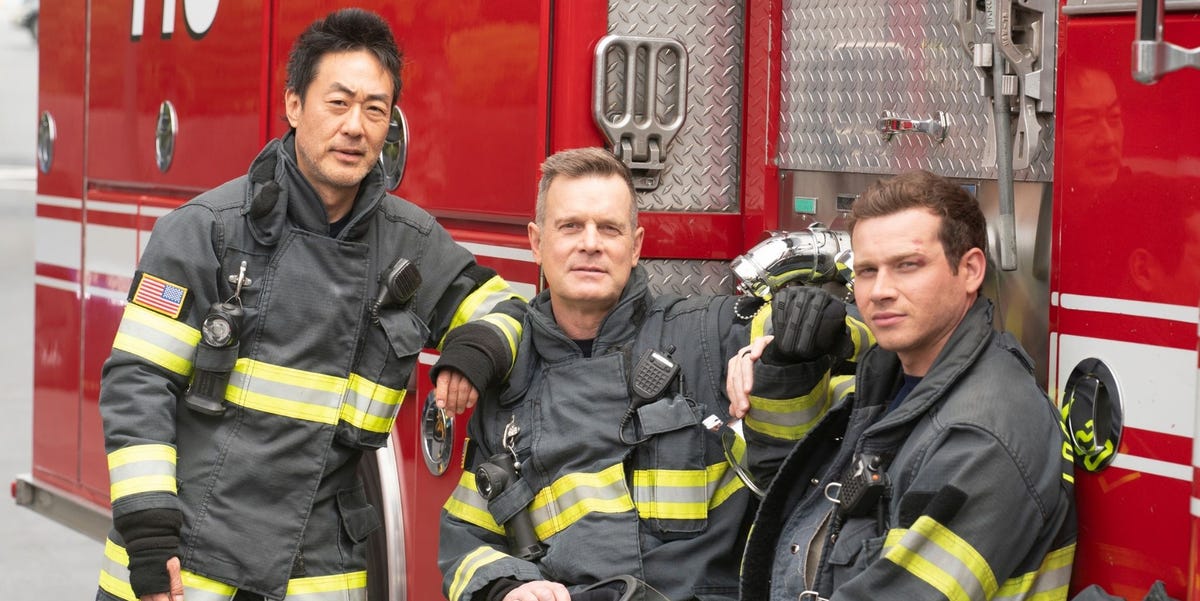
Just when you thought 9-1-1: Nashville had already squeezed every last drop of Music City flavor into its emergency-fueled universe, the show decided to kick the saloon doors open one more time. The latest buzz is that Noah Cyrus is stepping into the chaos for the season finale, making her the newest music-world face to join the spinoff’s increasingly on-brand parade of country-adjacent star power. In other words, this series is not merely set in Nashville. It is determined to be Nashville, cowboy boots, family drama, and all.
That reveal matters for more than headline sparkle. It confirms something viewers already suspected after Kane Brown’s earlier guest spot in the premiere: this show understands the assignment. A spinoff planted in a city synonymous with stages, songwriters, neon lights, and larger-than-life personalities would feel incomplete if it did not regularly pull recognizable music talent into the action. So when news broke that another star cameo was coming, fans did not exactly gasp in disbelief. They nodded, grabbed their remote, and said, “Yeah, that tracks.”
But the clever part is that these cameos are not random glitter tossed at the screen. They actually fit the DNA of the series. 9-1-1: Nashville is built as a high-octane first-responder drama with a sudsy family saga running right through the middle of it. That means massive rescues, emotional feuds, tangled relationships, and enough hometown spectacle to keep the city itself feeling like a character. Add famous musicians to that formula, and suddenly the show does not just have a gimmick. It has a brand.
Noah Cyrus Is the New Cameo, and the Choice Makes Perfect Sense
The newly revealed guest appearance belongs to Noah Cyrus, who is set to turn up in the season finale. That alone is a smart booking. Cyrus has spent the last few years carving out an identity that leans into folk, Americana, and country textures without sounding like a copy of anyone else. She brings name recognition, but she also brings the right mood. Her image fits the show’s Nashville setting far more naturally than a splashy celebrity cameo that screams, “We found someone famous and hoped for the best.”
The setup is delightfully dramatic, too. In true 9-1-1 fashion, this is not the kind of cameo where a star wanders through a hallway, says two lines, and vanishes before the next commercial break. The tease suggests a performance-related mishap that leaves Noah Cyrus in a dangerous situation, which means the firefighters of Station 113 will have to do what this franchise does best: save people while looking both heroic and mildly exhausted. It is a rescue show, after all. Nobody shows up just to wave from a safe distance.
What makes the cameo especially effective is the timing. It arrives late in the season, after the show has already established its core cast, its tone, and its appetite for spectacular emergencies. A finale cameo needs to feel like an escalation, not a distraction. Noah Cyrus offers exactly that. She brings fresh attention to the episode while reinforcing the series’ most marketable idea: in Nashville, the line between everyday life and show business is about as thin as a guitar string under pressure.
Kane Brown Set the Template Early
Before Noah Cyrus entered the conversation, Kane Brown helped lay the groundwork for what these music cameos could look like. His appearance in the pilot was not just a quick celebrity wink. It was folded into a major storyline involving a large-scale emergency, which immediately told viewers that the spinoff planned to integrate music stars into the action rather than hang them on the edge of the story like decorative Christmas lights.
That was a savvy opening move. Brown already had crossover appeal, and he was not new to television acting. His earlier acting work made him an easy fit for a procedural that demands performers react to collapsing structures, rising panic, and the possibility that a storm might fling a perfectly good event into total chaos. The cameo helped signal that 9-1-1: Nashville was serious about making the city’s music culture feel essential to the plot.
More importantly, Brown’s appearance gave the show a repeatable model. Bring in a recognizable performer. Put them in a scenario that only this franchise would dream up. Let the emergency unfold at maximum volume. Then use the star power to boost interest without overwhelming the ensemble. That formula works because it keeps the first responders at the center while giving viewers a little extra sugar on top. Noah Cyrus follows that same path, but she does it at a point in the season when the series has even more confidence.
Why Nashville Is the Perfect Playground for This Franchise
The original 9-1-1 has always thrived on scale. It likes emergencies that are part nightmare, part popcorn spectacle, and part “who in the writers’ room came up with this and were they supervised?” Moving that formula to Nashville was not just a location change. It was a tonal opportunity. The city offers iconic landmarks, a built-in entertainment ecosystem, and a public image that blends glamour, grit, tourism, and performance. That is catnip for a franchise that loves chaos with a side of melodrama.
The show leans into that hard. The official framing of the series emphasizes not only heroic first responders but also a family saga packed with power and glamour. That second part is important. 9-1-1: Nashville is not content to be only a rescue procedural. It also wants inheritance drama, secrets, rivalry, romantic sparks, and enough emotional turbulence to make a storm cloud feel underqualified.
That combination is what makes musical cameos feel organic. In a city where concerts, festivals, sound checks, and celebrity sightings are woven into the local mythology, a rescue tied to a performer does not feel forced. It feels inevitable. If the Los Angeles branch of the franchise specializes in sprawling urban catastrophe, the Nashville branch seems happy to ask a new question: what if a family soap opera and a concert emergency ran into each other in a pair of expensive boots?
The Cast Gives the Show More Than Enough Spark
Of course, celebrity cameos only work when the regular cast can support them. Fortunately, 9-1-1: Nashville is loaded with performers who know how to sell both sincere emotion and heightened drama. Chris O’Donnell leads the series as Don Hart, a veteran firefighter and former rodeo rider who feels custom-built for this world. He has the authority of a station captain, the secrets of a premium cable antihero, and the sort of backstory that practically begs for tense family dinners.
Jessica Capshaw brings polish and steel as Blythe, while Kimberly Williams-Paisley anchors the dispatcher side of the story with warmth and familiarity. Then there is LeAnn Rimes, whose presence is especially important because she blurs the line between the show’s fictional melodrama and its real-world connection to Nashville’s music scene. When a series already has Rimes in the main cast, adding other music stars does not feel like a stunt. It feels like the natural extension of the show’s world.
Around them, younger cast members like Michael Provost, Hunter McVey, Hailey Kilgore, and Juani Feliz help the series feel fast, messy, and emotionally alive. Their characters bring rivalry, attraction, loyalty, insecurity, and ambition into the firehouse, creating the kind of ensemble energy that lets a guest star drop in without unbalancing the machine. A cameo can generate attention, but a stable ensemble gives that attention somewhere to land.
This Is More Than a Stunt. It Is Franchise Strategy.
Let us be honest: television has always loved a good cameo. But there is a difference between stunt casting and strategic world-building. 9-1-1: Nashville seems to understand that difference. The country-star appearances are not simply there to trend for a day. They reinforce the identity of the spinoff at a time when every franchise extension has to answer the same question: why does this version deserve to exist?
The answer, increasingly, is that Nashville gives the 9-1-1 universe its own flavor. The flagship show has history. Lone Star had its own regional character. Nashville’s edge is the interplay between emergency response, Southern-fried family saga, and the entertainment culture wrapped around Music City. Cameos from performers who fit that world help sharpen the show’s silhouette in a crowded TV landscape.
The strategy also broadens the audience. Fans of the franchise come for disasters, rescues, and interpersonal fallout. Fans of country and Americana-adjacent artists come for the guest appearances and stay for the spectacle. That overlap matters. In the streaming-and-broadcast era, a series cannot afford to live inside one narrow lane. It needs social media chatter, crossover curiosity, and moments people want to discuss the next morning. “Did you see who showed up on 9-1-1: Nashville?” is exactly the kind of sentence ABC wants floating around.
The Show Already Has Momentum, and the Cameos Add Fuel
A cameo only matters if the underlying show has some traction, and this one clearly does. The series arrived with strong attention, a heavily promoted launch, and the advantage of sitting inside a recognizable television universe. It also benefited from a crossover with the flagship 9-1-1, which helped further knit the franchise together and reminded viewers that Nashville was not an isolated side road. It was part of the main highway.
The renewal news for season 2 only strengthens that impression. Once a network commits to another season, every late-season reveal gets reframed as a bridge to the future. Noah Cyrus’s cameo is exciting on its own, but it also suggests what the show might become: a series that can regularly tap into the city’s musical identity, use guest stars in meaningful rescue plots, and keep building a distinctive tone that separates it from every other emergency drama on television.
In that sense, the cameo is not just a fun finale detail. It is a proof of concept. It says the producers know what makes this branch of the franchise feel different, and they are willing to keep pressing that advantage. If season 1 introduced the idea, season 2 could expand it. At this point, fans may start watching every concert scene with the same suspicious excitement usually reserved for mystery shows. Who is the performer, what is about to explode, and how soon will Station 113 have to sprint into frame?
What Fans Are Really Responding To
On paper, the appeal seems obvious: big stars, big emergencies, big feelings. But the deeper reason these cameos work is that they amplify the fantasy at the heart of the franchise. Viewers do not watch 9-1-1 because it mirrors ordinary Tuesday afternoons. They watch because it takes recognizable parts of life and turns the volume all the way up. A concert does not just happen. A concert becomes a rescue zone. A family secret does not merely simmer. It detonates at exactly the wrong moment. A city is not just a backdrop. It becomes a machine that produces both danger and drama on demand.
Nashville is especially good at supporting that fantasy because its cultural image is already theatrical. It is a place associated with performance, heartbreak, reinvention, and ambition. Put that into a first-responder format and you get a series that can swing from genuine emotion to glorious ridiculousness in seconds. That tonal flexibility is part of the fun. One minute you are invested in a feud. The next minute you are watching firefighters navigate a disaster linked to a music event and thinking, “Yes, obviously this is how Thursday night should go.”
Experience Section: Why This Kind of Cameo Hits Different for Viewers
Watching a show like 9-1-1: Nashville when it drops a country-star cameo is a very specific kind of television experience. It is not the same as watching a prestige drama where everyone whispers in expensive kitchens for an hour. It is more communal, more playful, and honestly a lot more fun. There is a built-in thrill to recognizing a familiar music face and immediately knowing the odds of a peaceful, uneventful appearance are roughly zero.
For many viewers, the experience starts before the episode even airs. You see the first-look images, the teaser clip, or the social-media chatter, and your brain begins doing the math. If this performer is showing up on 9-1-1: Nashville, what kind of emergency are we dealing with? A stage collapse? A sound-check disaster? A tornado with stage lighting? Something involving a suspiciously unsafe decorative object? The anticipation becomes part of the entertainment. You are not just waiting for a guest star. You are waiting for the show’s writers to reveal how delightfully unhinged the scenario will be.
Then comes the actual viewing experience, which tends to feel like a blend of investment and amusement. Fans of the artist tune in to see how much screen time the cameo gets. Fans of the franchise tune in to see how the emergency escalates. Fans of both get a double reward. That overlap creates the kind of social TV moment networks love, where one audience pulls in another. Suddenly group chats are active, timelines are noisy, and someone is posting a screenshot with the digital equivalent of a cowboy hat and five exclamation points.
There is also a special satisfaction in seeing the setting matter. Too many shows choose a city and then barely use it. 9-1-1: Nashville feels more interested in making the city’s identity part of the ride. When a musician shows up, it reinforces the idea that this world is not generic. It belongs to Nashville specifically. That gives fans the feeling that they are watching a series with a point of view rather than just another procedural wearing a different jacket.
And for viewers who love entertainment culture more broadly, these cameos scratch a very fun itch. They create a moment where television fandom, music fandom, and pop-culture curiosity all overlap. You do not need to be a hardcore country listener to enjoy the payoff. You just need to appreciate the delicious absurdity of a performer entering a heightened emergency universe where absolutely nobody is allowed to have a quiet evening.
That is why Noah Cyrus’s appearance feels bigger than a simple guest spot. It extends the viewing ritual fans are already enjoying. Watch the tease. Make predictions. Tune in. React in real time. Debate whether the show is genius, ridiculous, or both. Then immediately start wondering who could be next. In a media environment where so much content is consumed passively, that kind of active, shared, slightly chaotic viewing experience is valuable. It reminds people that television can still feel like an event instead of background wallpaper.
Final Take
So yes, 9-1-1: Nashville revealing another country-star cameo is good promotional bait. But it is also a strong creative signal. Noah Cyrus joins a spinoff that already welcomed Kane Brown, already stars LeAnn Rimes, and already seems committed to turning Nashville’s music identity into one of its greatest storytelling tools. The result is a show that knows exactly what kind of sandbox it is playing in.
That is the real story here. The cameo is fun, but the bigger takeaway is that the spinoff is steadily defining itself. It is not trying to be a carbon copy of the flagship. It wants rescue spectacle, emotional chaos, and a distinctly Music City brand of star power. If that formula keeps working, viewers may need to accept a wonderful new television reality: in Nashville, even a guest appearance can end with sirens.