Some people measure the holiday season by the first snowfall. Others wait for the first peppermint latte, the first suspiciously cheerful playlist in a grocery store, or the first person who says, “Can you believe it’s almost December?” But design lovers know the real signal: the moment the ornament box appears from the attic like a festive treasure chest with questionable tape integrity.
The Editors’ Cut: Ornament Edition is a celebration of the tiny objects that do enormous emotional work. Ornaments may be small, but they carry style, memory, humor, family history, and occasionally a glitter problem that survives three vacuum cycles. This year, the most compelling ornaments are not just shiny fillers for a Christmas tree. They are miniature design statements: brass fish, pressed-tin pears, blown-glass mushrooms, velvet bows, paper stars, ceramic birds, and vintage baubles that look as if they have excellent stories and possibly a small inheritance.
The best ornament collections feel edited, not accidental. That does not mean every piece must match. In fact, the most beautiful trees often mix heirlooms, handmade finds, modern shapes, natural materials, and one ridiculous ornament that makes everyone laugh. The magic is in the cut: choosing pieces that feel personal, layered, and worthy of being unpacked year after year.
Why Ornaments Are Having a Design Moment
Holiday decorating has moved far beyond the old “red, green, repeat” formula. Today’s ornament trends reflect broader interior design values: craftsmanship, nostalgia, natural textures, storytelling, and sustainability. Shoppers are looking for pieces that feel meaningful rather than disposable. Editors and stylists are also paying closer attention to ornaments because they are affordable entry points into high-style decorating. Not everyone can redesign a living room before Christmas. Almost anyone can add a brass apple, a hand-painted glass bird, or a paper snowflake that looks chic instead of kindergarten-chaos.
There is also a cultural reason ornaments matter. A tree is often the most public memory board in the house. It holds the clay star made by a child, the souvenir from a trip, the glass bauble inherited from a grandparent, the first-apartment ornament bought on a tiny budget, and the “we survived that year” ornament that deserves its own tiny medal. Good ornaments do not merely decorate. They document.
The Big Theme: Nature, But Make It Tiny and Shiny
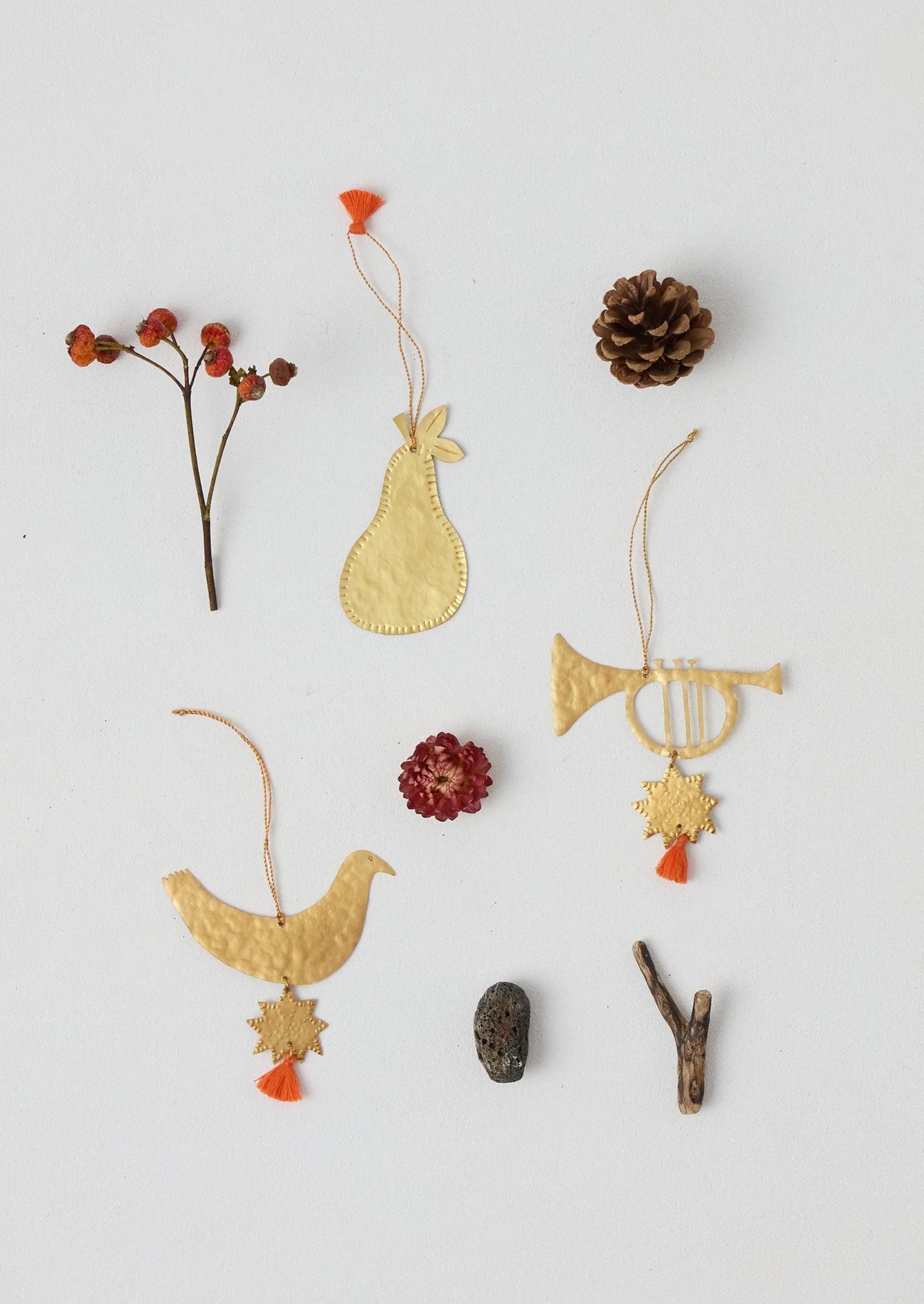
The strongest direction in ornament design right now is nature-inspired detail. Think flora, fauna, fish, fruits, mushrooms, woodland animals, leafy branches, citrus slices, berries, acorns, and birds. These motifs work because they feel seasonal without being trapped in one holiday cliché. A brass pear can hang on a Christmas tree, sit in a bowl on a mantel, or decorate a wrapped gift. A pressed-tin fish can look coastal, folk-inspired, or unexpectedly elegant depending on where it lands.
Nature ornaments also bridge modern and vintage styles. A shiny apple recalls old-world Christmas traditions, when trees were decorated with fruit, nuts, sweets, and paper decorations. A bird ornament can feel Victorian, Scandinavian, farmhouse, or contemporary. A mushroom can be whimsical without screaming “theme party in the forest.” That flexibility is why editors love them: they bring personality, but they do not boss the whole room around.
Editor’s Favorite Motifs
Fruit ornaments are especially versatile. Pears, lemons, figs, cherries, and apples bring color without relying on standard holiday tones. A tree filled with fruit shapes feels abundant and old-fashioned in the best way, like a still-life painting got invited to the party.
Birds and woodland creatures add movement. Place them toward the outer branches so they appear to perch naturally. Glass birds catch light beautifully, while felt, tin, or wood animals create a softer, handcrafted mood.
Fish and sea-life ornaments are the unexpected editors’ choice. They are playful, sculptural, and surprisingly elegant in brass or pressed metal. A fish ornament says, “Yes, this is festive, but I also own linen napkins and have opinions about olive oil.”
Materials Matter: Brass, Tin, Glass, Paper, Ceramic, and Felt
The best ornament collections usually include a mix of materials. This creates visual rhythm: shine next to matte, delicate next to sturdy, handmade next to polished. If every ornament has the same finish, a tree can look flat. If every ornament is shouting for attention, the tree can look like it lost a bet. Balance is the secret.
Brass and Pressed Tin
Metal ornaments are having a strong moment because they combine durability with charm. Brass brings warmth and a soft glow, especially near twinkle lights. Pressed tin feels nostalgic and folk-inspired, with just enough imperfection to avoid looking mass-produced. These ornaments are ideal for people who want a refined tree but still appreciate a little character.
Blown Glass
Blown-glass ornaments remain classics for a reason. They catch light, provide depth, and instantly make a tree feel special. The key is to use them thoughtfully. Place fragile glass pieces higher on the tree if you have pets, toddlers, or enthusiastic adults who gesture too much while telling stories.
Paper Ornaments
Folded-paper stars, honeycomb balls, paper fans, and cut-paper shapes offer elegance at a friendly price point. They are lightweight, easy to store, and ideal for filling gaps on larger trees. They also bring a handmade feeling without requiring anyone to discover their hidden talent for hot glue.
Ceramic and Porcelain
Ceramic ornaments add weight, texture, and a crafted quality. Small glazed houses, bells, fruits, stars, and animals look beautiful on simple trees with warm white lights. They also work well as gift toppers, place-card accents, or tiny decorations on a holiday table.
Felt, Wool, and Fabric
Soft ornaments are underrated. Felt animals, embroidered hearts, wool mushrooms, and stitched stars bring warmth and approachability. They are especially useful in homes where the tree needs to survive real life. A felt fox bouncing off the floor is a design inconvenience; a shattered glass fox is a holiday crime scene.
Vintage Ornaments: The Charm of the Slightly Imperfect
Vintage ornaments are popular because they have what new decorations often try to imitate: history. Shiny Brite-style glass balls, mercury-glass finishes, old ceramic trees, hand-painted figures, tinsel garlands, and embroidered holiday linens all bring texture and memory into a room. The tiny scratches, faded colors, and odd shapes are not flaws. They are proof that the ornament has attended more holidays than most of us have hosted successfully.
When shopping vintage, look for condition, but do not demand perfection. A little patina is part of the appeal. Check caps, hooks, paint loss, cracks, and loose glitter. For glass ornaments, avoid pieces with major structural damage unless you are collecting for display rather than active use. Estate sales, antique malls, thrift stores, local holiday markets, and carefully reviewed online shops can all be good sources.
The smartest way to style vintage ornaments is to mix them with modern pieces. Too many vintage items can make a tree feel like a museum display. Too many new pieces can feel sterile. Together, they create a collected look, which is design-speak for “I have taste and also a storage bin problem.”
How to Build an Edited Ornament Collection
An edited ornament collection does not happen by accident. It grows slowly. Start with a loose palette or theme, then allow personality to interrupt it. For example, you might choose brass, cream, forest green, and cranberry as your core colors. Then add a few wild cards: a tomato ornament, a tiny lobster, a glittering moon, or a handmade star from a family trip. The result feels intentional but not uptight.
Step 1: Choose a Mood
Before buying anything, decide how you want the tree to feel. Cozy and woodland? Elegant and metallic? Playful and colorful? Minimal and Scandinavian? Traditional and nostalgic? Your mood will guide materials, colors, and scale.
Step 2: Repeat Shapes
Repetition creates polish. If you love fruit ornaments, use several different fruits instead of one lonely pear. If you love stars, mix paper stars, metal stars, and small glass stars. Repeating a motif makes the tree look curated rather than random.
Step 3: Vary Scale
Large ornaments give structure. Medium ornaments fill the body. Tiny ornaments add detail near branch tips. A tree with only small ornaments can look busy. A tree with only large ornaments can look like it is wearing oversized jewelry. Mix scale for depth.
Step 4: Add the Memory Pieces Last
Heirloom ornaments deserve good placement. After the foundation is in place, add personal ornaments where they can be seen. The handmade snowman with one eye? Front and center. He has earned it.
Tree Styling Tips Editors Actually Use
Start with lights. Always. Lights are the architecture of the tree. Then add garland or ribbon if using it, followed by larger ornaments, medium ornaments, and finally delicate or sentimental pieces. Step back often. A tree decorated only from six inches away can develop a mysterious bald spot on one side.
Place reflective ornaments deeper inside the branches to bounce light outward. Hang matte or textured ornaments closer to the tips so their shapes are visible. Use heavier ornaments near stronger inner branches. If an ornament pulls a branch down like it just received bad news, move it.
Do not forget negative space. Every branch does not need an ornament. Empty spots allow special pieces to stand out. The goal is not to prove you own many ornaments. The goal is to make the tree feel alive, layered, and balanced.
Beyond the Tree: Where Else Ornaments Belong
One reason editors love small ornaments is that they are useful all over the house. Tie a tiny brass pear to a napkin with velvet ribbon. Hang glass birds from a chandelier. Place ceramic stars in a bowl with pinecones. Use paper ornaments in a window. Attach a small ornament to a wrapped gift so the package becomes part present, part decoration.
Ornaments also look beautiful on mantels, wreaths, garlands, cabinet knobs, wall hooks, and bookshelf branches. A few well-chosen pieces can make a room feel festive without turning every surface into Santa’s regional headquarters.
Buying Better: What Makes an Ornament Worth Keeping?
A good ornament does not have to be expensive. It should have at least one of three qualities: beauty, meaning, or durability. The best ones have all three. Before buying, ask: Will I still like this in five years? Does it work with what I already own? Is it well made enough to survive storage? Does it make me smile without explanation?
Handmade ornaments are often worth the investment because small variations make them feel human. Vintage pieces are worth collecting when they have charm and condition. Simple shapes in quality materials are usually safer than overly trendy novelty pieces, though every collection needs a little humor. One very specific ornament can become the family favorite precisely because it makes no sense.
Storage: The Un glamorous Secret to Beautiful Holidays
Ornament storage is not exciting, but neither is opening a box and discovering that your favorite glass bird is now modern art. Store fragile ornaments individually in tissue, cloth, or divided boxes. Keep original packaging when it is sturdy. Label bins by category: glass, handmade, kids’ ornaments, garlands, tree topper, and “mystery items I refuse to sort until next year.”
Avoid storing delicate ornaments in damp basements, hot attics, or anywhere that feels like a weather experiment. Paper, fabric, and vintage pieces are especially sensitive to moisture and temperature. Good storage protects not just objects, but future holiday joy.
Experience Notes: What Editors Learn After Years of Ornament Obsession
After enough years of unpacking, styling, rearranging, and repacking ornaments, you learn that the best decorations are rarely the ones that looked perfect in a product photo. The best ones are the pieces that keep starting conversations. A tiny brass fish may not seem like an obvious holiday hero until someone asks where it came from. A paper star may look almost too simple until it catches the light at dusk. A vintage glass bauble with a faded stripe may seem ordinary until you realize it gives the whole tree a softer, older soul.
The biggest lesson is that restraint is harder than abundance. It is easy to buy ornaments. It is much harder to choose. Every holiday market, museum shop, craft fair, and online collection seems to whisper, “Just one more.” The trouble is that “one more” becomes twelve more, and suddenly your tree has no visual plan, only enthusiasm. A good editor’s cut is about saying yes to the right pieces and no to the ones that are merely cute in the moment.
Another lesson: ornaments do not need to match your house perfectly. They need to belong to your life. A sleek modern home can handle a goofy felt squirrel. A traditional room can handle a neon pink glass mushroom. A minimalist tree can still hold one sentimental ornament that refuses to coordinate with anything except your heart. The tension between style and memory is where holiday decorating becomes interesting.
There is also joy in rotating ornaments. Not every piece needs to appear every year. Some years call for a quiet tree with paper stars and brass fruit. Other years need full sparkle, vintage glass, ribbon, and the entire cast of woodland creatures. Treat your ornament collection like a wardrobe. You do not wear every sweater at once, unless something has gone terribly wrong with laundry day.
Finally, the most valuable ornaments are often attached to ordinary moments. The little ceramic house bought during a rainy weekend trip. The apple ornament found in a small shop while killing time. The handmade felt bird from a friend who insisted, “It looked like you.” These pieces become emotional anchors. They remind us that decorating is not just about making a room look good for guests. It is about recognizing the passing of time, honoring small rituals, and giving beauty a place to hang.
So, yes, choose the shiny brass pear. Save the old glass ball. Hang the paper star. Keep the strange ornament that makes everyone laugh. That is the real editor’s cut: not the most expensive pieces, not the most fashionable pieces, but the ornaments that make the holiday feel unmistakably yours.
Conclusion: The Smallest Decorations Can Carry the Biggest Stories
The Editors’ Cut: Ornament Edition is really about thoughtful choosing. The best ornaments are small but mighty: they bring texture, memory, humor, and design intelligence into the holiday home. This year’s most interesting pieces lean into nature, craftsmanship, vintage charm, and materials with staying power. Brass fruit, pressed-tin fish, blown-glass birds, folded-paper stars, ceramic bells, and felt woodland creatures all prove that ornaments can be playful without being disposable.
Build slowly. Mix old with new. Let the tree breathe. Give sentimental ornaments pride of place. Store fragile pieces carefully. Above all, choose ornaments that you will be happy to meet again next year. Because when the box opens and the tissue paper comes off, the best ornaments do not just decorate the tree. They bring the holiday back to life.