When the power goes out, the refrigerator starts warming, the Wi-Fi disappears, and everyone suddenly remembers how much they dislike sitting in the dark. A dependable inverter generator can keep essential appliances, electronics, tools, and RV equipment operating without producing the window-rattling roar associated with many conventional portable generators.
The best inverter generators of 2025 combine stable electrical output, fuel-efficient engines, manageable noise levels, and useful safety features. Some are compact enough to carry with one hand. Others can run a refrigerator, freezer, lights, television, and several smaller devices at the same time. A few offer dual-fuel operation, remote starting, smartphone monitoring, or parallel connections for expanding capacity.
This guide compares seven leading models using published hands-on test results, official specifications, portability, outlet selection, fuel flexibility, runtime, noise, and backup-power usefulness. Prices and availability can change, so the goal is not to crown the cheapest machine on one particular Tuesday. It is to identify which generator makes the most sense for each type of user.
Best Inverter Generators of 2025 at a Glance
| Generator | Peak/Running Output | Fuel | Best For |
|---|---|---|---|
| Westinghouse iGen4500 | 4,500/3,700 watts | Gasoline | Best overall |
| Pulsar PG2200BiS | 2,200/1,800 watts on gasoline | Gasoline and propane | Best value |
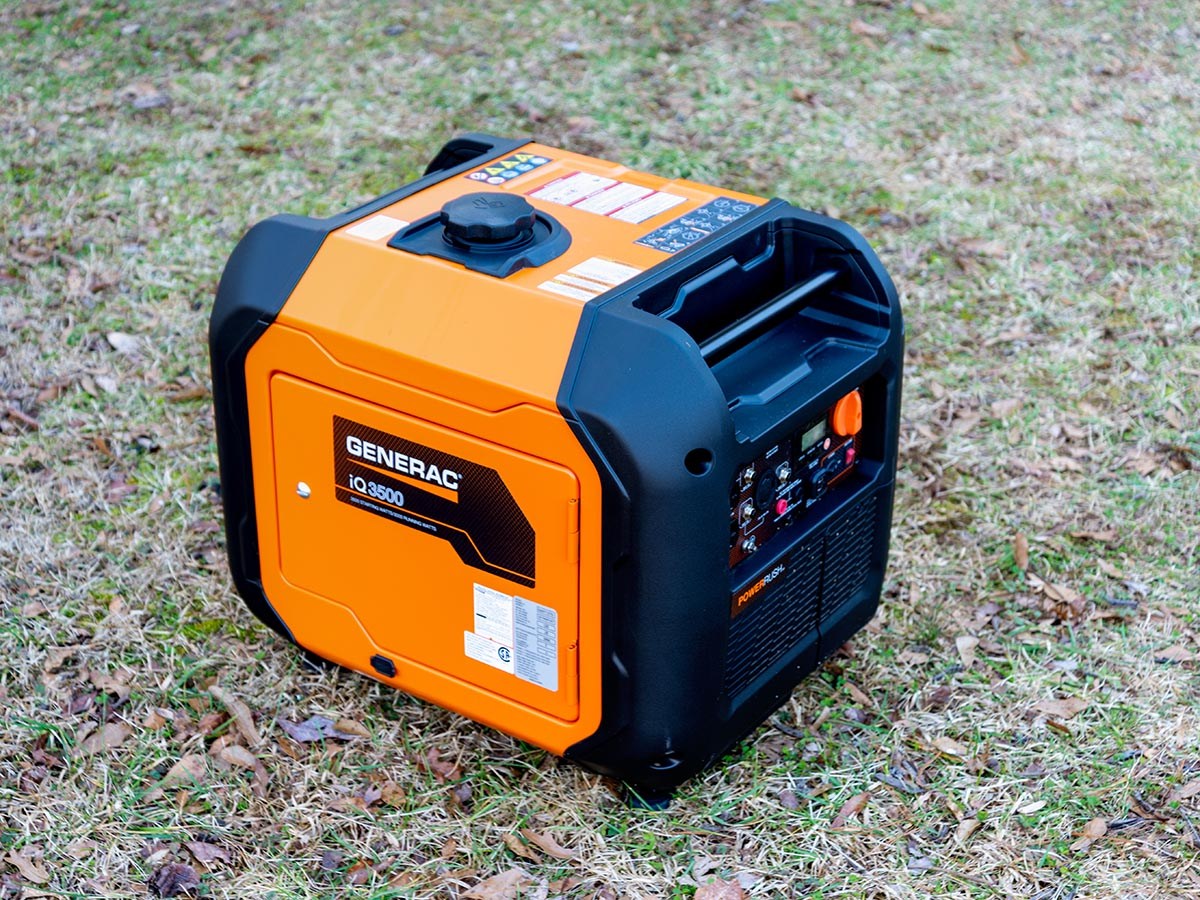
| Generac iQ3500 | 3,500/3,000 watts | Gasoline | Best controls |
| Ryobi RYi2322 | 2,300/1,800 watts | Gasoline | Best smart monitoring |
| Champion 201183 | 2,500/1,850 watts on gasoline | Gasoline and propane | Best lightweight model |
| Honda EU2200i | 2,200/1,800 watts | Gasoline | Best premium compact generator |
| DuroMax XP4500iH | 4,500/3,600 watts on gasoline | Gasoline and propane | Best high-output dual-fuel model |
How These Inverter Generators Were Evaluated
A useful generator must do more than produce an impressive number for the box. Starting watts matter, but so do sustained output, fuel consumption, starting convenience, outlet configuration, portability, and the generator’s behavior when appliances cycle on and off.
Published test findings were reviewed alongside official specifications. Particular attention was given to whether a generator could handle realistic combinations such as a refrigerator, lights, internet equipment, battery chargers, a television, or selected power tools. Noise, control layout, wheel design, carrying handles, carbon-monoxide shutoff systems, and maintenance accessibility were also considered.
No portable generator is ideal for every situation. A 39-pound camping model is wonderfully easy to lift but cannot run the same equipment as a 130-pound, 4,500-watt machine. The rankings therefore emphasize fitness for purpose rather than pretending that one generator should rule them all like a gasoline-powered emperor.
1. Westinghouse iGen4500: Best Overall
Quiet, capable, and unusually convenient
The Westinghouse iGen4500 hits a practical sweet spot between compact recreational generators and enormous open-frame backup machines. It produces 4,500 peak watts and 3,700 running watts, giving it enough capacity for several household essentials, RV equipment, or demanding tools without becoming completely unreasonable to move.
Published hands-on testing found it straightforward to set up and capable of powering a travel trailer, saws, a grinder, and battery-charging equipment. Its enclosed body helps reduce the harsh mechanical sound common to open-frame generators, while an efficiency mode adjusts engine speed when electrical demand is low.
The controls are a major advantage. Owners get recoil, electric, and remote starting, along with a digital display that tracks fuel level, voltage, power output, operating hours, and estimated runtime. A telescoping handle and wheels help manage its roughly 105-pound dry weight.
The iGen4500 also includes an RV-ready 30-amp outlet, standard household receptacles, and USB charging ports. Its gasoline-only design is less flexible than a dual-fuel generator, but its combination of power, runtime, quiet operation, and easy controls makes it the strongest all-around choice.
Best for: Homeowners, RV owners, and DIY users who want substantial output without buying a full-size conventional generator.
2. Pulsar PG2200BiS: Best Value
Affordable dual-fuel backup for basic essentials
The Pulsar PG2200BiS is a compact dual-fuel inverter generator that produces 2,200 peak watts and 1,800 running watts on gasoline. Output drops slightly on propane, but the ability to use either fuel is valuable during emergencies, when gasoline stations may be closed, crowded, or temporarily transformed into scenes from an extremely low-budget disaster movie.
At approximately 46.5 pounds, the Pulsar is portable enough for camping, tailgating, or moving between storage and a safe outdoor operating area. Its 1.18-gallon gasoline tank can provide up to eight hours of runtime at 50 percent load. The generator includes two household outlets, a USB port, low-oil shutdown, and parallel capability.
The Pulsar is not intended to operate an entire collection of high-draw appliances. Instead, it is best used for a refrigerator, selected lights, communications equipment, small electronics, or one moderate appliance at a time. Owners must also note that this model does not include an automatic carbon-monoxide shutdown system, making proper placement especially important.
Best for: Budget-conscious shoppers who want flexible fuel options for camping or light emergency power.
3. Generac iQ3500: Best Controls
An easy-starting generator with excellent information displays
The Generac iQ3500 delivers 3,500 starting watts and 3,000 running watts in a sturdy enclosed design. It offers more capacity than most suitcase-style generators while remaining quieter and easier to live with than many traditional open-frame alternatives.
Its PowerDial consolidates starting, running, and stopping functions into one control. An electric starter reduces the need for repeated cord pulling, while a recoil starter provides backup if the battery is weak. The digital screen displays wattage, fuel level, remaining runtime, operating hours, and generator status.
The iQ3500 includes standard household outlets, USB charging, and a 30-amp twist-lock receptacle. Its economy setting reduces engine speed under lighter loads, while a higher-response setting prepares the generator for equipment with demanding startup requirements. Generac’s COsense system can stop the engine when it detects a dangerous accumulation of carbon monoxide.
The main drawback is portability. Although marketed as portable, it is a heavy machine without the convenient integrated wheel system found on some competitors. Two people may be needed to load it into a truck or move it over awkward terrain.
Best for: Buyers who prioritize an electric start, clear controls, and detailed load information.
4. Ryobi RYi2322: Best Smart Monitoring
Bluetooth control for users who enjoy actual information
Generators traditionally communicate through engine noise, warning lights, and the occasional smell that suggests someone forgot the fuel valve. The Ryobi RYi2322 takes a more modern approach with Bluetooth connectivity and the GenControl app.
The app and onboard LCD screen can display power consumption, remaining runtime, and fuel level. This information makes it easier to manage loads without repeatedly walking outside to inspect the control panel. The generator supplies 2,300 starting watts and 1,800 running watts, making it appropriate for refrigerators, electronics, lights, fans, and other moderate loads.
Auto-idle technology reduces fuel consumption when demand falls, providing up to 10.3 hours of runtime at a 25 percent load. Extended handles and rear wheels improve mobility, while parallel capability allows two compatible units to be combined when additional power is needed.
An automatic carbon-monoxide shutoff adds protection, although it never replaces safe outdoor operation. At this output level, users must still manage appliance startup surges carefully.
Best for: Tech-friendly users who want remote load and runtime monitoring.
5. Champion 201183 2500-Watt Dual Fuel: Best Lightweight Model
Easy to carry and remarkably flexible
Weighing about 39 pounds, the Champion 201183 is one of the most portable inverter generators in its output class. It produces 2,500 starting watts and 1,850 running watts on gasoline. On propane, it provides 2,500 starting watts and 1,665 running watts.
Champion rates the generator at 53 decibels from 23 feet, which is quiet enough for campgrounds, tailgating, and residential backup use when properly positioned. Its gasoline tank can provide up to 11.5 hours at a 25 percent load, while a 20-pound propane cylinder can extend runtime dramatically under similar conditions.
The generator includes a household duplex outlet, a regulated 12-volt outlet, a USB adapter, economy mode, low-oil shutdown, and Champion’s CO Shield automatic carbon-monoxide shutoff. It is also parallel-ready, enabling owners to connect a second compatible Champion inverter through an optional kit.
The limited output means this is not a central-air-conditioner machine. It is, however, a very practical choice for keeping food cold, charging electronics, running lights, and handling smaller recreational loads.
Best for: Campers, apartment residents with appropriate outdoor space, and homeowners who cannot comfortably lift a 100-pound generator.
6. Honda EU2200i: Best Premium Compact Generator
Excellent refinement in a small package
The Honda EU2200i has long been a benchmark among compact inverter generators. It produces 2,200 maximum watts and 1,800 rated watts from Honda’s 121cc GXR120 engine. At just over 47 pounds, it is easy to carry compared with higher-capacity enclosed models.
Honda rates the EU2200i at 48 decibels under a quarter load and 57 decibels at rated output. Runtime ranges from approximately 3.2 hours at rated load to 8.1 hours at a quarter load from its 0.95-gallon tank.
The EU2200i uses Honda’s Eco Throttle system to match engine speed to electrical demand. It also supports Bluetooth monitoring through the Honda My Generator app and includes CO-Minder, which can shut the engine down if carbon-monoxide levels become dangerous around the machine.
The largest disadvantage is price. Less expensive generators can offer similar published wattage and may include dual-fuel operation. Buyers are paying for a refined engine, low noise, compact construction, established support, and a strong reputation for dependable operation.
Best for: Shoppers willing to pay more for a compact, quiet, and polished generator.
7. DuroMax XP4500iH: Best High-Output Dual-Fuel Model
Serious backup capacity with gasoline or propane
The DuroMax XP4500iH provides 4,500 peak watts and 3,600 running watts on gasoline. Propane output is slightly lower, but dual-fuel operation gives homeowners an important second option when fuel availability becomes unpredictable.
Its enclosed inverter design produces stable electricity suitable for modern appliances and electronics. The generator also offers remote starting, a digital control center, low-oil shutdown, carbon-monoxide detection, and an outlet for use with a compatible automatic transfer system.
The XP4500iH can operate refrigerators, freezers, lights, entertainment equipment, tools, and selected RV appliances, provided total running and startup loads remain within its capacity. Owners can connect two compatible units with a parallel kit for additional output.
At roughly 130 pounds, this is not a generator most people will casually carry across the yard while holding a coffee. Wheels and handles make movement manageable on firm surfaces, but loading it into a vehicle may require help.
Best for: Homeowners and RV users who need near-4,000-watt running capacity with dual-fuel flexibility.
How to Choose the Right Inverter Generator
Calculate running and starting wattage
List every appliance you expect to operate simultaneously. Add their running wattages, then account for the largest startup surge among motor-driven devices such as refrigerators, pumps, compressors, and air conditioners. Use the labels or manuals for your actual equipment rather than relying solely on generic online estimates.
A generator should not spend hours operating at its absolute maximum. Leaving additional capacity helps accommodate startup surges, reduces overload risk, and gives you room to connect one more light without beginning a household negotiation.
Decide whether dual fuel is worth it
Gasoline generally produces the generator’s highest rated output and is widely available. However, it can degrade during long storage and may gum up fuel-system components. Propane stores longer and avoids many stale-gas problems, but it usually produces slightly less power.
Dual-fuel generators provide useful flexibility during extended outages. Owners can keep propane on hand for storage and still use gasoline when maximum output is required.
Examine outlets, not just watts
A generator may have enough total output but lack the receptacle needed for an RV, transfer switch, or heavy-duty extension setup. Check for standard household outlets, 30-amp receptacles, USB ports, and parallel connections before purchasing.
Consider weight and storage
Compact generators under 50 pounds can usually be carried by one adult. Larger enclosed models often require wheels, ramps, or two-person lifting. Measure the intended storage area and plan how the generator will reach its outdoor operating position during an outage.
Treat carbon monoxide as the main safety issue
Never run a fuel-burning generator in a home, garage, basement, crawl space, shed, porch, or other enclosed or partially enclosed location. Operate it outdoors at least 20 feet from occupied buildings when possible, with the exhaust directed away from doors, windows, and vents. Use working carbon-monoxide alarms inside the home.
A built-in CO shutoff is an additional safeguard, not permission to operate the machine too close to the house. Refuel only after shutting the engine off and allowing it to cool.
Do not backfeed a wall outlet
Never connect a portable generator to a home by plugging it into an ordinary receptacle. This dangerous practice can energize utility lines, electrocute workers, start fires, and damage equipment. A home connection requires a properly installed transfer switch or approved interlock system. Consult a licensed electrician and follow local codes.
Experience Notes: What Using an Inverter Generator Actually Feels Like
The numbers on a specification sheet become much more meaningful when the house is dark and the refrigerator has begun its silent countdown toward room temperature. Published testing and common ownership scenarios reveal that generator satisfaction depends as much on preparation as on maximum wattage.
The first startup should happen before the storm
A surprising number of new owners leave a generator boxed until the electricity fails. That is the worst possible time to discover that the crankcase needs oil, the propane connection is unfamiliar, or the extension cord is six feet shorter than the safe operating distance.
A better experience begins with a practice run. Add the correct oil, review the controls, start the generator outdoors, and connect a simple load. Learn how the economy setting works and confirm that every necessary cable reaches its destination without crossing a driveway or sitting in water.
Quiet is relative, but inverter models are easier to tolerate
An inverter generator is not silent. You will hear it, especially when a refrigerator compressor starts or a tool demands a sudden burst of power. However, enclosed models generally produce a smoother, less aggressive sound than conventional open-frame machines.
That difference matters during a multiday outage. A generator that fades into the background is easier on the household and less likely to inspire angry looks from neighbors. Positioning also affects perceived noise. Distance, solid barriers that do not restrict ventilation, and directing the exhaust away from the home can make the sound far less intrusive.
Load management quickly becomes a household skill
Owners of 2,000- to 2,500-watt generators often develop a simple routine: keep the refrigerator and essential electronics connected, then temporarily unplug one device before operating a microwave, coffee maker, or other high-draw appliance. It is not glamorous, but neither is eating an entire thawing freezer in one afternoon.
Larger 3,500- to 4,500-watt models require less juggling, yet they still have limits. Watching a digital load meter teaches users how dramatically demand changes when motors and heating elements switch on.
Propane is wonderfully boring
For emergency storage, boring is a compliment. Propane does not create the same stale-fuel concerns as gasoline, and connecting a cylinder can be cleaner than pouring fuel from a can in poor weather. The tradeoff is reduced output and potentially shorter runtime under heavy demand.
Many dual-fuel owners reserve propane for routine testing and moderate loads, keeping gasoline available when maximum power is necessary. Whatever the strategy, fuel must be stored legally and safely, away from ignition sources.
Maintenance determines whether the generator is ready next time
After an outage, it is tempting to roll the machine into storage and celebrate the return of air conditioning. A better routine includes cooling the engine, checking the oil, cleaning debris, following the manufacturer’s fuel-storage instructions, and recording operating hours.
Electric-start batteries may need periodic charging. Gasoline systems may require stabilizer, draining, or a manufacturer-recommended shutdown procedure. Running the generator periodically under load can expose problems before the next emergency. A generator that starts every few months is far more reassuring than one that has spent four years becoming an expensive garage ornament.
Final Verdict
The Westinghouse iGen4500 is the best inverter generator of 2025 for most buyers because it combines useful home-backup output, quiet operation, long runtime, remote starting, an RV-ready outlet, and manageable mobility. It is powerful enough to operate several essentials without becoming as bulky as a full-size open-frame generator.
The Pulsar PG2200BiS is the value choice for lighter loads, while the Champion 201183 is ideal when low weight and dual-fuel operation matter most. The Honda EU2200i remains the premium compact option, and the Ryobi RYi2322 offers the most convenient smart monitoring. Buyers who need more power should consider the Generac iQ3500 or dual-fuel DuroMax XP4500iH.
Whichever generator you choose, calculate your electrical loads, prepare suitable cords, arrange safe fuel storage, and practice operating the machine before severe weather arrives. Backup power is most useful when the generator starts smoothly, the cables fit, and nobody is reading the manual by flashlight.