Note: This article is written as a humorous, first-person pet story while using real cat behavior, enrichment, safety, and pet photography principles from reputable animal-care and photography resources.
The Evidence Is Fur-Covered, Fast, and Slightly Chaotic
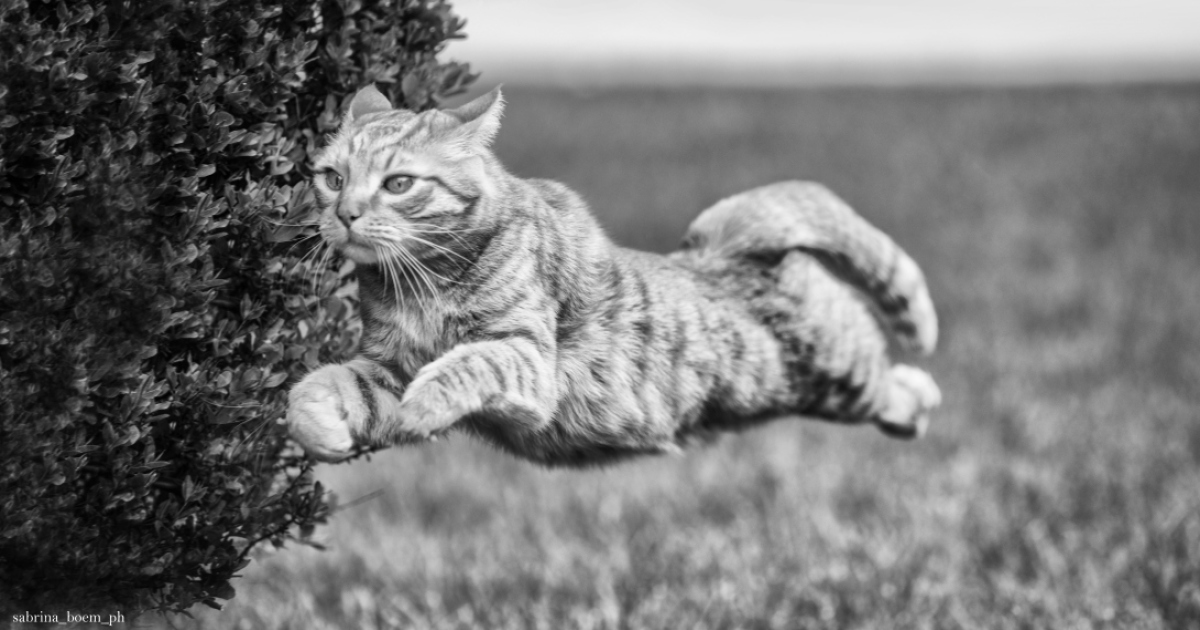
I did not set out to become the official historian of airborne cats. I was simply trying to take a nice photo of my cat Ricky looking dignified on the couch. You know the kind: soft light, sleepy eyes, whiskers arranged like an expensive paintbrush. Instead, Ricky launched himself across the living room like a tiny gray missile with opinions, and my camera captured the exact moment all four paws left the earth.
That was the beginning of the case file. Since then, I have collected enough flying cat photos to convince at least three friends, one neighbor, and possibly Ricky himself that he has access to a private aviation license. He jumps from chair to bookshelf, from floor to windowsill, from “perfectly normal house pet” to “low-altitude superhero” in less time than it takes me to say, “Please don’t knock over the lamp.”
Of course, Ricky cannot literally fly. Cats do not have wings, jet engines, or the emotional stability required for commercial aviation. But cats are extraordinary jumpers, climbers, sprinters, and midair body-adjusters. Their athletic ability, combined with good timing and a camera ready at the right second, can make an ordinary leap look like a supernatural event. And honestly, when a cat is floating across your hallway with his tail acting like a furry rudder, “ordinary” feels like the wrong word.
Why Cats Look Like They Can Fly
Cats are built for bursts of motion. Their bodies are flexible, their hind legs are powerful, and their balance is impressive enough to make a yoga instructor quietly reconsider life choices. When Ricky crouches before a jump, he does not look dramatic by accident. That little wiggle, shoulder dip, and focused stare are part of the launch sequence.
Powerful Hind Legs: Ricky’s Secret Engines
A cat’s back legs provide the main force for jumping. Before Ricky leaves the ground, he compresses himself like a spring. His hips lower, his paws grip the floor, and his eyes lock on the destination. Thenboom. He is airborne. The result is a photo where his legs are stretched behind him, his front paws are reaching forward, and his face says, “I meant to do this,” even when he clearly did not.
This is why cat jumping photos are so delightful. The camera freezes a movement too quick for the human eye to fully appreciate. In real life, Ricky is on the floor, then he is on the table, then I am explaining why no one should drink from that glass anymore. In a photo, however, the middle moment becomes visible: the leap, the twist, the little floating loaf of fur defying physics with confidence.
The Tail: A Built-In Balance Tool
Ricky’s tail deserves its own flight crew badge. During a jump, a cat’s tail helps with balance and body positioning. When Ricky changes direction midair, his tail often curves, lifts, or flicks like a steering device. In photos, this makes him look even more like a creature designed for flight. His front paws become landing gear. His ears become radar. His tail becomes a fuzzy stabilizer. The only thing missing is a tiny helmet, and frankly, he would refuse to wear it.
The Righting Reflex: Cat Acrobatics in Action
Cats are famous for their ability to twist their bodies in the air. This does not mean cats are invincible, and it definitely does not mean they should be allowed near unsafe windows, balconies, or high ledges. But it does explain why Ricky can turn a clumsy leap into a strangely elegant landing. He may begin as a potato with paws, but somewhere between takeoff and touchdown, he becomes a gymnast.
The Photo Collection That Started the Legend
The first “Ricky can fly” photo was accidental. The second was suspicious. By the fifth, I began naming them like scientific exhibits.
Exhibit A: The Sofa Launch
In this photo, Ricky is suspended between the arm of the couch and a laundry basket. His paws are tucked, his eyes are wide, and his body is shaped like a furry comma. The laundry basket was empty, which means he had no practical reason to jump into it. But cats do not need practical reasons. They need vibes, momentum, and a destination that makes humans nervous.
Exhibit B: The Hallway Hover
This is the photo that made a friend say, “Wait, did you Photoshop that?” I did not. Ricky had sprinted down the hallway after a toy mouse, bounced off a rug, and lifted into the air with such commitment that the photo captured him completely horizontal. His paws were not touching anything. His expression was calm. My expression, not pictured, was probably concern mixed with admiration.
Exhibit C: The Bookshelf Incident
Ricky loves vertical space. Many cats do. High places let cats observe their environment, rest, and feel secure. Ricky, however, treats the bookshelf less like furniture and more like a mountain that insulted his family. In one photo, he is halfway between the floor and the second shelf, front paws extended, back legs trailing, ears forward, dignity intact. Two seconds later, dignity became a paperback avalanche.
How to Take Flying Cat Photos Without Stressing Your Cat
Getting great cat photography is not about forcing a cat to perform. It is about noticing what your cat already loves to do and being ready when the magic happens. Ricky likes chasing feather toys, leaping onto soft furniture, and performing dramatic exits when I open a drawer. That gives me plenty of opportunities without turning the living room into a circus.
Use Play, Not Pressure
The best flying cat photos happen during natural play. A wand toy, a soft ball, or a crinkly toy can encourage healthy movement. The key is to let the cat choose the level of participation. If Ricky is in launch mode, he will chase, jump, pounce, and spin. If Ricky is not in the mood, he becomes a decorative throw pillow with judgmental eyes. Both versions are valid.
Keep the Environment Safe
Safety matters more than the photo. A great picture is not worth a fall, injury, or broken object that will forever be known as “the vase Ricky defeated.” Keep play areas clear of sharp corners, unstable furniture, open windows, and breakable items. Cats can be agile, but they are not immune to accidents. If your cat loves jumping, provide sturdy perches, cat trees, scratchers, and landing spots with good traction.
Use Good Light and Fast Timing
Action photos need light. A bright room or natural window light helps reduce blur. Phone cameras can work surprisingly well, especially with burst mode. Instead of trying to take one perfect picture, take a rapid series and review them later. Somewhere between “empty hallway” and “cat already gone,” there may be one glorious frame where your cat appears to be levitating like a furry wizard.
Reward the Landing, Not the Chaos
If Ricky lands safely and plays politely, he gets praise or a small treat. If he lands on the counter and looks proud of himself, I do not reward that specific choice. Cats learn from patterns. Positive reinforcement can encourage the behaviors you want, such as using a cat tree, perch, or approved jumping zone. Ricky has learned that the cat tree is allowed. He has also learned that the kitchen counter is not allowed. Whether he respects that lesson depends on the presence of chicken.
What Ricky’s “Flying” Says About Cat Behavior
Ricky’s airborne adventures are funny, but they also reveal something important: cats need enrichment. Indoor cats can live happy, safe lives, but they still need outlets for climbing, scratching, chasing, exploring, and hunting-style play. Without those outlets, a cat may invent entertainment, and the entertainment may involve your curtains.
Cats Need Vertical Territory
To Ricky, the floor is merely a suggestion. He prefers the back of the sofa, the windowsill, the top of the cat tree, and one specific chair that apparently belongs to him under international law. Vertical space helps cats feel secure because it gives them a place to observe the room. It also offers exercise and mental stimulation. A sturdy cat tree, wall shelves designed for cats, or a safe window perch can turn random chaos into approved adventure.
Play Mimics Hunting
When Ricky chases a toy, he is not just being silly. Cats are natural hunters, and play allows them to practice stalking, chasing, pouncing, and catching. That is why toys that move unpredictably often get the best reaction. A feather wand that darts behind a chair is more exciting than a toy lying motionless on the floor. The goal is not to exhaust your cat into becoming a couch cushion. The goal is to give him satisfying, healthy play sessions.
Some Cats Are Natural Athletes
Not every cat is Ricky. Some cats are careful climbers. Some are senior sweethearts who prefer ramps and soft beds. Some are kittens with the survival instincts of popcorn. A cat’s age, body condition, health, and personality all influence how much jumping is safe and enjoyable. If a cat suddenly stops jumping, hesitates before climbing, limps, or seems uncomfortable, a veterinarian should check for pain or health issues.
Myth vs. Reality: Does Ricky Actually Fly?
Let us be serious for one paragraph, which is difficult because Ricky is currently sitting beside me with one paw in a shoe. No, Ricky does not fly. He jumps. He climbs. He twists. He lands. My photos capture the middle of that process, and because the middle happens so quickly, it looks magical.
But that is the charm of pet photography. A photograph can reveal what daily life hides. We think we know our pets because we feed them, clean up after them, and negotiate with them over blanket ownership. Then a camera catches a moment we could never fully see: the paws off the ground, the whiskers forward, the body stretched in full commitment. Suddenly the ordinary cat becomes a superhero.
How Ricky Became the Household Air Force
After I showed the photos to friends, Ricky’s reputation grew. Someone called him “Air Ricky.” Someone else suggested a cape. One person asked if he could deliver packages faster than standard shipping. I told them Ricky would absolutely lose the package under the couch and demand lunch.
The funny thing is that Ricky has no idea he is famous in a very small, extremely biased circle. He is not jumping for applause. He is jumping because the toy moved, the shelf existed, the blanket looked suspicious, or the room needed a little drama. Cats live with a kind of confidence humans can only admire from a safe distance. Ricky does not worry about looking ridiculous. That is fortunate, because some of the photos show him with one ear folded, eyes enormous, and paws arranged like he just remembered he left the stove on.
Tips for Living With a Cat Who Thinks Gravity Is Optional
If your cat is also a jumper, climber, or part-time living room aircraft, the best approach is not to stop every leap. Instead, guide the energy into safe places.
Create Approved Launch Zones
Give your cat places where jumping is allowed. A stable cat tree, padded bench, or sturdy perch can become the preferred runway. Ricky’s cat tree sits near a window, which means he can leap, climb, and supervise birds without attempting to use the curtains as an elevator.
Protect Windows and Balconies
Even agile cats can fall. Secure screens, closed windows, and safe barriers are essential, especially in apartments or multi-story homes. A cat distracted by a bird or insect may misjudge a ledge. Ricky’s “flight training” happens indoors, close to the ground, with soft landing areasnot near open windows or balcony rails.
Use Short Play Sessions
Cats often enjoy several brief play sessions more than one marathon event. Five to ten minutes of active play can be enough to satisfy the hunter inside your cat. Ricky prefers dramatic bursts: sprint, leap, attack toy, freeze, walk away as if the meeting is over.
Know When to Stop
If your cat is panting, hiding, limping, growling, or losing interest, stop. Play should be fun, not forced. Ricky’s best photos happen when he is excited and comfortable. The moment he decides the session is finished, he becomes an independent contractor.
The Joy of Seeing Your Cat Differently
The real reason I love these photos is not because they “prove” Ricky can fly. They prove that the animal sleeping in a sunbeam for six hours also contains a secret acrobat. They prove that daily life with a cat is full of tiny events worth noticing. A jump from couch to chair becomes a story. A blurry tail becomes evidence. A ridiculous midair face becomes family history.
Pet ownership is full of routines: feeding, grooming, cleaning, vet visits, litter boxes, and the ancient household tradition of asking, “Why is this wet?” But inside those routines are moments of wonder. Ricky flying across the room is one of mine. He reminds me that joy does not always arrive neatly. Sometimes it launches from behind the coffee table with airplane ears and lands in a basket of clean laundry.
Extra Field Notes: My Experience With Ricky, the Cat Who “Can Fly”
The first time I seriously believed I had photographic evidence of Ricky’s flight, I was sitting on the floor trying to take a simple picture for a friend. Ricky had been lounging nearby, pretending not to care about the feather toy in my hand. This is one of his favorite strategies. He acts bored, looks away, blinks slowly, and then attacks with the timing of a tiny furry ninja. I moved the toy once, barely a flick, and Ricky launched himself over my leg. The camera clicked at the exact second his paws were tucked beneath him. When I looked at the image, he was not jumping. He was floating. His face had the calm seriousness of a pilot announcing mild turbulence.
Since then, I have learned to recognize the pre-flight checklist. First comes the stare. Ricky lowers his head and locks onto the target. Then comes the wiggle, a small adjustment of the back paws that looks funny but clearly serves an athletic purpose. Next, the tail rises. If the tail makes a question mark shape, take cover. Something is about to happen. Finally, he springs forward with complete faith in his own calculations. The calculations are usually correct. Usually.
One of my favorite Ricky memories happened during a rainy afternoon when the house was quiet. I tossed a soft toy down the hallway, expecting a lazy chase. Ricky exploded after it, bounced once, and flew sideways past the doorframe. I managed to capture him midair with his paws spread wide and his ears flattened by speed. The photo looks like he is swimming through the air. In reality, he landed on the rug, grabbed the toy, and immediately walked away like a celebrity avoiding paparazzi.
Another time, Ricky attempted what I call the Great Cushion Crossing. Two couch cushions had separated just enough to create a gap. Instead of walking around the gap like a normal creature, Ricky decided it was a canyon. He crouched, judged the distance, and jumped with heroic seriousness. The gap was about four inches wide. The photo makes it look like he is crossing the Grand Canyon to save a village. That is the magic of cat photography: small domestic moments become epic when you catch the right frame.
Living with Ricky has also made me more thoughtful about my home. I keep shelves stable, move breakable objects away from his favorite routes, and make sure he has better places to climb than the furniture I actually care about. I rotate toys so he does not get bored, and I end play sessions with a “catch” so he gets the satisfaction of winning. He is not flying because I trained him to perform. He is flying because he is happy, curious, playful, and slightly dramatic. The photos are just souvenirs from the airspace he already believed he owned.
Conclusion: Ricky May Not Have Wings, But He Has Proof
So, do I have photos that prove my cat Ricky can fly? Scientifically, no. Emotionally, absolutely. The pictures show a cat doing what cats do best: turning ordinary rooms into obstacle courses, ordinary toys into prey, and ordinary humans into breathless photographers yelling, “Did anyone else see that?”
Ricky’s flying photos are funny because they exaggerate the truth. Cats are athletic, curious, and wonderfully unpredictable. With safe play, good enrichment, and a camera ready at the right moment, any cat owner might discover that their sleepy little companion has a secret second career as an airborne legend. Ricky cannot fly in the strict biological sense, but in the world of pet stories, family jokes, and perfectly timed pictures, he has already cleared the runway.