Some table settings announce themselves with polished silver, towering flowers, and enough crystal to make guests afraid of moving their elbows. South Street Linen took a more relaxed route. Its early tabletop collection relied on natural flax, hand-worked patterns, painterly color, and the quietly confident style associated with coastal Maine.
Created by three Portland artists, the collection transformed practical placemats, napkins, and runners into usable pieces of art. The original home goods are now part of the company’s history rather than its primary product line, but their design lessons remain wonderfully current: choose honest materials, allow small imperfections, and never make a dinner table look as though it is awaiting a museum inspector.
The Artists Behind South Street Linen
South Street Linen grew from the friendship of Portland artists Lynn Krauss, Mary Ruth Hedstrom, and Jane Ryan. The three met regularly to critique one another’s artwork, bringing together backgrounds in painting, printmaking, composition, and color. What began as a creative conversation eventually escaped the canvas and landed, quite happily, on linen.
The origin story has the appealing spontaneity of a good Maine kitchen gathering. Krauss noticed a linen scarf worn by Hedstrom and mentioned that she wanted to print on textiles. Hedstrom was interested in dyeing linen, and Ryan soon joined them with a sewing machine. They dyed fabric, assembled pieces, and applied woodblock patterns, producing roughly 50 scarves for an early launch event. The scarves nearly sold out, providing a persuasive hint that their experiment might have legsor at least beautifully draped shoulders.
From scarves, the trio expanded into runners, placemats, napkins, pillows, and aprons. These early home goods allowed their fine-art sensibilities to enter everyday domestic life. A napkin was no longer merely something placed beside a fork; it became a compact study in line, repetition, negative space, and color.
Three Sensibilities, One Recognizable Look
The founders did not approach design from identical viewpoints. Contemporary profiles described Hedstrom as inclined toward minimalism, Ryan as a fan of bolder color, and Krauss as comfortable somewhere between the two. That creative tension helped the collection avoid both extremes: the designs were neither blank beige rectangles nor pattern explosions requiring protective eyewear.
Their references included worn ephemera, architectural geometry, Japanese design, and Scandinavian pattern. Those influences appeared through irregular dots, restrained blocks of color, graphic borders, and motifs that felt handmade without looking unfinished. The result was recognizably modern but warmer than strict minimalism.
The Original South Street Linen Tabletop Collection
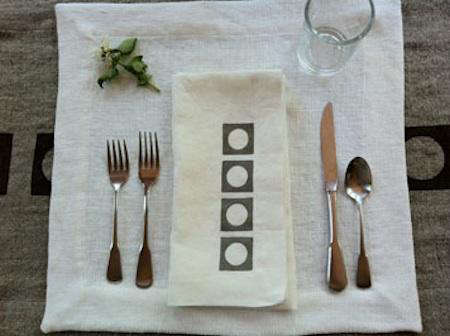
A 2011 Remodelista feature introduced South Street Linen’s tabletop pieces to a wider design audience. Among the highlighted products were 17-by-16-inch linen placemats in natural, ivory, and a lively green called kiwi. At the time, individual placemats were listed for $24. Sets of four ivory linen napkins, offered in several patterns, were listed for $89. These are historical details and prices, not a current retail catalog.
The measurements reveal something important about the collection. These were generous, visibly substantial placemats rather than narrow decorative strips that leave half the dinnerware stranded on bare wood. Their near-square proportions created room for a plate, flatware, and glass while giving the printed fabric enough surface area to make an artistic statement.
Natural, Ivory, and Kiwi
The palette was compact but flexible. Natural linen supplied earthy warmth and visible texture. Ivory offered a cleaner, lighter background without the intimidating formality of brilliant white. Kiwi added a fresh accent that could energize a neutral table without making it look as though a lime had exploded during meal preparation.
Used together, these colors demonstrated an effective tabletop strategy: begin with two quiet shades and introduce one more energetic tone. A natural placemat, ivory napkin, and green printed detail can create depth without requiring a matching dinnerware set, coordinated centerpiece, and ceremonial approval from a decorating committee.
Patterns That Behaved Like Artwork
Because the founders were visual artists, pattern was treated as composition rather than surface filler. Dots might shift slightly rather than forming mechanically perfect rows. A border could feel architectural while retaining the evidence of the human hand. The designs used repetition, but they did not become monotonous.
This balance is one reason artist-designed table linens age well aesthetically. A seasonal novelty print may feel charming for three weeks and oddly specific for the remaining 49. Abstract marks, geometric forms, and natural colors are easier to combine with changing dishes, flowers, and food.
Why Linen Works So Well on the Table
Linen is made from flax fibers and is valued for strength, absorbency, quick drying, and a natural soft sheen. It also wrinkles readily, a characteristic that inspires either affection or a sudden desire to locate an iron. Textile guidance from the University of Georgia notes that linen is durable and highly effective at wicking moisture, while repeated hard creasing and unsuitable care can weaken the fibers.
For tabletop use, those qualities are practical. An absorbent napkin performs its actual job, which is more useful than merely looking elegant beside the salad fork. Quick drying is helpful after laundering, while the fabric’s strength supports repeated use. Linen also develops character over time, becoming softer and more relaxed rather than looking exhausted after its third dinner.
The Wrinkles Are Part of the Point
A South Street Linen table does not need to resemble a hotel ballroom five minutes before a banquet. Light creasing contributes to the casual, tactile quality of the material. The fabric catches light unevenly, creating subtle tonal changes that make a simple neutral cloth look more interesting.
For a crisper setting, linen can be pressed while slightly damp. For an informal lunch, gentle wrinkles can remain. The distinction is important: relaxed linen looks intentional when the table is thoughtfully arranged. A crumpled heap under a soup bowl looks less like coastal minimalism and more like laundry day lost a fight.
How Portland and Coastal Maine Shaped the Aesthetic
South Street Linen’s identity is closely tied to Maine’s community of artists, stitchers, printers, and small manufacturers. Profiles of the company describe collaborations with local contract seamstresses and a master printer on Vinalhaven, while fabrics were sourced from established Irish and Lithuanian mills capable of producing the weights, colors, and textures required by the designers.
Maine’s textile history provides a meaningful backdrop. Although much of the state’s traditional mill infrastructure declined during the twentieth century, contemporary businesses, training programs, designers, and specialty manufacturers continue to support textile production. A recent state industry profile identifies active Maine companies working in apparel, woven materials, technical textiles, footwear, and workforce development.
The tabletop collection expressed that regional character without covering everything in lobsters, anchors, and miniature lighthouses. Its Maine identity came through more subtly: sturdy natural materials, practical construction, restrained color, local production relationships, and an appreciation for things that become more attractive through use.
Vinalhaven’s Influence
Krauss has discussed how the ocean, landscape, and small natural details of Vinalhaven influenced her approach to pattern and color. The working island also offered uninterrupted creative time and a setting where weathered surfaces, harbor equipment, rocky shores, and changing coastal light could become visual references without being copied literally.
This helps explain why the designs felt coastal without relying on obvious nautical decoration. A block-printed dot might suggest pebbles, buoys, seeds, or nothing in particular. A green accent might recall sea grass or painted trim, yet still look perfectly appropriate in an apartment hundreds of miles from salt water.
How to Create a South Street Linen–Inspired Table
Start With One Textural Foundation
Choose either linen placemats, a runner, or a tablecloth as the primary textile layer. Using all three can work on a large formal table, but on an ordinary dining table it may feel as though the fabric department is staging a peaceful occupation.
Natural flax, ivory, soft gray, muted blue, and mossy green are strong foundation colors. They complement ceramic plates, handmade pottery, clear glassware, wood, stainless steel, and vintage flatware without competing with the meal.
Mix Patterns in Unequal Amounts
Combine a mostly solid foundation with a smaller patterned element. For example, use natural placemats with printed napkins, or place solid napkins on a subtly patterned runner. Unequal proportions keep the arrangement from becoming visually noisy.
The patterns do not need to match exactly. A dotted napkin can work with a striped ceramic plate when they share one color or a similar visual weight. Think of the table as a composition rather than a boxed matching set.
Use a Low, Uncomplicated Centerpiece
A centerpiece should add atmosphere without blocking conversation. Extension guidance for table settings similarly recommends arrangements that enhance the table while remaining low enough for diners to see one another. A shallow bowl of apples, clipped branches, herbs in small jars, or a loose cluster of garden flowers suits the relaxed linen aesthetic.
There is no requirement to construct a floral monument visible from neighboring counties. The fabric already provides texture and pattern, so the centerpiece can remain simple.
Let Useful Objects Supply the Decoration
A wooden breadboard, small ceramic salt cellar, water carafe, and stack of linen napkins can decorate the table while serving practical purposes. This approach reduces clutter and supports the honest, functional character associated with South Street Linen’s early home collection.
From Home Goods to Slow-Fashion Clothing
The tabletop collection occupies an important but relatively brief chapter in the company’s history. After developing runners, napkins, placemats, pillows, and aprons, the founders experimented with an apron dress and a tunic based on a French work shirt. The positive response to clothing led them to discontinue the home-goods line and focus on garments.
South Street Linen subsequently became known for small-batch linen dresses, shirts, jackets, pants, scarves, and accessories designed in Maine and sewn with local production partners. Current regional business listings emphasize the brand’s all-linen clothing and its connection to slow fashion, longevity, and Maine-based craftsmanship.
This evolution does not make the tabletop work irrelevant. On the contrary, the early collection established a design language that carried naturally into clothing: breathable fabric, geometric prints, useful shapes, confident color, and a willingness to let linen behave like linen.
Caring for Linen Napkins and Placemats
Always begin with the maker’s care label. For washable linen, cool or lukewarm water, a mild detergent, and a gentle cycle are usually sensible choices. Avoid allowing food stains to sit for days while everyone collectively pretends not to notice them.
Blot spills promptly instead of rubbing them deeper into the fibers. Air-drying or removing pieces from the dryer while slightly damp can reduce hard wrinkles. Pressing while damp produces a sharper finish, but excessive heat may scorch plant-based fibers. Linen should also be stored dry because natural cellulosic fibers can be affected by mildew.
Fold pieces loosely and vary the fold lines occasionally. Repeatedly pressing the same hard crease can stress the fabric over time. Small stains, fading, and softened folds may eventually become part of the textile’s history, but reasonable care helps that history read as “beloved family linen” rather than “evidence recovered after brunch.”
Why the South Street Linen Tabletop Story Still Matters
The early collection arrived before phrases such as “slow living,” “small-batch design,” and “quiet luxury” appeared in every other product description. Yet it embodied the best aspects of those ideas. The pieces were useful, visually distinctive, grounded in natural materials, and connected to artists and makers.
They also challenged the assumption that a beautiful table requires flawless formality. Linen can wrinkle. Block printing can vary. Colors can be earthy rather than pristine. Napkins can be used on Tuesday night instead of waiting in a drawer for a holiday important enough to justify their existence.
Most importantly, the collection showed how fine-art thinking can improve ordinary objects. Composition matters when arranging a table. Color changes the mood of a meal. Texture affects how a place setting feels. Even a placemat can hold evidence of an artist’s eye.
A Personal Tabletop Experience Inspired by South Street Linen
The easiest way to understand this aesthetic is to use it rather than admire it from a safe distance. Imagine setting a small weekend table in Portland after visiting a bakery, a neighborhood market, and perhaps one shop more than originally planned. The meal is uncomplicated: good bread, chowder, a green salad, and a blueberry dessert that has already left a suspicious purple mark on one napkin.
Begin with a bare wooden table. Instead of hiding the entire surface, place one natural linen mat at each seat. Their texture softens the table but still allows the grain of the wood to remain visible. Add simple ivory plates and clear glasses. Nothing matches in the aggressive, showroom sense, yet the materials appear to belong together.
Next come the napkins. A green dot or irregular geometric print supplies enough pattern to wake up the setting. Fold each napkin into a loose rectangle, or simply gather it through a plain wooden ring. Elaborate swans are unnecessary. Nobody wants to unfold a bird before eating soup.
For the centerpiece, clip a few leafy branches and place them in a short ceramic pitcher. Add two small candles in mismatched holders. The arrangement looks balanced but not calculated. Guests can still see one another, reach the bread, and debate whether the final biscuit belongs to the person who baked them or the person who complimented them most convincingly.
During the meal, the linen immediately proves its usefulness. It absorbs condensation, catches crumbs, and protects the tabletop from hot bowls. The fabric does not remain perfectly flat. It shifts, folds, and records the activity of the meal. That movement improves the appearance because the setting becomes lived-in rather than staged.
After dinner, clearing the table feels less ceremonial than it would with delicate formal linens. Shake out the crumbs, treat stains, and wash the pieces according to their care instructions. Once dry, the napkins emerge softer and slightly more relaxed. The tableware returns to the cabinet, but the textiles retain a hint of the evening in their softened folds.
The same approach works beyond coastal Maine. In a city apartment, pair natural linen with black stoneware and grocery-store tulips. For a summer patio, combine ivory napkins with green glass and tomatoes in a shallow bowl. During fall, add warm ceramics, pears, and beeswax candles. In winter, use linen beside evergreen cuttings and simple white dishes rather than introducing an army of decorative snowmen.
The most satisfying lesson is that the table does not need to be saved for guests. A linen placemat beneath a bowl of pasta on an ordinary evening can change the mood of the meal. It signals that daily life deserves design, texture, and attention too. That may be the lasting appeal of the South Street Linen tabletop collection: it made art approachable, useful, washable, and willing to sit beside the mustard.
Conclusion
South Street Linen’s early tabletop collection captured a distinctly Portland, Maine, combination of art, practicality, natural texture, and understated humor. The placemats, napkins, runners, and other home goods were not designed to create a stiff, untouchable dining room. They were made to support real meals while adding pattern, color, and evidence of the human hand.
Although the brand ultimately shifted its attention toward linen clothing, the original tabletop designs remain a useful source of inspiration. Start with flax texture, choose a restrained palette, add one lively pattern, and allow the setting to relax. A beautiful table should invite people to sit downnot make them wonder whether touching the napkin will trigger an alarm.