A stylish travel alarm clock may sound like a tiny luxuryuntil your phone dies at 2:13 a.m., the hotel room has exactly one outlet hidden behind a wardrobe, and your “reliable” wake-up plan is suddenly a decorative black rectangle. That is when a compact, battery-powered alarm clock becomes the unsung hero of the trip. It does one job, does it without drama, and never tempts you into checking email, social media, flight delays, or the horrifying number of photos you took of airport coffee.
Today’s best travel alarm clocks are not the clunky plastic cubes many people remember from childhood guest rooms. They are sleeker, quieter, easier to pack, and often designed with the same care as a watch, speaker, or desk accessory. Some are minimalist analog clocks with luminous hands. Others are modern digital clocks with folding covers, USB-C charging, temperature displays, travel locks, or touch controls. The right one can improve your morning routine, support better sleep hygiene, and add a little personality to your nightstandwhether that nightstand is in a boutique hotel, a rental cabin, a cruise ship, or your aunt’s spare room with the suspiciously floral wallpaper.
Why Travel Alarm Clocks Still Matter in the Smartphone Era
Smartphones are convenient, but they are not always the best bedside companions. A dedicated travel alarm clock separates wake-up time from screen time. That matters because phones bring light, notifications, mental stimulation, and the dangerous promise of “just one quick look.” One quick look can become 37 minutes of reading restaurant reviews in a city you are leaving tomorrow.
Sleep experts often recommend reducing technology use close to bedtime because screens and alerts can delay sleep and disrupt your wind-down routine. A small alarm clock lets you leave your phone across the room, in a bag, or charging near the desk instead of glowing next to your pillow like a tiny casino. For travelers crossing time zones, that separation can be especially useful. When you are trying to adjust to destination time, a clear, reliable alarm helps anchor your morning and supports a more consistent sleep-wake schedule.
What Makes a Travel Alarm Clock Stylish?
Style is not just about looking good in a flat-lay photo next to a passport and sunglasses. A stylish travel alarm clock should combine design, function, and packability. It should feel intentional, not like an emergency gadget you found in a junk drawer. The best models usually share a few qualities: a readable face, a compact body, a stable base, intuitive controls, and a design that does not scream “office supply aisle.”
Minimalist Design
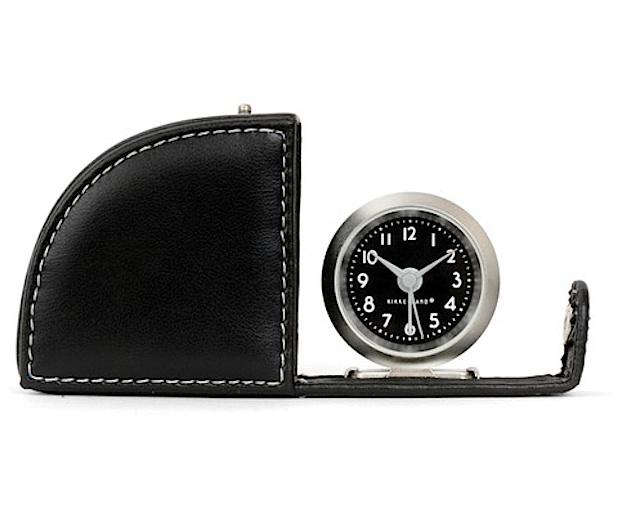
Minimalist clocks, such as Braun-style analog travel clocks, remain popular because they use clean faces, high-contrast hands, and simple shapes. The look is calm and practical. You can glance at the time without decoding a glowing spaceship dashboard. This is ideal for travelers who want their bedside setup to feel peaceful, not like mission control.
Modern Digital Convenience
Digital travel clocks have their own charm. A good digital model can show the time clearly in the dark, include a snooze button, fold flat for packing, and sometimes display the date or indoor temperature. Some models, such as compact Marathon-style digital clocks, are built around travel practicality with features like a folding case, backlight, alarm, calendar, and simple battery power.
Color, Texture, and Finish
A stylish clock can be matte black, soft gray, bright blue, brushed aluminum, or even a playful pastel. Lexon’s Flip-style alarm clocks are good examples of how color and interaction can become part of the design. Instead of burying the alarm setting in tiny buttons, the clock uses a reversible body: one side turns the alarm on, the other turns it off. That kind of design feels clever without being complicated.
Key Features to Look for Before You Buy
Buying a travel alarm clock is simple once you know what matters. The trick is ignoring features that sound impressive but do not help you wake up on time. A clock does not need to connect to twelve apps, predict the weather, or compliment your outfit. It needs to be dependable, readable, portable, and easy to set when your brain is operating on airport pretzel fuel.
Compact Size and Low Weight
A travel alarm clock should fit easily into a carry-on, toiletry pouch, backpack pocket, or bedside organizer. Many analog travel clocks are roughly palm-sized, while slim digital clocks can fold flat. A lightweight clock is better for frequent travelers, but do not choose something so tiny that the buttons become a puzzle for ants. Balance matters.
Readable Display
Readability is non-negotiable. For analog clocks, look for bold numbers, contrasting hands, and luminous tips or an on-demand light. For digital clocks, look for large digits, adjustable brightness, and a display that does not illuminate the room like a vending machine. A travel clock should help you check the time, not hold a midnight press conference.
Reliable Alarm Sound
Some travelers prefer a gentle ascending beep, while heavy sleepers may need something louder. Ascending alarms are useful because they begin softly and grow stronger if ignored. This can be less jarring than a sudden electronic shriek. However, if you regularly sleep through alarms, choose volume and clarity over elegance. Being stylish is nice; missing a 6:10 a.m. train is less glamorous.
Snooze and Backlight
Snooze is a personal choice. Some people love it; others treat it as a trapdoor into lateness. If you use snooze, make sure the button is easy to find in the dark. A backlight should also be easy to activate but not constantly glaring. On-demand lighting is especially helpful in hotel rooms, where unfamiliar layouts already make nighttime movement adventurous enough.
Battery Life and Power Source
Battery-powered clocks are excellent for travel because they do not depend on outlets or adapters. Classic analog models often run on AA or AAA batteries. Some compact digital clocks use button cells, while newer premium models may recharge by USB-C. Rechargeable clocks are convenient, but battery life matters. A clock that needs daily charging may be stylish, but it also becomes one more device begging for attention.
Analog vs. Digital Travel Alarm Clocks
The analog-versus-digital debate is really about personality and travel style. Analog clocks feel timeless, quiet, and visually simple. Digital clocks feel precise, practical, and feature-rich. Neither is automatically better. The best choice depends on how you sleep, pack, and wake up.
Choose Analog If You Want Calm Simplicity
Analog travel alarm clocks are great for people who want fewer lights and fewer settings. A model such as the Braun BC02 shows why this category still has fans: compact dimensions, a clean dial, luminous-tipped hands, and a quiet quartz movement make it easy to read without turning the bedside table into a tech showroom. Peakeep-style small analog clocks are another practical example, especially for travelers who like a silent, non-ticking movement and a simple ascending alarm.
Choose Digital If You Want More Information
Digital travel clocks are better if you want exact time at a glance, 12/24-hour settings, date display, temperature readings, or a foldable design. Casio’s compact PQ-style travel clocks show how a small digital alarm can remain simple while offering essentials like snooze, LED light, and lightweight portability. Digital clocks are also helpful for travelers who dislike estimating the time from analog hands at 4:00 a.m., when every number looks personally offensive.
Stylish Travel Alarm Clock Examples Worth Knowing
The travel clock market includes budget basics, design-forward pieces, and compact tools built for reliability. You do not need the most expensive model to get a good one. In fact, the best travel alarm clock is often the one you can set quickly, read easily, and trust completely.
Braun Classic Travel Analogue Alarm Clock
Braun’s classic travel alarm clocks appeal to fans of minimalist design. The clean face, contrasting hands, compact body, and quiet movement make them feel mature and understated. This is the clock for someone who packs a capsule wardrobe, owns a very nice pen, and quietly knows where their boarding pass is.
Lexon Flip Premium
Lexon’s Flip Premium is a more playful modern option. Its reversible alarm-on/alarm-off concept makes it intuitive, while the aluminum finish and clean LCD display give it a polished look. Features such as USB-C recharging, touch controls, sound sensor display activation, and a travel lock make it especially attractive for design-minded travelers who still want practical performance.
Marathon Compact Digital Travel Clock
Marathon-style compact digital clocks are good for travelers who want a straightforward bedside tool with useful information. A foldable case, alarm, snooze, backlight, and calendar or temperature display can be helpful on business trips, camping weekends, or family vacations where the room has no trustworthy clock in sight.
Peakeep Small Analog Travel Alarm Clock
Peakeep’s small analog travel clocks are popular for their silent, non-ticking operation, light-on-demand feature, snooze function, and easy-to-read dial. They are practical, affordable, and uncomplicated. This is the “just wake me up without turning my nightstand into a science fair” category.
Casio Compact Digital Travel Alarm Clock
Casio’s compact travel clocks are lightweight, simple, and built around everyday usefulness. Features such as snooze, LED light, 12/24-hour display, and small resin cases make them easy to throw into a bag. They are less about luxury and more about quiet competence, which is exactly what many travelers need before sunrise.
How to Match a Clock to Your Travel Style
Not every traveler needs the same alarm clock. A business traveler, backpacker, design lover, family vacationer, and cruise passenger may all want different features. Choose based on your real habits, not the fantasy version of yourself who wakes naturally at 5:45 a.m. and journals beside a lemon tree.
For Business Travel
Choose a compact digital clock with a clear display, reliable alarm, and easy time setting. A folding case protects the screen in a laptop bag, and a date display can help when meetings blur together. A travel lock is useful if you do not want the alarm activating inside your suitcase during a client dinner. That is memorable, but not in the way you want.
For Minimalist Packing
Choose a small analog clock powered by a common battery. It should be light, durable, and quiet. Avoid oversized displays and unnecessary charging cables. Minimalist travelers should prioritize a clock that disappears into a bag but remains easy to use at night.
For Design Lovers
Look for clocks with refined materials, smart interactions, and attractive finishes. Matte colors, aluminum bodies, rounded edges, and clever controls can make a travel clock feel like part of your personal style. A beautiful clock is also easier to keep using once you return home.
For Heavy Sleepers
Style should not come at the expense of volume. Look for a strong alarm, ascending sound, or placement-friendly design that lets you set the clock across the room. The most elegant clock in the world is useless if it whispers politely while your flight boards without you.
Travel Alarm Clocks and Better Sleep Hygiene
A travel alarm clock can improve sleep because it encourages a healthier nighttime routine. Instead of using your phone as an alarm, you can charge it away from the bed and reduce the temptation to scroll. This is especially helpful when staying in hotels, where sleep is already challenged by strange pillows, hallway noise, unfamiliar lighting, and the mysterious hum of a mini fridge working through personal issues.
When traveling across time zones, a clock also helps you commit to local time. Set the alarm based on your destination schedule, expose yourself to daylight at appropriate times, and avoid long naps that make nighttime sleep harder. A stylish clock cannot cure jet lag by itself, but it can support the routines that help your body adjust.
Common Mistakes to Avoid
The first mistake is choosing a clock that is too complicated. If setting the alarm requires reading a manual longer than your boarding pass terms and conditions, skip it. Travel gear should reduce friction, not create a new hobby.
The second mistake is buying a clock with a display that is too bright. A glowing screen can disturb sleep, especially in a dark hotel room. Choose adjustable brightness or on-demand lighting whenever possible.
The third mistake is forgetting batteries. If your clock uses AA, AAA, LR44, or another battery type, pack a spare. Put it in the same pouch as the clock. Future-you, standing in a hotel room at midnight, will consider this an act of kindness.
Finally, test the alarm before the trip. Learn how to set the time, activate the alarm, turn it off, and use the backlight. Nothing ruins a peaceful first night like discovering your new clock has been set to alarm at 6:00 p.m. in a time zone you left yesterday.
Care and Packing Tips
Pack your travel alarm clock in a small pouch or between soft items to protect the face and buttons. For analog clocks, check that the alarm switch has not been bumped. For digital clocks, use the travel lock if available. If your clock folds, close it before packing. If it recharges by USB-C, charge it before leaving and bring the cable only if the trip is long enough to require it.
Keep the clock in the same location every night while traveling. Place it where you can see it, but not so close that you hit snooze without fully waking. Across the room works well for determined snoozers. On a hotel desk or shelf, it becomes both a clock and a tiny accountability coach.
Real Travel Experiences With Stylish Travel Alarm Clocks
The value of a travel alarm clock becomes obvious during the trips that do not go according to plan. On a weekend city break, for example, a compact analog clock can save the morning after a late dinner when your phone is charging across the room and the hotel alarm clock is either unplugged, blinking, or apparently designed by someone who enjoys riddles. You set your own clock, place it on the nightstand, and wake up without touching your phone. The day begins with coffee instead of notifications, which already feels like a small vacation victory.
On business trips, the experience is different but just as useful. A digital travel clock with a clear display can sit beside a laptop, showing the time while your phone remains on silent. When you are juggling early meetings, airport transfers, and different time zones, having a dedicated alarm reduces one layer of mental clutter. You are not relying on hotel wake-up calls, which can be excellentor can arrive 20 minutes late with the confidence of a person who has never missed a train.
For family travel, a small clock can also help children understand routines. Instead of asking whether it is morning every seven minutes, kids can learn to check the clock. A soft backlight helps during nighttime bathroom trips, and a simple alarm can signal when it is time to get ready. Parents may still hear “Are we leaving now?” many times, but at least the clock provides a neutral third party.
On camping or cabin trips, battery-powered travel clocks feel refreshingly practical. There may be no convenient outlet, Wi-Fi may be weak, and phones may need to conserve battery. A small alarm clock keeps working quietly in the background. Analog models are especially nice in rustic settings because they do not add harsh light to the room. You get the time, the alarm, and none of the glowing-screen drama.
Long-haul travelers may appreciate a travel clock most when fighting jet lag. Setting the clock to local time immediately can become a simple ritual: arrive, unpack, set the alarm, drink water, and follow the destination schedule. It is not magic, but rituals matter. They tell your brain, “This is the time now.” A stylish clock makes that ritual feel intentional rather than clinical.
The most underrated experience is returning home and continuing to use the clock. Many stylish travel alarm clocks work beautifully on a desk, guest-room shelf, or bedside table. That makes them better purchases than single-use travel gadgets. A good clock becomes part of your routine at home and away. It is small, dependable, and surprisingly personalproof that even in a world full of smart devices, there is still room for one beautifully simple object that just tells time and wakes you up.
Conclusion
Stylish travel alarm clocks are proof that practical gear does not have to be boring. Whether you prefer the quiet elegance of an analog Braun-style clock, the playful interaction of a Lexon Flip, the practical display of a Marathon digital model, the simplicity of Peakeep, or the lightweight utility of Casio, the best choice is the one that fits your sleep habits and travel routine. Look for readability, reliable sound, compact size, sensible power, and controls you can understand when half-awake.
A dedicated travel alarm clock also helps create a healthier boundary between sleep and screen time. It lets your phone rest somewhere else, keeps your bedside routine calmer, and gives you a dependable wake-up plan wherever you land. In other words, it is a small object with a big job: protecting your morning from chaos. And honestly, for something that fits in your palm, that is a pretty stylish trick.