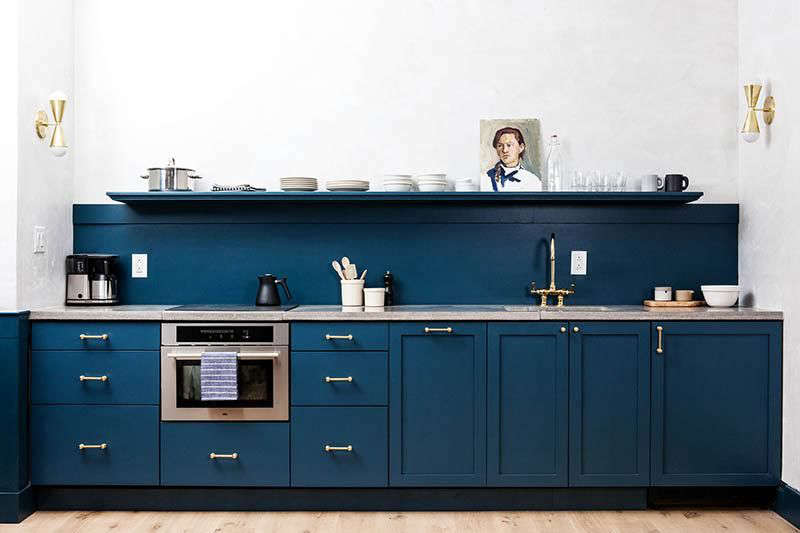
Some kitchens politely ask to be admired. This one walks into the room wearing a midnight-blue suit, flashes a brass watch, and orders an espresso.
Created by Tara Mangini and Percy Bright of Jersey Ice Cream Co., the boldly blue kitchen at Lokal Hotel in Philadelphia’s historic Old City neighborhood is compact, atmospheric, and unusually memorable. The design combines saturated blue cabinetry, a matching backsplash, hand-finished plaster walls, polished concrete countertops, reclaimed wood, industrial fixtures, and warm metal accents. Instead of making a small kitchen disappear behind pale neutrals, the designers gave it a strong identity.
The result feels historic without becoming a period-piece museum and modern without looking as though it arrived shrink-wrapped from a showroom. It is a practical apartment-hotel kitchen, but it has the personality of a room that has been collecting stories for decades.
Project background verified through Remodelista, Lokal Hotel, and Domino.
Why This Bold Blue Kitchen Works
The Blue Functions Like Architecture
The most obvious feature is the deep blue paint, identified as Sherwin-Williams Seaworthy SW 7620. Rather than limiting the color to a single island or a cautious row of lower cabinets, Jersey Ice Cream Co. carried it across the cabinetry, backsplash, and surrounding millwork. That continuity creates a visual envelope around the work zone.
In a small room, too many contrasting finishes can make every cabinet, appliance, and corner compete for attention. Using one dominant color simplifies the composition. Cabinet doors, drawer fronts, wall panels, and trim become part of a single bold shape instead of a collection of unrelated boxes.
Dark blue also acts almost like a neutral. It is colorful enough to provide drama but restrained enough to support wood, gray concrete, black appliances, white ceramics, and brass fixtures. Better Homes & Gardens and Houzz have repeatedly highlighted blue cabinetry as a versatile backdrop for both warm metals and natural materials. In other words, blue is doing the hard work while pretending it just showed up looking fabulous.
Paint color and blue-cabinet compatibility verified through Sherwin-Williams, Remodelista, BHG, and Houzz.
It Feels Historic, but Not Dusty
Lokal occupies a historic Philadelphia building, so a completely slick, futuristic kitchen could have felt disconnected from its surroundings. Jersey Ice Cream Co. instead used materials that develop character: plaster, solid metal, concrete, reclaimed wood, leather, ceramics, and painted millwork.
Those materials reference older interiors without copying them literally. There is no fake colonial wallpaper, decorative butter churn, or strategically placed basket of wooden eggs. The historic feeling comes from texture, weight, patina, and craftsmanship.
This is one of the studio’s recurring strengths. Architectural Digest has documented how the designers use mottled plaster, matte wood floors, built-ins, vintage objects, and custom furniture to give even newer spaces a sense of age. The rooms do not look artificially distressed; they look comfortably established.
Jersey Ice Cream Co. material approach verified through Architectural Digest and Domino.
The Essential Ingredients of the Look
1. Saturated Blue Cabinetry
To recreate the kitchen, begin with the cabinet color rather than the accessories. Choose a blue with enough gray or green in its undertone to keep it from looking cartoonish under artificial light. Seaworthy is a deep, slightly muted blue that shifts with changing daylight, appearing richer in shadow and more vivid near windows.
Always test large painted samples vertically in the actual room. A tiny color chip cannot tell you how a dark blue will interact with warm bulbs, cool daylight, wood flooring, or stainless-steel appliances. Observe the sample in the morning, afternoon, and evening. Paint has a mischievous habit of becoming a different person after sunset.
For cabinetry, use a durable enamel formulated for trim or cabinets. Degrease the surfaces, label and remove the doors, repair dents, sand or degloss the existing finish, apply the correct primer, and allow adequate drying time between coats. This Old House emphasizes that careful preparation is the foundation of a professional-looking cabinet finish. Skipping prep may save one afternoon and cost you several years of staring at peeling paint.
Cabinet-paint preparation verified through This Old House.
2. A Tone-on-Tone Backsplash
One of the design’s smartest moves is continuing the cabinet color onto the backsplash. This prevents the compact kitchen from being chopped into blue cabinets, white tile, gray counters, and another wall color. The work area reads as a unified block.
You can copy the effect with painted moisture-resistant paneling, color-matched tile, beadboard, or a slab backsplash. Paint is the least expensive option, but surfaces near the range and sink need a washable, durable finish. Confirm local building requirements and the appliance manufacturer’s clearance specifications before using combustible wall materials around a cooktop.
For a less intense interpretation, paint only the lower cabinets and backsplash blue while leaving the upper wall in plaster, warm white, or pale gray. The room will retain the original mood without feeling quite as immersive.
3. Textured Plaster Walls
The plaster walls keep the blue kitchen from feeling flat or overly polished. Their soft variations catch light differently throughout the day, adding visual movement without introducing a busy pattern.
Jersey Ice Cream Co. is known for hand-applied plaster surfaces, often using custom pigments. Authentic plaster requires skill, time, and an understanding of the substrate, so it may be worth hiring an experienced applicator. Lime-based and gypsum-based products behave differently and may need specialized primers, base coats, sealers, or maintenance.
For a budget-friendly alternative, use mineral paint, limewash, Roman clay, or a carefully layered matte-paint technique. The goal is not to create theatrical faux finishing. Subtlety matters. You want “beautiful old wall,” not “Italian restaurant renovated during a highly emotional weekend.”
4. Polished Concrete Countertops
The gray concrete counters provide a cool transition between the dark blue cabinetry and warm wood elements. They are visually quiet, slightly industrial, and naturally compatible with the building’s urban setting.
Concrete can be cast in place, precast off-site, or applied as a resurfacing overlay. It can also incorporate integral drainboards, pigments, aggregates, or custom edge profiles. However, it is not maintenance-free. Kitchen-grade sealing is essential because unprotected concrete can absorb water, cooking oil, wine, citrus, and other substances that seem determined to document every meal you have ever prepared.
Concrete Network advises using sealers specifically designed for countertop performance rather than products intended for floors or exterior surfaces. Even sealed concrete should be treated with cutting boards, trivets, prompt spill cleanup, and nonabrasive cleaners.
Concrete countertop care verified through Concrete Network.
5. Warm Brass Fixtures
Brass is the visual spark in the room. Against dark blue, it reads as warm, elegant, and slightly old-fashioned. The original design incorporates brass lighting and plumbing details, allowing relatively small objects to have an outsized impact.
You do not need every metal surface to match perfectly. Unlacquered brass, aged brass, bronze, blackened steel, and stainless steel can coexist when the mix appears intentional. Repeat each important finish at least twice. For example, connect a brass faucet to brass cabinet knobs, then balance black stools with a dark kettle or appliance front.
If you love patina, choose unlacquered brass and allow it to darken naturally. For a more consistent appearance, select a sealed or brushed finish. Be aware that product photos often make all brass finishes look like long-lost siblings; in person, some are barely acquainted.
6. Reclaimed Wood and Simple Furniture
A custom reclaimed-wood bar introduces warmth, age, and tactile contrast. The rougher wood grain prevents the blue-and-concrete palette from becoming cold. Industrial black stools keep the seating visually light and allow the wood to remain the star.
For a similar effect, consider a narrow wall-mounted counter, vintage worktable, reclaimed timber shelf, or compact dining table. Check salvaged wood for structural soundness, insects, embedded metal, lead paint, and previous chemical exposure. Reclaimed does not automatically mean safe, clean, or ready to become a sandwich-preparation surface.
7. Compact, Integrated Appliances
The Lokal kitchen had to fit real cooking functions into an apartment-sized footprint. Its original equipment list included a narrow bottom-freezer refrigerator, an induction cooktop, and a compact built-in speed oven. Choosing smaller appliances preserved storage and counter area while keeping the room suitable for longer hotel stays.
Induction is especially useful in a compact kitchen because the cookware itself is heated by electromagnetic energy. ENERGY STAR and Consumer Reports note that induction cooking is efficient, responsive, and generally faster than conventional electric resistance cooking. It also produces less stray heat around the cooking surface, although compatible magnetic cookware and appropriate electrical service are required.
Appliance configuration and induction guidance verified through Remodelista, ENERGY STAR, and Consumer Reports.
How to Recreate the Layout in a Small Kitchen
Start With Activity Zones
Before ordering paint or brass knobs, map the refrigerator, sink, cooking surface, food-preparation area, trash storage, and dish storage. The National Kitchen & Bath Association’s planning guidance emphasizes organizing kitchens around functional work areas and adequate clearances.
In a narrow room, a single-wall or galley layout may work better than forcing in an island. A shallow dining ledge can add seating without blocking circulation. Deep drawers can store cookware more efficiently than conventional lower cabinets, and tall pantry storage can use vertical space that would otherwise host nothing but dust and one heroic spider.
Measure appliance doors in the open position, not just the appliance boxes. Confirm that the refrigerator, dishwasher, oven, and cabinet doors can operate without colliding. Also reserve landing space near the refrigerator, sink, and cooking surface.
Kitchen-planning principles verified through NKBA guidance.
Protect the Countertop From Clutter
The Philadelphia kitchen looks composed partly because it avoids a lineup of oversized countertop appliances. Prioritize the tools you use every day, then store or eliminate the rest. A compact kettle, a few ceramics, glass bottles, and a small piece of art can provide personality without turning the counter into an appliance convention.
Open shelves should hold objects that are attractive, useful, or both. White stoneware, gray ceramics, clear glass, and black accessories work particularly well against the deep blue backdrop. Local or handmade pieces add variation and prevent the room from feeling overly coordinated.
Layer the Lighting
Dark cabinetry absorbs more light than white cabinetry, so a bold blue kitchen needs thoughtful illumination. Combine ambient lighting with focused task lighting over the sink, cooktop, and main preparation surface. Brass cone sconces contribute character, but hidden under-shelf or under-cabinet lighting can make the kitchen easier to use after dark.
Food & Wine’s lighting guidance notes that under-cabinet fixtures provide direct illumination where overhead lighting may leave shadows. Choose a warm or neutral color temperature that complements the plaster and brass rather than turning the blue cabinets into something that resembles an airport security tray.
Task-lighting guidance verified through Food & Wine.
Three Ways to Steal the Look
Budget Refresh
Keep the existing cabinet boxes, paint the doors and visible frames deep blue, replace the hardware, add a vintage-style wall light, and introduce wood through shelves or a small table. Use a concrete-look laminate or resurfacing system instead of replacing the countertops. Finish with striped linen towels, white ramekins, simple glassware, and a thrifted painting.
Midrange Renovation
Install new cabinet fronts, paint the cabinetry and backsplash the same saturated blue, add durable concrete or concrete-look counters, replace the faucet, and integrate a narrow refrigerator or induction cooktop. Use mineral paint or limewash on the surrounding walls for subtle texture.
Full Interpretation
Commission custom cabinetry, hand-applied plaster, sealed concrete countertops, reclaimed-wood furniture, compact integrated appliances, solid-brass fixtures, and purpose-built storage. This version requires the most planning, but it most closely captures the depth and material richness of the original Jersey Ice Cream Co. kitchen.
Common Mistakes to Avoid
Choosing blue from a screen: Digital colors vary dramatically. Test physical samples in the actual kitchen.
Ignoring preparation: Cabinet paint cannot rescue grease, loose finishes, damaged laminate, or poorly bonded primer.
Making every surface dark: Balance blue with reflective metal, pale ceramics, adequate lighting, and natural wood.
Using decorative concrete without proper sealing: A porous countertop may look romantic until the first encounter with olive oil and red wine.
Buying furniture before measuring circulation: A beautiful stool is considerably less charming when it prevents the refrigerator from opening.
Overstyling open shelves: Leave breathing room. A kitchen should look inhabited, not as though the ceramic mugs have formed a densely populated republic.
Living With a Bold Blue Kitchen: Practical Experience and Lessons
The most useful lesson from a kitchen like this is that bold color is rarely the real risk. Poor coordination is the risk. A dark blue cabinet can feel sophisticated, cozy, industrial, traditional, or modern depending on the surfaces around it. When homeowners dislike a bold kitchen, the problem is often not the color itself but weak lighting, mismatched undertones, shiny finishes, or too many competing materials.
Living with dark cabinetry also changes how you notice maintenance. Dust, flour, water spots, and fingerprints may be more visible on a saturated matte finish than on pale wood. That does not make the color impractical, but it makes paint quality and sheen important. A washable satin or low-luster cabinet enamel usually provides a better balance than dead-flat paint. Keep a small labeled jar of the original finish for touch-ups, because cabinet doors inevitably meet fingernails, rings, grocery bags, pets, and that one cast-iron pan everyone insists is not too heavy.
The tone-on-tone backsplash is particularly effective in everyday use because it reduces visual clutter. Small kitchens naturally contain many interruptions: electrical outlets, cabinet seams, appliance controls, plumbing fixtures, and stored objects. Repeating the blue behind the counter makes those interruptions feel less chaotic. However, homeowners who cook frequently should choose a backsplash finish that can withstand splashes and repeated cleaning. Beauty is important, but tomato sauce has no respect for design awards.
Concrete countertops reward people who appreciate natural variation. Hairline marks, subtle color changes, and gradual patina can become part of the surface’s character. Anyone expecting the absolute uniformity of engineered quartz may find concrete frustrating. Before committing, view an installed counter that has been used for several years, not just a freshly sealed showroom sample. Ask who fabricated it, which sealer was used, how stains are repaired, and how often maintenance is expected.
Plaster walls create a similar relationship with imperfection. Their appeal comes from movement, tonal variation, and the evidence of handwork. Strong sidelight may reveal trowel marks that disappear under softer illumination. This is a feature, not necessarily a flaw. The finish works best for people who prefer depth and atmosphere over perfectly uniform drywall.
The reclaimed-wood elements also improve how the room ages. Scratches on a brand-new glossy surface can look like damage; scratches on a weathered wood bar often blend into the story. This is one reason old and tactile materials work so well in hardworking kitchens. They do not demand that daily life apologize for occurring.
Finally, the Philadelphia kitchen demonstrates that small spaces can support strong ideas. A compact footprint may actually make an immersive palette more effective because the color remains concentrated. The key is disciplined repetition: one dominant blue, one warm wood family, one primary metal, one calm countertop material, and a limited group of accessories.
Rather than copying every product, copy the hierarchy. Let the blue establish the identity, plaster soften the edges, concrete add utility, wood provide warmth, brass catch the light, and a few handmade objects supply personality. That approach can succeed in a city apartment, a suburban galley, a rental kitchenette, or a renovated rowhouseeven when the budget does not include custom furniture and a design team willing to camp beside the construction site.
Conclusion
The boldly blue kitchen by Jersey Ice Cream Co. succeeds because it is more than a collection of fashionable finishes. Every choice supports the same idea: a compact urban kitchen can feel historic, functional, tactile, and thoroughly original.
Recreating the room does not require an exact shopping list. Begin with a rich blue cabinet color, repeat it deliberately, surround it with honest materials, invest in preparation and lighting, and resist the urge to decorate every available inch. Add brass for warmth, reclaimed wood for soul, concrete for industrial restraint, and plaster for a surface that changes with the light.
The finished space should not look copied. It should feel as though the Philadelphia kitchen introduced you to a very stylish set of ideas and then trusted you to make them your own.
Note: Paint colors, appliance models, finishes, and product availability may change. Test samples, verify dimensions, review current manufacturer specifications, and consult qualified tradespeople before beginning structural, electrical, plumbing, plaster, or countertop work.