There are two kinds of people in the woods: the ones admiring the trees, and the ones staring suspiciously at the ground like they’ve misplaced a tiny, delicious treasure. This article is for the second group. “Stalking the wild mushroom” sounds dramatic, but that is exactly what mushroom lovers do. They move slowly, scan logs and leaf litter, inspect mossy corners, and act like the forest has hidden a secret handshake in plain sight.
Still, this is not a treasure hunt in the cartoon sense. Wild mushrooms are fascinating, beautiful, ecologically important, and sometimes downright tasty. They are also capable of ruining a perfectly good weekend, your liver, and your confidence in beige produce if they are misidentified. That tension is part of the mystique. Mushrooms reward patience, observation, and humility. They do not reward overconfidence. In the mushroom world, swagger is a red flag.
If you want to understand the appeal of wild mushrooms, you have to start with what they are. Mushrooms are fungi, not plants, which means they play by different rules. They do not photosynthesize, they often appear suddenly after the right mix of rain and temperature, and they spend most of their lives hidden from us as underground networks. What we call a mushroom is usually the fruiting body: the flashy, temporary part that pops up when conditions are right. In other words, the mushroom is the forest’s brief public appearance after a long season of working backstage.
Why People Become Obsessed With Mushrooms
Wild mushrooms sit at a strange and wonderful intersection of food, science, weather, mystery, and pure luck. Birders look up. Mushroom people look down. Gardeners fight weeds. Mushroom hunters celebrate decay. The same fallen log that screams “yard waste” to one person can look like a jackpot to someone stalking chanterelles, oysters, or boletes.
Part of the obsession is seasonal rhythm. Spring brings morel fever, when people begin talking about warm soil, recent rains, and woodland edges with the seriousness of stock analysts. Summer and fall bring other favorites, including chanterelles in some regions and a parade of boletes, puffballs, and bracket fungi elsewhere. The timing changes from state to state, forest to forest, and even hillside to hillside. That variability is maddening and magical. It also means mushroom lovers become accidental students of trees, rainfall, slope direction, and local habitat.
Another part of the appeal is that mushrooms sharpen your attention. Once you start noticing them, the woods change. Rotting stumps are no longer just rotting stumps. They are neighborhoods. The base of an oak becomes a possible clue. A patch of duff after a rainy spell suddenly looks suspiciously promising. Mushrooming teaches the kind of close looking modern life rarely rewards. Nobody gets points in a group chat for noticing a subtle change in forest moisture, but the woods might.
The Romance of the Search, and the Reality Check
It is easy to romanticize mushroom hunting. Early morning light. Damp boots. A basket swinging at your side. That earthy, cinematic feeling of being in on a secret. All of that is real. So is the reality check: wild mushroom identification should never be treated like a guessing game.
Public health experts are blunt for good reason. Poisonous mushroom exposures are preventable, but they still happen, and some species can cause severe illness or death. The most dangerous cases often involve people confidently eating mushrooms that were identified incorrectly. A terrible mushroom does not arrive with a villain soundtrack. It simply looks convincing enough to fool somebody who relied on one trait, one photo, one social-media post, or one badly timed burst of optimism.
This is why serious mushroom people repeat the same boring advice over and over: do not eat a wild mushroom unless it has been identified with certainty by a qualified expert. Not “pretty sure.” Not “my cousin said it was fine.” Not “it looked like the photo.” Certainty. Mushrooms are one of nature’s best arguments for humility.
What Mushroom Stalkers Actually Look For
When experienced people identify mushrooms, they do not rely on a single feature. They build a case. They look at the cap, stem, gills or pores, color changes, texture, bruising, smell, the type of wood or soil nearby, the tree species around it, whether it grows alone or in clusters, and the season. Some also use spore prints as one clue among many. The key idea is simple: mushroom identification is a full-body puzzle, not a one-question quiz.
That is especially important because some edible mushrooms have notorious look-alikes. Chanterelles, for example, are famous and delicious, but their toxic imitators have sent plenty of overeager foragers into miserable territory. True chanterelles typically have blunt, forked ridges rather than sharp, blade-like gills, and they grow from the ground rather than directly from wood. By contrast, jack-o’-lantern mushrooms often grow in clusters from buried wood, roots, or stumps and can cause significant gastrointestinal distress. It is a classic reminder that the forest enjoys making copycats.
Morels inspire a similar level of enthusiasm and caution. They are among the most prized spring mushrooms in the United States, but they also have poisonous look-alikes known as false morels. That is why morel season brings equal parts joy and nervous overexplanation. Ask any morel fan how their season is going and you may receive a weather report, a tree lecture, and a stern safety disclaimer before you finish your coffee.
Rules, Ethics, and Not Acting Like a Goblin
One of the least glamorous but most important parts of stalking the wild mushroom is knowing the rules. Regulations vary wildly depending on where you are. Some public lands allow limited personal collection. Some allow collection only in certain areas. Some require permits. Some prohibit harvesting entirely or restrict commercial gathering. In one place, a small basket for personal use may be fine; in another, the same habit can get you in trouble.
Examples from U.S. public lands show just how different the rules can be. Some national forest sites allow small incidental collection for personal use, while certain national park sites allow limited amounts with location-specific restrictions. Other forests require permits even for harvesters over a certain age. The lesson is not that the rules are confusing, although they absolutely can be. The lesson is that mushroom people need to check before they collect.
Ethics matter just as much as legality. Good mushroom etiquette is gloriously unsexy. Do not trespass. Do not tear up habitat. Do not leave a mess. Do not tromp through sensitive meadows because you spotted something orange and got spiritually unwell about it. Do not strip an area bare just because you found it first. A respectful mushroom stalker leaves the place looking like a person with impulse control was there.
The Forest Is Giving Clues
Mushrooming trains people to notice relationships. Certain mushrooms are associated with certain trees. Some favor hardwood forests, some conifers, some disturbed ground, some buried wood, and some lawns that seem determined to keep suburban homeowners humble. Rain matters. Temperature matters. Drainage matters. Timing matters. You may walk the same trail five times and see nothing, then return after a shift in weather and feel as if the forest suddenly turned on the lights.
This is where mushrooming becomes less like shopping and more like field reading. You are not simply looking for mushrooms. You are learning to read the conditions that make mushrooms likely. The best practitioners become amateur ecologists almost by accident. They start by wanting dinner and end by being weirdly excited about mycorrhizal relationships.
Why Experts Are So Careful
People sometimes assume the danger of poisonous mushrooms is exaggerated. It is not. Some toxic mushrooms cause early vomiting and diarrhea. Others are more deceptive. A person may get sick, appear to improve, and then develop far more serious complications later. That false sense of recovery is one reason poisoning cases can become so dangerous. If mushroom poisoning is suspected, immediate medical advice matters, and poison control resources in the United States exist for exactly this reason.
There is another complication that receives less attention: even an edible species is not automatically agreeable to every stomach. Some people react badly to mushrooms that others tolerate well. Preparation also matters. None of this means mushrooms are villains. It means they deserve seriousness. “Natural” is not a synonym for “safe,” and the forest is under no obligation to label its produce for convenience.
The Culture of Mushroom People
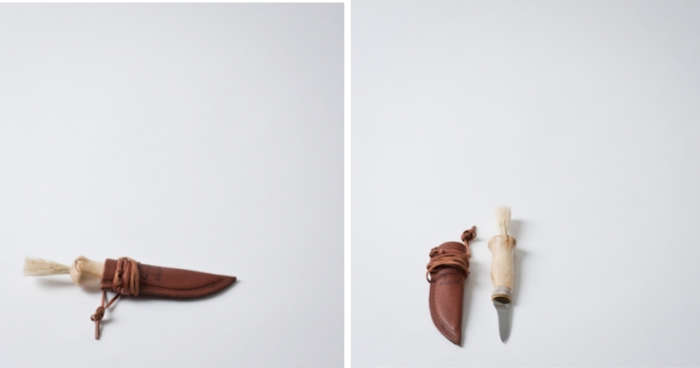
Mushroom lovers can be a charmingly peculiar bunch. They carry knives, field guides, and the quiet intensity of people who have definitely texted someone a photo of fungus while saying, “Can you confirm?” They compare flushes, habitat notes, and timing the way gardeners discuss tomatoes. They also tend to be evangelists for slow observation. Spend enough time around them and you will hear phrases like “fruiting body,” “spore print,” and “associated host tree” delivered with the emotional gravity of wedding vows.
Yet the best part of mushroom culture is not the gear or jargon. It is the blend of curiosity and restraint. The smartest mushroom people are often the quickest to say, “I don’t know,” and that is exactly why they are worth listening to. In mushrooming, uncertainty is not weakness. It is survival wearing sensible shoes.
Stalking the Wild Mushroom Without Losing the Plot
So what does it mean to stalk the wild mushroom well? It means treating the woods like a library rather than a buffet. It means valuing the search, the habitat, and the learning as much as the find. It means understanding that a mushroom can be worth admiring even when it is not worth touching, collecting, or eating. And it means accepting that some days the forest gives you a perfect chanterelle, some days it gives you a soggy stump, and some days it gives you a life lesson about overconfidence.
That may sound less thrilling than the fantasy version of mushroom hunting, but it is actually better. The real joy is not just in bringing home something rare and earthy and brag-worthy. It is in developing the eyes to notice what most people miss. It is in learning the mood swings of weather, trees, and soil. It is in becoming the kind of person who can walk through a forest and see not just scenery, but patterns.
Mushrooms reward that kind of attention. They appear briefly, disappear quickly, and keep their secrets unless you are willing to slow down. In a noisy world, that is part of their power. They make you listen to the ground.
Field Notes: What the Experience Feels Like
There is a very specific thrill that comes with searching for mushrooms, and it has less to do with speed than with focus. The experience often begins before the walk itself. Maybe it rained two days ago. Maybe the air has that cool, damp smell that makes the woods feel freshly unwrapped. Maybe somebody casually mentioned they found a few promising specimens near an old stand of hardwoods, and now your brain has become a low-budget detective show. You head out not because you expect certainty, but because possibility is doing a lot of heavy lifting.
At first, the forest can feel stingy. Every curled leaf looks like it might be something. Every bump in the duff seems suspicious. You crouch down for what turns out to be a pine cone, a knot of bark, or a mushroom so old it now resembles a forgotten kitchen sponge. There is a lot of false hope in mushrooming. That is part of the sport. The woods are full of decoys, and your eyes need time to adjust.
Then something changes. You stop charging forward and start reading the ground more slowly. You notice where moisture lingers. You notice how a fallen log softens into the soil. You notice tree roots, shade patterns, little pockets of rich decay. The search becomes less random and more conversational, as if the landscape is finally willing to answer after you asked the question properly.
And then, suddenly, there it is. Maybe it is one clean golden cap tucked beside leaves. Maybe it is a cluster on a stump glowing like a tiny warning sign. Maybe it is a beautiful specimen you will admire and leave alone because beauty is not proof of edibility. The emotional response is almost always outsized. You would think a person had found pirate gold instead of a fungus. But that is the strange dignity of mushrooming: it makes modest discoveries feel enormous.
Even the disappointments become memorable. A day with no edible finds is rarely a wasted day. You remember the smell of wet earth, the way light filtered through the trees, the absurd number of times you said, “Wait, what’s that?” before realizing it was a leaf. You remember how the search sharpened your attention. Mushrooming turns a walk into an investigation and the landscape into a puzzle. Whether you come home with photos, notes, or nothing at all, the experience stays with you because it changes how you look at the woods the next time.
That is why people keep going back. Not only for the possibility of a prized morel or a perfect chanterelle, but for the feeling of being alert, curious, and slightly enchanted. Stalking the wild mushroom is really about learning to notice the world at a finer scale. The mushrooms are the excuse. The real prize is the way the search rearranges your attention.
Conclusion
Stalking the wild mushroom is part science, part patience, part seasonal obsession, and part humility lesson delivered by the forest. It invites people to slow down, pay attention, and appreciate the strange brilliance of fungi. But it also demands respect. Wild mushrooms are not a casual guessing game, and the smartest enthusiasts know that caution is part of the craft. The joy of mushrooming is not just in finding something remarkable. It is in becoming observant enough to know why it is remarkable in the first place.
SEO Tags
Note: This article is for educational purposes only. Local laws, species, and risks vary by region, and no wild mushroom should be eaten unless an expert has verified it in person.