Soldering is one of those “tiny hobby tasks” that can turn into a full-blown production if you’re not careful. One minute you’re tacking a header pin, the next minute you’re hunched over a smoky little volcano of flux, wondering why your eyes feel like they’re auditioning for a tear-jerker.
Here’s the good news: you don’t need a NASA cleanroom or a lab-grade ventilation budget to level up your setup. You just need to stop treating fume extraction like a thing you “remember to do” and make it a thing that’s already doing its jobhands-free, always in the right spot, and ready the moment your iron touches metal.
This article walks you through a practical, workshop-friendly “hands-free fume extractor hack” that blends the best parts of pro safety guidance with DIY reality: capture fumes close to the source, keep airflow stable, and position the intake so you’re not constantly nudging it around like an indecisive microphone stand.
Why Solder Fumes Deserve More Respect Than They Usually Get
The smoke you see while soldering isn’t just “a smell.” It’s a cloud of heated flux byproducts and fine particles. Rosin-based flux fumes, in particular, are notorious for irritating eyes and airways and can contribute to asthma-like symptoms with repeated exposure. Even if you only solder “sometimes,” your breathing zone is still your breathing zone. Your lungs don’t care whether you’re a professional technician or a weekend keyboard modder.
And yeslead-free solder can still create plenty of nasty smoke because flux is still doing flux things: cleaning oxides, improving wetting, and making your joints shiny enough to post online. The goal isn’t to scare you away from soldering. The goal is to make sure you can keep doing it for years without turning “electronics” into “seasonal allergies… indoors.”
What’s Actually Making That “Smoke”?
A helpful mental model is this: most visible soldering smoke comes from flux, not the metal itself. In typical electronics soldering, temperatures are relatively low compared with processes that generate lots of metal fume. That doesn’t make soldering “safe by default”it just tells you where to aim your controls.
Flux fumes: the main event
Flux (especially rosin-based flux) can create irritating fumes when heated. These fumes rise right into your face because physics loves drama. If you’re hovering over your work for precision (and you are), you’re basically doing a front-row seat situation.
Particles and residues: the sneaky follow-up
Even when metal fumes aren’t the headline, residues on your hands, your bench, and your tools can still be a problem. Good habitswashing hands, not eating at the bench, keeping solder scraps containedare part of the system, too.
What “Good Ventilation” Means at a Hobby Bench
The gold standard is local exhaust ventilation: capture the contaminant at the source before it spreads. That can be a benchtop fume extractor, a flexible “snorkel” hood, or a ducted system. The common thread is placement: the intake has to be close enough to actually grab the rising plume instead of politely watching it drift away.
A desk fan that blows fumes across the room is not the same thing. You might feel better, but you may simply be redistributing the problem (now with bonus flux dust settling on everything you own).
The Hands-Free Hack: A “Snorkel” Intake You Don’t Babysit
The core idea is simple: lock the intake position so it’s always a few inches from the work, always aimed where the plume rises, and never requires a spare hand mid-solder.
Most people fail at fume extraction because the intake wanders. You start with good intentions, then it slowly drifts, blocks your light, bonks your magnifier, and eventually gets moved “temporarily” to the corner of the bench where it lives forever like a sad houseplant.
Your hands-free upgrade has two parts:
- A stable, adjustable arm that holds a small capture hood exactly where you need it.
- A reliable on/off method that doesn’t require you to stop holding parts, solder, or tweezers.
Pick Your Build Level
Level 1: “I have parts in a drawer” (Fast and cheap)
- PC fan (120 mm preferred for quieter airflow)
- Activated carbon sheet (for fumes/odors) and a simple prefilter (for dust)
- Cardboard or small plastic enclosure (yes, cardboard can work surprisingly well if kept away from heat)
- Desk clamp + gooseneck phone holder or adjustable arm
- A small funnel/hood (3D printed, PVC coupler, or even a cut plastic bottle as a temporary hood)
- Foot switch or inline switch for hands-free control
Level 2: “I want quieter and better capture” (The sweet spot)
- A benchtop fume extractor or small extraction unit with HEPA + activated carbon
- Flexible capture arm (“snorkel”) positioned near the joint
- Auto-on power (current-sensing power strip, smart plug automation, or switched outlet paired with your soldering station)
Level 3: “I solder a lot” (Pro-style workflow)
- Ducted extraction or a higher-flow filtration unit
- Dedicated capture nozzle designed for source capture
- Optional tip extraction tools for specialized setups
How to Build the Hands-Free “Snorkel” Add-On
This approach works whether you’re using a DIY fan box or a commercial extractor. The hack is the arm + hood system, not the fan brand name.
Step 1: Build (or choose) a small capture hood
A hood is just a shaped intake that helps “aim” your suction. A small funnel shape works well because it collects the plume without needing extreme airflow. If you’re improvising, a short piece of PVC coupler or a small plastic funnel can do the job.
Keep it compact. A giant hood blocks your view and lighting, and then you won’t use it. The best fume extraction system is the one that doesn’t annoy you into ignoring it.
Step 2: Mount the hood on an adjustable arm
Here’s the “hands-free” secret: use a desk clamp plus a gooseneck arm (or friction-jointed arm) so you can position the hood precisely. Your goals are:
- Stability: it stays where you put it, even when you bump the bench.
- Range: it can swing in close for tiny PCB work and swing away for bigger assemblies.
- Low obstruction: it doesn’t block your iron, your light, or your magnifier.
Position the hood slightly behind the joint (from your perspective) so fumes travel away from your face as they rise and get captured. Think of it like placing a camera mic: close enough to pick up what matters, not so close it ruins the shot.
Step 3: Connect airflow (fan box, extractor, or duct)
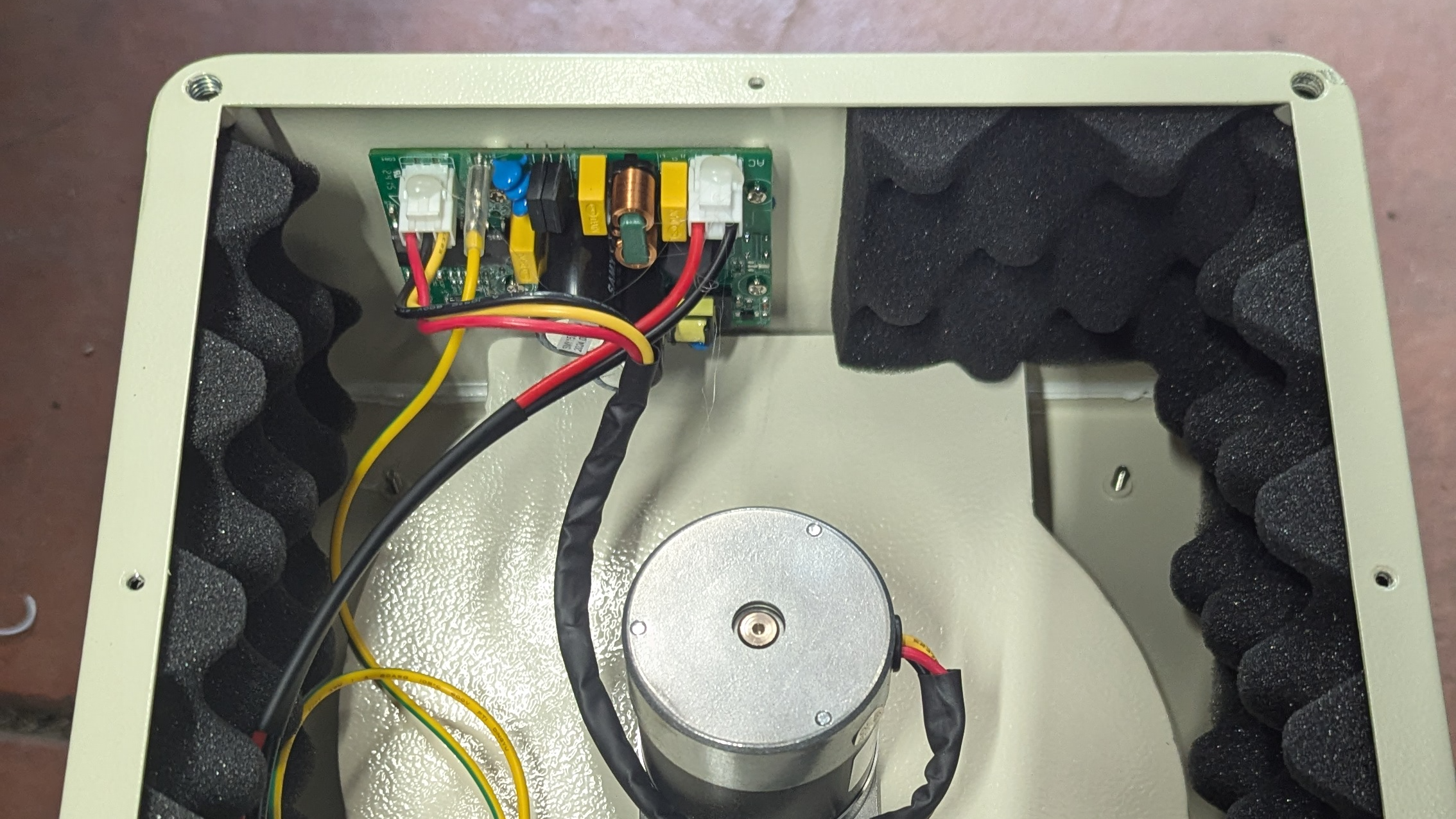
If you’re using a PC fan box: mount your filter stack on the intake side, seal gaps with tape or gasket material, and make sure air is actually flowing through the filternot sneaking around it.
If you’re using an extractor with a hose: keep bends gentle and runs short. Sharp turns and long hoses reduce effective capture at the hood.
Step 4: Make it truly hands-free (three easy control options)
Option A: Foot switch (the simplest “why didn’t I do this sooner?” upgrade)
A foot switch lets you kick the extractor on/off without letting go of tweezers, solder, or your sanity. It also encourages a good habit: turn extraction on first, solder second.
Option B: Auto-on with your soldering station
If your station powers on when you solder, use a switched outlet or a current-sensing strip so your fume extraction comes on automatically. This turns “remembering” into “it just happens,” which is the whole point.
Option C: “Always on” at low speed + boost when needed
Some setups run quietly at a low baseline and then ramp up when you’re doing heavier soldering. This works well if your fan is quiet and your bench is in a shared space.
Placement Rules That Make or Break Your Results
Source capture works because it intercepts fumes before they disperse. That means distance mattersa lot. The practical takeaway: closer is better, as long as you’re not melting your hood or blocking your work.
- Start by placing the hood just a few inches from the joint.
- Angle it so it captures the plume as it rises, not after it hits your glasses.
- Keep your work between you and the hood only if it helps pull fumes away from you.
- If the hood is far away, you’ll need dramatically more airflow to get the same capture.
If you want a nerdy sanity check: lightly burn a tiny bit of scrap flux (carefully) and watch where the smoke wants to go. Your job is to put the hood where the smoke naturally travels, not to fight airflow like you’re in a wind tunnel Olympics.
Filter Smarts: HEPA vs Activated Carbon (and Why “Both” Wins)
HEPA
HEPA filtration is designed to capture fine particles. In soldering, that helps with particulates in the smoke plume. If you’re doing lots of soldering or working with materials that produce fine particulate, HEPA becomes more important.
Activated carbon
Activated carbon targets odors and certain gases/vapors. Flux fumes are exactly the kind of thing carbon is commonly used for in solder fume extraction.
The combo approach
Many dedicated extraction systems use multi-stage filtration: prefilter, HEPA for particles, and carbon for fumes. If you’re building DIY, you can approximate this by using a simple prefilter layer plus activated carbon, and upgrading to true HEPA if your airflow and fan can handle the resistance.
Common Mistakes (A.K.A. Why Some Fume Extractors “Don’t Work”)
- Too far away: the fan is working, but it’s not capturing the plume.
- Air leaks: air takes the path of least resistancearound your filter instead of through it.
- Wrong filter expectations: carbon sheets get saturated; prefilters clog; nothing lasts forever.
- Blowing instead of capturing: pushing fumes away can spread them into the room and onto surfaces.
- Annoying ergonomics: if it blocks your light or your hands, you’ll stop using it. Guaranteed.
Maintenance Checklist That Takes Two Minutes (But Saves You Hours)
- Replace or refresh carbon filters on a schedule based on use (if odors return, your carbon is basically on vacation).
- Swap prefilters when they look loaded with dust/residue (airflow drop = capture drop).
- Wipe the bench and wash hands after soldering sessions, especially before eating or touching your face.
- Keep solder scraps contained; don’t let “tiny bits of wire” become “tiny bits of everywhere.”
- Verify airflow occasionally by feeling suction at the hood and observing plume behavior.
When to Upgrade From DIY to a Dedicated Extraction System
DIY can be great for occasional soldering and small projects. But if you solder frequently, share air with other humans, or work in a small room, a dedicated unit with multi-stage filtration (often HEPA + activated carbon) becomes worth it. The quieter the unit and the less it interferes with your workflow, the more likely you are to run it every time.
Also consider an upgrade if:
- You solder more than a couple of hours a week.
- You notice irritation even with your current setup.
- Your bench is in a bedroom, office, or shared living space.
- You’re doing processes beyond soldering (adhesives, coatings, certain plastics) that benefit from better gas filtration.
Conclusion: Make Safety Automatic (and Keep Your Bench Fun)
The smartest soldering bench isn’t the one with the most expensive toolsit’s the one where the healthy choice is the easy choice. A hands-free fume extractor hack works because it removes friction: the hood is already positioned, the airflow is already ready, and your hands are free to do the careful work you actually sat down to do.
Set your hood close, keep it stable, and automate power so extraction turns on when soldering starts. Your future self will thank you probably while breathing normally.
Shop Stories: Real-World Solder Fume Extraction Lessons (Extra of Experience)
Let’s talk about the part nobody puts in the glamorous “bench tour” photos: the awkward little dance you do when your fume extractor is technically present… but functionally useless. I’ve seen more than one setup where the extractor sits six inches to the left, pointed at a wall, bravely sucking up absolutely nothing while the user leans directly into the plume like it’s a campfire ghost story.
The first lesson is that fume extraction is a positioning problem disguised as a fan problem. People upgrade from a small fan to a bigger fan, then to a louder fan, then to “maybe I should open a window,” when the real fix was moving the intake three inches closer and slightly higher. Once you see it, you can’t unsee it: the plume rises fast and narrow, then spreads. Miss the narrow part, and you’re fighting physics with brute force.
The second lesson is that anything that annoys your workflow will be “temporarily removed.” If the hood blocks your ring light, you’ll move it. If it vibrates and slowly droops, you’ll re-adjust it… twice… and then you’ll ignore it. That’s why the hands-free arm matters more than people think. A stiff gooseneck, a friction joint, or even a repurposed phone mount can be the difference between a system you use and a system you own.
Third: the smell test is real. Activated carbon works until it doesn’t, and when it’s spent, it doesn’t send you a polite email. It just stops helping. The first sign is usually that familiar “flux perfume” returning like an uninvited guest. If you’re running your extractor and still smelling strong fumes, don’t assume you’re doomedassume your carbon is saturated or your intake is too far away.
Fourth: “quiet” is a safety feature. Loud fans train you to skip extraction for “just one quick joint.” Quiet extraction trains you to leave it on because it’s not constantly yelling at you. This is also why foot switches and auto-on setups feel magical: they reduce the number of times you have to decide to do the right thing. You don’t need more willpower. You need fewer decisions.
Fifth: the clean bench myth. Flux residue lands on your surface, your tools, and your fingers. Even when the air looks clear, the session leaves a footprint. A quick wipe-down and a hand wash isn’t overkillit’s closing the loop. And once you build that into your routine, soldering feels better: less irritation, less smell, and less of that “why is my desk sticky?” mystery that haunts electronics benches worldwide.