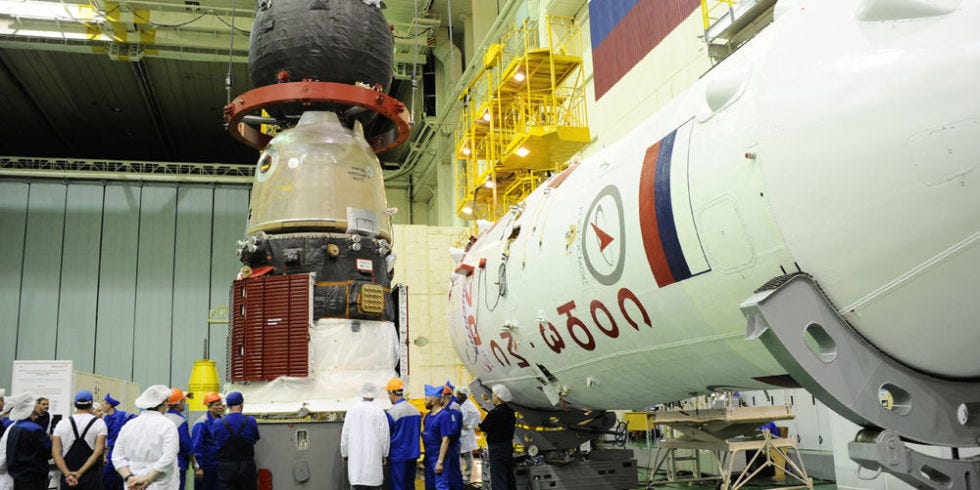
The Russian Soyuz spacecraft is one of those rare machines that seems to have misplaced its retirement paperwork. Born in the Cold War, refined through decades of orbital service, and still ferrying crews to the International Space Station, Soyuz has earned its reputation the old-fashioned way: by showing up, again and again, when humans need a ride to space.
But even a legendary spacecraft cannot keep flying forever on vintage electronics, aging rendezvous hardware, and a communication system that once depended heavily on ground-station coverage. The Soyuz-MS upgrade was Russia’s answer to that problem. It did not transform Soyuz into a sleek sci-fi spaceplane with cup holders and mood lighting. Instead, it gave the veteran spacecraft exactly what it needed: better navigation, stronger communications, improved docking systems, additional safety features, more electrical power, and updated digital hardware.
In other words, Soyuz did not get a midlife crisis sports car. It got a practical engineering makeoverthe kind that matters when your commute involves orbital mechanics, vacuum, micrometeoroids, and a landing in Kazakhstan.
What Is the Soyuz-MS Upgrade?
The Soyuz-MS spacecraft is the modernized version of the long-running Soyuz crew vehicle used to transport astronauts and cosmonauts to and from low Earth orbit. The “MS” is commonly understood as “modernized systems,” and that phrase is a good summary of the project. The structure and basic mission profile stayed familiar, but many internal systems were replaced or upgraded to make the spacecraft safer, more capable, and more compatible with modern space operations.
The first crewed Soyuz-MS mission, Soyuz MS-01, launched in July 2016 from the Baikonur Cosmodrome in Kazakhstan. Its crew included Roscosmos cosmonaut Anatoly Ivanishin, NASA astronaut Kate Rubins, and Japan Aerospace Exploration Agency astronaut Takuya Onishi. The mission took a two-day, 34-orbit route to the International Space Station so the crew and ground controllers could test the upgraded systems before treating the new model as routine transportation.
That careful approach made sense. A spacecraft upgrade is not like updating a phone app, where the worst-case scenario is that your weather widget sulks for three days. In human spaceflight, every new system has to prove itself under real mission conditions. Soyuz-MS was designed to do just that.
Why Soyuz Needed a Makeover
The Soyuz spacecraft has always been a study in practical design. It is compact, rugged, and built around a three-module layout: an orbital module for living and docking operations, a descent module for launch and reentry, and a service module that carries propulsion, power, and support systems. This architecture has served generations of crews well.
However, spaceflight technology does not stand still. By the 2010s, several Soyuz systems were becoming outdated. Some components were no longer ideal for modern ISS operations, while others depended on legacy manufacturing chains. Russia also faced growing pressure to replace foreign-made hardware and modernize electronics that had been designed for an earlier era of orbital flight.
The International Space Station also demanded dependable crew vehicles that could function as both transportation and emergency return craft. A docked Soyuz is not just a parked spaceship; it is a lifeboat. If something serious happens aboard the station, the crew assigned to that vehicle must be able to undock and return to Earth. That makes upgrades to communications, navigation, docking, and onboard diagnostics more than nice improvements. They are mission-critical.
Key Soyuz-MS Upgrades
1. Better Communications With the EKTS System
One of the most important Soyuz-MS improvements was the introduction of the EKTS integrated command and telemetry system. Earlier Soyuz versions relied heavily on direct communication with Russian ground stations. That meant contact with mission control could be limited when the spacecraft was outside ground-station visibility.
Soyuz-MS improved this by adding satellite relay capability. The new communication system can use Russian Luch relay satellites and was designed with potential compatibility for other relay networks. This gives flight controllers and crew members more reliable contact during key phases of flight.
That may sound like a boring telecom upgrade, but in space, “boring” is a compliment. Reliable communication lets controllers monitor spacecraft health, support rendezvous operations, and respond quickly if something looks wrong. Nobody wants a dramatic silence during docking, unless they are watching a movie and the popcorn is excellent.
2. New Kurs-NA Rendezvous System
Another major upgrade was the Kurs-NA automated rendezvous system. Soyuz has used automated docking technology for decades, and the Kurs system became famous for guiding Russian crew and cargo vehicles toward space stations. But older versions of Kurs used aging electronics and included components that were increasingly difficult to support.
Kurs-NA was designed to be smaller, lighter, more modern, and more power-efficient. It also reduced reliance on older supply chains. During approach to the ISS, the rendezvous system helps determine range, closing speed, and alignment, feeding critical information to the spacecraft computers.
Docking with the space station is not simply “pulling into a garage,” although that image is charming. The Soyuz and ISS are traveling around Earth at roughly orbital speed, and the spacecraft must approach with extreme precision. A modern rendezvous system helps make that ballet look calm from the outside, even though the math underneath is doing a full gymnastics routine.
3. Improved Satellite Navigation
Soyuz-MS also introduced upgraded satellite navigation hardware, commonly associated with the ASN-K navigation system. This system can use navigation satellite signals, including Russia’s GLONASS and GPS, to help determine the spacecraft’s position and motion in orbit.
This was an important modernization. Older tracking methods depended more heavily on ground-based systems. Satellite navigation gives the spacecraft and controllers a more flexible way to understand orbital position, especially during phases when accurate state estimation matters most.
For readers on Earth, it is tempting to compare this to using navigation in a car. The comparison is imperfect, of course, because your car does not usually dock with a laboratory traveling hundreds of miles above Earth. But the principle is similar: better position awareness leads to better decisions.
4. Digital Video and Data Improvements
Soyuz-MS replaced older analog video links with a digital video transmitter and encoder. This improved the quality and usefulness of engineering video during rendezvous and docking. Clearer views of the spacecraft’s approach help mission teams monitor alignment and verify that the automated systems are performing as expected.
Digital data systems also support better diagnostics. Soyuz-MS includes modernized recording and telemetry features, including an updated flight data and voice recording system often compared to a spacecraft “black box.” This type of equipment is valuable not because engineers expect problems, but because responsible engineering assumes that if something unusual happens, the data should be available afterward.
5. More Electrical Power
Modern electronics need power, and Soyuz-MS added improvements to its power system. Reports on the upgrade describe more photovoltaic cells on the solar arrays and additional power-system refinements to support the new hardware.
That matters because every spacecraft is a carefully balanced energy budget. Add new computers, transmitters, sensors, and navigation systems, and the power system has to keep up. Soyuz-MS did not simply bolt on new gadgets and hope for the best. The upgrade package included the electrical support needed to make those gadgets useful.
6. Upgraded Thrusters and Redundancy
Soyuz-MS included changes to the thruster system, with emphasis on redundancy. Redundancy is one of the sacred words of human spaceflight. It means that if one component fails, another can take over. In a spacecraft, redundancy is not a luxury; it is the engineering equivalent of wearing both a belt and suspenders while walking across a windy bridge.
Upgraded thrusters support attitude control and maneuvering. The spacecraft must point correctly, adjust its orbit, approach the station, back away if needed, and prepare for reentry. Improving redundancy in these systems strengthens mission safety during both routine and off-nominal operations.
7. Better Docking Probe Reliability
The Soyuz-MS upgrade also included redundant electrical motors for the docking probe. The docking mechanism is one of the most important physical interfaces between the spacecraft and the ISS. It must perform cleanly, securely, and predictably.
A docking failure can cause major operational headaches and, in the worst case, safety concerns. Adding redundancy to the docking probe motors improved confidence that the spacecraft could complete docking and pressurization steps successfully.
8. Additional Micrometeoroid and Debris Protection
Space may look empty, but it is not empty in the way your living room is empty after you finally clean it. Low Earth orbit contains natural micrometeoroids and human-made orbital debris. Even small particles can be dangerous because they move at tremendous speeds.
Soyuz-MS added extra micrometeoroid and debris shielding, especially around vulnerable areas. This protection was a practical response to the increasingly crowded orbital environment. It does not make the spacecraft invinciblenothing in spaceflight doesbut it improves protection against small, high-speed impacts.
Soyuz-MS and the International Space Station
The Soyuz-MS upgrade arrived during a period when Soyuz remained essential to ISS operations. Before NASA’s Commercial Crew Program brought SpaceX Crew Dragon into regular service, Soyuz was the primary ride for NASA astronauts traveling to the station after the retirement of the Space Shuttle. Even after Crew Dragon entered service, Soyuz continued to transport international crews and serve as part of the station’s emergency return strategy.
Soyuz vehicles typically remain docked to the ISS during a crew’s stay, ready to bring their assigned crew home. That lifeboat role explains why reliability matters so much. A spacecraft does not stop being important after docking; in some ways, its importance becomes even more personal. It is the way back.
Soyuz-MS missions have continued through the 2020s, carrying mixed Russian and international crews. The spacecraft remains tied to the broader reality of ISS cooperation, where engineering partnerships continue even when politics on Earth become complicated. Spaceflight has never been free of politics, but orbital operations have a way of making practical cooperation hard to ignore. When people are living in a sealed laboratory above the planet, the priority list becomes refreshingly direct: air, power, navigation, docking, return home.
What the Soyuz-MS Upgrade Says About Spacecraft Design
The Soyuz-MS upgrade is interesting because it shows a different style of spacecraft progress. Not every leap in space technology looks like a brand-new capsule, reusable booster, or futuristic touchscreen cockpit. Sometimes progress means taking a trusted design and replacing the systems most likely to limit its future.
Soyuz is not spacious. It is not luxurious. No one boards a Soyuz and says, “Ah yes, finally, legroom.” Yet its compact design has advantages. It is proven, well understood, and supported by decades of operational experience. The MS upgrade leaned into that strength. Instead of discarding the platform, engineers modernized its weak points.
This approach is common in aerospace. Aircraft, spacecraft, and launch systems often live long lives through incremental modernization. The reason is simple: proven systems carry knowledge. Engineers understand their behavior, failure modes, maintenance needs, and operational quirks. Replacing every old system with a new one can introduce new risks. Upgrading selectively can preserve reliability while improving performance.
Challenges and Lessons From Soyuz-MS Operations
No spacecraft is perfect, and Soyuz-MS has operated in a challenging era. Incidents such as the Soyuz MS-22 coolant leak in 2022 reminded the space community that even mature vehicles remain vulnerable to external damage and complex system failures. That event led to the launch of Soyuz MS-23 without a crew to serve as a replacement return vehicle for the affected station crew.
Such moments do not erase the value of the Soyuz-MS upgrade. Instead, they underline why constant modernization, inspection, and contingency planning are essential. The more humans rely on orbital infrastructure, the more every crew vehicle must be treated as both transportation and emergency equipment.
The lesson is not that old spacecraft should never fly. The lesson is that old spacecraft must keep evolving. Soyuz-MS proves that a design born in the 1960s can still serve modern missions when engineers keep updating its nervous system, senses, communications, and safety margins.
Why the Soyuz-MS Makeover Still Matters
The Soyuz-MS upgrade matters because it represents continuity in human spaceflight. Space programs often celebrate the newand understandably so. New rockets are exciting. New capsules are photogenic. New mission patches look great on jackets. But continuity is the quiet foundation of exploration.
For more than half a century, Soyuz has been a bridge between generations of spaceflight. It served Soviet stations, Mir, and the International Space Station. It carried cosmonauts, astronauts, private visitors, scientists, and engineers. The MS upgrade allowed that bridge to remain usable in a world of digital systems, satellite relay networks, and more crowded orbits.
It also shows that modernization is not always glamorous. Sometimes the most important improvements are hidden inside avionics boxes, antennas, sensors, wiring, and software. Nobody throws a parade for a better telemetry link, but when a spacecraft is approaching the ISS, everyone is suddenly very emotionally invested in telemetry.
Experience-Based Reflections: What Soyuz-MS Teaches Anyone Who Works With Complex Systems
Looking at the Russian Soyuz spacecraft makeover from a practical perspective, the biggest lesson is that upgrades work best when they respect the original machine. Soyuz-MS did not try to pretend Soyuz was something else. It did not chase fashion. It took a famously durable spacecraft and asked a disciplined question: what must be improved for this vehicle to keep doing its job safely?
That mindset applies far beyond spaceflight. Anyone who has worked with complex systemsaircraft, hospitals, software platforms, factories, power grids, or even a very stubborn family printerknows that replacing everything is not always the smartest option. Sometimes the best upgrade is targeted. You identify the bottlenecks, the obsolete parts, the safety gaps, and the systems that no longer match today’s operating environment. Then you fix those first.
Soyuz-MS is a useful example because it shows how modernization can be both conservative and ambitious. Conservative, because the spacecraft kept its basic three-module design and familiar mission role. Ambitious, because communication, navigation, telemetry, docking, power, and protection systems all received meaningful attention. That balance is difficult. Change too little, and the system grows outdated. Change too much, and you risk losing the reliability that made the system valuable in the first place.
The upgrade also highlights the importance of testing. Soyuz MS-01 followed a longer two-day approach to the ISS so crews and controllers could evaluate the new systems. That may not sound dramatic, but it is exactly how responsible engineering should feel: deliberate, measured, slightly allergic to unnecessary drama. In high-risk environments, confidence is earned through procedures, not vibes.
Another experience-based takeaway is that redundancy is not paranoia. It is maturity. Soyuz-MS added redundant elements in areas such as thrusters and docking probe motors because spacecraft operations leave little room for wishful thinking. On Earth, a failed component may mean a service call. In orbit, it may mean a mission rule, a contingency plan, or a very serious meeting full of people drinking coffee like it is life support.
The communication upgrades are equally instructive. Better contact with mission control improves decision-making. In any complex operation, information is oxygen. Teams cannot solve what they cannot see. By improving telemetry and relay capability, Soyuz-MS gave flight controllers a clearer picture of spacecraft health. That principle holds whether the system is a spacecraft, a hospital network, or a cybersecurity operation: visibility changes everything.
Finally, Soyuz-MS reminds us that old does not automatically mean obsolete. Age becomes a problem when maintenance stops, when parts vanish, when assumptions go unchallenged, and when the operating environment changes faster than the machine. But a mature system can remain valuable if it is inspected honestly and upgraded intelligently.
That is the real story behind the Soyuz-MS upgrade. It is not a flashy reinvention. It is the disciplined modernization of a spacecraft that has already earned its place in history. Soyuz put on a new suit, updated its electronics, strengthened its defenses, improved its conversation skills, and went back to work. For a vehicle that has spent decades proving that practical engineering can be heroic, that is a pretty good makeover.
Conclusion
The Soyuz-MS upgrade gave Russia’s veteran crew spacecraft the modern tools it needed to continue serving the International Space Station era. With improved communications, satellite navigation, Kurs-NA rendezvous technology, digital video, stronger redundancy, more power, and added debris protection, Soyuz-MS became a smarter and safer version of a spacecraft already known for endurance.
Its makeover was not about glamour. It was about survival, reliability, and mission readiness. Soyuz-MS proves that in spaceflight, progress is not always loud. Sometimes it looks like a better antenna, a smaller rendezvous radar, an extra layer of shielding, and a spacecraft that keeps bringing people home.
Note: This article is based on synthesized public information from reputable aerospace, science, and spaceflight reporting sources, including agency updates and established U.S.-based space publications. No source links are inserted in the article body for cleaner web publishing.