What happens when Hollywood glam walks straight into a Disney castle, borrows a ball gown, and somehow makes the animated version look underdressed? You get the dreamy, viral world of celebrity Disney princess fan artespecially the work of Helen Morgun, the digital artist widely shared online for reimagining famous actors and singers as beloved Disney characters.
The headline many fans know her by calls her a Russian artist, though later entertainment coverage has also described Morgun as Ukraine-born and based in Spain. Either way, the internet agrees on the main point: she has a remarkable eye for matching real celebrities with animated icons. Her portraits do not simply slap a tiara on a famous face and call it a day. They blend facial likeness, costume design, color palettes, personality clues, and a little “yes, this would absolutely work in a live-action casting meeting” magic.
From Blake Lively as Aurora to Amanda Seyfried as Rapunzel, Lucy Liu as Mulan, Rihanna as Tiana, and Selena Gomez as Moana, Morgun’s illustrations invite viewers into a playful question: if your favorite celebrity lived in a Disney universe, which princessor villain, fairy, heroine, or royal rebelwould they become?
The Viral Appeal of Celebrities as Disney Princesses
Celebrity transformation art succeeds because it combines two things people already love: recognizable stars and familiar childhood characters. It is basically pop culture comfort food with better lighting. Disney princesses carry decades of emotional memory, from Snow White’s old-Hollywood softness to Moana’s ocean-powered confidence. Celebrities bring their own public personas, fashion histories, facial features, and fan bases. When the two align, the result feels instantly satisfying.
That is why Morgun’s Disney princess illustrations travel so well across Instagram, entertainment blogs, Pinterest boards, and fan communities. A good mashup delivers three tiny thrills at once: recognition, surprise, and debate. You recognize the celebrity. You recognize the Disney character. Then your brain does a tiny somersault and says, “Waitthis actually makes sense.”
Of course, the debate is half the fun. Some fans may look at Blake Lively as Sleeping Beauty and nod like royal advisors approving a treaty. Others may insist she belongs in another fairy tale entirely. That disagreement keeps the content alive. Fan art is not just visual; it is social. It gives people something to share, defend, remix, and lovingly overanalyze as if the fate of the kingdom depends on it.
Who Is Helen Morgun?
Helen Morgun is a digital artist known for creating polished portraits that merge famous faces with fantasy, animation, and pop culture characters. Her celebrity Disney character series became especially popular because it feels both glamorous and affectionate. Rather than mocking the source material, Morgun treats Disney style with care. Her portraits preserve the emotional core of the characters while adding more realistic facial structure and celebrity-inspired detail.
She has been associated with digital painting, celebrity portraiture, Disney-inspired fan art, and fantasy-themed illustrations. Entertainment coverage has noted that she began drawing in childhood, later trained in art, and eventually moved into digital tools. That evolution matters. Her work has the softness and storytelling of illustration, but the finish and shareability of modern digital art.
The portraits also show discipline. A quick celebrity filter can be funny for five seconds, but Morgun’s images work because they feel intentionally built. Hair texture, eye shape, pose, expression, costume silhouette, and background mood all contribute to the illusion. She is not only asking, “Who looks like Ariel?” She is asking, “Who could carry Ariel’s curiosity, movement, romance, and rebellious spark?”
Why the Celebrity-to-Princess Pairings Work So Well
Blake Lively as Aurora
Blake Lively as Aurora, also known as Sleeping Beauty, feels like a natural fit because both carry a classic fairy-tale elegance. Aurora is graceful, romantic, and bathed in a soft pastel world, while Lively’s red-carpet history often leans into luminous gowns, golden hair, and old-school movie-star charm. The pairing works visually, but it also works because Lively has the kind of serene screen presence that could make woodland animals start organizing backup vocals.
Amanda Seyfried as Rapunzel
Amanda Seyfried as Rapunzel is another fan-favorite match because the resemblance is almost too convenient. Big expressive eyes? Check. Golden hair? Check. A sweet, curious quality that suggests she might paint a mural, befriend a chameleon, and escape a tower before dinner? Also check. Rapunzel from Tangled is energetic and wide-eyed without being naive, and Seyfried’s screen persona often carries that same mix of innocence, humor, and hidden strength.
Lucy Liu as Mulan
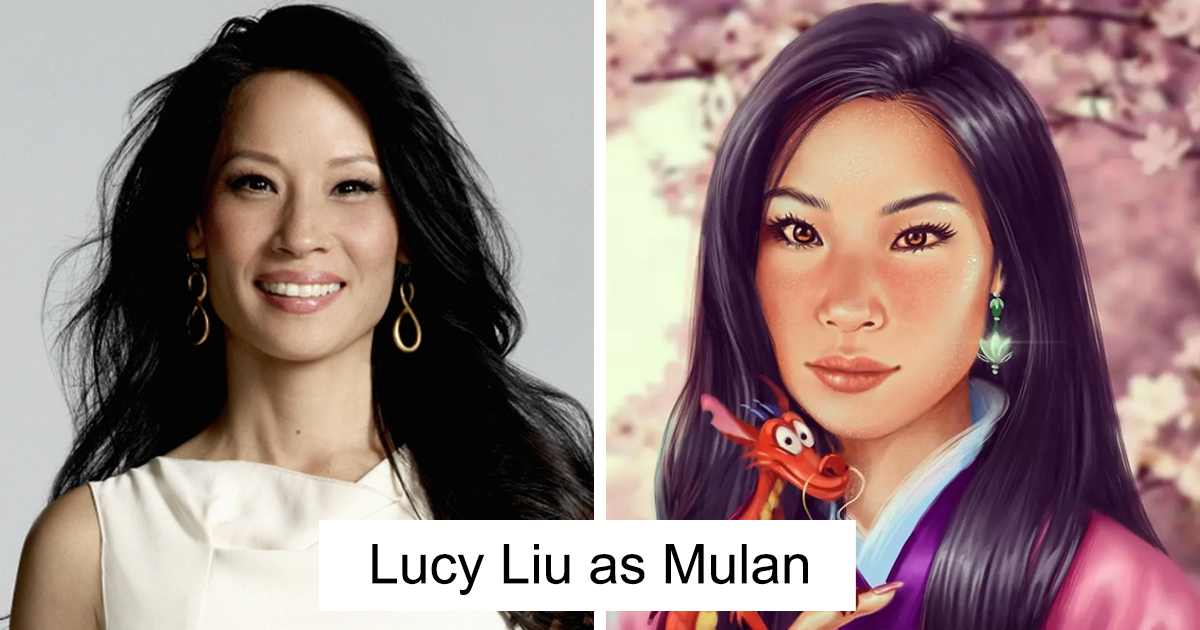
Lucy Liu as Mulan brings a sharper, more heroic energy. Mulan is not a princess in the traditional crown-and-castle sense, but she is one of Disney’s most admired heroines because of her courage, intelligence, and loyalty. Liu has long projected elegance with an edge, making the pairing feel powerful rather than merely pretty. The best Disney fan art does not only chase resemblance; it captures attitude. This one has attitude with a sword.
Rihanna as Tiana
Rihanna as Tiana is the kind of casting idea that makes the internet collectively sit up straighter. Tiana, from The Princess and the Frog, is ambitious, hardworking, stylish, and deeply connected to her dreams. Rihanna’s public imageentrepreneurial, musically influential, fashion-forward, and impossible to ignoreadds another layer to the character. The match feels regal, modern, and just a little intimidating in the best possible way. If Tiana ran a restaurant empire and a beauty brand before noon, nobody would be shocked.
Selena Gomez as Moana
Selena Gomez as Moana works because of warmth. Moana is brave, compassionate, and guided by a sense of responsibility bigger than herself. Gomez’s public persona often combines softness with resilience, and that emotional tone fits the ocean voyager surprisingly well. The visual connection may begin with hair and facial expression, but the deeper appeal is character-based. Moana is not trying to become someone else; she is trying to understand who she already is. That theme resonates far beyond animation.
Margot Robbie as Elsa
Margot Robbie as Elsa brings icy glamour with movie-star precision. Elsa is not an official Disney Princess in the same brand lineup as characters like Cinderella, Ariel, or Tiana, but she is absolutely part of the broader Disney royalty conversation. Robbie’s sharp features, cool blonde beauty, and ability to shift between vulnerability and power make the pairing easy to understand. Also, let us be honest: if Margot Robbie sang “Let It Go” on a mountain, the mountain would probably apologize for not being dramatic enough.
Rachel McAdams as Cinderella
Rachel McAdams as Cinderella has a gentle, classic quality. Cinderella’s appeal is not only the dress or the glass slipper; it is patience, hope, and emotional endurance. McAdams has played many characters with warmth and sincerity, making her a strong fit for a princess whose softness is often mistaken for weakness. In a modern reading, Cinderella is not passive. She survives a miserable household, stays kind, and still has enough emotional range left to dance with a stranger in formalwear. That is stamina.
The Art Behind the Magic
What separates strong celebrity Disney fan art from a basic costume sketch is visual translation. Morgun’s illustrations work because she understands how to move between realism and animation. A Disney face is simplified, expressive, and shaped for instant readability. A celebrity face has specific proportions, asymmetries, textures, and recognizable details. The challenge is to keep both identities alive at the same time.
That means the artist must make hundreds of small choices. How much should the eyes be enlarged? How soft should the jawline become? Which hairstyle belongs to the character, and which belongs to the celebrity? Should the expression reflect the Disney scene, the actor’s public persona, or a blend of both? When done well, the viewer sees the celebrity first, then the character, then both at once.
Costume design is another major reason the series feels polished. Disney princess costumes are loaded with visual shorthand. Ariel’s red hair and sea colors, Belle’s yellow gown, Rapunzel’s purple dress, Tiana’s green palette, and Mulan’s armor-inspired elements all tell viewers where they are before a caption is needed. Morgun uses those cues while keeping the portraits fresh enough to feel like fantasy casting rather than copy-and-paste cosplay.
Why Disney Princess Fan Art Keeps Coming Back
Disney princess fan art has remained popular because the characters are flexible symbols. They can be reimagined as modern professionals, superheroes, fashion models, parents, villains, warriors, historical figures, or celebrities. Every generation updates the princess idea to match its own conversations about beauty, independence, ambition, identity, and representation.
Early Disney princesses were often framed through romance and rescue. Later heroines became more adventurous, independent, and complex. Belle loved books. Mulan challenged gender expectations. Tiana pursued a business dream. Merida rejected a forced marriage. Moana led her people toward restoration. Raya entered a fractured world shaped by distrust. These characters are not interchangeable, which is exactly why celebrity pairings are so much fun. Each match becomes a tiny character analysis.
When fans argue that a celebrity “should be” a certain Disney princess, they are usually talking about more than appearance. They are reading public personality, roles, fashion, voice, confidence, and cultural meaning. A star can match a princess because of her hair, yesbut also because of her ambition, humor, poise, rebelliousness, or ability to look emotionally devastated while surrounded by suspiciously beautiful lighting.
Celebrity Culture Makes the Fantasy Even Bigger
There is a reason this concept feels tailor-made for the internet. Modern celebrity culture already turns actors and singers into characters. Red carpets have themes. Music videos build fantasy worlds. Magazine shoots transform stars into icons, rebels, angels, villains, and futuristic space duchesses. Morgun’s work simply makes that transformation more literal.
It also taps into the internet’s love of dream casting. Fans constantly imagine who should play whom in live-action remakes, reboots, Broadway adaptations, and alternate-universe movie franchises. A portrait of a celebrity as a Disney princess feels like a casting pitch with visual evidence. You do not have to explain why Lucy Liu would make a compelling Mulan when the illustration is already giving you cheekbones, courage, and battle-ready elegance.
At the same time, the art stays lighthearted. Nobody is demanding that every illustration become an actual film. The joy is in possibility. It is the same pleasure as saying, “This actor would be perfect for that role,” except now the idea arrives wearing a jewel-toned gown and possibly accompanied by a raccoon, dragon, frog, fish, or emotionally supportive snowman.
Not Just Princesses: Villains, Fairies, and Other Disney Icons
Although the princess portraits get plenty of attention, Morgun’s broader Disney-inspired work has also included villains and other animated icons. That expansion makes the project more interesting. Disney villains often have stronger silhouettes, sharper color stories, and more theatrical expressions than the heroes. Reimagining Lady Gaga as Ursula, Tom Hiddleston as Hades, or Rami Malek as Jafar gives the artist room to play with drama, humor, and menace.
Villain art also reminds us that “favorite character” does not always mean “nicest character.” Sometimes the most memorable figure in the movie is the one with the best entrance, the boldest eyeliner, and the least reasonable life plan. Disney villains are deliciously overdesigned, and celebrities with dramatic stage presence can slide into those roles with alarming ease.
This is one reason Morgun’s fan art feels richer than a simple princess lineup. It treats Disney as a full visual universe. Princesses bring romance and heroism. Villains bring theatrical chaos. Side characters bring comedy and surprise. Together, they create a playground where celebrity likeness becomes storytelling.
What Brands and Content Creators Can Learn From This Trend
For bloggers, artists, entertainment writers, and social media creators, the popularity of celebrity Disney princess art offers a useful lesson: audiences love familiar ideas presented through a fresh frame. The concept is instantly understandable, but the execution creates the value. Nobody needs a ten-paragraph explanation of “Rihanna as Tiana.” The idea lands immediately. The deeper analysis comes afterward.
That is powerful SEO content territory. Searchers may arrive looking for “celebrities as Disney princesses,” “Helen Morgun Disney art,” “Disney princess fan art,” or “celebrity Disney characters.” But they stay for commentary, examples, and interpretation. A good article should not merely list the pairings; it should explain why the pairings work, what they say about character design, and why fans keep sharing them years after the first viral post.
The trend also shows how visual culture crosses platforms. A portrait can begin on Instagram, appear in an entertainment roundup, move to Pinterest, resurface on Facebook, inspire Reddit discussions, and eventually become search-friendly evergreen content. That is the modern fan art lifecycle: draw, post, share, debate, rediscover, repeat.
Experiences and Reflections: Why This Topic Feels So Addictive
Anyone who has ever fallen into a late-night fan art rabbit hole understands the strange power of these celebrity Disney princess portraits. You open one image because it looks pretty. Then another catches your eye. Then you start forming opinions you did not know you had. Suddenly you are mentally recasting half of Hollywood as animated royalty while your laundry waits in the corner like a neglected side character.
The experience is fun because it feels participatory. You are not just looking at art; you are testing the artist’s choices against your own imagination. Does Amanda Seyfried really feel like Rapunzel? Yes, probably. Could someone else play Belle better? Maybe. Should Rihanna be Tiana, or is she too powerful to be limited to one kingdom? Reasonable question. This is the kind of harmless argument the internet was invented for, right after cat videos and before everyone started reviewing air fryers.
There is also a nostalgic pleasure in seeing childhood characters reinterpreted through adult pop culture. Many viewers grew up with Disney movies as emotional landmarks. The songs, colors, sidekicks, and dramatic castle silhouettes are stored somewhere deep in the brain, next to school memories and the exact sound of a VHS tape being pushed into a player. Celebrity portraits reopen that memory box, but with a modern twist. They say, “Remember this magical world? Here it is again, but now it has red-carpet lighting.”
For artists, the series can be inspiring because it makes creative study feel playful. Looking at Morgun’s work encourages viewers to notice shape language, color harmony, facial structure, costume cues, and expression. It becomes a mini lesson in visual storytelling. Why does one celebrity fit a princess while another does not? Why does one portrait feel alive while another fan edit might feel flat? The answer usually lives in the details.
For entertainment fans, the images create a safe space for imagination. Not every beloved character needs a remake, and not every remake needs a celebrity dream cast. But there is something delightful about imagining alternatives without pressure. A portrait can exist purely as a “what if.” What if Rachel McAdams stepped into Cinderella’s glass slippers? What if Lucy Liu carried Mulan’s sword? What if Margot Robbie ruled Arendelle with perfect posture and suspiciously flawless hair? The questions are silly, but the joy is real.
The best part is that this type of art makes viewers feel like co-creators. Fans suggest new pairings, share favorites, and build their own lists. The artist begins the conversation, but the audience keeps it moving. That is why celebrity Disney fan art continues to feel fresh. It is not only about princesses, celebrities, or nostalgia. It is about the pleasure of seeing two familiar worlds collide and discovering that, somehow, the shoe fits.
Conclusion
Helen Morgun’s celebrity Disney princess illustrations work because they understand both sides of the fantasy. They respect Disney’s iconic character design while celebrating the recognizable beauty, charisma, and personality of modern stars. The results are charming, polished, and extremely shareableexactly the kind of visual storytelling that makes the internet pause its scrolling for a few magical seconds.
The appeal goes beyond “this celebrity looks like that princess.” These portraits ask viewers to think about character, mood, style, and cultural memory. Blake Lively as Aurora, Amanda Seyfried as Rapunzel, Lucy Liu as Mulan, Rihanna as Tiana, Selena Gomez as Moana, and Margot Robbie as Elsa all work because they connect appearance with story. They feel like tiny alternate universes where Hollywood and animation meet for coffee, then accidentally start a kingdom.
In the end, the series reminds us why fan art matters. It is not official canon, and it does not need to be. Fan art gives audiences permission to imagine, remix, and revisit stories they love. Sometimes that imagination arrives as a sketch. Sometimes it arrives as a digital painting. And sometimes it arrives as your favorite celebrity looking so perfectly royal that even the fairy godmother would say, “Honestly, I have no notes.”
Note: This article discusses public fan art, Disney-inspired characters, and celebrity imagery for commentary and entertainment purposes. It is not affiliated with Disney, Helen Morgun, or the celebrities mentioned.