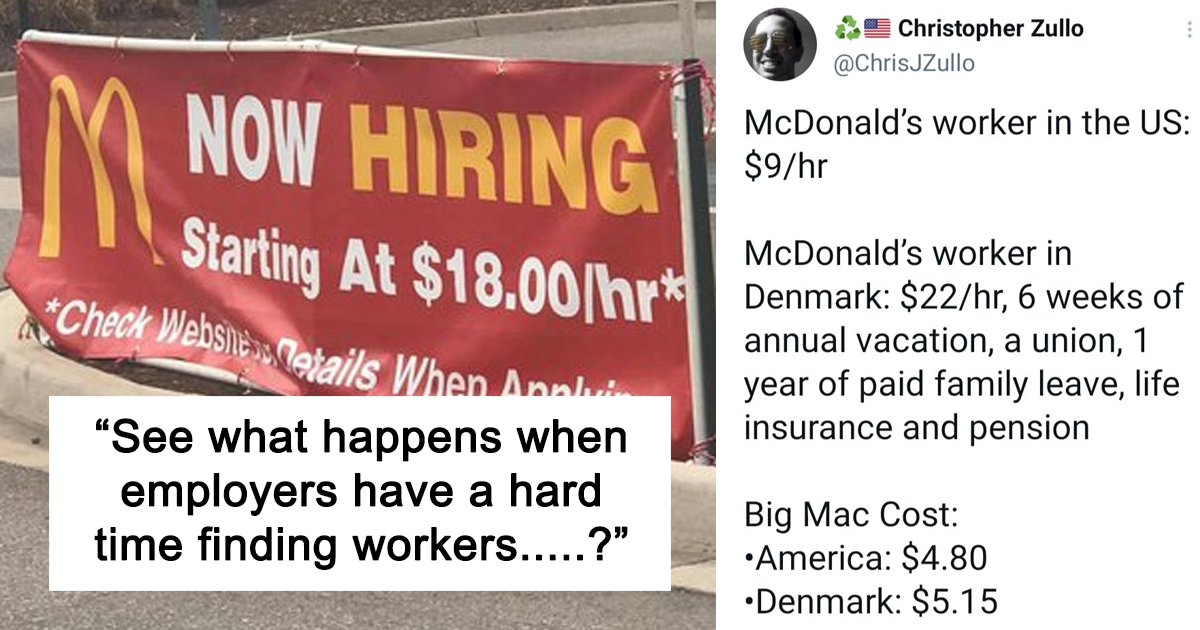
For years, the phrase “entry-level job” has done a lot of heavy lifting. It has been used to describe the person who opens the coffee shop before sunrise, restocks shelves after closing, handles a lunch rush with the calm of an air-traffic controller, and somehow smiles while a customer asks whether the coupon from 2017 is “still valid.” Now, after inflation, labor shortages, high turnover, and a long national debate over what work is actually worth, many restaurants and stores in the United States are finally raising salaries.
The change is not happening evenly. A cashier in Washington may see a very different paycheck from a fast-food worker in Mississippi. A national chain may advertise higher starting pay while a family-owned diner quietly worries about payroll, food costs, and whether customers will revolt over a $17 burger. Still, the larger trend is clear: wages in retail, restaurants, grocery, quick-service dining, and hospitality are under pressure to rise.
And people have thoughts. Workers say it is overdue. Customers say they support fair pay but do not love surprise fees. Business owners say they want to pay more but need the math to work. Economists say the labor market is changing. The internet, naturally, says all of this in capital letters.
Why Restaurants and Stores Are Raising Salaries Now
Restaurants and stores did not suddenly wake up one morning, sip an oat milk latte, and decide generosity was trending. Wage increases are being pushed by several forces at once: state minimum wage laws, competition for workers, turnover costs, inflation, consumer expectations, and the simple fact that low pay is no longer enough to keep many employees in high-pressure service jobs.
Retail and restaurant work has always required more skill than some people admit. A good server remembers orders, reads moods, manages timing, handles complaints, and walks the equivalent of a small hiking trail during a dinner shift. A store associate may act as cashier, inventory clerk, online-order picker, customer-service therapist, and unofficial security guard before lunch. These jobs are physically demanding, emotionally draining, and often scheduled at odd hours.
For a long time, employers could rely on a large pool of workers willing to accept low hourly pay. That pool is not as easy to access anymore. Many workers moved to warehouse jobs, gig work, health care support roles, remote customer service, or better-paying local employers. Others left the service industry during the pandemic and never returned. Restaurants and stores that want reliable staffing increasingly have to offer better pay, better scheduling, or at least fewer reasons for employees to quit before the new name tag gets printed.
The Wage Numbers Tell a Bigger Story
Recent wage data shows why this issue feels so personal. In food service, many workers still earn less than the national median across all occupations. Food and beverage serving jobs have historically sat near the lower end of the wage scale, and retail sales roles have also remained below the overall national median. That means a raise from $13 to $16 an hour may sound small in a corporate spreadsheet but feel enormous to someone choosing between groceries, gas, rent, and a phone bill.
At the same time, average hourly earnings in retail trade and food services have moved upward. This does not mean every worker is thriving. Averages can be sneaky little gremlins because they include supervisors, managers, full-time employees, part-time workers, and higher-wage regions. But the direction matters. Employers are paying more because the labor market, local laws, and worker expectations are forcing the conversation.
Minimum Wage Increases Are Pushing the Floor Higher
One of the biggest drivers is the state-by-state rise in minimum wage laws. While the federal minimum wage remains $7.25 an hour, many states and cities have moved far above that level. In some areas, $15 an hour is no longer treated as a radical demand. It is becoming the floor, and in high-cost cities, even that floor looks like a welcome mat with a hole in it.
Restaurants and retailers in states with higher wage floors often have to raise starting pay first, then adjust wages for experienced employees so the person training new hires does not end up making the same amount as someone who just learned where the mop bucket lives. This creates a “wage ladder” effect. When the bottom rung rises, the steps above it usually need attention too.
That is why minimum wage increases affect more than minimum wage workers. A shift lead, assistant manager, cook, stockroom employee, or senior cashier may expect a raise as well. Otherwise, experience starts to feel less like a career advantage and more like a souvenir from past exhaustion.
Workers Say: “Finally”
Many workers view the salary increases as overdue, not luxurious. Their argument is simple: if a job is essential enough to keep a restaurant open, a grocery aisle stocked, or a pharmacy checkout running, it should pay enough to make the job worth keeping.
Workers often point out that higher pay does more than improve morale. It reduces turnover, makes scheduling easier, and helps employees focus on service instead of constantly searching job boards during break time. A cook who can afford rent is more likely to stay. A cashier who feels respected is more likely to learn the store systems, handle customers professionally, and train others. A server who is not financially panicking may provide better hospitality because their brain is not busy calculating whether tips will cover the electric bill.
There is also a dignity issue. For many employees, the debate is not just about dollars. It is about being treated as adults with bills, families, goals, and bodies that get tired. The old idea that restaurant and retail work is only for teenagers has not matched reality for a very long time. Plenty of adults rely on these jobs as primary income, and many younger workers are also paying real expenses, not saving up for movie tickets and bubble gum like it is 1983.
Customers Say: “Yes, But Why Is My Sandwich $18?”
Customers are more complicated. Many support higher wages in theory. They want workers to earn more. They dislike seeing exhausted employees juggling impossible workloads. They agree that nobody should be yelled at over a missing sauce packet for poverty wages.
Then the bill arrives.
Rising menu prices, service fees, delivery charges, and tip prompts have made customers more sensitive. A family that used to eat out twice a week may now treat restaurant meals as a small financial summit meeting. Grocery shoppers notice when prices rise. Retail customers compare online deals before buying in-store. When businesses raise wages and pass some costs to customers, public support can turn into side-eye very quickly.
The most common customer complaint is not always higher prices themselves. It is confusion. People dislike mystery fees labeled “living wage fee,” “service charge,” or “employee wellness fee” when they appear near the end of the transaction. Customers tend to respond better when businesses are transparent: raise menu prices honestly, explain tipping policies clearly, and do not make the receipt look like it was assembled by a committee of raccoons.
Restaurant Owners Say the Math Is Brutal
Restaurant owners are not all sitting on yachts named “The Wage Suppressor.” Many independent operators work on thin margins. Food costs, rent, insurance, credit card fees, utilities, delivery app commissions, repairs, and payroll all compete for the same dollar. When labor costs rise, owners have limited choices: raise prices, reduce hours, simplify menus, adopt technology, cut waste, or accept lower profits.
For large chains, the solution may include kiosks, mobile ordering, smaller menus, automated scheduling, and tighter inventory systems. For small restaurants, the options are less glamorous. They may cross-train employees, close one day a week, reduce late-night hours, or redesign menus around fewer ingredients. In other words, the future of restaurant labor may involve both better pay and fewer places willing to serve a 14-item brunch menu with three kinds of aioli.
Still, higher pay can also save money. Replacing workers is expensive. Constantly hiring and training new staff drains managers, frustrates customers, and creates mistakes. If better wages keep experienced employees longer, payroll increases may partly pay for themselves through lower turnover and better productivity.
Retailers Are Using Pay as a Recruiting Tool
Retailers face a similar challenge. Stores need workers who can handle in-person shopping, online order pickup, returns, inventory, seasonal rushes, and customers who believe “the website said you had one” is a legally binding statement.
Many large retailers have raised starting wages over the past several years, especially in competitive labor markets. Some now advertise hourly pay ranges, bonuses, tuition programs, predictable scheduling, or promotion paths. These benefits matter because retail workers are comparing opportunities. A store that offers slightly higher pay but chaotic scheduling may lose employees to a warehouse, a hospital cafeteria, or another retailer with more predictable shifts.
Pay transparency is also changing expectations. Job seekers can compare wages online before applying. If one employer offers $17 an hour and another offers $13 with a “fast-paced family environment,” applicants know how to translate that. Usually, it means “bring comfortable shoes and emotional armor.”
People Are Divided on Whether Higher Wages Cause Higher Prices
The biggest debate is whether higher salaries lead directly to higher prices. The honest answer is: sometimes, partly, but not always in the dramatic way people imagine. Labor is one major cost, especially in restaurants, but it is not the only cost. Food inflation, rent, utilities, insurance, supply chains, marketing, debt, and technology also affect prices.
When a burger goes up by $2, wages may be part of the reason. But so might beef costs, packaging, delivery app fees, rent increases, or a landlord who believes the strip mall parking lot is made of gold. Blaming workers alone is convenient, but it is rarely the full picture.
On the other hand, customers are not wrong to notice that prices have risen. Consumers have budgets too. A worker buying lunch is also a customer somewhere else. That is why the wage debate is not simply “workers versus customers.” It is a bigger affordability problem. People want fair pay, reasonable prices, healthy businesses, and no surprise receipt math. Apparently, wanting all four makes you an economist now.
Better Pay Could Improve Service Quality
One underrated benefit of higher pay is better service. Restaurants and stores depend heavily on experienced employees. A skilled line cook keeps tickets moving. A strong shift manager prevents chaos. A veteran cashier spots errors quickly. A confident sales associate can answer questions without vanishing into the back room like a magician with anxiety.
When wages are too low, experienced workers leave. Service quality drops. Customers wait longer. Managers spend more time hiring than improving operations. Higher pay gives businesses a better chance to keep employees who know what they are doing.
This does not mean money solves every workplace problem. Bad management can ruin a good wage. Unpredictable schedules, understaffing, disrespectful customers, and lack of advancement still push people out. But better pay is a foundation. You cannot build loyalty on pizza parties and inspirational posters alone, especially when the poster says “teamwork” and the team is short three people.
The Tipping Debate Is Getting Louder
Restaurant wage increases also collide with America’s complicated tipping culture. Some workers depend heavily on tips. Others prefer a higher base wage with less uncertainty. Customers are increasingly tired of tip prompts appearing at coffee counters, bakeries, takeout windows, and tablets that spin around with the emotional force of a courtroom verdict.
As wages rise, some restaurants are experimenting with service charges, no-tip models, or higher menu prices. Each system has trade-offs. Tips can reward strong service but create income instability and unequal earnings between front-of-house and back-of-house staff. Service charges can support wages but frustrate customers if they are not clearly explained. Higher menu prices are more transparent but may scare away price-sensitive diners.
The best approach is clarity. Customers should know what they are paying, workers should know what they will earn, and managers should not need a flowchart to explain whether a fee goes to employees, benefits, payroll taxes, or the mysterious “operations” cloud.
Small Businesses Need a Different Strategy Than Big Chains
A national chain can spread labor cost increases across hundreds or thousands of locations. It can invest in apps, kiosks, supply-chain software, and corporate analytics. A small restaurant or local shop has fewer cushions. That does not mean small businesses should be exempt from fair pay, but it does mean the transition can be harder.
Small businesses that handle wage increases well often do three things. First, they simplify. Fewer menu items, better inventory control, tighter scheduling, and smarter purchasing can reduce waste. Second, they communicate. Customers are more likely to support a local business when they understand that higher prices help keep good staff. Third, they invest in retention. A reliable employee who stays for three years may be worth far more than a revolving door of cheaper new hires.
In local communities, the conversation can be more personal. Customers may know the barista, butcher, cashier, or server by name. When wages rise, people may be more willing to support the change if they see the human being behind the paycheck.
Experiences From the Floor: What This Raise Feels Like in Real Life
Imagine a fast-casual restaurant on a Friday night. The line reaches the door, the printer spits out online orders like it is personally offended, and someone at table six wants to know whether the gluten-free bun is also “emotionally gluten-free.” In that environment, a raise is not an abstract policy. It is the difference between feeling trapped and feeling like the job might be worth the stress.
For a worker, a higher hourly wage can change small daily decisions. It may mean taking a rideshare home after a late shift instead of waiting alone for a bus. It may mean buying groceries without doing mental gymnastics in the cereal aisle. It may mean saying yes to a dentist appointment, replacing work shoes before they become archaeological artifacts, or working one job instead of two. These are not luxury upgrades. They are ordinary life repairs.
For a store associate, a raise can also change attitude. When employees feel underpaid, every difficult customer lands harder. A complaint about a return policy feels personal. A messy fitting room feels like an insult wrapped in denim. But when pay improves, workers are more likely to feel that the effort is recognized. They may still have bad days, because retail is retail and someone will always ask if the Christmas sale applies in July, but the job feels less like a dead end.
Managers notice the difference too. Better pay can reduce the constant churn that makes service businesses exhausting. A manager who keeps trained workers can build stronger schedules, assign responsibilities more confidently, and spend less time begging people to cover shifts. The atmosphere improves when the team is not permanently half-new, half-burned-out, and fully suspicious of the next schedule change.
Customers experience the results, even if they do not always connect them to wages. A well-paid, experienced employee is more likely to know the menu, solve a problem, recommend the right product, and keep a line moving. Good service feels effortless to the customer precisely because someone behind the counter has learned how to make complicated work look simple.
Of course, not every reaction is positive. Some customers feel squeezed by higher prices and ask why they should pay more. Some workers say raises are still not enough in expensive cities. Some owners feel like they are being asked to solve a national affordability crisis with a cash register and a walk-in freezer. Everyone has a point, which is deeply inconvenient for anyone hoping for a simple villain.
The most realistic experience is mixed but hopeful. Wage increases will not magically fix housing costs, health care costs, childcare costs, or the price of eggs when eggs decide to act like rare gemstones. But they do give workers more breathing room. They push businesses to build better models. They force customers to think more honestly about the labor behind convenience.
In the end, the raise is not just about a number on a paycheck. It is about whether service work can become more sustainable. Restaurants and stores need people, not just “labor units.” Customers want good service, not a skeleton crew sprinting through burnout. Workers want respect, not applause for surviving low pay. If higher salaries help bring those interests closer together, then maybe the future of dining out and shopping in America will be a little fairer, a little clearer, and hopefully still include fries.
Conclusion: The Raise Is Here, but the Debate Is Not Over
Restaurants and stores in the U.S. are finally starting to raise salaries because the old model is showing cracks. Workers need pay that reflects the real cost of living. Employers need stable teams. Customers want fair treatment for employees but also want prices they can understand. The tension between those needs will define the next phase of American service work.
The good news is that higher wages can create better jobs, lower turnover, and stronger customer experiences. The challenge is making the transition transparent and sustainable. Businesses that simply add confusing fees may lose trust. Businesses that communicate clearly, improve operations, and treat employees as long-term assets may come out stronger.
People are sharing their thoughts because this issue touches almost everyone. We eat at restaurants. We shop in stores. We work, tip, budget, complain, support local businesses, and occasionally stare at a receipt like it has betrayed us personally. The salary debate is really a bigger conversation about what everyday work is worth in modern America. And that conversation is not going away anytime soon.