Before Wi-Fi became the household oxygen and fiber internet started flexing like a gym influencer, there was ISDN: Integrated Services Digital Network. The name sounded like something printed on a government binder, but for a brief and fascinating era, ISDN felt like the future had finally found the phone jack.
To remember ISDN is to remember a time when getting online was not invisible. It made sounds, required hardware, involved phone companies, and occasionally inspired someone in the house to yell, “Are you using the line?” ISDN arrived as a clever bridge between the analog telephone world and the fully digital broadband age. It promised clearer voice calls, faster data, video conferencing, remote work, digital faxing, and a more elegant way to squeeze modern communication through old copper wires.
Was it perfect? Absolutely not. ISDN could be expensive, confusing, unevenly available, and marketed with the warmth of a tax form. But it mattered. It helped teach businesses, broadcasters, engineers, and early internet users that the future of communication would be digital, simultaneous, and always demanding more bandwidth than anyone expected five minutes earlier.
What Was ISDN?
ISDN, short for Integrated Services Digital Network, was a set of digital communication standards designed to transmit voice, data, video, and signaling over the public switched telephone network. In plain American English: it was a way to turn traditional phone lines into cleaner, smarter digital pipes.
Unlike ordinary dial-up modems, which converted digital computer signals into analog tones and then back again, ISDN was digital from the customer’s equipment through the telephone network. That made connections faster to establish, more stable, and more predictable. It also allowed multiple services to share one connection. You could carry a voice call on one channel and data on another, which felt like wizardry when many households were still negotiating custody of the phone line like it was a rare family heirloom.
The “integrated services” part was the big idea. Instead of treating voice, fax, data, and video as separate islands, ISDN aimed to bring them together on a standardized digital network. In theory, one connection could support several communication needs. In practice, the experience depended heavily on local phone company support, equipment compatibility, monthly pricing, and whether the person installing it had a strong coffee and a good mood.
How ISDN Worked Without Making Your Brain File a Complaint
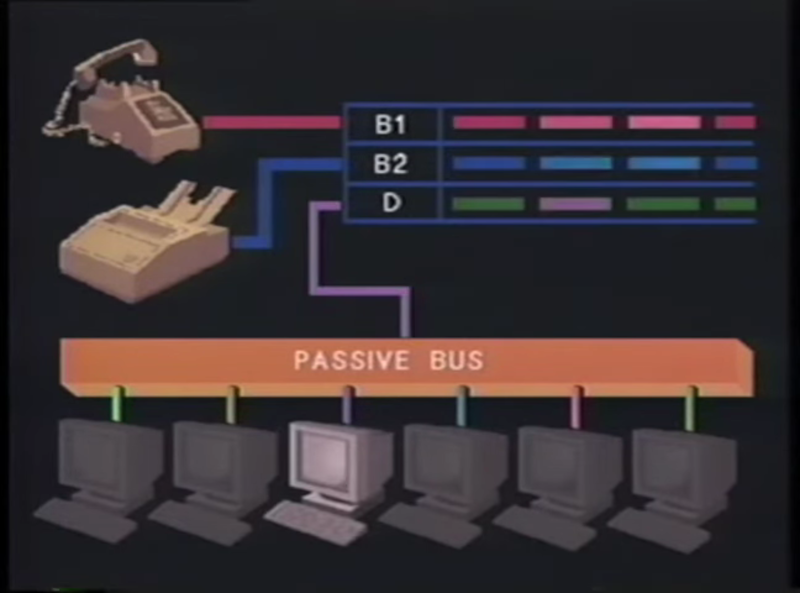
ISDN was built around channels. The two most important types were B channels and D channels.
B Channels: The Workhorses
B channels, or bearer channels, carried the actual voice or data. Each B channel commonly offered 64 kbps. By modern standards, 64 kbps looks like a rounding error. Today, one browser tab can inhale more bandwidth than an entire office once used. But in the 1980s and 1990s, a reliable 64 kbps digital channel was a serious upgrade over many analog modem connections.
D Channels: The Traffic Cops
The D channel handled signaling and control information. It helped set up and tear down calls, manage network communication, and keep the digital conversation organized. Think of it as the person at a busy restaurant who does not cook the food but somehow makes sure everyone gets seated, served, and billed without chaos. Mostly.
BRI vs. PRI: The Two Main Flavors of ISDN
ISDN usually appeared in two main forms: Basic Rate Interface and Primary Rate Interface. These sound like terms invented by people allergic to fun, but they were practical and important.
Basic Rate Interface (BRI)
BRI was aimed at homes, small offices, telecommuters, and specialized users. It used a structure commonly described as 2B+D: two 64 kbps B channels plus one 16 kbps D channel. The two B channels could be used separately, such as one for voice and one for data, or bonded together for a 128 kbps data connection.
That 128 kbps connection was one of ISDN’s most memorable selling points. It was not broadband as we understand the word now, but it was fast enough to feel luxurious compared with slower dial-up connections. Web pages loaded with less suspense. Downloads were still a test of patience, but at least they no longer felt like waiting for erosion to sculpt a canyon.
Primary Rate Interface (PRI)
PRI was the bigger business-class version. In North America, PRI typically ran over a T1 line and provided 23 B channels plus one 64 kbps D channel. That made it useful for PBX phone systems, call centers, large offices, dial-in internet access banks, and organizations that needed many simultaneous voice or data channels.
For many businesses, PRI lasted longer than consumer ISDN because it solved a real operational problem. A company could connect many calls through a single digital trunk instead of managing a nest of individual analog lines. It was not glamorous, but neither are electrical panels, and everyone suddenly cares about those when the lights go out.
Why ISDN Felt Revolutionary
To appreciate ISDN, you have to mentally step away from today’s world of unlimited streaming, cloud storage, and video calls from grocery store parking lots. In the era when ISDN gained attention, many people were still using analog modems. A 28.8 kbps modem was exciting. A 56 kbps modem was a headline. Connection speeds were fragile, noisy, and often optimistic in the way a weather forecast is optimistic before a picnic.
ISDN offered several advantages. It connected faster than traditional modems. It provided cleaner digital quality. It could support simultaneous voice and data. It made early video conferencing more realistic. It gave remote offices a better way to connect to corporate networks. For broadcasters and voice professionals, ISDN became especially valuable because it could deliver reliable, high-quality audio between studios.
That last point is important. ISDN was not just “old internet.” It became part of professional media workflows. Radio stations, recording studios, voice-over artists, and production houses used ISDN lines to send broadcast-quality audio from one location to another. Long before everyone had remote collaboration apps, ISDN helped a narrator in one city work with a producer in another without mailing tapes, booking flights, or praying over a questionable phone patch.
The 1990s: ISDN’s Moment in the Sun
The 1990s were a strange and wonderful period for networking. The internet was exploding into public life, but broadband was not yet common. People wanted faster access, businesses wanted digital connectivity, and phone companies wanted to modernize their copper networks without replacing every line with fiber overnight.
ISDN seemed perfectly positioned. It used existing telephone infrastructure, offered digital service, and promised a path toward the “information superhighway,” a phrase that appeared so often in the 1990s it should have had its own lane and toll booth.
In 1992, a major interconnection of regional ISDN networks in the United States was celebrated as a step toward nationwide digital service. Around the same era, National ISDN standards tried to reduce compatibility problems across different switches, vendors, and regional carriers. That standardization effort mattered because early ISDN could be painfully inconsistent. Buying equipment was one thing; making it behave with the local switch was another. The experience sometimes felt less like installing future technology and more like negotiating peace between rival kingdoms.
Why ISDN Never Became the Household Standard
ISDN had promise, but several forces kept it from becoming the universal home internet solution.
It Was Often Too Expensive
Monthly service fees, installation charges, usage pricing, terminal adapters, and configuration costs could make ISDN feel like a premium product. For households used to paying for a regular phone line and an internet provider, ISDN could look like a luxury upgrade rather than an obvious necessity.
It Was Confusing
ISDN was not always easy to explain or buy. Consumers had to understand BRI, service profiles, directory numbers, SPIDs, terminal adapters, and local availability. SPIDs, or Service Profile Identifiers, deserve special mention because they haunted many North American ISDN setups. They were strings of numbers needed to identify services on the line. In theory, simple. In practice, they turned many installations into a small detective story with worse lighting.
Broadband Arrived With Bigger Muscles
DSL and cable internet changed the game. They offered higher speeds, always-on connections, and a simpler pitch: faster internet without dialing a connection each time. As DSL matured, it used copper telephone lines more aggressively than ISDN ever could. Cable providers used coaxial networks to deliver speeds that made 128 kbps look quaint. Later, fiber made the whole comparison unfair, like racing a bicycle against a jet.
Analog Modems Improved Too
ISDN also had to compete with cheaper analog modems. By the late 1990s, 56 kbps modems became widespread. They were slower than bonded ISDN, but they were inexpensive, familiar, and often “good enough” for casual users. In technology markets, “good enough and cheap” frequently beats “better but confusing.”
ISDN in Business, Broadcasting, and Remote Work
Even as ISDN struggled as a mainstream consumer product in the United States, it remained useful in business and professional settings. PRI lines became common for office phone systems and call centers. Banks, retailers, medical offices, and branch locations used ISDN for backup connectivity, point-of-sale systems, and controlled digital links. Network engineers appreciated ISDN for dial-on-demand routing and backup WAN connections because it could be activated when a primary circuit failed.
Broadcasters and voice professionals developed a special affection for ISDN. For years, it was the gold standard for remote voice-over sessions and live studio connections. A voice actor could record from a home studio while a producer monitored and directed from elsewhere. The connection was stable, low-latency, and trusted. Modern tools such as Source-Connect, ipDTL, Zoom, and other internet-based audio platforms eventually took over, but ISDN held its place far longer in audio production than many people realize.
That is one of ISDN’s odd legacies: it became both obsolete and indispensable at the same time, depending on the industry. For a teenager browsing the early web, ISDN may have looked like a pricey stepping stone. For a national radio show, it could be the thing that kept a remote guest sounding professional.
What ISDN Taught the Internet Age
ISDN taught several lessons that still echo through modern communications.
Digital Beats Analog for Reliability
ISDN showed the practical value of end-to-end digital communication. Cleaner signaling, faster setup, and predictable channels mattered. That principle carried forward into DSL, cable internet, fiber, VoIP, and modern unified communications.
Standards Matter
ISDN also proved that technology can suffer when standards are unevenly implemented. A great technical concept can stumble if customers face compatibility issues, confusing provisioning, and inconsistent support. The history of ISDN is a reminder that infrastructure is not just wires and protocols; it is also customer service, pricing, documentation, and whether the installer has the right adapter in the truck.
Bandwidth Demand Always Wins
ISDN felt fast until the web became more visual, software downloads grew larger, and people wanted audio, video, and always-on access. The hunger for bandwidth did not politely stop at 128 kbps. It kept going, raided the fridge, and asked for fiber.
The Slow Fade of ISDN
ISDN did not vanish overnight. Technologies rarely do. They linger in closets, data centers, broadcast racks, government systems, and forgotten invoices. Consumer ISDN faded as DSL, cable, fiber, cellular data, and VoIP became dominant. Businesses migrated from PRI to SIP trunking and cloud phone systems. Broadcasters shifted to IP-based audio tools. The copper network itself began giving way to fiber and wireless alternatives.
By the 2020s, ISDN had become a legacy technology in most places. Some carriers stopped selling new service. Others retired old circuits region by region. Even software support began disappearing. In 2026, reports noted that old ISDN-related code was being removed from the Linux kernel along with other legacy networking components. That was not just a technical cleanup; it was a symbolic retirement party for a technology that once represented the future.
Still, calling ISDN a failure would be too simple. It was more like a bridge that got overshadowed by a freeway. Not everyone used it, not everyone loved it, but it helped move telecommunications toward the fully digital world we now take for granted.
Remembering ISDN Through Real-World Experience
Remembering ISDN is not only about channel structures and network standards. It is also about the feeling of early digital connectivity. It was the experience of ordering a special line and waiting for the phone company to install it. It was the little box on the desk with blinking lights that made you feel like mission control had opened a branch office in your spare room. It was the satisfaction of watching a connection come up quickly while your old modem sat nearby, suddenly looking like a retired banjo player.
For home users who had ISDN, the upgrade could feel dramatic. Web pages appeared faster. Email attachments downloaded with less theatrical suffering. Online gaming, where supported, could feel more responsive. Remote access to office systems became less painful. You could bond two B channels for extra speed, then drop one channel if you needed a voice call. This was not seamless by modern standards, but at the time it felt wonderfully clever, like the phone line had learned a new trick.
There was also a ritual quality to using ISDN. You knew your hardware. You knew your terminal adapter. You knew the local access number. You knew that one wrong configuration setting could turn a promising afternoon into a long conversation with technical support. In many setups, users had to enter SPIDs exactly right. One misplaced digit could ruin everything. ISDN did not forgive typos; it stared at them with bureaucratic disappointment.
In small businesses, ISDN often felt like a professional upgrade. A company with a few remote workers could connect branch offices more reliably. A design firm could send larger files without tying up ordinary phone service forever. A medical or legal office could use digital lines for data and voice with more confidence. For companies that were not ready for leased lines or early broadband, ISDN occupied a useful middle ground.
For audio professionals, the memories are even stronger. Many voice actors built home studios around ISDN because clients expected it. Booking a session meant checking line quality, connecting to a studio, and performing in real time while someone hundreds or thousands of miles away directed the read. It gave remote work a professional structure before remote work became normal. When ISDN worked, it worked beautifully. When it failed, everyone suddenly became a part-time telecom engineer.
The funny thing about remembering ISDN is that the numbers now seem tiny. Two 64 kbps channels. A 128 kbps bonded connection. A PRI with 23 channels. These specs sound modest in an age when phones casually stream high-definition video while also tracking steps, maps, messages, and whatever app is currently asking for permission to know your location. But context matters. ISDN was impressive because it made digital communication feel reachable through infrastructure people already had.
There was a certain optimism around ISDN. It belonged to the era when people believed the phone network could evolve into a grand digital platform for everything: voice, video, fax, data, education, shopping, business, and entertainment. That dream did come true, just not exactly through ISDN. The internet became the platform. Broadband became the access method. IP swallowed voice, video, and messaging like a very hungry protocol with excellent lawyers.
And yet, ISDN deserves a respectful nod. It was part of the learning curve. It helped users understand that digital networks could combine services. It gave businesses practical tools. It supported broadcasters and voice talent for decades. It introduced many people to the idea that communication lines did not have to be single-purpose. It also gave us enough acronyms to season an entire alphabet soup.
If you ever configured an ISDN terminal adapter, waited for both B channels to connect, or celebrated a stable 128 kbps link, you remember the little thrill. It was not just speed. It was control. It was the sense that the old copper wire in the wall had been hiding secret talents. ISDN may be retired from the spotlight, but it still has a place in the museum of technologies that made the modern internet possible.
Conclusion: Why ISDN Still Matters
ISDN occupies a fascinating place in telecommunications history. It was too advanced to be ordinary phone service and too limited to survive the broadband explosion. It promised integrated digital communication before most homes were ready for it, and it gave businesses and media professionals a dependable tool during a critical transition period.
Remembering ISDN means remembering the moment when the telephone network tried to become the internet’s on-ramp. It means remembering that progress often arrives in awkward middle chapters: not fully old, not fully new, but absolutely necessary. ISDN may no longer be the star of connectivity, but it helped write the script for the digital world we use every day.
Note: This article is written for web publication and synthesizes historically accurate public information about ISDN, telecommunications standards, business use cases, and legacy internet access without embedding source links.