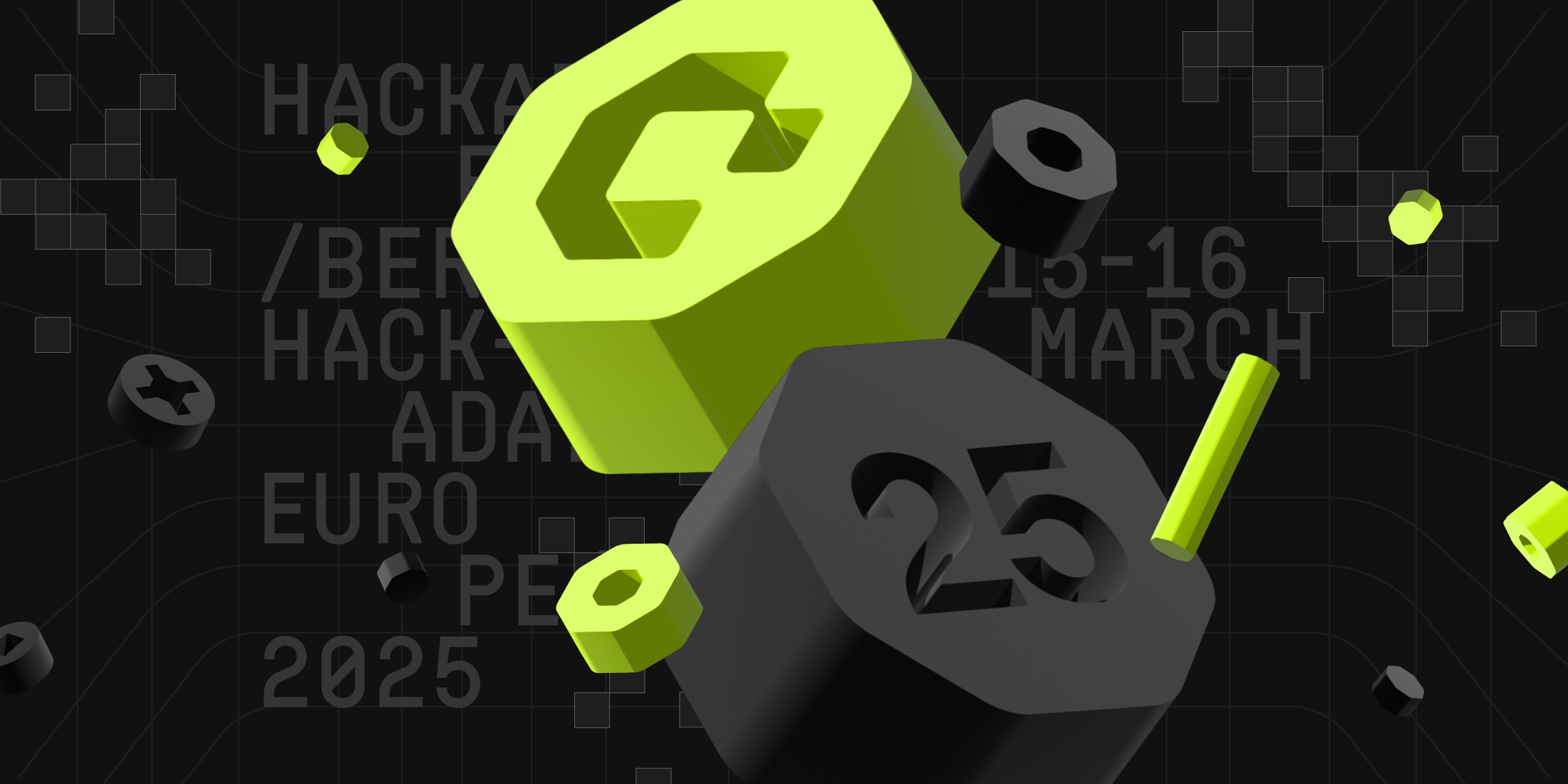
Hackaday Europe 2025 brought the hardware-hacking crowd back to Berlin with a packed speaker schedule, an official event page, hands-on workshops, badge hacking, a livestream, and the kind of wonderfully specific engineering energy that makes a room full of soldering irons feel like a social network with better LEDs.
What Was Hackaday Europe 2025?
Hackaday Europe 2025 was a hardware, hacking, and design conference held in Berlin, Germany, centered around talks, workshops, community projects, badge culture, and the joyful chaos of people who look at a circuit board and think, “Yes, but what if it also played music?” The official Hackaday Europe 2025 event page listed the main dates as March 15–16, with a Friday evening pre-party on March 14, making the weekend feel less like a traditional conference and more like a compact maker festival with a schedule.
The event took place at MotionLab.Berlin, a hardtech and makerspace environment located at Bouchéstraße 12, Halle 20, in Berlin. That venue choice mattered. Hackaday Europe is not the sort of event that wants beige walls, sleepy conference carpeting, and a projector that requires three adapters and a prayer. It needed a space associated with prototyping, machinery, startups, art, robotics, and physical invention. In other words, the building had to understand why someone might arrive carrying a PCB, a laptop, a roll of tape, and a suspiciously enthusiastic grin.
The official event page acted as the main hub for attendees and remote viewers. It gathered the speaker lineup, schedule, workshop details, venue information, sponsor credits, and practical weekend structure in one place. Hackaday also published a dedicated announcement confirming that the speaker schedule was finalized and that the official event page was live, which helped consolidate information that had previously appeared across separate posts about speakers, workshops, lightning talks, and meetup plans.
Hackaday Europe 2025 Official Event Page: Why It Mattered
For a niche technical event, the official event page is more than a digital flyer. It is the map, the schedule board, the speaker directory, the workshop guide, and occasionally the emotional support document you check when you are trying to remember whether the talk about flexible PCBs comes before dinner or after your third coffee.
The Hackaday Europe 2025 official event page clearly organized the conference into major sections: speakers, workshops, schedule, venue, and sponsors. This made it especially useful for three different audiences. First, in-person attendees could plan their Saturday around talks, lunch, dinner, workshops, and the late-night badge hacking ceremony. Second, remote viewers could use the schedule to follow Saturday talks through Hackaday’s streaming information. Third, readers who discovered the event after the weekend could understand the shape of the program and use it as a guide to the archived talk topics.
From an SEO and user-experience perspective, that structure is exactly what searchers want when typing phrases like “Hackaday Europe 2025 speaker schedule,” “Hackaday Europe official event page,” “Hackaday Europe 2025 speakers,” or “Hackaday Europe Berlin schedule.” The audience does not want vague hype. They want names, times, topics, location, livestream details, and a sense of whether the event is about embedded systems, open hardware, art machines, hacker culture, or all of the above. Conveniently, the answer is: all of the above, with LEDs.
Hackaday Europe 2025 Speaker Schedule Overview
The Saturday program on March 15 was the main speaker day. The schedule started with registration and breakfast from 9:00 to 10:00, followed by opening remarks from 10:00 to 10:20. After that, the event moved quickly into a lineup that blended open-source electronics, hardware manufacturing, silicon imaging, NFC payment systems, pinball hacking, product design lessons, light sculpture, retrocomputing collaborations, flexible PCBs, CNC software, hacker camp history, and participatory art.
Morning Talks: Compostable Electronics, Badge Manufacturing, and Silicon Imaging
The keynote was delivered by David Cuartielles, co-founder of Arduino, with the talk “What if the Future [of Electronics] was Compostable?” Scheduled from 10:30 to 11:20, the keynote set a thoughtful tone for the day. Instead of treating electronics only as faster, smaller, and shinier, the topic pushed the audience to think about sustainability, education, materials, and the long-term consequences of hardware design.
At 11:30, Giovanni Salinas presented “Manufacturing the Hackaday Supercon Badge.” For anyone familiar with Hackaday culture, the badge is not just a name tag. It is a small electronic playground, a social object, and sometimes a puzzle box that happens to hang around your neck. A talk about manufacturing the badge therefore speaks to the collision between design ambition, deadlines, production reality, and community expectations. In normal industries, this is called product development. In Hackaday terms, it is also called “fun, but with more panic.”
At noon, Bunnie Huang gave “Seeing Through Silicon with IRIS (InfraRed, in-situ) Imaging.” The topic focused on imaging silicon chips in certain packages without removing them from a circuit board. It fit perfectly into the Hackaday universe: practical, technical, slightly magical to outsiders, and deeply appealing to anyone who has ever wanted to know what a chip is doing without turning the whole project into expensive confetti.
Afternoon Talks: NFC, Pinball, Startups, Light, Collaboration, and Flexible PCBs
After lunch, Daniel Büchele and Andre Zibell presented “Developing a NFC Based Decentralized Payment System for a Music Festival.” This was one of those talks that sounds narrow until you think about everything hiding inside it: custom hardware, payment terminals, offline reliability, user experience, festival logistics, security tradeoffs, and the problem of making technology behave while humans are dancing nearby.
Daniel Dakhno followed with “Hacking a Pinball Machine,” a topic that feels almost custom-built for Hackaday. Pinball machines are physical computers with drama. They involve timing, sensors, solenoids, scoring logic, mechanical assemblies, lights, sound, and enough personality to make debugging feel like negotiating with a tiny arcade gremlin.
Sera Evcimen’s “Hardware Startup / Product Pitfalls” brought a different but equally important flavor to the program. Hardware founders often learn the hard way that a working prototype is not the same thing as a reliable product, a scalable supply chain, or a business that can survive manufacturing surprises. Her topic spoke directly to hardtech teams that need more than enthusiasm and a 3D-printed enclosure.
Erik Bosman’s “Creating Light Sculptures for Fun and…Mostly for Fun” shifted the mood toward art, geometry, software, and electronics. His work with light sculptures showed how technical skill can become visual expression. In a schedule filled with boards, badges, and systems, this talk reminded attendees that hardware hacking does not always need a commercial reason. Sometimes the reason is simply: because glowing polyhedra are excellent.
The collaboration talk from Andy Geppert, Pierre Freyermuth, and Anders Nielsen, “The Core64 – NeonPixels – 65uino Collaboration,” represented one of Hackaday’s strongest community themes: projects do not exist in isolation. Retrocomputing, microcontrollers, neon displays, old-school logic, and international collaboration all converged into a single session. That kind of cross-pollination is exactly why hardware conferences still matter in a world overflowing with online tutorials.
Rehana Al-Soltane presented “Make PCBs Bend Over Backwards for You: How to Design Flexible PCBs.” Flexible PCBs are a fascinating bridge between electronics, wearables, fabrication, and design freedom. The talk addressed how circuit boards can move beyond the usual flat rectangle and become part of objects that bend, wrap, flex, and adapt to unusual forms.
Evening Talks: CNC Software, Matrix Boards, Hacker Camps, Plotters, and Badge Hacking
Francis Stokes gave “More Than Motors: Decoding the Software Behind Pen Plotters and CNC Devices.” Many people focus on the belts, motors, frames, and mechanical assembly of CNC-style devices, but the firmware and control software are what turn a pile of components into a machine that draws, cuts, moves, or occasionally tries to redecorate your desk. This session highlighted the hidden software layer that drives physical tools.
Alun Morris closed the early evening talk block with “Half-size Hacking – 0.05in Matrix Boards Under the Microscope.” His topic appealed to anyone who enjoys minimalism, dense builds, and the quiet satisfaction of making electronics smaller without immediately making them impossible to repair.
After dinner, Christel Sanders presented “HEU1993 to WHY2025: Dutch Hacker Camps from the Past and the Future,” a historical session connecting decades of hacker camp culture. That kind of talk is valuable because technical communities are not only defined by tools; they are defined by rituals, gatherings, shared jokes, field infrastructure, and the collective memory of people who built things outdoors before “maker culture” became a marketing phrase.
Niklas Roy followed with “Vectors, Pixels, Plotters and Public Participation,” bringing together art, science, technology, and audience interaction. His work sits in the delightful zone where machines are not only tools but performers. The evening then moved into live performance and the Badge Hacking Ceremony, scheduled from 22:00 to midnight, followed by a party that carried the event into the early hours. Because apparently hardware people do sleep, just not during conferences.
Hackaday Europe 2025 Workshops
Alongside the talks, Hackaday Europe 2025 included hands-on workshops on Saturday. These workshops gave attendees a chance to move from listening to doing, which is a crucial distinction in a community where half the audience is probably resisting the urge to open something with a screwdriver.
Tiny Tapeout Workshop with Matt Venn
The Tiny Tapeout workshop, led by Matt Venn, ran from 13:30 to 16:30. It focused on creating a design and preparing it for manufacture on an open-source ASIC. Participants were expected to learn core ideas behind semiconductor design, digital logic, simulation, and GDS file creation for fabrication. For many attendees, this kind of workshop turns chip design from a mysterious industrial process into something approachable enough to attempt with a laptop, a GitHub account, and a willingness to learn.
Satisfying-Senseless-Sonic Add-On Workshop
The Satisfying-Senseless-Sonic Add-On workshop ran from 17:00 to 19:00 and involved Mitch Altman, with additional support from makers connected to the project. The idea was wonderfully Hackaday: build a noise-making device, use a badge add-on from the event swag, work with low-cost open-hardware RISC-V microcontrollers, and then contribute to a badge orchestra. It was part electronics lesson, part soldering session, part performance art, and part proof that the phrase “badge orchestra” should appear in more event programs.
Friday Pre-Party and Sunday Lightning Talks
The official schedule also included a Friday evening meetup at Jockel Biergarten on March 14. This pre-party gave attendees a lower-pressure way to arrive, meet other makers, bring projects, and start conversations before the formal talks began. In technical communities, these informal moments are often where the best exchanges happen. A five-minute chat beside a table can turn into a GitHub collaboration, a workshop idea, a new PCB revision, or someone saying, “I have exactly the weird sensor you need.”
Sunday, March 16, was structured around brunch, hacking, and lightning talks from 11:00 to 14:00 at MotionLab.Berlin. Lightning talks are especially important for a community event because they lower the barrier to participation. Not every project needs a 40-minute lecture. Some ideas are better as a seven-minute burst of excitement, a quick demo, a cautionary tale, or a “look what I accidentally built” moment. In a room full of curious engineers and artists, that can be more than enough.
Livestream and Remote Access
Hackaday also supported remote participation through livestream information for Saturday talks. This mattered because Hackaday’s audience is global, and not everyone could get to Berlin in March. The livestream helped turn the event from a local gathering into a shared community moment for viewers following from home.
For online viewers, the official event page, Hackaday Discord channels, and talk streams served as the practical toolkit. The result was a hybrid experience: people in Berlin could enjoy the hallway conversations and badge hacking in person, while remote followers could still track the talks, participate in chat, and save sessions for later viewing. That is especially useful for technical content, because some talks deserve a replay, a pause button, and maybe a second monitor with documentation open.
Why the Hackaday Europe 2025 Lineup Worked
The strongest part of the Hackaday Europe 2025 speaker schedule was its range. A weaker conference might have focused on only one narrow slice of hardware: startups, embedded systems, electronics manufacturing, open-source software, or digital fabrication. Hackaday Europe mixed them together. That made the program feel more like the real maker world, where a single project may involve CAD, firmware, PCB layout, mechanical design, supply-chain compromises, user testing, and an alarming number of cables.
The keynote gave the event a broader question: what should the future of electronics look like, especially if sustainability becomes central rather than decorative? The badge manufacturing talk grounded that question in production reality. The IRIS imaging talk leaned into reverse engineering and trust. The NFC payment talk explored applied systems. The pinball, light sculpture, CNC, plotter, and flexible PCB sessions expanded the definition of hardware beyond “useful device” into cultural object, creative tool, and public experience.
That variety is also good SEO content strategy. Searchers looking for “Hackaday Europe 2025 speakers” may arrive for one name, but they stay because the schedule tells a larger story. Searchers looking for “Hackaday Europe 2025 official event page” may need practical information, but they also want to understand what kind of event it was. The best answer is not simply a list of times. It is a guide that explains why those times mattered.
Who Should Care About Hackaday Europe 2025?
Hackaday Europe 2025 was relevant to several groups. Hardware developers could learn from talks on manufacturing, flexible PCBs, ASIC design, CNC software, and NFC systems. Artists and creative technologists could connect with sessions on light sculptures, plotters, public participation, and sonic add-ons. Startup founders could take practical lessons from hardware product pitfalls. Educators could pay attention to the keynote and workshop formats. Retrocomputing fans could enjoy the collaborative projects that pulled older concepts into modern builds.
Even casual technology readers could find value. The event demonstrated that modern electronics culture is not limited to corporate product launches or polished keynote videos. It also lives in workshops, hacker camps, badge add-ons, community Discords, solder smoke, open-source design files, and small teams trying to make a strange idea work before dinner.
Experience Notes: What Hackaday Europe 2025 Felt Like From the Schedule
The experience of Hackaday Europe 2025 can be understood through its rhythm. It did not behave like a stiff business conference where everyone pretends to enjoy panel discussions under fluorescent lights. It behaved like a living workshop with a microphone. The Friday pre-party set the tone before the official program even started. Instead of forcing people to network in a sterile ballroom, the event invited them to meet casually, bring a hack, and talk like humans before the badge lanyards took over.
Saturday started early enough to feel serious but not so early that the coffee had to file a complaint. Registration and breakfast created a natural first checkpoint: find the venue, find the people, find the schedule, find the caffeine. The opening remarks then pulled everyone into the same shared story. From there, the keynote on compostable electronics pushed the audience into a bigger conversation about responsibility and design. That is a smart way to begin a hardware event. Before people get lost in components, it asks them to think about consequences.
As the day moved into badge manufacturing, silicon imaging, NFC payments, and pinball hacking, the experience likely became more kinetic. Each talk would attract a slightly different corner of the audience. The badge crowd would listen for manufacturing lessons and behind-the-scenes drama. Reverse engineers would lean into the IRIS imaging session. Embedded developers would perk up during the NFC payment and CNC software talks. Artists and builders would gravitate toward light sculptures, flexible PCBs, plotters, and sonic add-ons. The result was a schedule that rewarded wandering curiosity.
The workshops added another layer. Listening to a talk can inspire you, but a workshop makes you responsible for your own blinking, buzzing, simulated, or fabricated thing. The Tiny Tapeout session likely gave attendees a rare sense of access to chip design, a field that often feels locked behind expensive tools and institutional gates. The Satisfying-Senseless-Sonic Add-On workshop sounded like the opposite of a boring lab exercise. It asked participants to build something playful, noisy, physical, and connected to the event badge culture. That is not just education; it is memory-making with a soldering iron.
By evening, the schedule became increasingly social and theatrical. Dinner gave people time to compare notes, show off builds, and explain why their project was “almost working” with the confidence of every maker in history. The later talks on hacker camp history and public plotter art widened the lens from individual projects to community culture. Then the Badge Hacking Ceremony transformed the badge from swag into stage prop, shared challenge, and conversation starter.
For remote viewers, the experience was different but still meaningful. The livestream and event page made it possible to follow the talks from home, track the speaker order, and join the community conversation through online channels. Of course, you cannot fully stream the smell of solder, the clatter of parts bins, or the moment someone triumphantly fixes a bug with a wire they found in a pocket. But the online format still gave the broader Hackaday audience a window into the weekend.
The lasting impression of Hackaday Europe 2025 is that it treated hardware as a culture, not just a category. It welcomed serious engineering, playful art, historical reflection, product lessons, open-source tools, and late-night badge chaos into the same room. That mix is why the official event page and speaker schedule are worth revisiting. They document more than a list of sessions; they capture a community doing what it does best: building, sharing, laughing, debugging, and occasionally making something beep for no practical reason whatsoever.
Conclusion
Hackaday Europe 2025 was a compact but ambitious celebration of hardware hacking in Berlin. The official event page pulled together the essential details: March 15–16 at MotionLab.Berlin, a Friday pre-party, a full Saturday speaker schedule, workshops, Sunday lightning talks, venue information, and community links. The speaker schedule stood out because it balanced technical depth with creative energy, moving from compostable electronics and chip imaging to badge manufacturing, flexible PCBs, CNC software, light sculpture, hacker camp history, and participatory art.
For attendees, it offered the full physical experience: talks, workshops, badge hacking, hallway conversations, and the pleasure of meeting people who understand why a tiny circuit board can become a social object. For remote viewers, the livestream and official event page made the weekend accessible beyond Berlin. For anyone researching the event later, Hackaday Europe 2025 remains a strong example of what a hardware community conference can be when it takes engineering seriously but refuses to be boring about it.