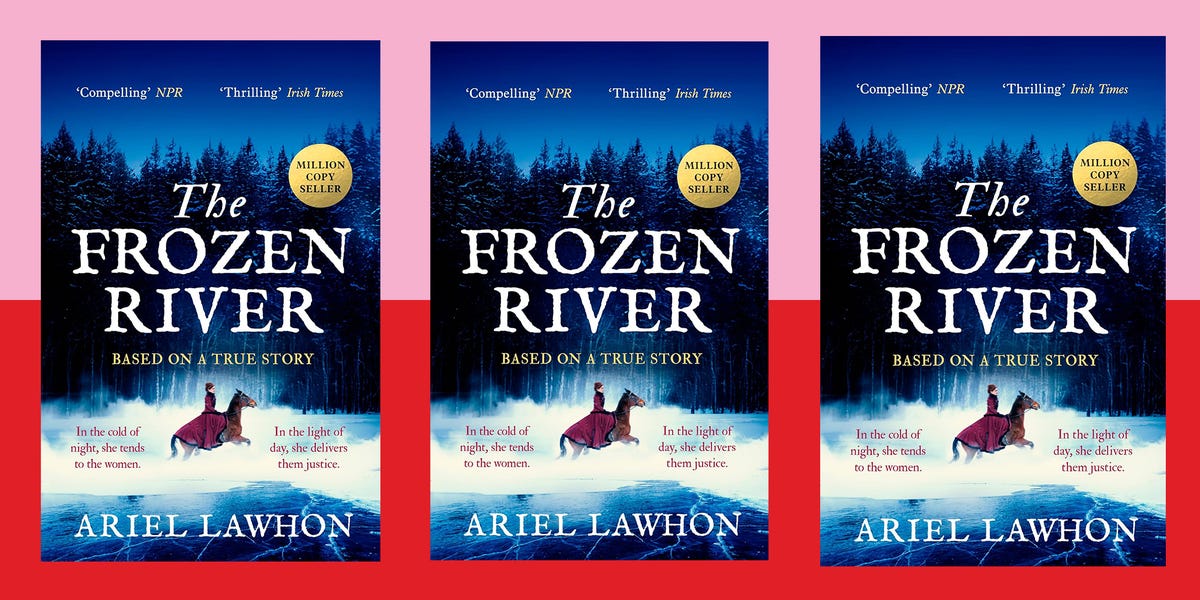
If your ideal reading experience involves a candle, a blanket, and a story that makes you whisper “well, that escalated quickly,” The Frozen River is very much in your lane. Ariel Lawhon’s historical novel drops readers into Maine in 1789, where winter is brutal, reputations are fragile, and justice is about as slippery as river ice. The book has been praised as a historical mystery with real bite, but what makes it linger is not just the murder at its center. It is the woman staring that murder down: Martha Ballard, a midwife, healer, diarist, and the least likely person in town to be treated like she is in charge, even though she very obviously is.
One note before we head onto the ice: because the novel is copyrighted, this article does not reproduce a long verbatim extract from the book. Instead, think of this as an original, spoiler-light guided walk through the opening atmosphere, major themes, historical roots, and emotional pull of The Frozen River. In other words, you get the shiver without anyone calling the copyright lawyer.
Why The Frozen River has captured so much attention
Published in hardcover in late 2023, The Frozen River arrived with the kind of credentials that make historical fiction fans sit up straighter: it was selected for the Good Morning America Book Club, named a bestseller, and quickly drew praise for blending suspense with meticulous period detail. That combination matters. Plenty of historical novels know their way around a petticoat and a snowdrift, but fewer manage to make the past feel urgent rather than preserved behind glass.
Lawhon’s trick is that she does not treat history like a museum rope line. She treats it like a living argument. Her Martha Ballard is rooted in the record, but she moves through the page with the velocity of a thriller heroine. The result is a novel that feels literary without becoming stiff, dramatic without losing emotional intelligence, and thoughtful without forgetting that readers enjoy turning pages at an unhealthy clip.
The real woman behind the novel’s icy mystery
The biggest reason The Frozen River lands with authority is that Martha Ballard was real. She was an 18th-century midwife and healer in Hallowell, Maine, and she kept a diary for decades. That diary turned out to be the literary equivalent of striking gold with a kitchen spoon. Ballard recorded weather, births, household work, illnesses, legal trouble, gossip, money worries, and the endless labor of keeping people alive in a demanding world. Historians have long considered her diary a rare and revealing account of early American life, especially because women’s daily work was so often ignored, minimized, or simply left out of the official record.
That is part of what gives the novel its eerie authority. Martha is not a made-up modern heroine wearing a bonnet as a costume. She is a woman who genuinely lived at the crossroads of life and death. She delivered babies, treated sickness, watched families crack and reform, and recorded what she saw with striking regularity. If modern social media tells us what people want to be seen doing, Martha’s diary tells us what life actually demanded. Spoiler: it was not all cozy bread baking and tasteful lantern light.
Her writings later inspired Laurel Thatcher Ulrich’s Pulitzer Prize-winning work A Midwife’s Tale, which helped bring Ballard to a wider audience. That history matters because Lawhon is not pulling a story from thin air. She is entering into a conversation already shaped by scholarship, documentary storytelling, and public fascination with a woman who should have been a household name long ago.
What the opening of The Frozen River feels like
The novel begins with an image built to hook readers instantly: a dead man discovered in the frozen Kennebec River. That alone would be enough for many books, but Lawhon is playing a deeper game. Martha Ballard is summoned to examine the body and determine how the man died. Right away, the story establishes the thing that will power everything else: Martha knows what she knows, but the men around her are not especially eager to accept that knowledge if it complicates their comfort.
From there, the opening widens into a town-sized pressure cooker. Months earlier, Martha had documented the details of an alleged rape involving one of the community’s most respected men. Now one of the accused is dead, and the river is not the only thing preserving dangerous truths beneath a hard surface. The beauty of the setup is how efficiently it works on multiple levels. You get a murder mystery, a legal drama, a study of gendered power, and a portrait of a woman whose diary becomes both weapon and witness.
Even if you have not yet read a formal extract, the premise tells you exactly what kind of reading experience to expect. This is not a dainty historical stroll. It is a winter novel in the best sense: tense, severe, intimate, and full of the cracking sounds made when a community pretends it is solid while fractures spread underneath.
Atmosphere that does not quit
One reason readers describe the book as haunting is the way weather and setting become active forces. The frozen river is not just scenery; it is metaphor, mood, obstacle, and threat. Everything feels slowed by cold yet sharpened by it. Lawhon uses winter the way some writers use a villain: always present, always applying pressure. The physical environment mirrors the social one. People are trapped. Secrets do not disappear. They freeze in place until someone is brave enough to chip them free.
That gives the book a particular kind of chill. Not jump-scare chill. Moral chill. The kind that comes when you realize a woman can know the truth, document the truth, and still have to watch powerful men shrug in broad daylight.
What makes the novel more than a murder mystery
At its core, The Frozen River is about authority: who gets to speak, who gets believed, and who is expected to swallow injustice politely. Martha’s work as a midwife puts her in rooms where official history rarely bothers to look. She sees bodies honestly. She hears women when they are frightened, in pain, ashamed, furious, or simply out of options. That makes her dangerous to a system that prefers women silent, dependent, and conveniently forgetful.
Lawhon also uses Martha’s marriage to Ephraim to add warmth and dimensionality. Critics have noted that the novel’s portrait of their relationship gives the book emotional lift as well as sensual humanity. That matters because too many historical novels mistake seriousness for emotional frostbite. Here, love exists alongside brutality. Domestic life is tender without becoming sentimental. The effect is grounding. Martha is not heroic because she has no attachments; she is heroic because she keeps choosing courage while surrounded by people she loves and risks losing.
Then there is the question of female expertise. A formally trained male physician can walk into the room and be granted authority on sight. Martha, meanwhile, has years of lived experience, practical skill, and community knowledge, yet she must repeatedly defend conclusions she arrived at through direct observation. That dynamic gives the book a modern hum. Readers do not need a historian standing beside them to notice the parallels. The novel is set in 1789, but its frustrations do not feel trapped there.
Why the book feels haunting instead of merely dramatic
Lots of novels are dark. Fewer are haunting. The difference usually comes down to residue. A haunting book leaves a trace after the plot machinery has done its work. The Frozen River does this by tying its suspense to questions that do not neatly expire: how women preserve truth when institutions fail them, how communities protect power, how memory can become evidence, and how ordinary labor can turn into a quiet archive of resistance.
Martha’s diary is the novel’s emotional ghost light. It glows through every scene because it represents the refusal to let experience vanish. Every entry says, in effect, this happened. Someone saw it. Someone wrote it down. In a world eager to dismiss women’s testimony, that simple act becomes radical. It is hard to read that and not think about all the lives history nearly misplaced.
The haunting quality also comes from the tension between the scale of the setting and the size of the stakes. This is one town. One river. One winter. One woman with a sharp eye and a stronger spine than the legal system deserves. And yet the questions raised are enormous. Who owns the truth? What counts as proof? What happens when a woman’s knowledge threatens men who are used to being the authors of every public story?
Who should read The Frozen River?
This novel is a particularly strong fit for readers who love historical fiction with momentum. If you enjoy books that combine research with readability, moral urgency with propulsive plotting, and real historical figures with emotionally rich reimagining, this one is a good bet. It also works beautifully for readers who want a historical novel centered on women’s labor rather than treating women as decorative side lamps in the corners of men’s adventures.
It is equally appealing to book club readers, because almost every thread opens into a larger conversation: justice, class, marriage, medicine, faith, power, violence, and the politics of who gets believed. That said, it is not homework in period costume. The novel has too much narrative muscle for that. It moves. It stings. It occasionally makes you want to yell at several men who have been dead for centuries, which is honestly a mark of success.
Reading experience: what it feels like to step into a story like this
Reading a novel like The Frozen River can feel strangely physical. You start out admiring the setup, the historical framing, the confidence of the voice. Then, slowly, the book changes temperature around you. The river, the snow, the stillness of winter, the creak of homes holding families and secrets inside themit all begins to work on your imagination until you can practically hear boots on hard ground and feel the sting of cold air in your throat. That immersive quality is one reason historical fiction lovers become so loyal to books like this. When it works, you are not just observing another century. You are inhabiting its weather, its danger, and its emotional math.
There is also a particular pleasure in following a protagonist whose intelligence comes from attention rather than theatrics. Martha Ballard is compelling because she notices. She reads rooms, injuries, silences, motives, and social bargains. For many readers, that creates a deeply satisfying experience. You are not watching a character blunder into plot points for convenience. You are watching a seasoned woman use the tools available to hermemory, skill, intuition, routine, observation, languageto hold her world accountable. That kind of competence is catnip on the page.
Another experience tied to this novel is the emotional double vision that strong historical fiction creates. You are in the past, but you keep recognizing the present. The details differ: clothing, laws, geography, medicine, customs. Yet the underlying tensions feel familiar in ways that can be unsettling. A woman tells the truth and is doubted. A respected man benefits from reputation. Expertise is gendered. Community loyalty gets confused with morality. That recognition is part of why the story hits so hard. You are not reading about a sealed-off old world; you are reading about patterns with a disturbingly long shelf life.
Then there is the experience of finishing a chapter and wanting to talk immediately. Not because the book is confusing, but because it is provocative in the best sense. It invites arguments. It makes book clubs lively. One reader gets absorbed by the mystery. Another latches onto the medical history. Someone else cannot stop thinking about the marriage. Another person wants to discuss the diary as a form of power. This is the sweet spot for a novel that wants to be both gripping and substantial. It gives readers plot momentum and conversational meat at the same time.
Perhaps the strongest experience of all is a renewed respect for lives that traditional history books once treated as background noise. A woman riding out in bad weather to attend a laboring mother does not always make the grand national narrative. But in a novel like this, that work becomes central. Necessary. Heroic, even when no one in the room is handing out medals. By the time you reach the end, the haunting feeling is not just about the murder or the river or the winter. It is about the realization that whole worlds have depended on women like Martha Ballard, and that many of them were nearly edited out of the story. The Frozen River pushes back against that erasure with cold hands and a very steady gaze.
Final thoughts
The Frozen River succeeds because it understands that suspense is not only about discovering who did what. It is also about whether the truth will survive the people most invested in burying it. Ariel Lawhon builds that tension with a historian’s respect for the record and a novelist’s instinct for pace, emotion, and atmosphere. The result is a story that feels sharp, intimate, and yes, haunting.
So if you came looking for the appeal of an extract from The Frozen River, here is the cleanest answer: the novel opens with a body in the ice, but its real power lies in the living woman who refuses to look away. Martha Ballard is the reason the book works, the reason it lingers, and the reason this frozen world never feels lifeless. Once you step onto this river, it is surprisingly hard to climb back out.